

By Palak Malik
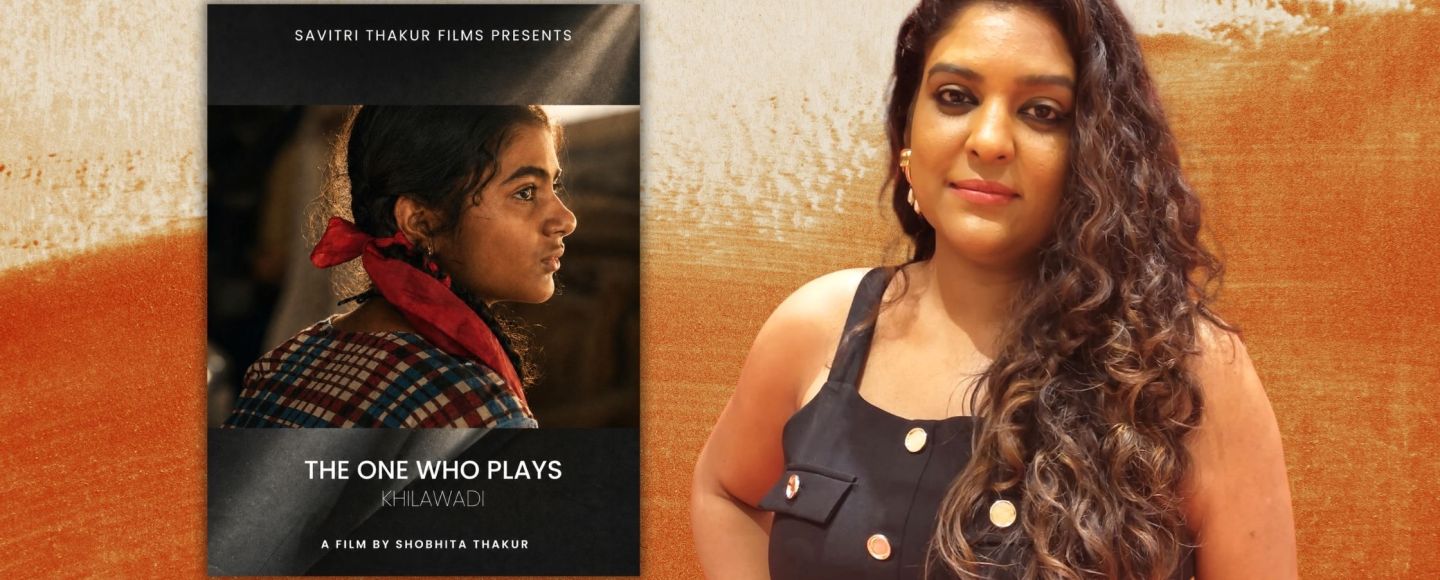
For filmmaker Shobhita Thakur, cinema is far more than storytelling. It is, as she puts it, “humanity’s greatest and most intricate memory project” – a way of preserving lives, histories and emotions that might otherwise disappear. That philosophy lies at the heart of her directorial debut, Khilawadi (The One Who Plays) (2026), a short film that confronts one of India’s least-discussed realities: the ritualized sexual exploitation of girls in the Banchhada community of Madhya Pradesh.
The film centers on Sapna, an 11-year-old girl whose childhood is gradually consumed by a system in which girls are pushed into prostitution as a hereditary occupation. Rather than presenting a single act of brutality, Khilawadi reveals how oppression unfolds through caste, poverty, family expectations, bureaucratic neglect and silence.
For Mumbai-based Thakur, the story was years in the making.
Growing up in Bhopal in the early 2000s, she was immersed in literature, theatre and political conversations. Visits to Bharat Bhawan, the British Library and book fairs were routine, while leftist writers and theatre legends – including Habib Tanvir – frequently visited her home. Those experiences shaped both her politics and her artistic sensibility.
“I always knew who the true idols in art and cinema were,” she says. “Those committed to creating socially meaningful work.”
Ironically, while her father introduced her to many of these progressive thinkers, he resisted her decision to study English Literature and later filmmaking. “My father did not speak to me for two years because I chose English Literature,” she recalls. “Life, however, has a beautiful way of coming full circle. The same father eventually financed and co-produced my film. The rebellion was worth it.”
That willingness to challenge authority eventually led her to the Film and Television Institute of India (FTII), Pune, and ultimately to Khilawadi.

The 27-minute drama has already won awards, including at the Fascinasian Film Festival (Canada). It is India’s only representative film in the long short film category at the Kazan International Film Festival in Russia and Festival du Film de Nancy in France. It has also been selected for the XXII Muestra Internacional de Mujeres en el Cine y la Televisión, Mexico, a women-centric film festival supported by the Mexican government.
The emotional power of Thakur’s debut film rests on meticulous research. Before writing the screenplay, Thakur spent nearly four months in Neemuch meeting Banchhada women and girls, listening to their testimonies, studying police FIRs, official documents and historical material on caste-based prostitution.
“I met Banchhada girls and women personally, spending hours in conversation with them,” she says. “Every conversation, every document, every single word brought me closer to understanding how, from the earliest years of childhood, they are systematically pushed to the margins.”
One encounter became the emotional foundation of the character Sapna.
She met a young woman pursuing an MSc – the only girl in her community to have reached that level of education. Despite her achievements, the woman lived in constant fear that her education could end at any moment.
“She was full of dreams and aspired to become a station master,” Thakur says. “Yet beneath her innocent smile lay an unmistakable anxiety.” Around her were many younger girls who had already dropped out of school and had never been encouraged to imagine a future beyond inherited oppression.
“Sapna became a composite of all these girls – their dreams, their fears, their resilience and their unspoken pain.”

Shot in Abidabad and Bhopal, Khilawadi deals with subjects that could easily become exploitative in less careful hands: menstruation, childhood, virginity and sexual violence. Instead, Thakur consciously avoids showing brutality directly.
“It is my own experience of being a woman that enables me to approach these moments with tenderness,” she avers, explaining that, while filming scenes involving her 11-year-old lead actor, she made deliberate creative choices to protect the child from becoming an object of spectacle.
“In the scene where the mother silently hands the young girl the bottle of oil before the final horrific act, I made the conscious decision not to photograph the child’s face. I did not want the brutality of that moment to become a spectacle.”
Instead, she leaves the horror to the audience’s imagination. “It compels me to protect my characters from being exploited on screen, even while telling the truth of their lives.”
The same restraint shaped the film’s treatment of virginity, which in the Banchhada economy becomes a commodity.
“I was acutely aware that, within this highway prostitution economy, virginity becomes a form of currency,” she says. “Yet at no point did I want the film to approach this reality in a manner that felt sensational or exploitative.”
Instead of explicit imagery, she relied on subtle visual and cultural cues – the onset of menstruation, red chillies thrown into a fire, folk songs and meaningfully composed scenes – to communicate the emotional truth without violating the dignity of her characters.
For Thakur, being a woman filmmaker is inseparable from the way she approaches storytelling.
“Our families and society often make conversations about women’s bodies extraordinarily difficult,” she says. Cinema, however, offers another language.
“Visual metaphors, carefully composed frames and meticulously crafted performances create an emotional resonance that is far more profound than a conversation that can so easily be interrupted or argued away.”

Rather than persuading audiences intellectually, she wants them to inhabit another person’s emotional world. “People begin to feel alongside the characters. They experience another human being’s pain and humanity as their own.”
This perspective also informs her understanding of oppression. “The gradual closing of every door in Sapna’s life is, in many ways, the story of countless Indian women,” she says.
“The difference is that many of us are fortunate enough to be born into circumstances where at least a few doors remain open. By the sheer accident of birth, Banchhada girls enter a world where those doors have already been locked.”
Thakur believes serious cinema allows people to remember lives they have never lived. “Cinema has always been an extension and expression of human memory,” she says. “Everything we think, feel, endure and cherish gradually finds its place in our stories.”
That belief explains why Khilawadi has resonated with audiences far beyond India. From Mumbai and Pune to screenings in Canada and France, she has witnessed the same response.
“As the final images fade from the screen, audiences almost invariably fall into complete silence,” she says. “That shared silence has become the most meaningful response to the film.”
For Thakur, that silence confirms something she has always believed. “The world of Banchhada girls may seem unimaginably distant from urban India, yet the heart that beats within them is no different from the heart that beats within any one of us.”
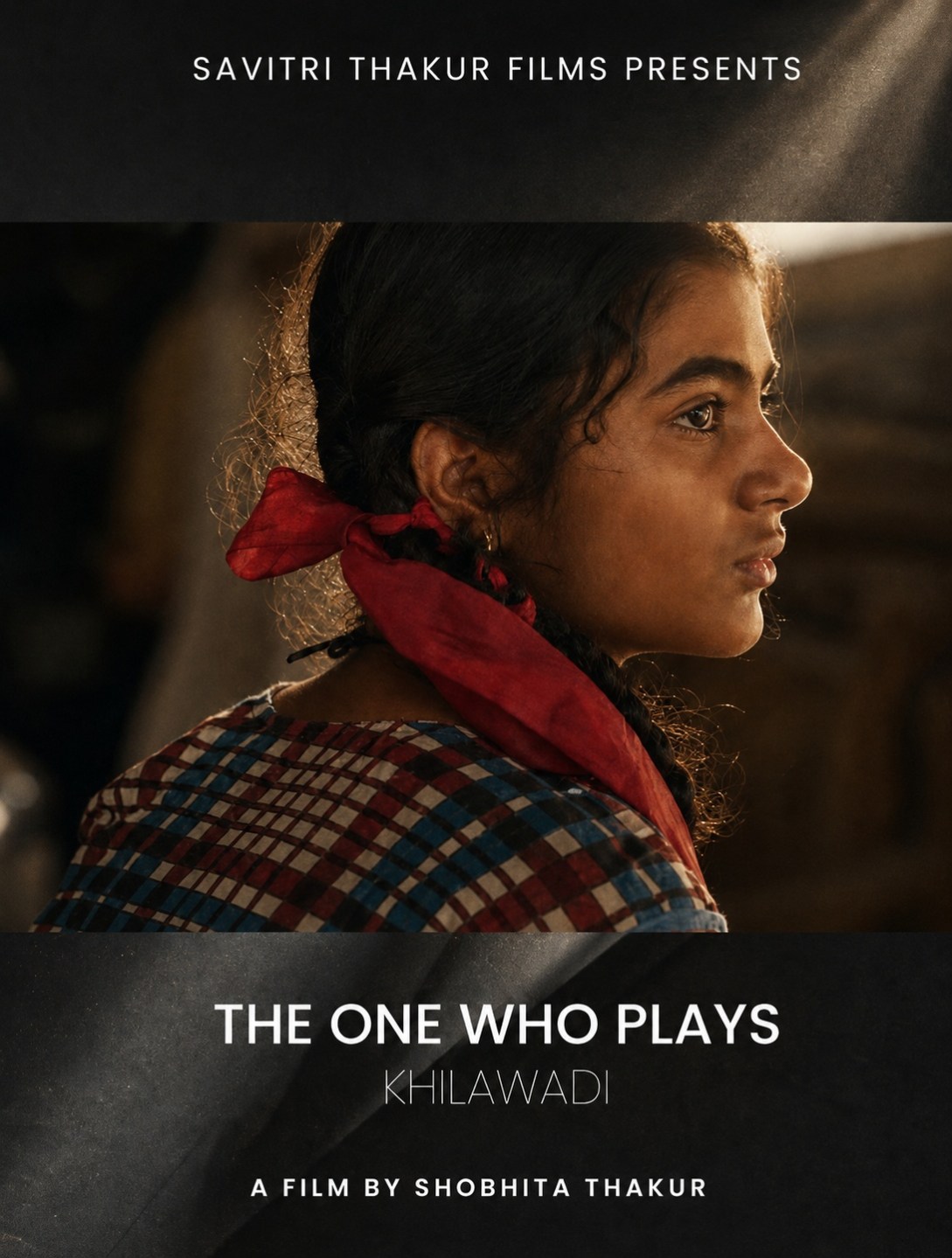
One of the film’s most haunting images arrives in its closing moments, when Sapna sits where her mother once sat – adorned in red, wearing alta and jewelry, her childhood seemingly erased.
The image draws inspiration from the visual language of directors such as Zhang Yimou and Wong Kar-wai, but its symbolism is rooted firmly in Indian society.
“I have often wondered why our culture has historically created such elaborate rituals and symbols of shringaar exclusively for women,” Thakur says. “The alta, the payals, the bindi, the red sari – however beautiful they may appear – have also become symbols through which patriarchal power regulates women’s bodies.”
For her, the ending is not just about the fate of one child. “It represents not only the oppression imposed upon Banchhada girls, but also the quiet, enduring burden borne by countless women across our society.”
In Khilawadi, Thakur has transformed one community’s hidden history into a deeply human story – not simply about caste or exploitation, but about stolen childhoods, denied futures and the stoic resilience of girls who continue to dream despite being born into a system determined to extinguish those dreams.

Palak Malik is Art and Culture Correspondent at eShe. She is a digital and communication specialist, recognised as a LinkedIn Top Video Production Voice for her expertise in video production.
Discover more from eShe
Subscribe to get the latest posts sent to your email.
0 comments on “Locked in the system: Shobhita Thakur’s ‘Khilawadi’ exposes the violence of caste and patriarchy”