


SEATTLE, WASHINGTON: As they took the south exit of Pioneer Square Station onto street level, the massive roof of the Seattle Stadium loomed ahead, greeting FIFA World Cup fans ahead of the USA-Australia match. Binita Kharel’s husband turned to her and said his heart was pounding.
“Your heart is beating fast even while just passing the stadium – what would have happened if we had been inside?” Binita teased him, laughing.
The little interaction says everything about what the World Cup felt like for a group of eight Nepali women in their 30s and 40s who had lived in Seattle for years and never quite seen the city like this.
They didn’t always need to be inside the stadium. The stadium, it turned out, wasn’t the only place the World Cup was happening.
News reports suggest that over 580,000 people were in downtown Seattle the day Binita and her friends headed there. The crowd, she says, felt larger than the one that turned out for the Seahawks’ Super Bowl championship parade.
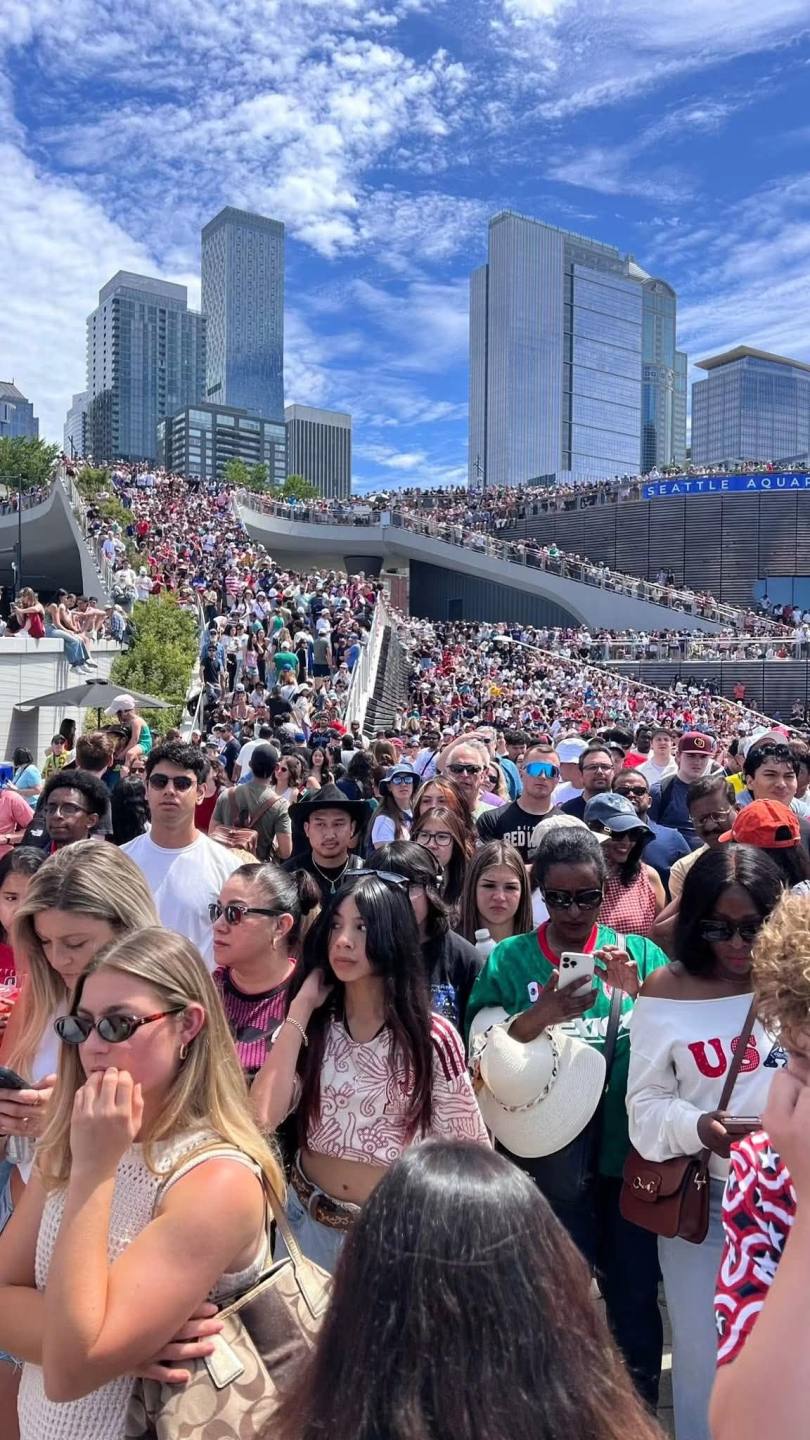
It started in a group chat
Binita, who lives in Renton, Washington, in the Greater Seattle Area with her husband and two teenage children, shares how it all began: a regular group chat of Nepali friends living in the city. “We talk every day,” she says.
“As someone who grew up in Nepal, the World Cup is something I grew up watching on TV. I didn’t even expect in my dreams that it could happen in the city I live in.”
When Seattle was confirmed as a host city, the group tried to get closer to it than most fans manage. “We applied for the volunteer position first. We didn’t get in,” Binita says. “Even if the World Cup was happening in the city, getting tickets for the whole family was too expensive,” she adds.
(She’s right about that: this is the most expensive World Cup tournament ever.)
So the group of women with decades of soccer and World Cup fandom decided to make the most of the opportunity: if they couldn’t be inside the stadium, they’d be everywhere else.
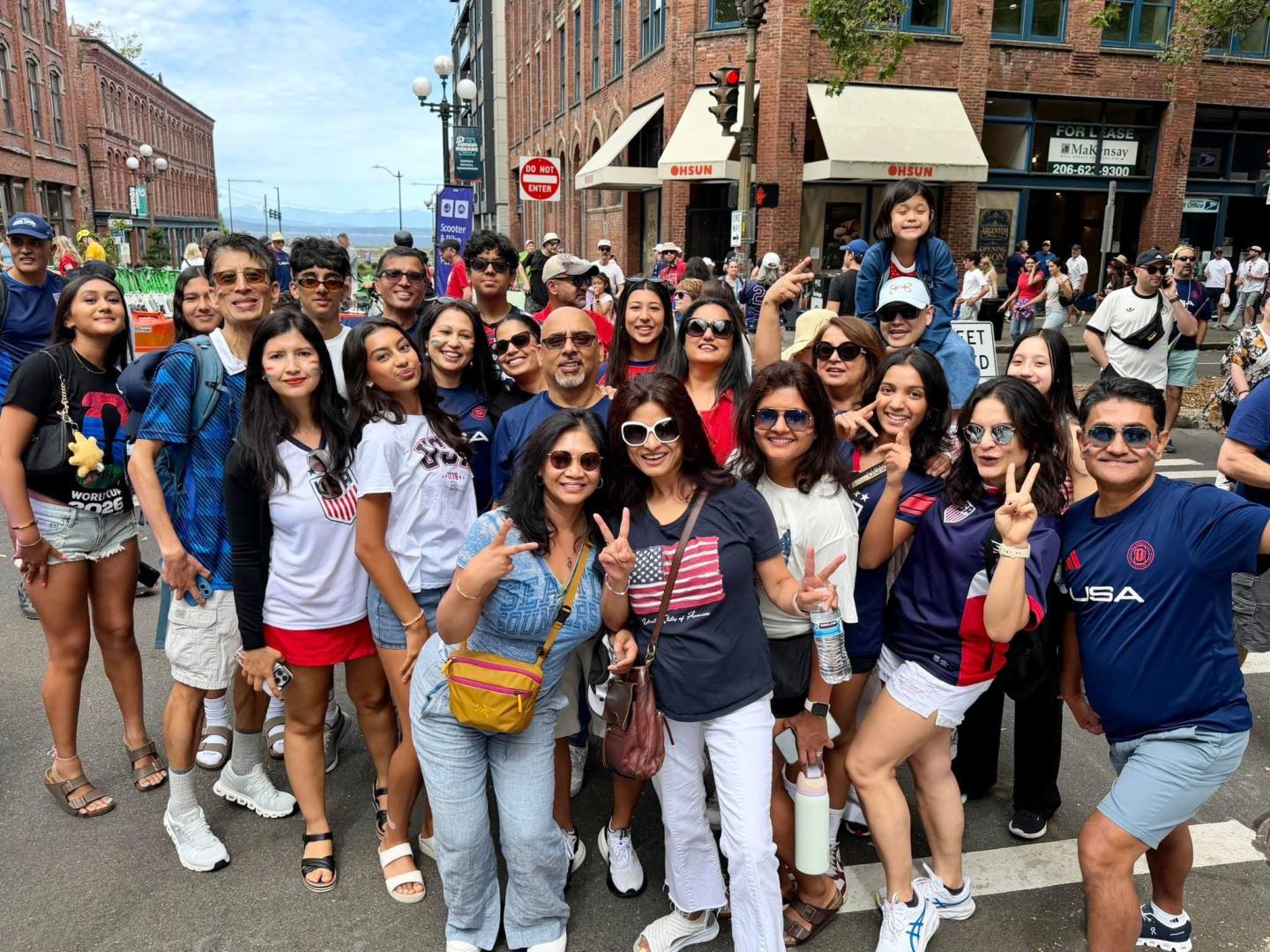
Binita, who works as an education professional, said her colleagues called her crazy. “But watching together, going around the city for the watch party, and being part of all the fun is something we wanted to do,” she says. “We all brought matching jerseys in bulk weeks before the game.”
So they went various different watch parties to see each match. Some nights that meant staying close to home, in Renton. Other nights, like June 19 when USA took on Australia, meant going all in.
“It’s USA playing in our hometown, and we wanted to be as close as possible,” Binita says. “This is the big one; it’s like a dream come true”
The city before the kickoff
For Pooja Giri, a medical professional from Lynnwood who made the short trip to downtown Seattle with her husband and their two teenage kids, the day had a charge to it before they’d even left the house.
“Seattle had an incredible festival atmosphere. It’s already a strong soccer city because of the Sounders and their success in Major League Soccer, and with the USA playing at the World Cup, it felt like one big festival,” Pooja says.
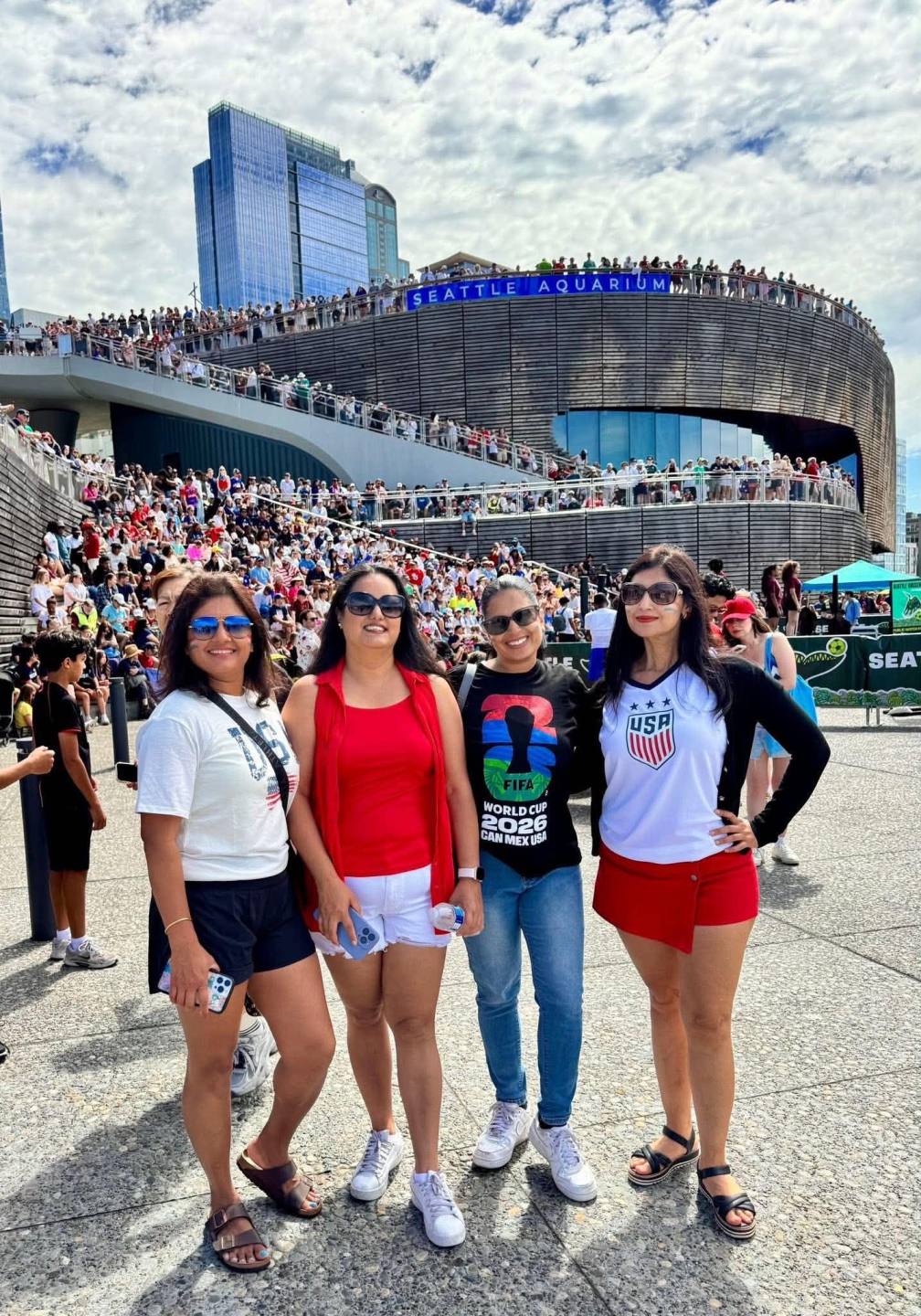
Most of these women did not watch the game from inside a stadium seat, and none of them describe the day as any less for it. Pooja and her family, along with their friends, made their way to a public watch party downtown.
One image has stayed with her since: fans from countries with no obvious stake in the USA-Australia match, “smiling and taking videos with positivity” alongside strangers. She adds, “It felt different; we’d just won the Super Bowl, but USA playing in the World Cup in your own city hits different.”
A festival, not just a match
Her friend Usha Pathak adds, “Seattle Waterfront at Pier 62 looked spectacular. On one side were huge crowds celebrating, and on the other was the beautiful water. It felt uniquely Seattle.”

Usha, who lives in Newcastle and came with her husband and eight-year-old son, took public transit for the first time and was amazed by the infrastructure and arrangement. “The park-and-ride lots were completely full,” she says. “There were police officers, security personnel and large crowds everywhere. It was busy, but everything felt organized.”
Walking from the rail station into downtown Seattle, she says, felt “almost like an airport because of the security presence.” A city that had, for one day, rebuilt itself around a single match. “Even before reaching the stadium, the entire downtown area felt like part of the event,” she shares.
According to Usha, who works in healthcare, there were crowds everywhere: “Watch parties, food vendors, music and constant excitement – the atmosphere was energetic but positive and respectful.” That last detail mattered to her as much as the noise of 580,000 strangers, and nothing about it felt unsafe.
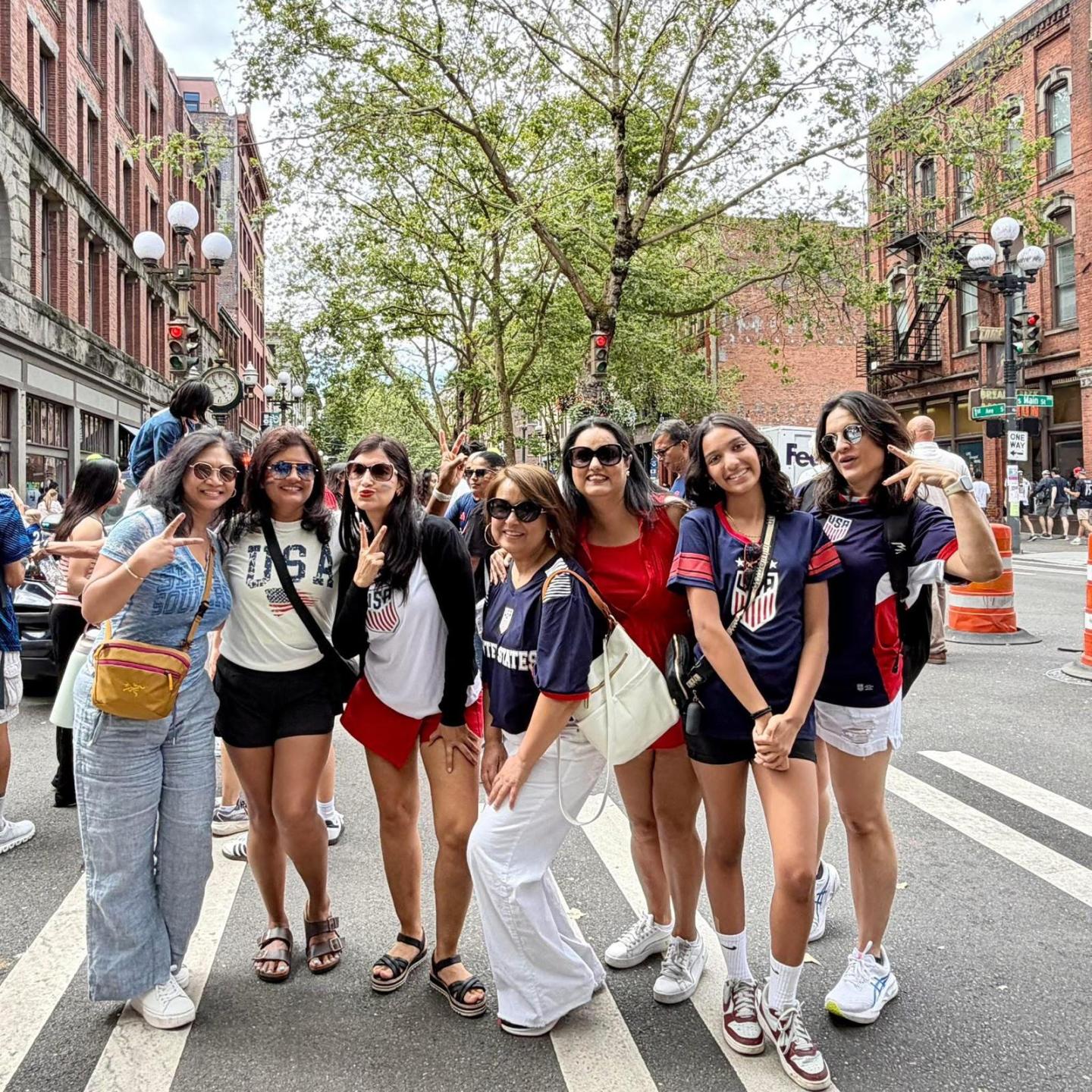
Nisha Shrestha, a finance professional from Lynnwood, traveling with her husband and their two young daughters, remembers the train ride itself as part of the celebration rather than just a means of getting there.
“It was packed with fans, and you could already feel the excitement before we arrived,” she says. “Seeing so many people wearing team jerseys and cheering on the train created an amazing FIFA 2026 atmosphere and made the journey part of the experience.”
She adds, “For a day we all were wearing the same jersey, and it felt like all of Seattle was a part of a big family. The music, giant screens, decorations and the energy from fans of different countries made it feel like a true worldwide celebration.”
The goal that stopped Pike Place
If the day had a single moment that outlasted all the others, it belongs to Usha, standing with her family and friends in front of a big screen at Pike Place Market.
“The most memorable moment was when the USA scored its first goal,” she says. “We were watching from Pike Place Market near a large screen. Before a commercial break ended, there was a 60-second countdown, and everyone started counting down together. Then the crowd began chanting ‘USA! USA! USA!’ The energy was unbelievable. That moment is something I’ll never forget.”
Every one of these women, when asked whether the day changed how they see their city, answers some version of yes, and each frames it slightly differently.
For Pooja, the day was proof of something bigger than sport. “Events like this can bring people together beyond team loyalties,” she says.
Usha reaches a similar conclusion from a more civic angle: “The city handled huge crowds effectively, public transportation worked well, and people from many different backgrounds came together to celebrate,” she says. “It reinforced my belief that Seattle is a great sports city and an excellent host for major international events. I believe we proved to FIFA that even though we were added at the end, we are the best addition to the list of cities for FIFA 2026.”
The comparisons to Seattle’s other great sporting passion come up naturally. A Seahawks game, even a playoff run, is intense in bursts of tension that resolve, one way or another, in three hours.
The World Cup, many of the women noted, built differently: excitement that started before they’d even left home and kept going long after the final whistle, spilling into sports bars where, as one of them put it, you could “literally feel the vibration from the crowd.”
Binita says their group isn’t done yet. “We are attending watch-parties till the final match,” she says, adding that her favorite teams so far have been USA, England and France. The group is registered for a watch party at Marymoor Park in Redmond, and have already booked the space for the final. “We are rooting for Spain,” Pooja says, though Usha’s eight-year-old is rooting for Argentina.
As MetLife Stadium at New Jersey prepares for the 2026 FIFA World Cup final on July 19, it’s worth remembering that Seattle had a head start on all of this. Seattle is known for having one of the loudest stadiums in the United States, home to Seahawks fans famously nicknamed the “12th Man” – 11 players on the field, and the crowd itself counted as the 12th.
During the USA versus Australia game on June 19, the friends experienced a ‘fanquake’ at Seattle Stadium. According to PNSN scientists, the seismic activity peaked at 3.3 millimeters per second, powered by the cheering of 67,000 fans inside the stadium. These women compared it with an earthquake.
Some cities host a World Cup. Seattle shook for one.
Discover more from eShe
Subscribe to get the latest posts sent to your email.
0 comments on “These 8 Nepali women turned a World Cup night in Seattle into the time of their lives”