
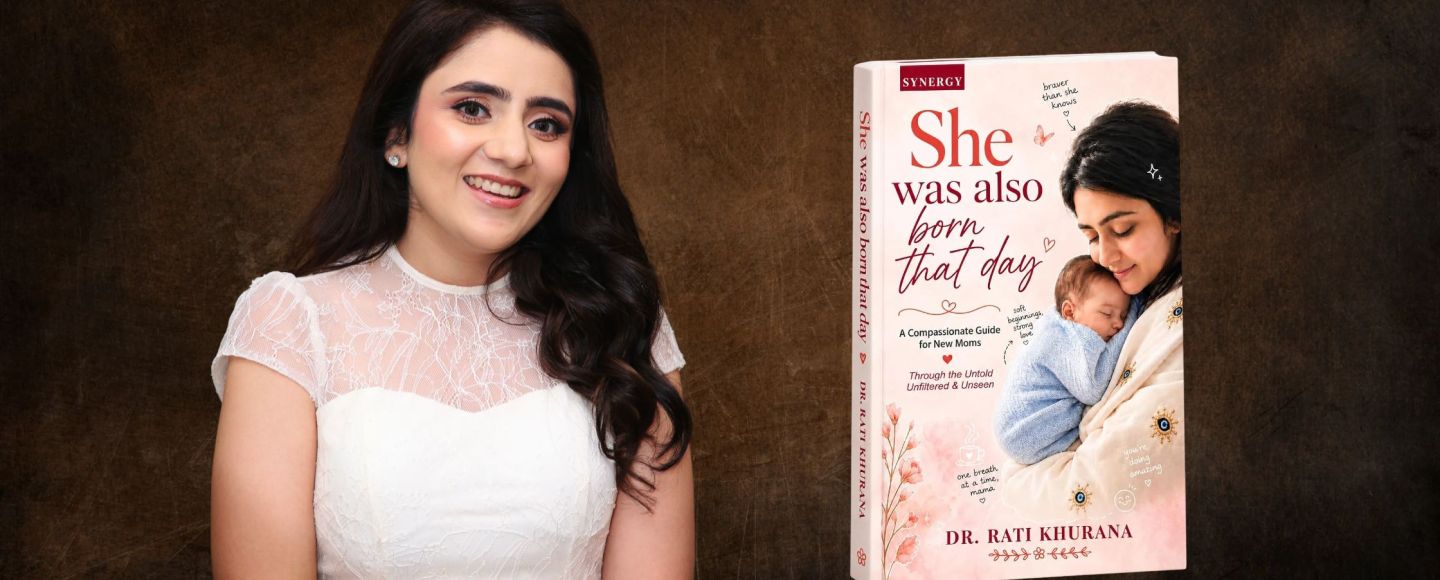

By Dr Rati Khurana
When my baby was born, the hospital corridor heard the sentence every Indian family waits for: “Jaccha-baccha dono theek hain” (Mother and baby are both fine). I wrote about that moment two years later in my book, and I put it plainly: The baby was fine, I was fine, the file was closed.
Except it wasn’t, at least not for me. I had the training, had read the research papers, and spent years helping other women find words for exactly this. And when it was my turn? Nothing. Months went by, and I couldn’t find the right words to say it out loud. Anyone who asked got the same answer: I’m tired.
Tired is such a convenient word for a new mother. Nobody asks a follow-up question about tired.
That silence is why two recent court cases caught my attention. Both raised questions about postpartum mental health, but only after devastating losses and years of legal proceedings. They remind me how urgently we need to notice a mother’s distress when it first appears, rather than discuss it only after a crisis.
One case is from the United States. You may have read about Lindsay Clancy, the Massachusetts mother whose three young children died in January 2023. She faced trial in connection with their heart-wrenching deaths. In September 2026, the jury could not reach a decision, and the judge declared a mistrial. Her defense raised postpartum psychosis; the prosecution disputed that explanation, and experts who testified were divided. There was no verdict. None of us reading the news is in a position to decide what was happening in her mind.
The other case is much closer to home. A woman in Assam had been sentenced to life imprisonment over the death of her 38-day-old baby girl in 2016. On 6 October 2026, the Gauhati High Court acquitted her. The judges rejected her confession as evidence, leaving the prosecution’s case unable to stand. They said they did not need to determine whether she had postpartum psychosis, but noted that the trial court should have considered the possibility before convicting her.
I am not going to judge either woman. I do not know them, and neither court established that she had postpartum psychosis. What stays with me is something else: in both cases, questions about a mother’s mental state after childbirth surfaced years later in a courtroom.
Those questions deserve attention much earlier, in the first weeks after birth, at home and in the healthcare system.

That is also why I wrote She Was Also Born That Day. Not because I had all the answers, but because I knew exactly how easy it is for a new mother to hide in plain sight in a house full of people who love her. Writing the book taught me lessons that these court cases have brought into sharper focus.
The first lesson was that the mother is almost always the last person anyone checks on, including herself. Your baby has an entire industry devoted to them. You have considerably less. I wrote that line quite rhetorically, and it turned out to be the one readers quote back to me most.
The second was that women do not need to be told they are strong. They have been told that their whole lives. What they need is room to be not okay for a while, without having to seek anyone’s permission or face judgment for supposedly being a bad mother.
And the third, the hardest, came when I reached the pages on postpartum psychosis. Everywhere else in the book, I chose gentle words on purpose. There, I couldn’t. That is the one page where I more or less shout: Don’t wait. Go now, tonight. When there are signs of psychosis, a day can make a difference. Sometimes, a few hours can.
Those pages have been on my mind a lot this autumn. The cases in the news underscore why the distinction between ordinary postpartum distress and a psychiatric emergency matters so much, and why families need clear information rather than fear or speculation.
Here is what I want every family to know, because in our homes, it is usually the family, not a doctor, who notices a change first.
Postpartum psychosis is rare. It affects roughly one or two women in every 1,000 births. It usually begins suddenly, often in the first two weeks after delivery. A mother may stop sleeping and not seem to need sleep. She may become confused, believe things that no one can talk her out of, or see or hear things others do not. Often, she cannot recognize that anything is wrong. It is a medical emergency, just as heavy bleeding after delivery is an emergency. And it is treatable. Most women recover fully with the right care.
It is also not the same as the “baby blues”, which are very common and usually pass within days, or postpartum depression, or the frightening, unwanted thoughts that many new mothers experience but never say aloud. That last distinction matters. A mother who is horrified by a sudden image of harm coming to her baby is often experiencing an intrusive thought, not psychosis. Her distress at the thought can be a sign that she recognizes it as unwanted. Psychosis is different: it can disrupt a person’s grasp of reality and ability to recognize that something is wrong.
I say this because I do not want a single mother reading about these trials to lie awake wondering whether her own scary thoughts make her dangerous. In the vast majority of cases, they do not.
But families need to know the difference, because in India, I see early warning signs explained away all the time. She is just tired. It is “nazar”, the evil eye. Let her rest; she will be fine in the morning. Sometimes she will. And sometimes, by morning, you have lost time you cannot get back.
My request to every family is simple. If she suddenly does not seem like herself, take the change seriously. Make sure she and the baby are not left alone while help is arranged. Have another family member contact a doctor or take her to an emergency department that very night. Do not wait until the end of the traditional 40-day postpartum rest period, or jaapa. Do not wait until next week. Reach out to a helpline or emergency number in your country. When you speak to a health care professional, say this first: she has recently had a baby.
I wrote my book for the mother who says she is tired. These two cases have reminded me to keep saying something to the people around her, too. Look at her, not only at the baby in her arms. Ask how she is doing, and then really listen. If what you see worries you, please do not wait it out. Seeking help is not a judgment on her. It is care.
Because she was also born that day, and she deserves to be looked after as much as the baby in her arms.

Dr Rati Khurana holds a PhD in clinical psychology. She is an RCI-registered rehabilitation practitioner (CRR A106451) and associate professor with more than 50 publications, research papers and workshops. Her book She Was Also Born That Day released in September 2026; its proceeds and royalties go to charity, including the Smile Foundation.
Discover more from eShe
Subscribe to get the latest posts sent to your email.
0 comments on “I wrote a book about postpartum mental health – then these two cases shook me”