

By Dr Uroosa Mushtaq
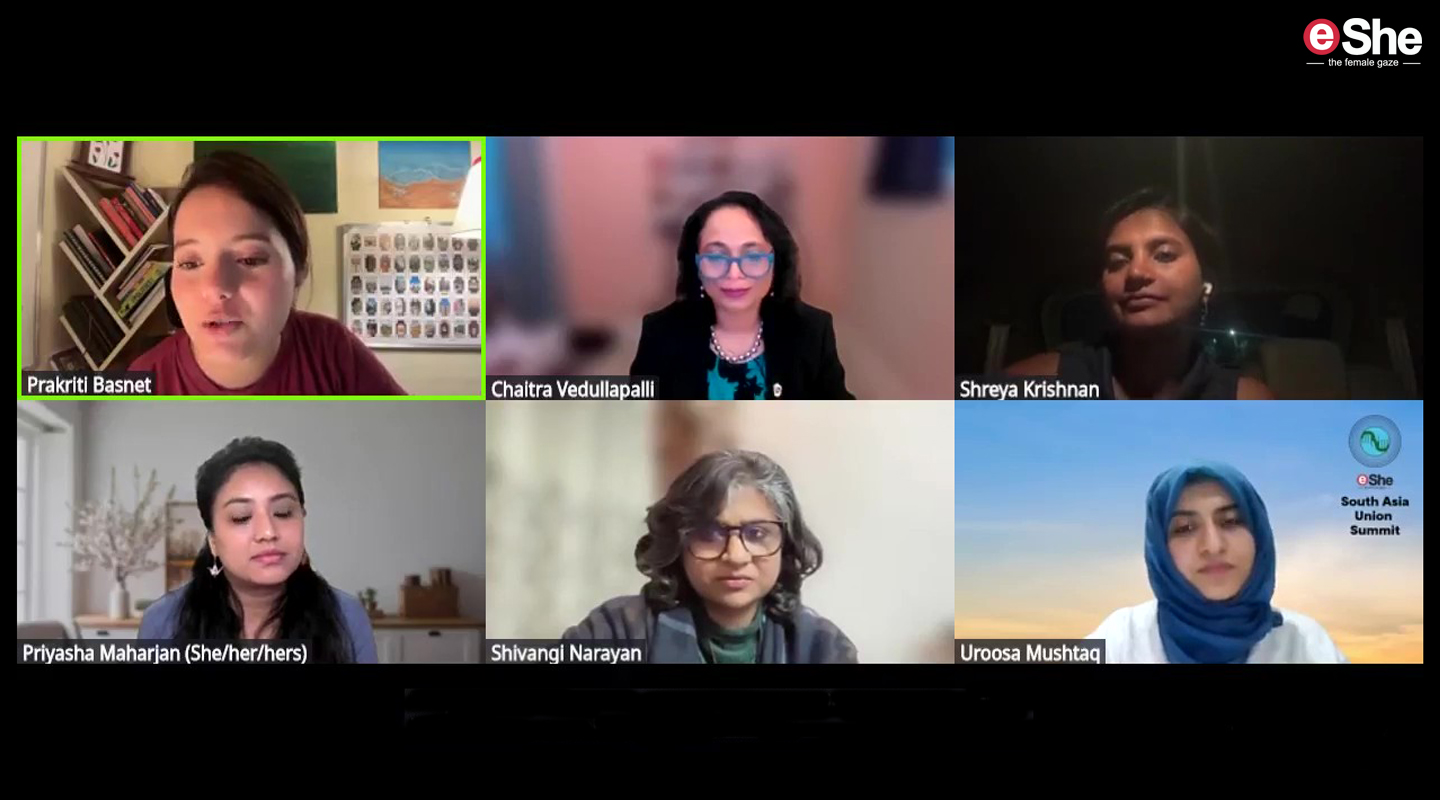
“Hope is not a governance strategy,” said Priyasha Maharjan, a global health technology researcher from Nepal currently based in Seattle, WA, speaking at eShe South Asia Union Summit 2026.
She was part of a panel titled ‘Who Owns the Intelligence? AI, Technology and Systemic Bias’. The panel’s central question was to discuss whether artificial intelligence is truly serving everyone or simply reinforcing the inequalities already embedded in society.
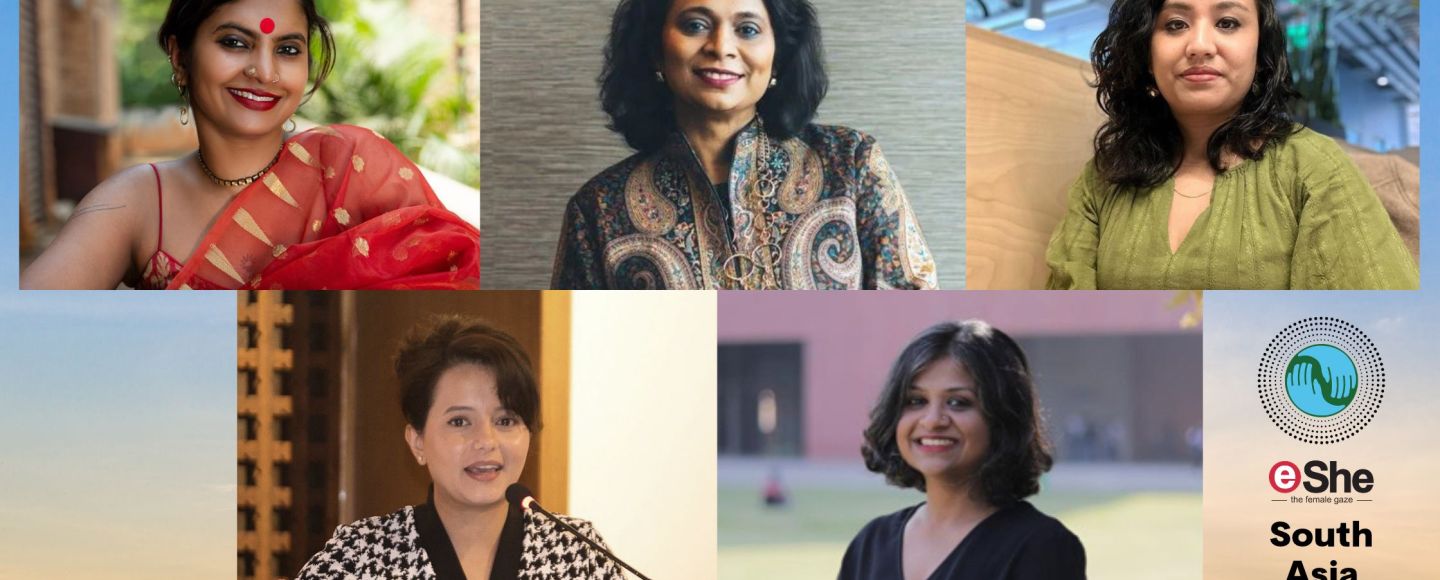
Besides Maharjan, other speakers included Chaitra Vedullapalli, Seattle-based co-founder and President of Women in Cloud; Shreya Krishnan, Bengaluru-based author, managing director of AnitaB.org India and chair of the Policy Advocacy Committee for UNESCO’s Women for Ethical AI; and Dr Shivangi Narayan, an independent researcher on technology and society from New Delhi.
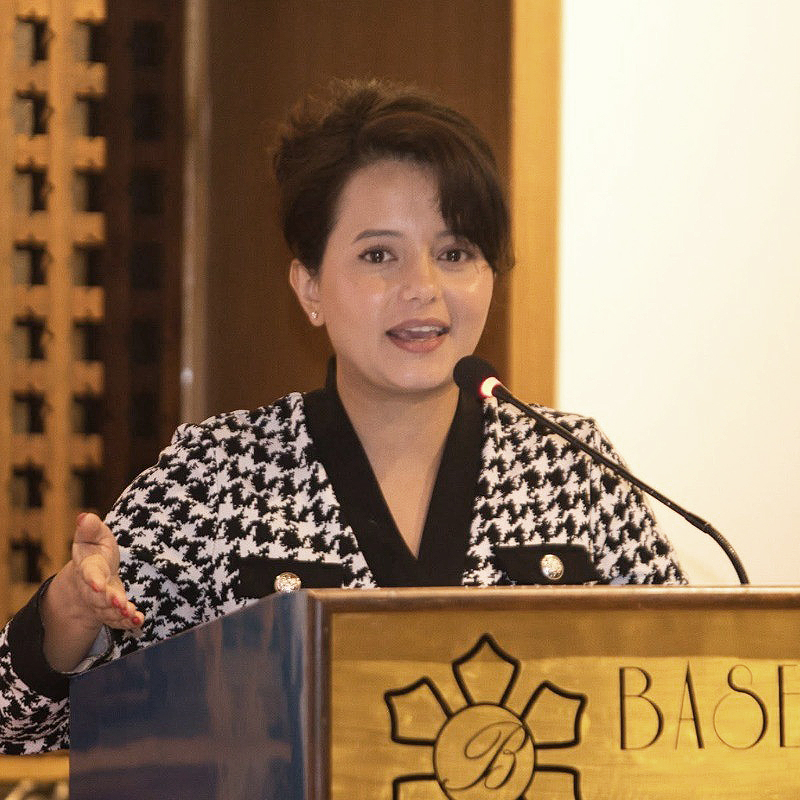
The discussion was moderated by Prakriti Bhattarai, a technology policy consultant and public policy professional from Nepal, whose work focuses on digital governance, platform accountability and gender-sensitive democratic participation.
Moving beyond the conventional debate about whether AI is “biased”, the panel explored the underlying structural controls that guide how AI systems are built and who is in control of their infrastructure and whether those on the margins of this technology can meaningfully shape their technological futures.
Questions of power and ownership
The discussion opened with the moderator, Bhattarai discussing the scale of AI’s expansion, highlighting a very prominent paradox: as investment in and use of AI increases, so does industry opacity.
“Generative AI reached 53 percent of the world’s population in three years, faster than the internet, faster than any technology ever,” she shared, adding that despite this growth, AI companies are disclosing lesser and lesser about their own systems.
“More money, more users, less transparency,” stated Bhattarai, who holds a Master’s in public policy from the University of Oxford’s School of Government, and is currently a teaching fellow at the Harvard Kennedy School of Executive Education.
The question, therefore, is not simply how quickly AI is developing, but who is benefiting from this transformation.
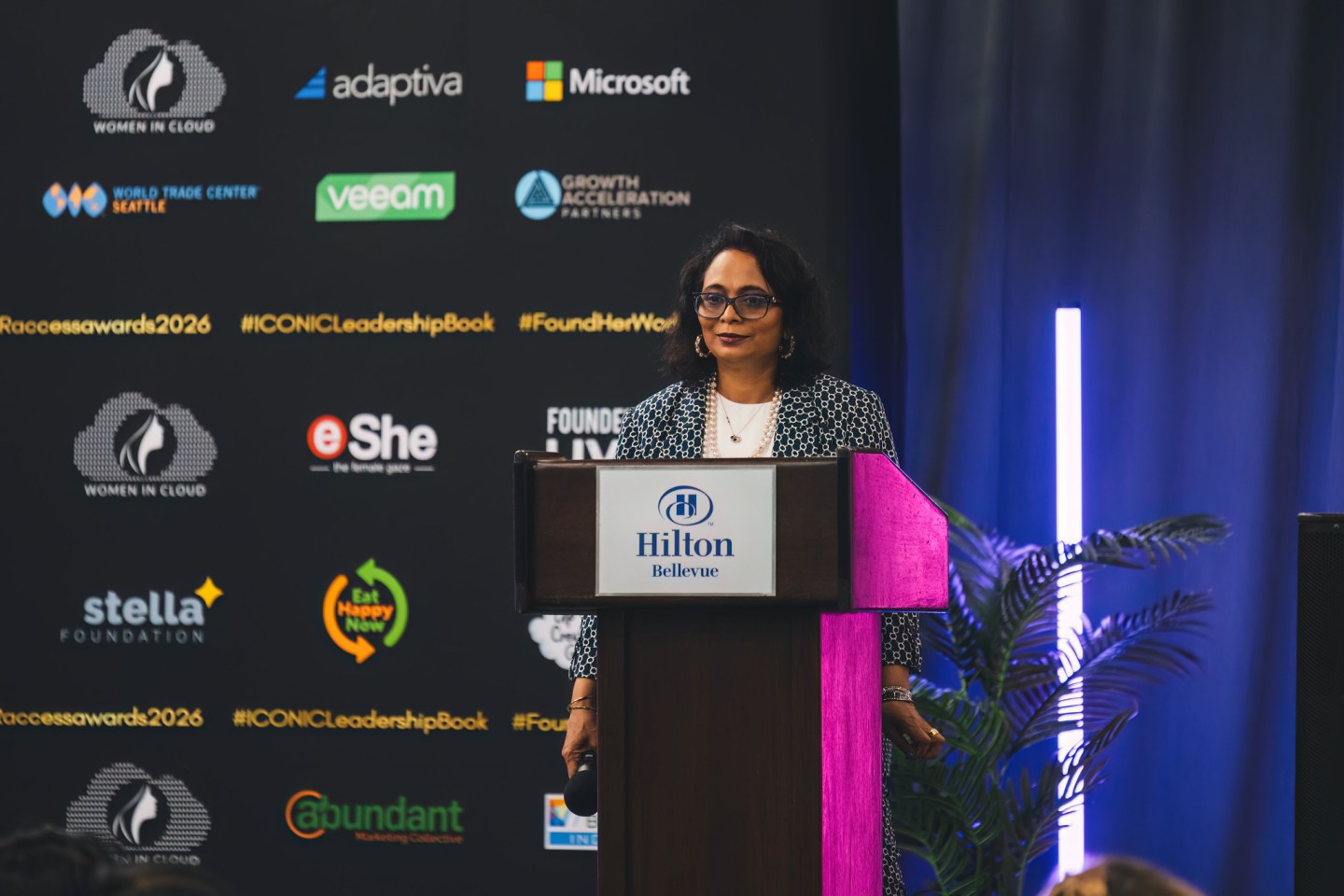
Chaitra Vedullapalli, an award-winning technology entrepreneur, compared AI to electricity, describing it as a general-purpose technology with the potential to reshape economies. However, she argued that access to technology alone does not guarantee access to economic opportunity.
Drawing on her work with Women in Cloud, a global tech community and economic development initiative with a goal of unlocking $1 billion in economic access for women by 2030, she emphasized the importance of linking technology education and certification to employment, customers, investment and business opportunities.
“We can democratize intelligence,” she said, “but what does the democratization of opportunity look like with this tech?” For Vedullapalli, the challenge is to ensure that how people actually live influences AI development, rather than pushing the digital divide further apart.
On her part, Shreya Krishnan critiqued that whether representation alone could address the structural inequalities within the AI industry. She pointed out the staggering statistic that although women account for approximately 31 percent of AI representation in South Asia, they remain away from decision-making positions and are mostly confined to lower-level roles.
With more than two decades of experience in leadership, impact, marketing, communications, ESG and CSR, Krishnan serves on the advisory boards of more than 20 organizations, and sees the industry as being driven by profit-oriented forces that frequently overlook ethical responsibility and the wider consequences of technological deployment.
“We need to build foundational structures, we need to build the basement, not a ceiling,” she argued, emphasizing that governance cannot simply be added after powerful systems have already been developed. She also challenged the idea that AI itself can be ethical or responsible. Using the analogy of a knife, she explained that technology does not independently determine how it is used. Responsibility lies with the people who develop and deploy it.

Her argument extended beyond technology companies to society itself. She commented that any meaningful change should begin at home, through the routine opinions and structures that determine whose ambitions and opportunities are supported.
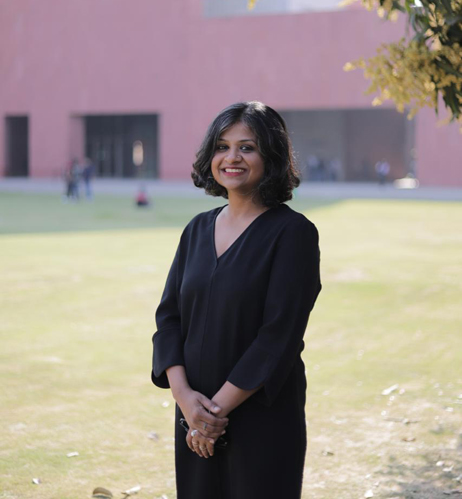
Dr Shivangi Narayan brought a different perspective to the conversation: she questioned the very efficiency of the language of AI bias to understand the problem.
“Bias means something that you can fix,” she argued, stating that many AI systems are actually working according to the classifications and assumptions built into them. A former engineer and journalist, Dr Narayan holds a PhD in sociology from the Centre for the Study of Social Systems at Jawaharlal Nehru University, Delhi, and has authored a book, Predictive Policing and the Construction of the Criminal (2023).
Drawing on her academic research into policing and surveillance, she explained how predictive systems can reproduce existing social inequalities when society’s definitions of crime and criminality are embedded into technological systems. Her concern was that technology does not merely inherit existing hierarchies; it can also create new ones.
She illustrated this through the gig economy, where a single negative customer rating can significantly affect a worker’s earnings. While digital platforms are often celebrated as innovations, their design may prioritize customer convenience over workers’ rights and economic security.
For Dr Narayan, the question is ultimately about who possesses the power and agency to use technology, and whose interests these systems are designed to serve. “The system is not biased. The system is working exactly as intended,” she stated.
Priyasha Maharjan highlighted how technologies that are trained predominantly on Western datasets may fail to understand South Asian languages, healthcare realities, disease patterns and cultural contexts. In healthcare, this mismatch can have serious consequences. A model trained on hospital data from North America or Europe may misinterpret health risks in South Asian populations.
She also pointed out that a tool developed in an urban Indian hospital cannot automatically be considered suitable for a rural clinic in Nepal.
Maharjan warned that smaller economies risk becoming permanent consumers of foreign technologies, purchasing expensive, opaque systems while having little control over the underlying models, computing infrastructure or data governance.
“Every dollar a Ministry of Health spends licensing proprietary foreign AI tools is a dollar not spent on primary healthcare,” she argued.
Key takeaways and the way forward
The discussion highlighted that to attempt making AI inclusive requires more than increasing representation of the marginalized or introducing additional regulations.
The speakers called for strong grassroots governance, increased transparency, locally sensitive data and meaningful participation of marginalized communities in decision-making.
For South Asia, this also means putting investment in improving local technological capabilities to avoid dependence on systems developed in larger economies that are different in structure.
Maharjan proposed three important safeguards for AI in healthcare: to validate locally across multiple population groups, to protect health data from surveillance and misuse, and to co-design tools with context-aware frontline health workers and communities.
Vedullapalli further called for collaboration between technology and healthcare ecosystems, suggesting that South Asian stakeholders begin by identifying and solving one shared problem together.
Closing the discussion, Bhattarai returned to the economic inequalities underlying the AI industry, highlighting the vastly different payments received by data-labelling workers in Kerala and Kenya for similar work.
Her sum-up message was clear: the panel was not arguing against technological progress. It was demanding a version of progress that benefits everyone. “We want technology in our society. We want it in our lives, but for the good of all people,” she concluded.
The question of who owns intelligence, therefore, cannot be separated from questions of labor, resources, representation and power. For South Asia, particularly, the challenge is not simply to adopt AI, but to have a meaningful role in shaping its future.
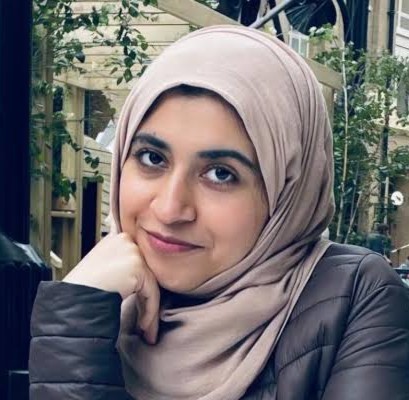
Dr Uroosa Mushtaq is a researcher in politics and international studies whose work examines political belonging, identity, intergroup relations and mistrust in conflict-affected and diasporic contexts.
Read more about eShe South Asia Union Summit 2026 here.
Discover more from eShe
Subscribe to get the latest posts sent to your email.
0 comments on “Who owns the intelligence? Tech insiders question power structures and systemic bias in AI”