
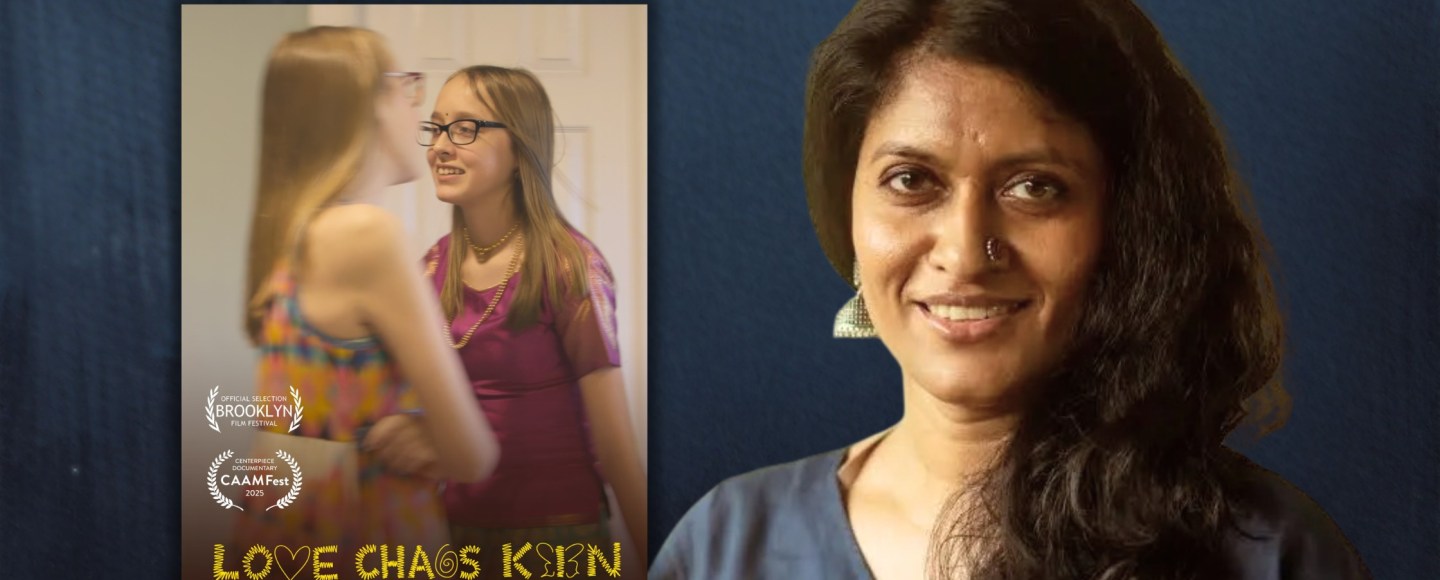

SEATTLE: Love Chaos Kin, a documentary screened at the recently concluded 52nd Seattle International Film Festival (SIFF), tells the story of a South Indian couple in Philadelphia who adopted white-presenting Navajo twins. Produced, directed, shot and edited by Indian-origin filmmaker Chithra Jeyaram, the 97-minute film follows the life of an interracial family where the adoptive parents sought to maintain real relationships with the twins’ birth parents, deliberately exposing the girls to both worlds.
SIFF screened 203 films over 11 days starting 7 May. Speaking at a pre-screening discussion on 17 May in Seattle’s Cinema Uptown, Jeyaram said that the story of Love Chaos Kin – featuring Indian immigrant couple Lakshmi and Narayanan Iyer, and their adopted twins Anjali and Cecilia – began with a personal crisis: her own divorce.
Jeyaram wanted to be a mother. Her ex did not want to be a parent. “I was at a point where I was like, I’m not really in a place to find love or find a human to go through that process,” she told the audience. Adoption seemed the answer. But she could not find a single story that looked like hers.
“I’ve been in the United States from 2001 and this is home for me,” she said. “I don’t know very many people who look like me who have adopted here.” That gap sent her on what she called a “wild goose chase” across the internet. What she found was a Huffington Post article about a South Indian couple in Philadelphia who had adopted white-presenting Navajo twins. She wrote to the author. Several weeks later, Lakshmi Iyer responded.
Getting the family to say yes took time. Lakshmi had been blogging the family’s story for years, but under fake names, protective of her husband and unable to speak for the children. Her answer was neither yes nor no. “Why don’t you come home,” she said. “If the children connect with you.”
Jeyaram arrived with a camera she did not set up. Instead, she and the children built it together. They put the lenses on, set up the microphone, and learned what everything was. By the time filming began, it was their camera too. The first footage in the film is from that day.
What Jeyaram did not yet know was that there was another mother in the picture. That first day, the children kept talking about “Mommy B”. “That’s when I knew there was more to the story,” she said. Every subsequent visit brought more. Eight years of visits, in total.
Jeyaram’s path in cinema was not straightforward. Her route into filmmaking was indirect: after a decade as a physical therapist, a failed attempt to fund a film in India pushed her toward a full career change and an MFA. She identifies as Tamil and calls both Chennai and New York City home. Through her boutique production company, Real Talkies, she has built a body of work that consistently finds the political inside the personal.
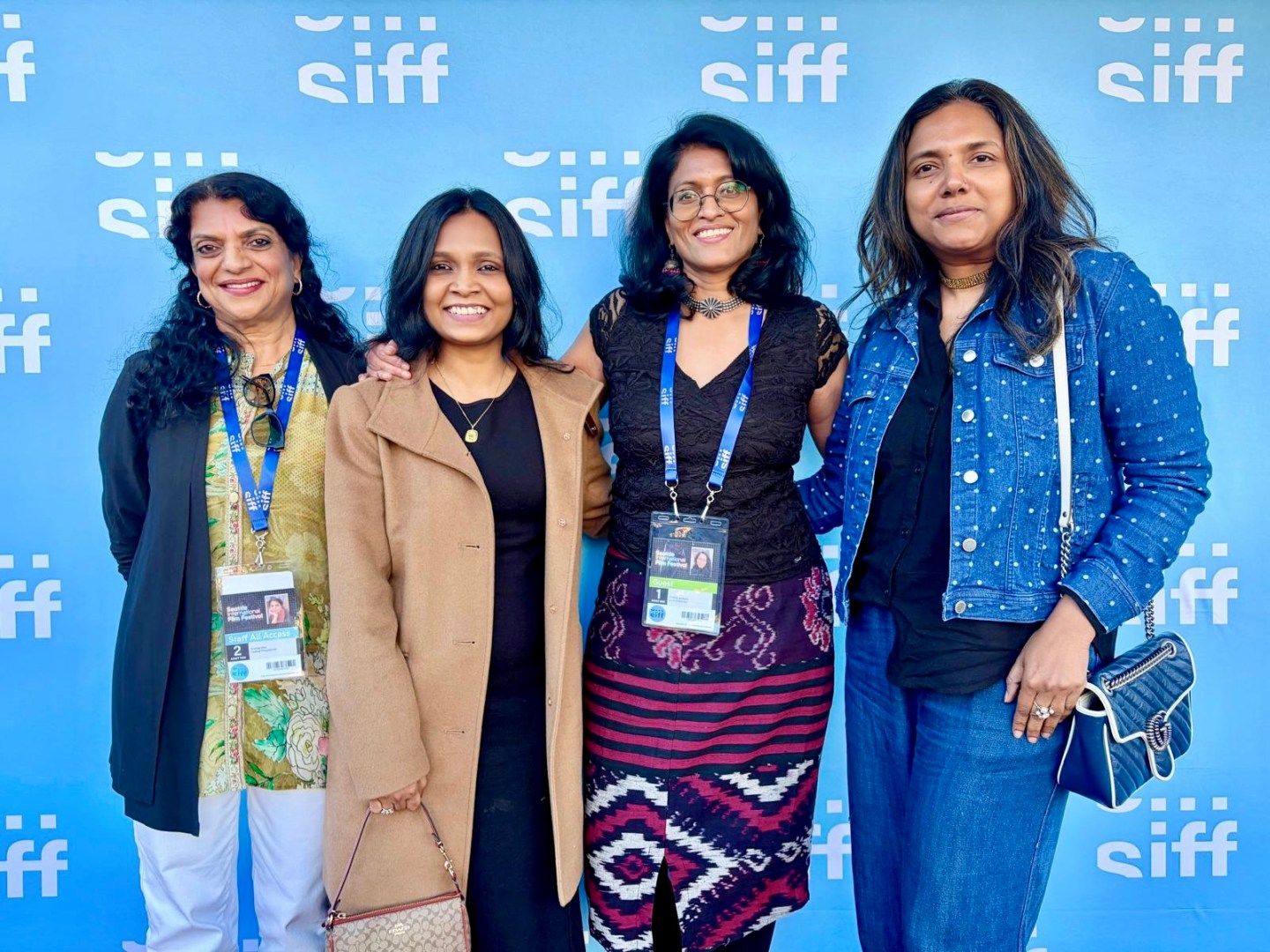
Her films reflect a consistent preoccupation with stories left out of mainstream narratives. Rags to Pads (2012) reframes menstruation as a societal issue through the story of a husband who worked to destigmatize it. Foreign Puzzle (2019) contrasts the brutality of cancer with the resilience of dance. Amma’s Pride (2024), for which she served as lead producer, champions unwavering parental support for trans people and marriage equality.
Her editing credits include Sex Work: It’s Just a Job (2025) and One Thousand and One Berber Nights (2023). She is currently writing her first screenplay, The Longest Summer.
An adjunct faculty member at NYU Tisch School of the Arts, she has taught documentary production and post-production at the Documentary Center at GWU in Washington, D.C. Her work has been supported by various prestigious fellowships and grants, and been screened on PBS, CBSN and Apple TV, besides various other international platforms.
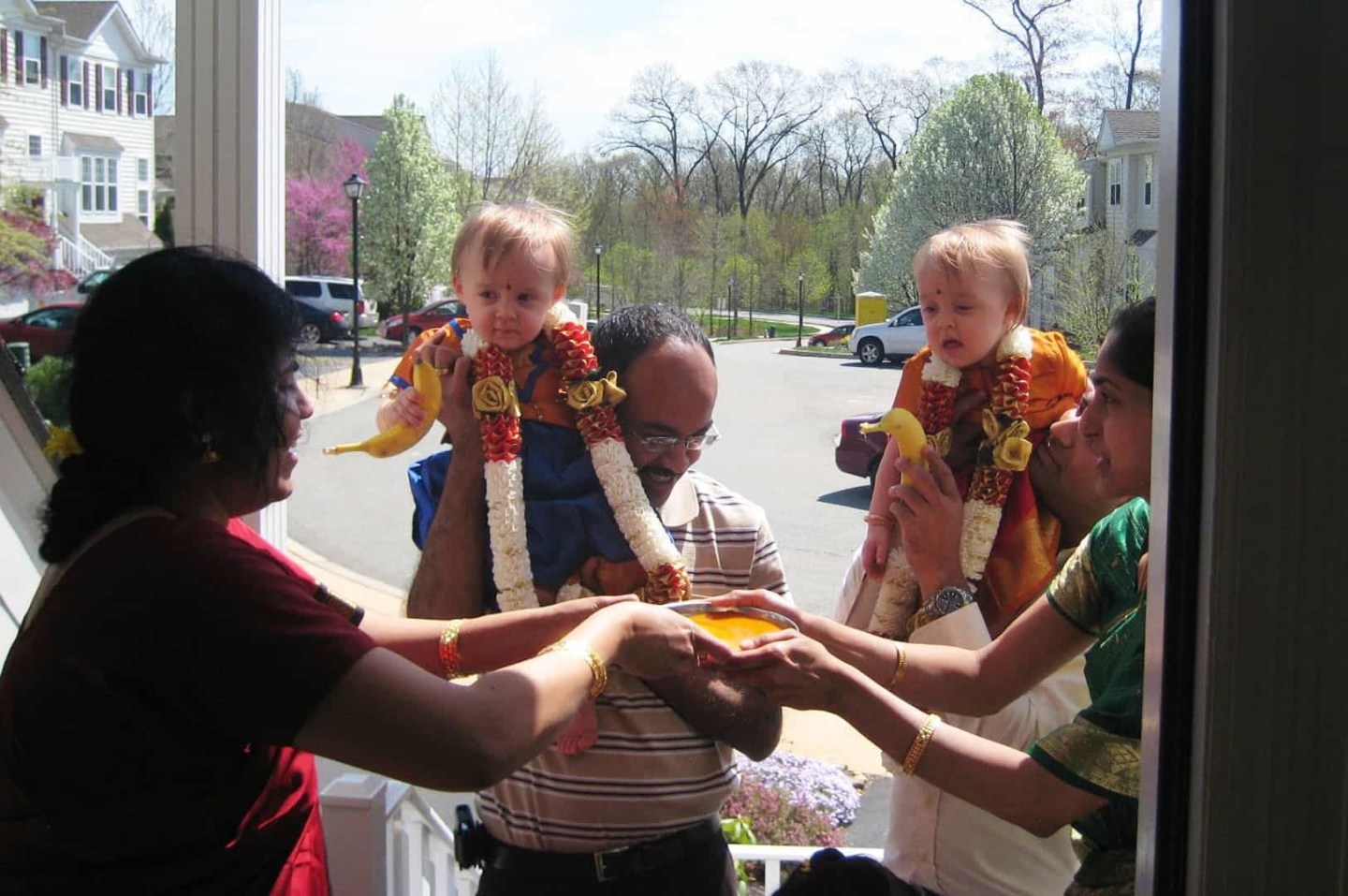
Love Chaos Kin, which first released in 2025, documents the twins’ visit to India among other milestones, tracing eight years of a family growing into itself. The twins are now 17. As Jeyaram put it: “They are not white enough, they are not brown enough, they’re not indigenous enough. They don’t fit in any of the spaces. But they are in all of those spaces.”
She paused. “It can be a bit much. But that’s a good thing.”
The family has been tracking the film’s festival run. They recently asked about holding a screening at their high school. That request is the measure of what Jeyaram built over eight years: a film the subjects want to claim.
Away from the edit suite, food is Jeyaram’s first love, and she has completed 15 marathons. Both facts feel consistent with someone who makes films the long, patient way.
Discover more from eShe
Subscribe to get the latest posts sent to your email.
0 comments on “Documentary on Indian-American couple with white-Navajo adopted twins featured at SIFF 2026”