
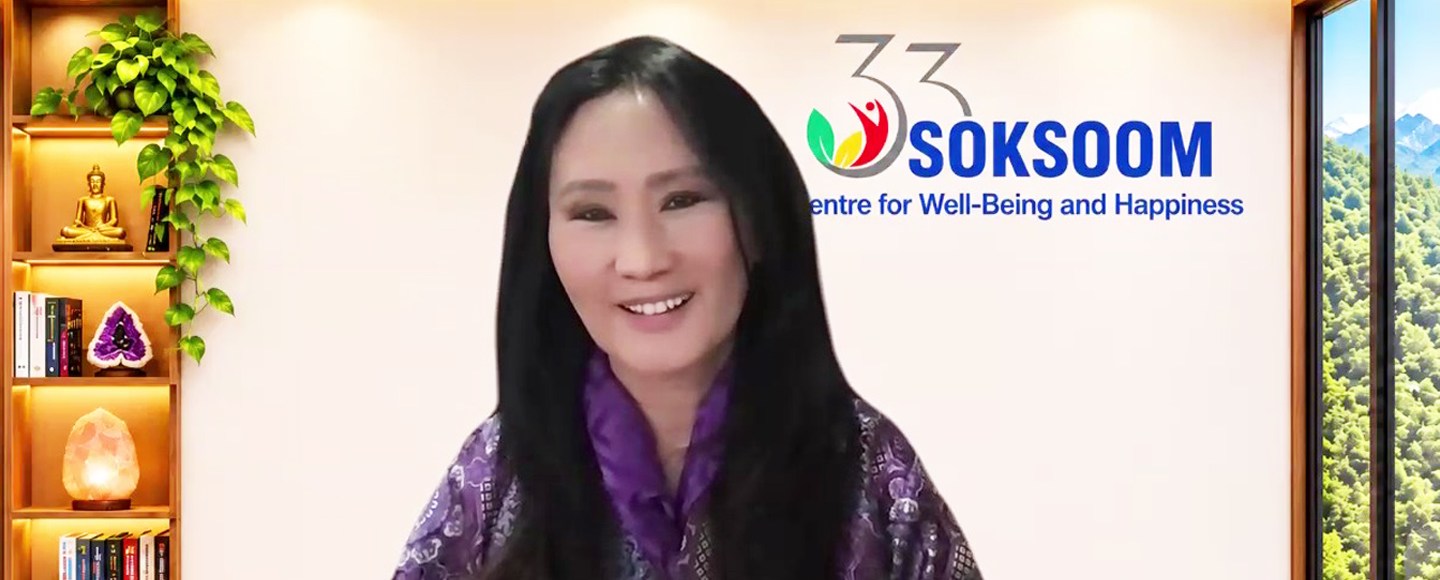

“There can be no genuine development and progress without the participation of half the population of our countries.” For pioneering Bhutanese politician Lily Wangchuk, gender equality is not merely a question of women’s rights. It is fundamental to the prosperity of nations, the quality of governance and the possibility of a more peaceful world.
Speaking as a keynote speaker at eShe South Asia Union Summit 2026, Wangchuk made a compelling case for recognizing women as equal partners in nation-building. In conversation with eShe founder and editor-in-chief Aekta Kapoor, she drew on her extraordinary personal journey to examine the barriers to women’s political leadership, the transformative potential of regional solidarity, and what the world could learn from Bhutan’s development philosophy.
A former diplomat, author and advocate for inclusive governance, Wangchuk made history in 2013 as the first woman in Bhutan to lead a political party. Her professional experience spans over three decades across diplomacy, politics, international development and civil society, including 12 years with Bhutan’s Ministry of Foreign Affairs. She also served as Assistant Resident Representative with UNDP Bhutan and Executive Director of the Bhutan Media Foundation. She is now also a transformation coach and holistic wellness practitioner.
Yet, for all her professional accomplishments, stepping into political leadership meant confronting a prejudice that transcended qualifications and experience.
“The biggest challenge for me in political leadership was being a woman,” she recalled.
Battling cancer and breaking the glass ceiling
Wangchuk acknowledged the enormous responsibility of being a trailblazer in a young democracy where political leadership had traditionally been a male domain.
“Being the first woman in Bhutan to lead a political party was not only a privilege but also a huge responsibility because I had to be very conscious about the fact that how I conduct and carry myself would shape perception about women’s leadership,” said Wangchuk, who holds a Master’s degree in public policy from the Australian National University and has written a book, Facts about Bhutan.
While crediting Bhutan’s monarchy with creating equal opportunities for women, she acknowledged that the country was not immune to sociocultural biases. Some women doubted her leadership abilities, while some men feared that a woman coming to power would result in discrimination against men.
She also spoke candidly about experiencing “sexual harassment, and unwelcome remarks, and behavior” from workers within her own political party.
“You have to work twice as hard as compared to your male counterparts to prove that you’re equally capable of effective leadership,” she said.
What makes Wangchuk’s political journey particularly remarkable is that she embarked upon it while facing a deeply personal crisis.
“You need a strong why,” she reflected. “I embraced politics when I was battling with cancer.”
Invited by a group comprising largely men to lead a political party just four months before the elections, Wangchuk was contemplating the very purpose of her existence. Having benefited from Bhutan’s free education and healthcare, she questioned whether she had given enough back to her country.
Politics, she realized, offered a platform to effect meaningful change. The pursuit of power, in her circumstances, was not about personal ambition but about public service.
Her sense of purpose, she said, gave her “the passion to stand tall in a world of men.”
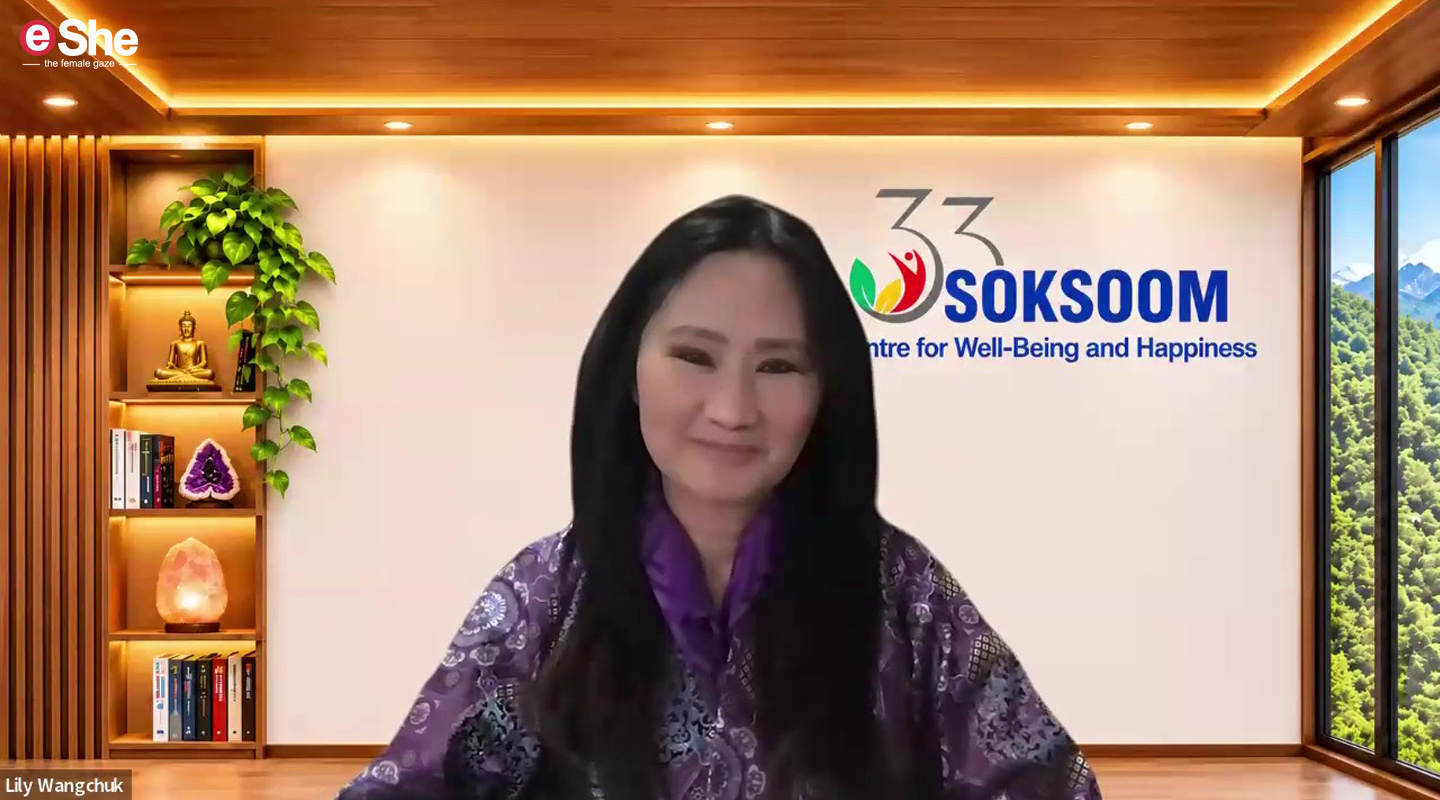
Another important lesson was that women need not wait until they feel perfectly qualified to assume leadership roles. “I just went head-on, and along the way, it was a very empowering journey,” she said.
Looking back, Wangchuk measures her political legacy not in electoral victories but in the women she inspired to enter politics and the voices of women and young people she helped amplify.
Beyond token representation in South Asia
With South Asian countries sharing historical, cultural and social experiences as well as developmental challenges, Wangchuk believes the region has much to gain from women’s greater participation in public life.
Women represent half the region’s wisdom, talent and perspectives, she pointed out. Excluding them from decision-making amounts to depriving entire nations of these intellectual and human resources.
Rather than approaching gender equality as an international development obligation, she urged policymakers to recognize its intrinsic value.
“We are not doing it for anyone. We are doing it for our women. We are doing it for our country. We are doing it for our region,” she asserted.
She called for political will, affirmative measures and a transition from gender-neutral and gender-blind governance to gender-responsive policies that acknowledge the particular structural, institutional, economic and cultural barriers women encounter.
Responding to a question from a participant Mohammad Fazil about institutional resistance to women’s leadership, Wangchuk highlighted how patriarchal political establishments sometimes perceive women as threats rather than partners.
She also drew attention to women’s disproportionate burden of unpaid domestic labor and lack of financial independence, which restrict their opportunities to participate in nation-building. “But who loses out? It’s not women and their family, it’s the nation,” she said.
Responding to another Pakistani participant, Malaika Tariq, Wangchuk recalled the double standards she confronted while earning the trust of both voters and her own party members.
Vulnerability in a woman leader, she observed, is perceived as weakness, whereas the same quality in a male leader can be interpreted as compassion. Leadership can consequently become an isolating experience for pioneering women.
What the world can learn from Bhutan
For Wangchuk, Bhutan’s philosophy of Gross National Happiness offers an alternative vision of development in a world preoccupied with economic growth.
“There is so much of emphasis on people’s happiness and wellbeing,” she said, explaining how the philosophy informs Bhutan’s policies and programs.
She highlighted the involvement of women in grassroots development committees, through which their concerns and perspectives can inform governance. Inclusive leadership, she emphasized, must extend beyond national parliaments into communities.
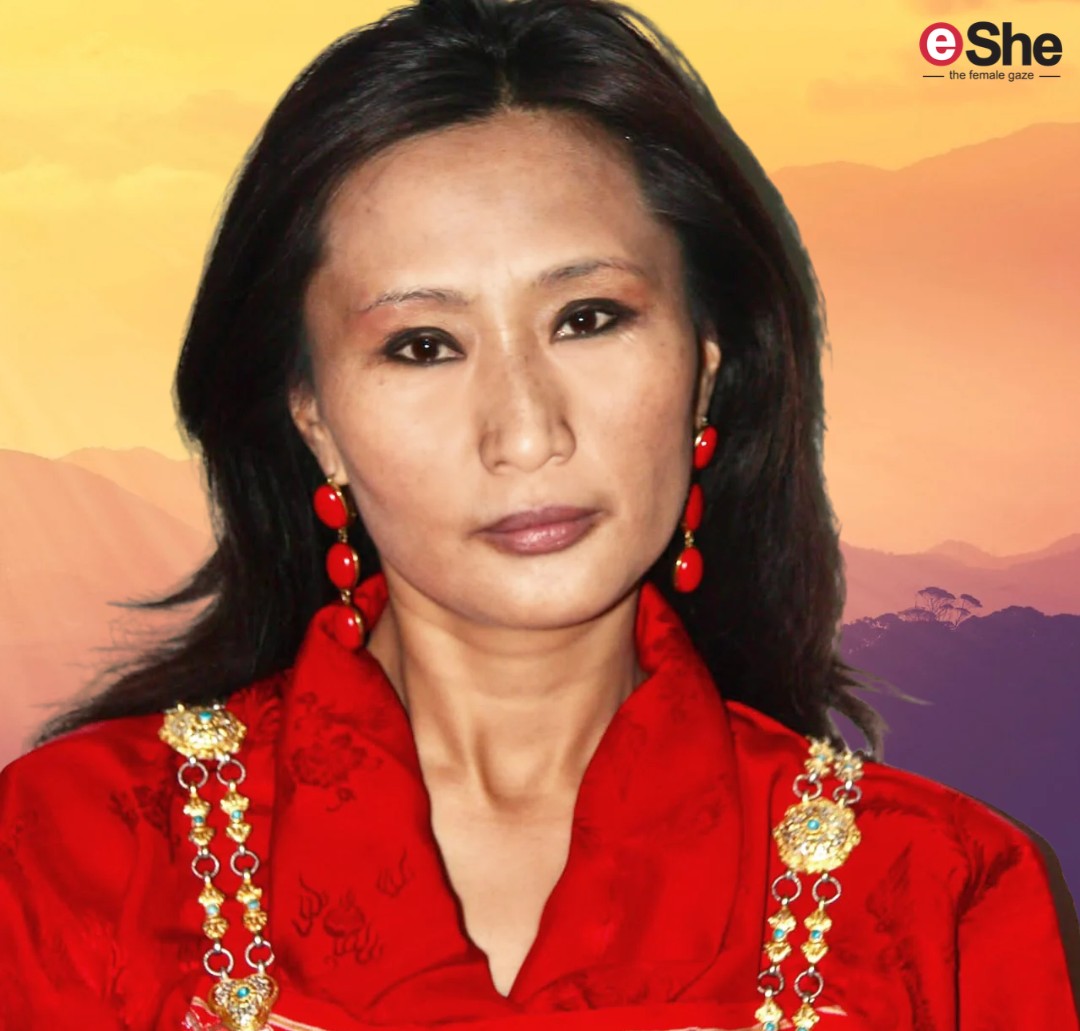
Responding to Indian participant Ritu Goyal’s question about Bhutan’s geopolitical position between India and China, Wangchuk underscored the importance of building mutual trust among neighboring countries.
She envisaged a greater role for South Asian women in advancing peace, cooperation and regional harmony, reiterating that their potential could only be fully realized by dismantling existing barriers.
Building a sisterhood across borders
One of Wangchuk’s most significant observations from her political career was the advantage men derived from their extensive professional and social networks.
She advocated stronger national and regional women’s networks, mentorship initiatives and collaboration through civil society organizations and regional institutions such as SAARC.
“Women need to support each other, and we need to be there in more visible numbers to be able to affect change,” she stated.
Asked whether she would return to active politics, Wangchuk said she remained passionate about contributing to change, although she felt the current environment was not sufficiently conducive to effective participation at the leadership level. She has kept her options open.
For the next generation of South Asian women leaders, her journey offers a powerful reminder that challenging patriarchy does not require the assurance of victory. Every woman who enters a previously inaccessible space expands the possibilities for those who follow.
“I think we need to look beyond our family,” said Wangchuk, “if you want to hand over a region and a world that is better than it is today.”
Read more about eShe South Asia Union Summit 2026 here.
Discover more from eShe
Subscribe to get the latest posts sent to your email.
0 comments on “Beyond the glass ceiling: Bhutanese leader Lily Wangchuk on gender justice in South Asia”