
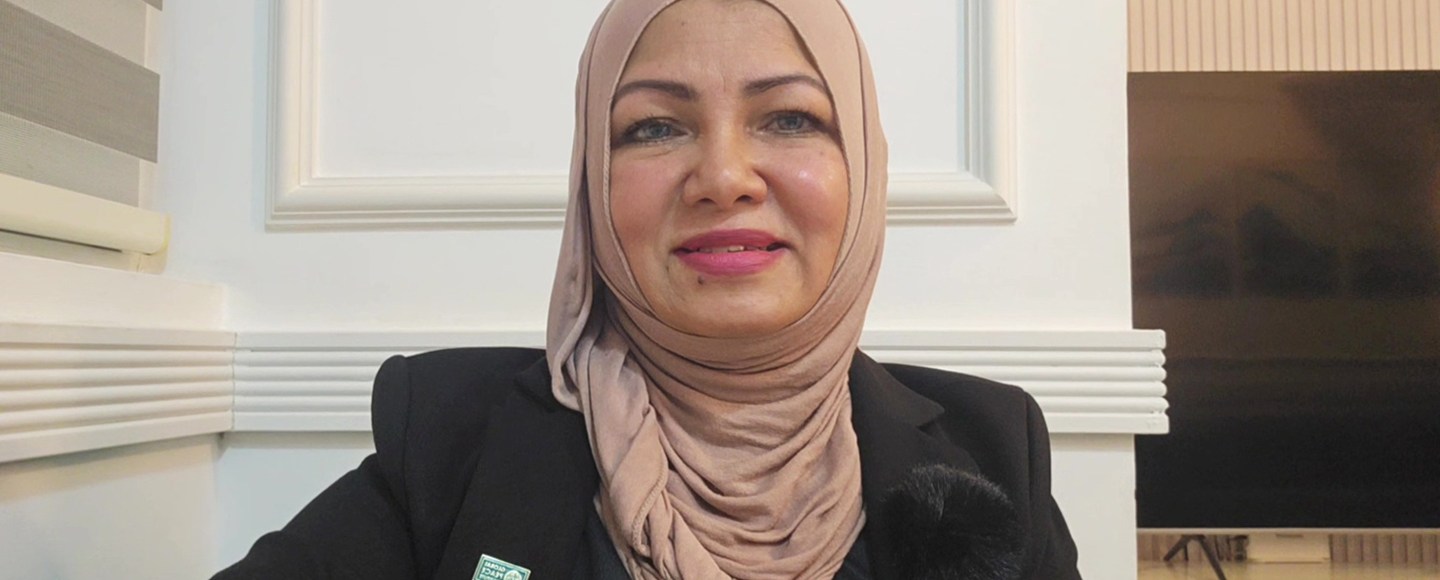

“A woman can hold a title and still not be heard. She can sit at the table and still be absent from the decisions that matter.”
With these powerful words, Maldivian political leader and former diplomat Dr Aishath Rafiyya captured one of the most persistent contradictions in the global struggle for gender equality: women may have gained access to positions of authority, but meaningful power often remains beyond their reach.
Delivering a keynote address at the eShe South Asia Union Summit 2026, Dr Rafiyya examined the progress and persistent inequalities shaping women’s lives in the Maldives, while making an impassioned appeal for greater political representation, economic independence, cross-border solidarity and opportunities for the next generation of South Asian women.
Her central message was unmistakable: women’s empowerment must move beyond legislation, symbolic representation and celebratory speeches to create tangible changes in everyday lives.
“Are our daughters growing up in a better world than our mothers did?” she asked. Her answer was yes. But was that world good enough? “Not yet.”
A pioneering voice from the Maldives
Dr Rafiyya brings more than two decades of experience in governance, international affairs and strategic leadership. She holds a doctorate in politics and international relations and made history as the first woman elected vice president of a political party in the Maldives.
Currently the chief executive officer of the Global Peace Institute, London, and editor-in-chief of Impact Legacy magazine, she focuses on geopolitics, small-state sovereignty, preventive peace, and global and digital governance. Her contributions have earned national and international recognition, including the University of East London Alumni Changemaker Award.
Yet, despite these accomplishments, Dr Rafiyya chose to introduce herself to the summit audience through three deeply personal identities: daughter, mother and someone who has spent much of her life working alongside women and young people.
Growing up in the Maldives, she witnessed how geography and economic circumstances determined educational opportunities. For many young people scattered across the Indian Ocean archipelago, pursuing higher education meant leaving their islands, sometimes even their country. Today, Maldivian women are doctors, lawyers, researchers, politicians, entrepreneurs, judges, ministers and diplomats.
Dr Rafiyya herself began her career in banking before moving into diplomacy, politics, business and leadership. “I have been given opportunities that many women of my mother’s generation could scarcely have imagined,” she reflected.
But her journey also taught her that opportunities do not reach everyone equally.
Educated women, unequal opportunities
One of the most striking contradictions highlighted in her address was the gap between women’s educational achievements and their economic participation.
According to figures she cited, approximately 99 percent of young Maldivians are literate. Yet women’s employment stands at just 43 percent, compared with 73 percent for men.
“We have succeeded in educating our daughters. No question about it. But we have not yet succeeded in allowing them to use that education,” she declared.
For Dr Rafiyya, this disparity raises fundamental questions about the meaning of progress.
“What is the value of opening the school door if the door to opportunities remains half closed?”
Education, she argued, must translate into meaningful employment, financial independence, entrepreneurship and the freedom to make personal decisions. “Education should give a woman more than a certificate. It should give her the choices and the right to exercise her choices,” she said.
Her argument resonates across South Asia, where women’s educational achievements have not always translated into equal access to employment, economic resources or leadership.
When laws change faster than women’s lives
Beyond its idyllic reputation as a honeymoon destination, the Maldives has complex social realities, including historically high divorce rates.
Dr Rafiyya acknowledged the country’s important legal reforms: the Family Act of 2000, domestic violence legislation in 2012, laws addressing sexual harassment and abuse in 2014, the Gender Equality Act of 2016, and reforms establishing 18 as the minimum marriage age without exception in 2020.
Nevertheless, she cautioned against confusing legislative progress with lived equality: “A law can change in a single day. And a woman’s life may take years to change.”
She questioned whether women experiencing difficult marriages could afford legal assistance, access support systems or independently provide for their children. Citing the 2022 census, she noted that approximately 10 percent of Maldivian women aged 15 and above were divorced, compared with around seven percent of men.
Importantly, she challenged the stigma surrounding divorce. “I do not believe divorce should always be seen as a failure. Sometimes ending a marriage is the safest and the healthiest choice,” she said. For her, strong families cannot be sustained through women’s silence or sacrifice alone.
“Strong families are built on respect, on kindness, and on fairness, not in silence, not on fear, and never on one person carrying all the burden.”
Changing the rules
Perhaps the most compelling evidence of how structural reforms can transform women’s political representation came from the Maldives’ local government elections.
Women occupied approximately six percent of local council seats during the term beginning in 2017. Following legislation reserving at least one-third of council seats for women, their representation rose to nearly 40 percent after the 2021 elections.
“When we change the rules, we change who has the chance to lead.”
However, the contrast with national politics remains stark. In the 2024 parliamentary elections, only three women were elected to the 93-member legislature, representing approximately three percent of parliament.
“Are women less capable of leading a nation than leading a council? Of course not,” she asserted. The problem, she explained, lies in access to campaign financing, party backing, political networks and opportunities to exercise authority.
Women also face disproportionate public scrutiny and pressures that their male counterparts frequently escape. “It is not enough to encourage women to enter politics. We must also create the conditions for them to succeed,” she emphasized.
Her message offered a crucial feminist distinction: representation is necessary, but it must be accompanied by genuine decision-making power.
Leadership means opening doors for others
Reflecting on her professional journey, Dr Rafiyya shared how banking taught her discipline, diplomacy taught her listening, and business and public life demanded courage.
During her diplomatic service in Bangladesh, she discovered the importance of understanding different perspectives. She also spoke about mentoring young people through programs connected with the University of Cambridge and the New York Academy of Sciences.
“If life has opened a door for us, we must never close it. We must hold it open for the next person.”
Motherhood strengthened this conviction for her. “I want my daughters to have the freedom to make their own choices. I want my sons to understand that respecting women is not a favor. It is a responsibility,” she said.
Her reminder that “we must also raise our sons differently” placed responsibility for gender equality on society as a whole.
A South Asian sisterhood beyond borders
Turning to regional cooperation, Dr Rafiyya observed that young women across South Asia often share similar aspirations: mentors, markets, opportunities and a voice in decisions affecting their futures.
She acknowledged the severe restrictions facing women and girls in Afghanistan while urging women across the region to strengthen their connections despite national differences.
“The future of South Asian cooperation cannot belong to governments alone,” she said. “It must belong to people, to women, to students, to researchers, to entrepreneurs and business leaders.”
She challenged participants to move beyond conferences and commitments by taking practical action. “Before end of this month, make one introduction, offer one hour of mentoring or open one door for a woman who does not have one,” she urged.
For an island nation such as the Maldives, she also identified enormous opportunities in artificial intelligence, digital entrepreneurship and remote work. Technology could allow women on remote islands to build international businesses without leaving home, provided they had access to education, infrastructure and support.
But she warned against allowing technological progress to create new inequalities: “Women should not simply live in the decisions that others make for us. Women should help make those decisions.”
The unfinished business of equality
Dr Rafiyya’s address offered South Asia a powerful lesson from the Maldives: meaningful progress requires both institutional reform and sustained individual action.
The country’s achievements in female literacy, legal protections and local political representation demonstrate what is possible. Its persistent inequalities in employment and national leadership reveal how much remains unfinished.
“We cannot change the past our mothers lived through. But today together we can shape the future our daughters will inherit,” she concluded.
And perhaps her most enduring message was that the true measure of leadership lies not in titles or awards, but in the lives transformed along the way: “Let us do more than celebrate successful women. Let us help more women to succeed. Let us do more than speak about equal opportunity. Let us create it.”
For women across South Asia, it is both a challenge and an invitation: to claim their rightful place in shaping the future, and to ensure that other women can follow.
Read more about eShe South Asia Union Summit 2026 here.
Discover more from eShe
Subscribe to get the latest posts sent to your email.
0 comments on “Unfinished revolution: Dr Aishath Rafiyya on women’s leadership in the Maldives”