


By Chaitra Vedullapalli
SEATTLE: One Tuesday afternoon, a Fortune 500 procurement leader called me to say he had shortlisted vendors for a cloud transformation engagement worth more than $1 million. As a technology entrepreneur in Seattle who’d worked for years building exactly the kind of solution they were seeking, I knew I was in a good position. I had spent months building the relationship, our pricing was competitive, and my team carried the exact certifications their compliance process required.
We had the experience, the readiness and the capability to deliver. I genuinely believed we had earned a seat at the table.
But then the buyer told me we didn’t make the final cut.
When I asked why, he paused and then answered, “Chaitra, your company is not visible inside our buying system. You aren’t showing up in the marketplace. You didn’t have a co-sell agreement activated. We trust certain procurement pathways and you are not embedded into them. Your company never surfaced during our vendor screening process.”
Imagine that. I had built something genuinely excellent and the buyer never found it.

That conversation changed what I understood about the gender imbalance problem in technology enterprise. I had spent years believing that the gap facing women founders was primarily about confidence, or networks, or capital. Believe me, those gaps are real.
But that Tuesday, I understood something more structural. The buying process had moved, but my company’s go-to-market (GTM) model hadn’t moved with it. And I wasn’t the only female entrepreneur in this boat.
What I experienced that afternoon, multiplied across millions of women-led businesses worldwide, represents one of the most significant and underreported market failures in the global economy.
The numbers are staggering and deliberately specific. Women entrepreneurs currently receive just 1 percent of an $11 trillion global public procurement market. Less than 2 percent of venture capital flows to women-led companies. By the end of this year, women founders will lose access to an estimated 70 to 90 percent of the deals they should be competing for, not because their products aren’t good enough, but because modern enterprise buyers never see them in the first place.
Gartner research tells us that 70 to 80 percent of the B2B buyer journey is now complete before a vendor is ever contacted. Buyers build their shortlists using AI-powered procurement tools that filter by verified ecosystem credentials, marketplace listings, co-sell certifications, structured data profiles. Companies without that infrastructure don’t appear in the lists at all.
Women-led companies are underrepresented in every one of those systems: on the AWS Marketplace, on Salesforce AppExchange, in Microsoft’s co-sell programs, in the supplier diversity registries that feed enterprise procurement decisions. The market is discriminating by design and AI is accelerating the exclusion faster than most people realize.
The economic consequence of this structural failure is $5 trillion in unrealized GDP. But here is the number that should arrest every chief economist, every institutional investor, every policymaker reading this: for every $1 invested in the infrastructure that removes these gender-based barriers, economies receive $3.76 in return. This is not a good social argument. It is the most underfunded infrastructure arbitrage opportunity in global economics.
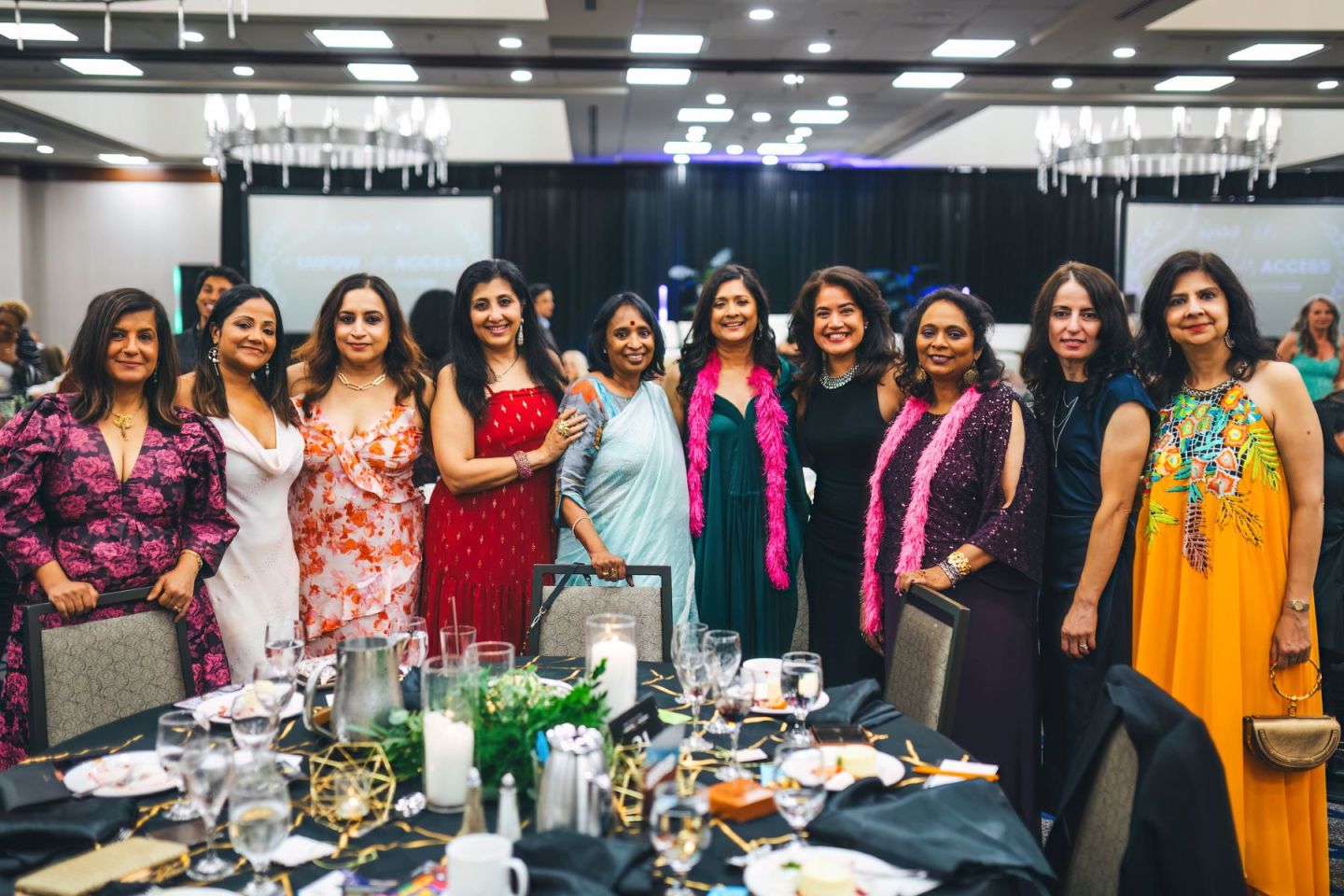
Six years ago, I founded Women in Cloud from Seattle with a single conviction: that economic access is an infrastructure problem, and infrastructure problems have infrastructure solutions.
We did not build a mentorship program. We built a GTM engine. Through AI certifications, cloud training, B2B accelerators, hyperscaler partnerships, and coordinated ecosystem access, Women in Cloud has so far unlocked $600 million in documented economic access for a community of 150,000 women across 120 countries.
We distributed 7,000 free and subsidized cloud, cybersecurity and AI industry certifications. We placed founders into Microsoft, AWS, and Google Cloud partner programs. We held the Guinness World Record for the most vision boards created simultaneously because collective belief, it turns out, is also infrastructure.
The scoreboard is real. But it is 60 percent of the way to where it needs to go.
This May, we launched #FoundHerWorld, a global founder spotlight, offers distribution and AI readiness campaigns designed to move women founders from invisible to partnership-ready. Working with 10 communities across three continents, we will spotlight 250 founders through a coordinated launch reaching 10 million people simultaneously.
Each founder receives a public spotlight profile, a revenue opportunity map, and an AI readiness score assets she carries into every investor conversation, every enterprise pitch, every hyperscaler application for the rest of her career.
It is designed as a new layer of infrastructure, built specifically for the market that exists today. The five-year target is unambiguous: 100,000 women Cyber and AI certified, 5,000 founders go-to-market ready and embedded in the hyperscaler ecosystems that will define category leadership for the next decade, and $1 billion in total economic access unlocked.
The window to act is not theoretical. It is measured in months.
AI is consolidating enterprise procurement around a small set of pre-qualified, ecosystem-verified vendors right now. Gartner projects that by Q4 of this year, more than 70 percent of enterprise deals in major technology categories will be influenced by hyperscaler ecosystems and partner programs. The founders who enter the verified consideration set in the next 12 to 18 months will define who leads those categories for the following decade. The founders who don’t won’t.
I built Women in Cloud because I understood viscerally, on a Tuesday afternoon six years ago, that the problem is not the founder. The problem is the system she is trying to sell into a system that was never designed to surface her, and that is now being rebuilt around algorithms that will, by default, exclude her further unless we act deliberately and act now.
The trillion-dollar economy that women founders should be leading is not guaranteed. It is constructed company by company, ecosystem credential by ecosystem credential, coordinated launch by coordinated launch.
We are building it. And we are inviting the world to build it with us.

Chaitra Vedullapalli is founder and president of Women in Cloud, a Seattle-based organization driving the $1 billion economic access movement for women in the AI-powered economy. #FoundHerWorld launched 12 May 2026. Learn more at womenincloud.com.
Take the pledge to enable the success of women tech entrepreneurs.
eShe is a community partner for Women in Cloud, and a founding partner for the #FoundHerWorld Global Campaign.
Discover more from eShe
Subscribe to get the latest posts sent to your email.
0 comments on “A global #FoundHerWorld experiment to drive economic access for women tech founders”