
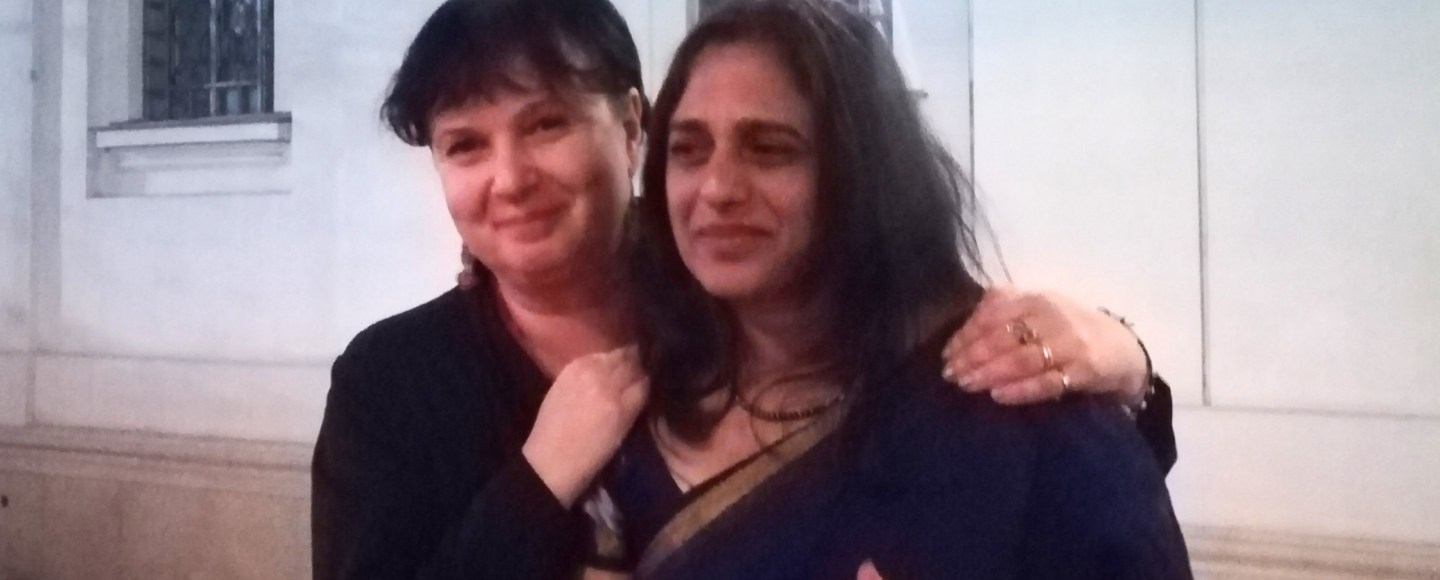

In 2019, Usha Akella, an Austin-based Indian-American poet, traveled to Bucharest, Romania, to attend an international poetry festival. Through a series of happy connections there, she met prominent Romanian poet, essayist, novelist, and literary critic Ruxandra Cesereanu and gifted her a copy of her book of poetry, The Rosary of Latitudes (2016).
There began an unusual friendship that led to an intercontinental exchange of poetry in the backdrop of momentous global events like Covid and the Ukraine war. This year, their poems have been published in a first-of-its-kind poetry collection titled Ants & Lotus (Kelsay Books, 2026), “a triumph of friendship and poetry” as the introduction says.
The arrangement of poems is evocative of the age-old jugalbandi format – a Hindi term literally translating to “duet” or “entwined twins” – used in Indian classical music for a collaborative, often playful, call-and-response performance between two solo musicians or singers.
In the case of Ants & Lotus, the poems move from light-heartedness to take on greater gravitas amidst personal loss and underlying themes of patriarchy, postcolonial geopolitics, religion, freedom and grief.
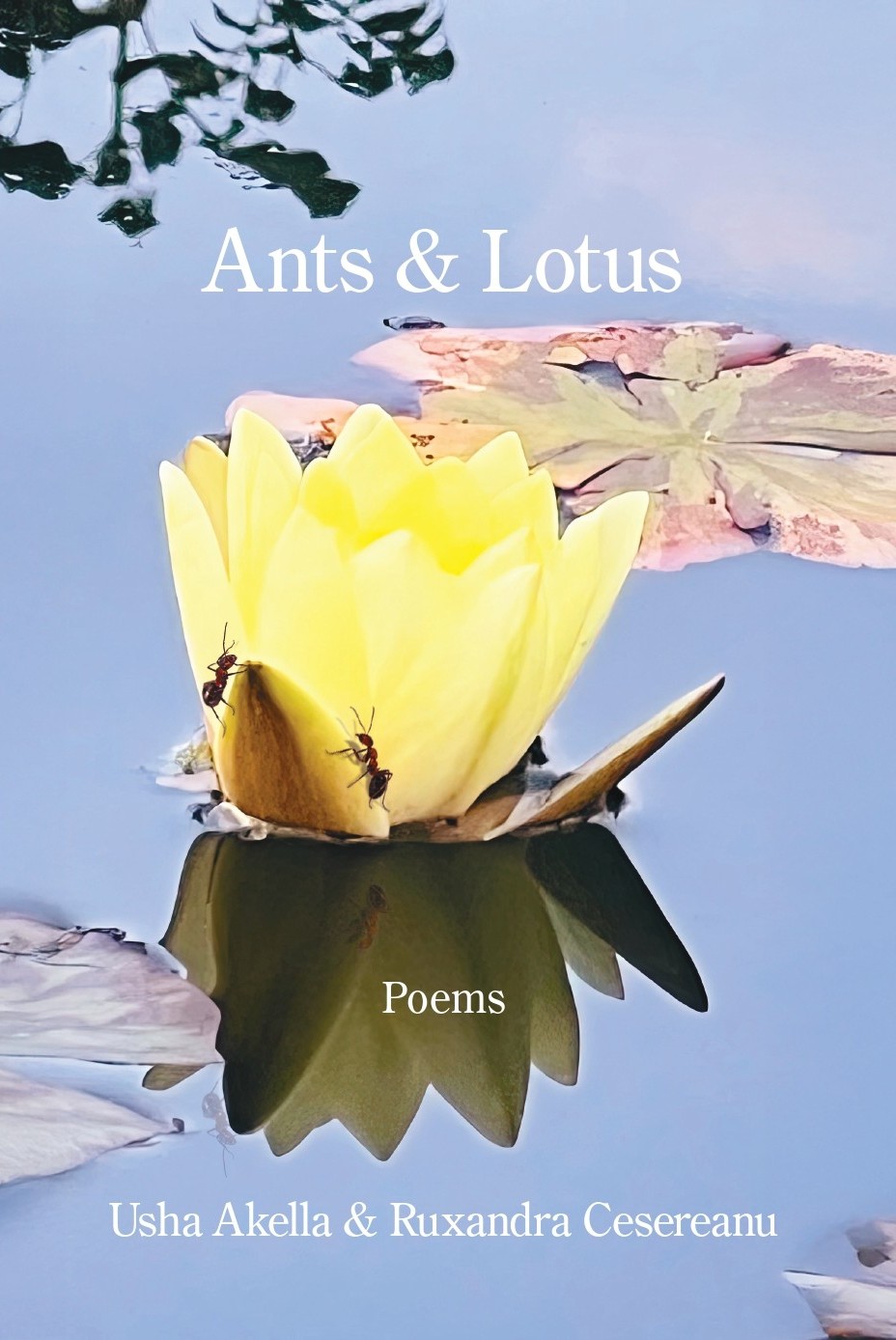
Written between 2019 and 2022, the poems are both tender and unsparing, looking both inward at social conditioning and outward at political realities. Their intimate juxtaposition – with each poem sowing the seed of the next – opens up new possibilities for literature.
As Andrei Codrescu, poet, novelist and winner of the Peabody Award and Pushcart Prize, suggests in the book blurb, “This could be the first in a series of collaboration between poets from different cultures breaching the walls of the imperial language.”
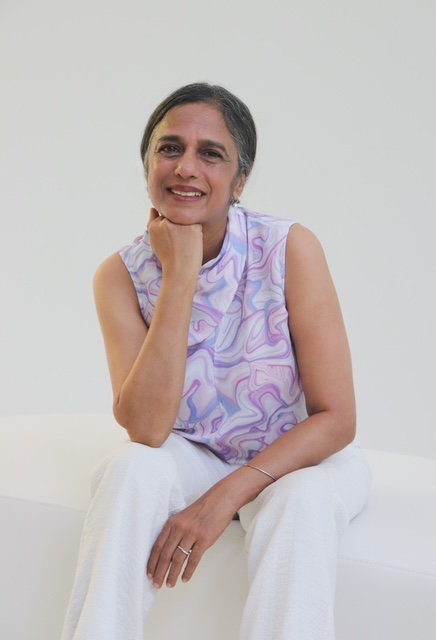
Raised in Hyderabad, India, Usha Akella is the founder of the Matwaala, a festival dedicated to amplifying the visibility of South Asian diaspora poets in the US, and the Poetry Caravan, which takes poetry readings to the disadvantaged in New York and Austin. She is co-host of the-pov.com, and her poetry has been published in over 150 journals and anthologies.
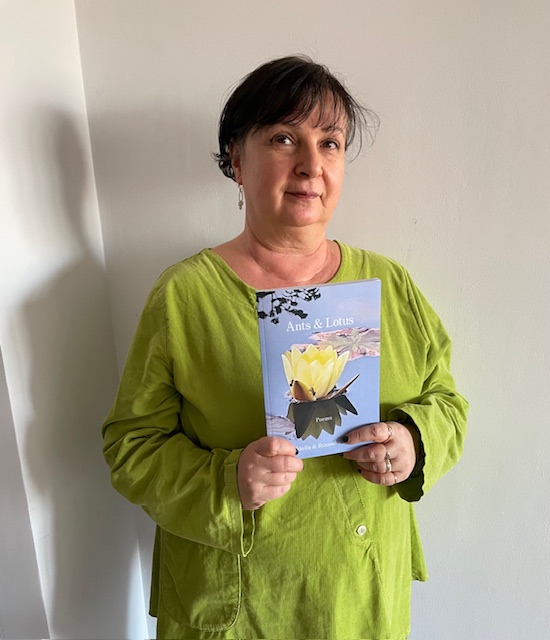
One of the most important contemporary Romanian writers, Ruxandra Cesereanu’s poems and novels have been widely translated and have won a number of literary honors. She is a professor in the Department of Comparative Literature at Babeş-Bolyai University.
I reached out to both poets for their thoughts on the process and outcome. Read on for an exclusive excerpt from the poetry collection.
eShe: What did this writing process mean to you and how did it change you?
Usha Akella: The writing process began with the urge to explore another’s creative psyche. I didn’t know much about Romanian poetry at that point. Throughout my writing life I’ve thrived on initiating community projects, and partnerships. When we began, I envisioned three pairs of poets but finally only Ruxandra and I chugged ahead.
We started with no agenda, and I think in some sense my favorite part of the journey was those initial long-distance exchanges – from a semantic exploration of names to gradually warming up to various themes along with a blossoming friendship.
One grows through any writerly journey. But this was a first for me – an intriguing writing project happening through a call-and-response method via email that required a different kind of alertness. The poems had to interact with each other like an ekphrastic response framed by another poem yet taking flight from it.
The poems and process became mirrors to view myself as we navigated through massive global occurrences and other personal tumults. In retrospect, the book seems a miracle. This sort of experiment has not happened between a Romanian and Indian poet. And indeed, strengthens the conviction that poetry is a ground of hope in a splintering world.
Ruxandra Cesereanu: It was fascinating to understand Usha’s poetic universe, which was different from my own. Usha is a more hermetic poet than I am – even more conceptual, I would say. It was an experience to read and learn about a different kind of poetry than the one I write. At the same time, it was a unique poetic communion and exchange through the themes we chose and the fact that, as poets, we adapted to one another – even though we are different – and tried to find a connection somehow, while still maintaining our own identities.
When we wrote together in English, I only got to know half of Usha’s poetic self. It was only when her work was translated into Romanian by Călina Părău, and I reviewed and polished the translation, that I truly and fully entered Usha’s poetic universe. It was then that I was able to read her work and delve deeper into it in my native language, Romanian.

eShe: What was your feeling on seeing the final result put together in a book?
Usha Akella: The birth of any book is a profound feeling. But this book as an interactive book stands as a testimonial to the hearts of both poets invested in poetry, and its possibilities of creating dialogue.
Ruxandra Cesereanu: I was glad that this book came into being like a wild lotus. The poetic lake in which we wrote was both disciplined and wild. We are both lucid poets, but at the same time we have a touch of madness within us, a frankness in saying things (or complicating them), a desire to understand the world and, at the same time, ourselves. This was essential.
eShe: What are your thoughts in retrospect about the timing of the project – during which the world went through a pandemic and Ruxandra lost her mother? How did these events affect the trajectory of the combined work?
Usha Akella: I think a deepening current and tenor began to move the poems with an existential tremor – personal loss is an earthquake in the psyche. And the loss of lives globally and forced isolation was shaking the world, awakening us to humanity’s purpose. It was a very dramatic time, and the mood began to seep into the curve of the poems. I say ‘seep’ because the writing was unthemed and intuitive, the poems were vessels of symbiosis.
Ruxandra Cesereanu: What happened in the world and what happened to each of us was significant both externally and internally. On the one hand, the world had fallen ill with a fatal disease (which lasted two years and still has consequences today); on the other hand, I, at least, experienced the greatest loss of my life so far and came to understand what death, grief, and loneliness in the face of grief are.
What is truly unique is that I was unable to write (poetry) about the loss of my mother in Romanian, but only in English, in a sort of lyrical epistle to Usha. It was as if I was reluctant to open up in my native language, because I found a “screen language” that could express my pain in a more discreet and enigmatic way. It is strange – and even worthy of psychoanalysis – that my poems about mourning could only be written in English, not in Romanian.
It is, however, not at all unusual that both Usha and I were deeply troubled by the war in Ukraine and the Russian aggression, writing poems about it. Usha from afar (since America is far from Ukraine), and I, up close, since Romania shares a border with Ukraine. We were both witnesses to an act of tyranny, and we wanted to bear witness to it.
Between Us (June 6, 2020)
Usha Akella, Ants & Lotus
(We open
days like the words of a lullaby
hours like pillows
night like a cradle
a deep sleep overtakes our poems
meanwhile
a country is dismembering itself
pressing its knee into its conscience
I will mail you this country as a letter
read it, tell me what it means
in your language
here, I will grapple
with its foreign alphabet
with the hot embrace of summer heat
and flakes of cockroach wings, sweeping
their mute bodies & needle-thin antlers
spot fluffs of white and black flashing
as racoons skulk in the orange night
and an overtime light undulates gaudily
on the walls do you hear our marches
in the snail of your ear?
Our children have been returned to our nests
no one understands the horoscope of the weather.
As I ponder the value of a comma against a period
uppercase vs lower—Allen Ginsberg is walking naked
in the capital with Kali by his side—
he unlocked the lockdown—followed
by plangent breath in the ventilators of masked-
marches—the air hemorrhages in cities—someone is
tuning the earth—resetting its chromosomes—people
pour into the streets—like oil from a canister—
streets like wicks, inflammable—
the brackets contain footnote-histories
—uncuffed lynched
men are removing their nooses—
and a black rage burns hot white.
I am neither black or white
I am the color of uneasy peace
I am like a window pane between two realities
in this eternal osmosis for home
to the US: I return the credit card for borrowed time,
to India: my ashes, and ask the stars for another map.
and close
a bracket of us)
Windows and Doors (July 10, 2020)
Ruxandra Cesereanu, Ants & Lotus
Staying in one of my mother gowns, thinking it could be an immortal skin
and listening to Messiah of Händel so as to sweeten the sorrow.
Then reading your poem, your translucid letter, smelling your words.
Hallelujah! Hallelujah! Hallelujah! Hallelujah! Hallelujaaaaah!
The world is in iced flames and the personal ache is now just a zero.
I am white but I could be a black, red, yellow
or without a color, without a flag.
Not just a country, but the earth is slowly dismembering,
and the fringe are hanging near the rotten seams of melancholia.
Remember this prophet from half a century:
I saw the best minds of my generation destroyed by madness, starving hysterical naked,
these words are still pungent.
If India could be a Jerusalem and Jerusalem could be any other metropolis,
if cities, streets, mankind could change their ventricles.
This summer is not for time out, but for deep dream generator marches.
The carnival is not in Venice or Rio de Janeiro, but suspended or maybe perverted,
as the masks entered into the faces.
To think until the ashes, to be ready for a little Nirvana starting with ashes,
to be an astral ash one day.
Listen more to the prophet:
angel headed hipsters burning for the ancient heavenly connection to the starry dynamo in the machinery of night
We can be windows, we can be doors, always open.
We are the air, the breathing.
Poetry is the only way.
No maps, no servitudes, just transparence without any amoeba.
Reproduced with permission from Kelsay Books, Utah, USA
Discover more from eShe
Subscribe to get the latest posts sent to your email.
0 comments on “An Indian-American, a Romanian, and a poetic parley on histories, politics and hopes”