
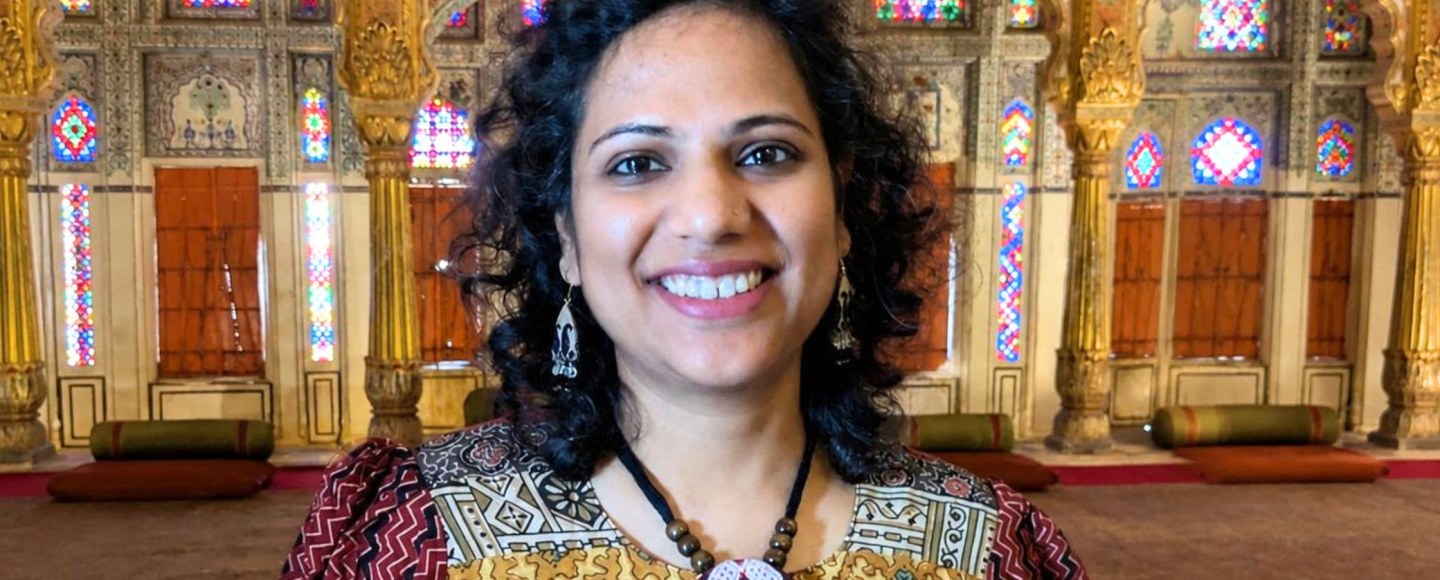

By Nikita Gupta
I am always both eager and afraid to talk about my childfree life. Eager, because every time I talk about it, I realise how content I am with my choice. Afraid, of being misunderstood and hurting people close to me – my parents, cousins with children, friends who want children and even those who don’t.
I don’t identify with my “childfreeness” as a movement. I don’t even know if I like the term ‘childfree’. Of course, it’s better than “childless”. But it’s also similar to car-free. While I understand seeing a car as a burden curtailing your freedom, children are not tradeable cars. Some people find it liberating to have and raise kids.
Do I seem to be making a case for having children? I guess I am just trying to say that freedom, happiness, fulfilment and love are such subjective values! You may find them in a life with children, and I, in a life without.
I would be lying if I said my choice does not boggle me at times. I do not feel that “innate desire” to have a child, that evolutionary reproductive instinct experts say is hardwired in the human brain. A friend of mine who feels the same used to google if there was something wrong with her. Thankfully, my feminism taught me early on to be more comfortable in my desire-less(or free)-ness.
I have also wondered if I am simply scared – my go-to response to new, even mildly challenging things. I sat on a roller coaster last month, and I was terrified. But there was a voice deep, deep, deep inside me that was excited despite the looming threat of a vomit rain.
When I decided to pursue a Masters from the UK (“and leave my husband behind” in India) last year, I was beyond overwhelmed. But, again, there was a small, small, small nudge that informed me of being thrilled and even proud of this “unusual” decision.
So I would like to think that: A) I have instincts. B) I can do stuff even when scared.
It is simply the wish to have an “issue” that I lack.
Random aunty on the train: Are you married?
Me: Yes
Aunty: Issue?
Me: Huh?
Aunty: (gesture of cradling a baby) Issue, issue?
Me: (returning to my book) No, Aunty. No issues at all.
My relatives share Aunty’s spurned look on being treated like her. “Beta! Ek bachcha to hona hi chahiye (you should have one child, at least).” This one dialogue is the distillation of all the parenthood advice – incognito pressure – I have been given by my parents, relatives and relatives’ relatives.
And what about my social-media “friends”? “I experienced selfless/unconditional love only when I became your mother, my precious baby. Happy [RANGE: one to 11] month(s)!”
If I had a penny for every time I read such posts since my late 20s, I would still be confused. Rich, but confused. Do we glimpse unconditional love only in a parent-child relationship? Is parent-child love always selfless? Am I simply hallucinating these people talking about parenthood fatigue and childhood traumas in therapy?
To me, love is a rainbow of moments, selfish and selfless. Ayn Rand points out that even in the generous declaration “I love you”, the “I” comes first. Besides, selfishness isn’t necessarily bad, and selflessness not necessarily good. Rejecting the selfishness in parent-child love thus seems to me a myopic, self-preserving act of glorifying one’s choice.
Neighbour: Do you have children?
Me: No
Neighbour: Are your parents okay with this? Do they not object to this?
As dreamy 20-somethings, my friends and I often visualised our future family lives. My dreamy picture showed me reading in our home garden while my partner looked lovingly at me from the terrace of our single-storey home. It was a complete, expansive moment – a full nest.
It did not occur to me that people could view this postcard picture as the hallmark of emptiness. The troubling part is that some of these people are my very own. I don’t want to hurt them by saying we can be empty and lonely even when surrounded by family. Children are not void-filling tools.
And how can the word gender not be present in a discussion about parenthood? I perhaps risk accusations of “These feminists make everything about gender.” But parenthood can be so strongly tied to biological and gender roles that it would be foolish to ignore them. Besides, yes, I am an incorrigible feminist.
25-year-old me to my then-boyfriend-now-spouse: I am not sure about having kids.
Him: Umm… I am not sure, either.
Me: I mean, I may think of adopting someday, but I don’t see myself having biological children.
Him: I understand. Your body, your choice.
I remember being stumped by his answer. I came from a family where my mother gave out numerous incredulous gasps at the idea of her daughter discussing NOT having children with a potential husband. And a potential husband had just reaffirmed her daughter’s feminism. On checking my reaction, I realised how “given” it is for a woman in our society to have children… that a man stating that she has a choice leaves her stumped.
And even though my data points are limited, many of my female friends share that they didn’t want to have a biological child or have one so early, but since their husbands did, they decided to go along. They assert that it turned out to be one of their best life decisions and encourage me to take the leap.
I am happy for them, but I don’t see myself going along with someone in a body-brain-life-altering decision. Better safe than sorry. Besides, this way, I save my relatives the massive spurning they could suffer by offering me unsolicited advice on raising my child.
It’s almost funny that my spouse rarely gives his non-fatherhood an essay-worthy thought. He wears it like his skin, without any armour. Gone are the days when I was in awe of his level-headedness. Now, I know better. Just like motherhood is constructed so differently from fatherhood, my non-motherhood is not the same as his non-fatherhood. He does not need an armour.
I am also on my way to progressively shed mine. Each day, I wake up deeply grateful in my non-motherhood. I water my plants, compost, check the stock market, cook, sit in the sun, read, take long walks, work out. I bask unapologetically in my freedom. I post pictures with the adorable neighbourhood babies without caring about the expectations they will create.
I plan impromptu trips, further studies, and leaving everything behind to live in the hills (wait, I already live in the hills, just leaving everything behind remains). And on days when I want to feel and heal a little more, I write… lazily over many afternoons. My deep self-care in my squishy, childfree life.

Nikita Gupta is a Jammu-based verbal aptitude educator. When she isn’t teaching or writing, she is composting, tending to her plants or dreaming up future travels. You can find her on Substack, though she will be highly embarrassed when you do. You can also follow her on LinkedIn and Instagram.
This essay was first published on Ochre Sky Stories, a platform for writers from the memoir-writing workshops facilitated by Natasha Badhwar.
Discover more from eShe
Subscribe to get the latest posts sent to your email.
Most welcome ! We all are the wayfarers in the journey of life!
It’s our duty to help each other in what ever we do !
A creative approach to life must be based on individual choice and respect to others.
Do write more for all of us!
With all good wishes !
Prof Sachidananda Mohanty
sachimohanty@yahoo.co.in
Well written piece with a fine message:
In all matters in life, we must be true to ourselves!
Congratulations!
Prof Sachidananda Mohanty
Your comment is so affirming. Thank you! 🙂