


Will we achieve gender equity in the far future? Contemporary feminist science-fiction novels have compelling clues for us, many of which point to a future without gender at all, a post-gender utopia if you will.
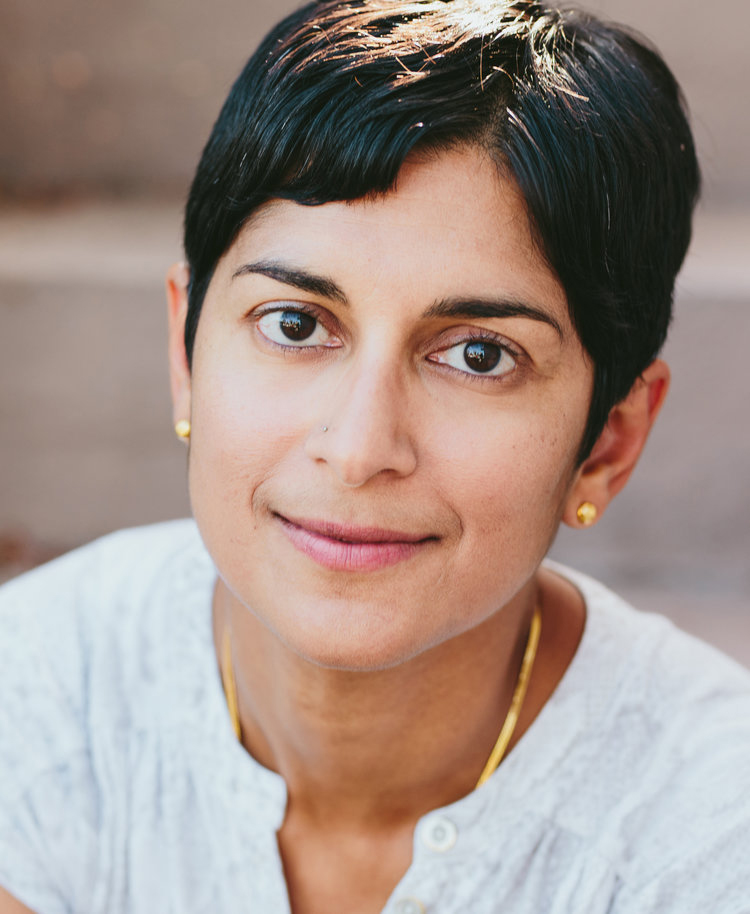
My favorite is Indian-origin American engineer SB Divya, whose imaginary futures amplify present-day global issues – immigration politics, gender and disability rights, racism, tech capitalism, social-media culture, AI ethics and ecological justice – while proposing nonbinary characters that defy current conventions of gender and patriarchy.
Born in Pondicherry, India, Divya Srinivasan Breed (penname SB Divya) is based in California where she lives with her spouse and child. After completing her Bachelor’s in computation and neural systems from California Institute of Technology, she did her Master’s in engineering, specializing in signal processing and high-speed communication.
She holds two patents, and has worked in jobs involving pattern-recognition, chip design, AI and machine learning. She was also a DJ, an oil painter, a Bharatnatyam dancer and co-editor of a sci-fi podcast. Due to long covid, she says she developed Myalgic Encephalomyelitis, after which she gave up passions such as biking, wilderness hiking, snowboarding and scuba-diving.

Her first novella, Runtime (2016), which got me hooked to science fiction, is a near-future story of a young woman without money, documentation and legal status competing in an exosuit race. A fast-paced and gripping read, Runtime critiques class-based access to technology and the gendered politics of ambition.
Divya’s first full-length novel Machinehood (2021) takes these themes further. Set in USA and India in the year 2095, it explores AI, gig economies, bioengineering and surveillance through the lens of women’s bodily autonomy and global inequalities. Divya visualizes humanity beyond gender-based limitations and capabilities – bodies integrated with cybernetic components and nanobots, with ‘pills’ and ‘flows’ used to enhance human abilities and compete in the shrinking job market dominated by AI. (The novel was prescient because it was written before the launch of ChatGPT.)
Genderless imaginaries
But I believe Divya’s latest works – a duology called The Alloy Era – truly challenge genderism and ableism. They present a far-futuristic space opera where a genetically modified disabled woman Jayanthi journeys with a sentient alloy Vaha to reimagine kinship, ecology and planetary survival.
The books are remarkable in their depiction of nongendered alloy and nonbinary human characters. “As we step into the future, gender becomes more fluid… So why should we confine ourselves to the binary?” Divya once posited in an interview.
I am certainly tempted and piqued about the idea of unconfining myself – only if governments, society and technology didn’t make it so impossible to be genderless.
The books experiment with what technology feminist Judy Wajcman terms ‘wetware’ – imagining bodies and agencies that defy current understandings and definitions of gender and identity. For example, the character Vaha is a gigantic nongendered alloy pilot whose purpose of existence is to transport humans and other beings across space. Vaha and Jayanthi fall in love and even birth a child together, a scenario that challenges racial boundaries and literary mores of heteronormative romance.
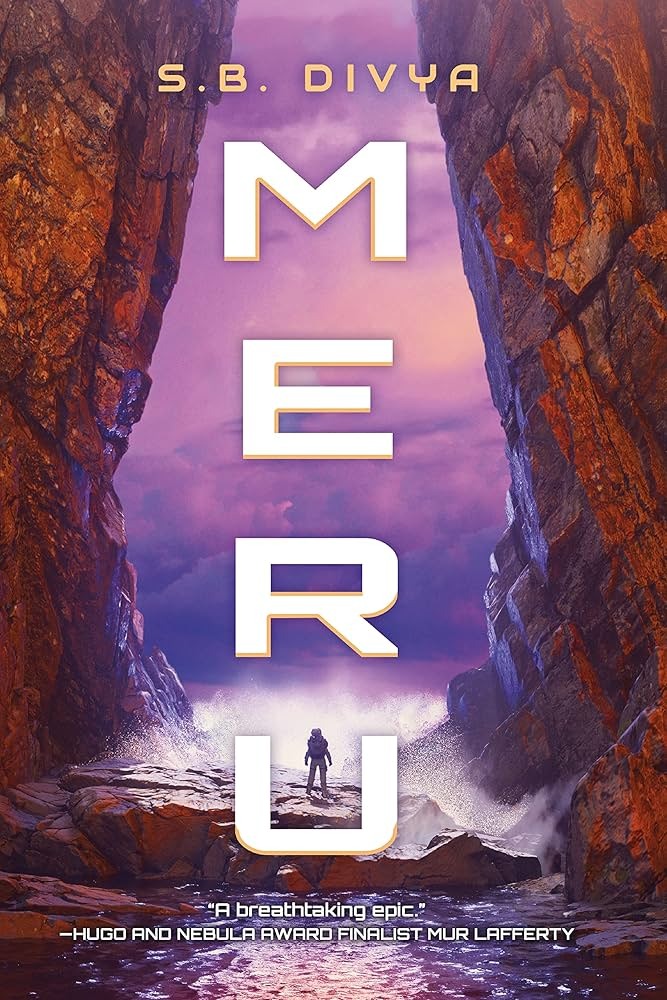
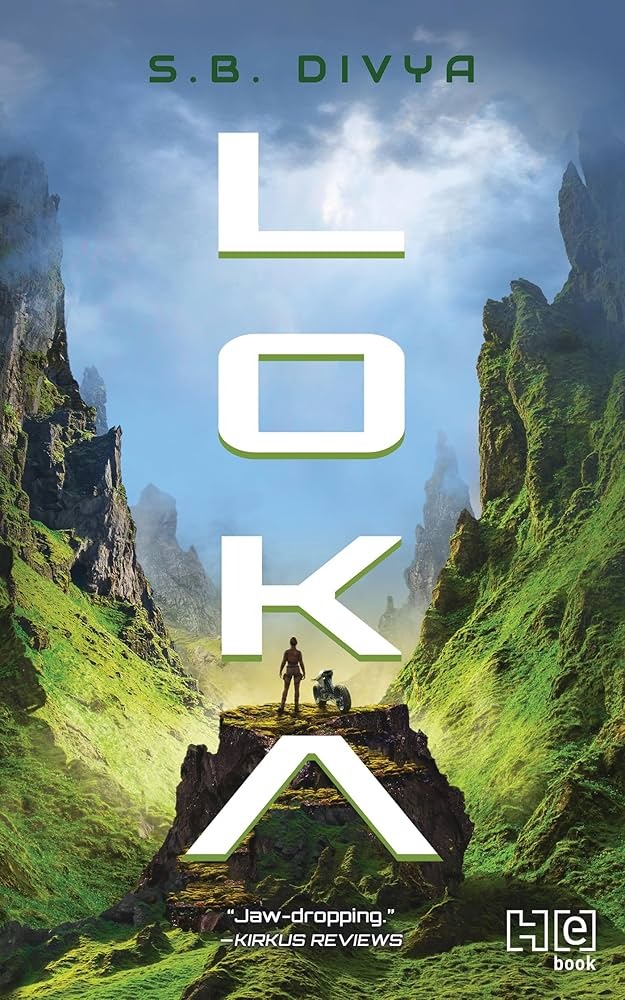
Through this series, Divya offers us a future where reproduction is separate from sexuality – offspring are gestated in technological wombs, so gender identity and sexual orientation do not matter. She also uses zie/zer ‘Spivak pronouns’, which releases characters from the confines of gendered roles.
What I love about Divya’s fiction is its postcolonial sensibility that turns away from Western ‘White male’ hero archetypes, featuring female protagonists of Indian or South Asian origin. Most characters in Meru and Loka have names with Sanskrit roots.
(SPOILER ALERT!) Divya also makes a strong case against able-bodied normativity. Meru has a ‘happy ending’ that includes Vaha losing a body part and needing prosthetics, and Jayanthi designing an embryo to inherit her sickle-cell anemia, despite genetic engineering allowing her to create a ‘perfect’ baby. Loka ends with their child Akshaya refusing gene therapy and instead moving to Meru, a planet where her sickle-cell disease is an asset.
“Genetic diversity is a strength, not a weakness,” Divya once said. These views are refreshing at a time when the prospect of gene editing babies is increasingly popular with to-be parents.
Feminist science fiction down the decades
Divya’s books contribute to a larger feminist and LGBTQ+ discourse that has been around for decades, or what gender theorist Kate O’Riordan calls “trans and gender identity as a political project”. Second-wave feminists and science-fiction novelists Ursula K. Le Guin, Joanna Russ and Marge Piercy had experimented with gender-neutral characters and gender-defying identity performance in their pathbreaking novels in the 1960s and ’70s.
Ursula K. Le Guin’s classic science-fiction novel The Left Hand of Darkness (1969) was revolutionary for its time in imagining an androgynous race of ‘Gethenians’ and a non-White human protagonist. In the prologue to the 2017 edition, British fiction writer China Miéville argues that the work is still “radical and affecting” even half a century later, “in an era shaped by decades of feminist struggle, gay politics, trans voices, militant gender trouble, of growing insistence on the fluidity and performance of sexuality”.
In her own introduction to the 1976 paperback edition, Le Guin notes that “science fiction isn’t about the future” and that she “isn’t predicting, or prescribing” but merely observing and describing aspects of psychological reality.


Similar observations can be made about Joanna Russ’s The Female Man (written in the late 1960s and published in 1975), in which the four female protagonists – essentially one character split into four parallel universes – voice powerful perspectives about biological determinism, gender roles and women workers’ rights.
In these contexts, science fiction is not so much about predicting the future as it is about representing contemporary realities. “The point of such writing is to influence the present by extrapolating current trends for advancement or detriment,” writes Marge Piercy in the 2016 introduction to her 1976 science-fiction novel Woman at the Edge of Time, which featured gender-neutral characters and used nongendered pronouns such as ‘per’ and ‘person’ much ahead of its time.
Piercy points out that “a number of utopias” were created by science-fiction writers including herself during the second wave of feminism, because, at the time, “change felt not only possible but probable”.
Now, she notes in a 2016 column in the Guardian, “When our political energy goes into defending rights, and projects we won and created now under attack, there is far less energy for imagining fully drawn future societies we might wish to live in”.
A sign of the times
Indeed, themes in feminist science fiction have often mirrored the waves of feminism. Dystopian science fiction of the 1980s and ’90s explored how patriarchal systems manipulate reproduction, sexuality or autonomy, and how women resist, adapt to or subvert these constraints.
Margaret Atwood’s pivotal The Handmaid’s Tale (1985) exposes how patriarchal power reduces women to baby-producing vessels. PD James’s The Children of Men (1992) depicts a future when infertility has doomed humanity, and one woman’s pregnancy becomes a radical act of hope against authoritarian despair.
This was the time of Donna Haraway’s pathbreaking A Manifesto for Cyborgs (1985), which destabilized patriarchal binaries of man/woman, animal/human, nature/culture and organism/machine.
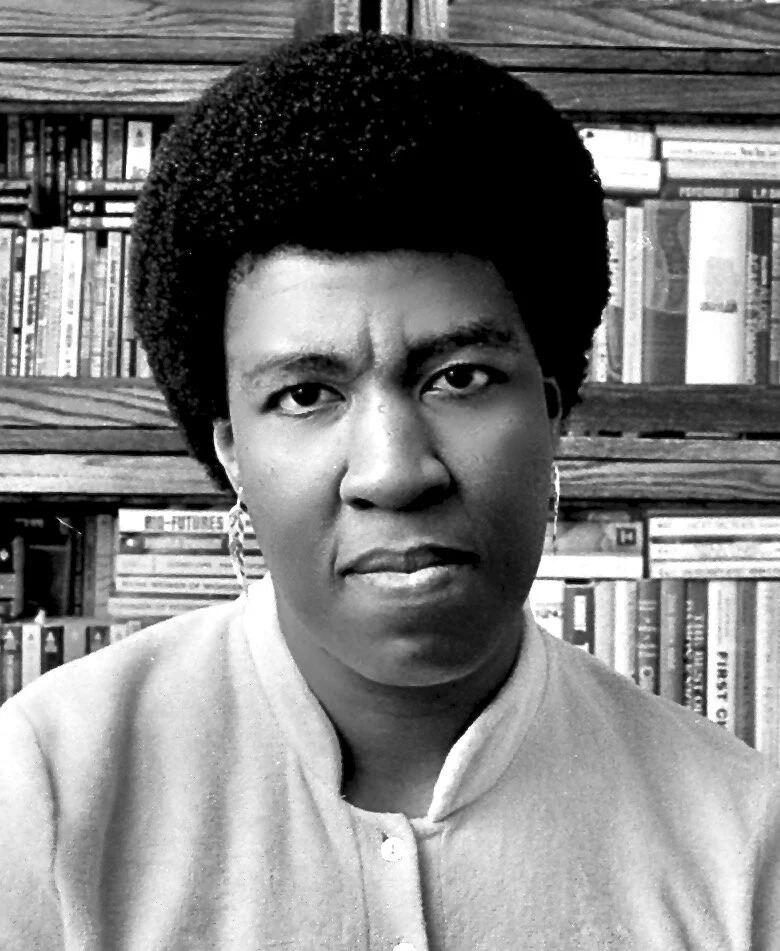
During third-wave feminism (mid 1990s to early 2010s), identified by its emphasis on “intersectionality”, revolutionary science-fiction author Octavia E. Butler published Parable of the Sower (1993) set in a climate-ravaged America, where a young Black woman founds a new belief system rooted in collective survival.
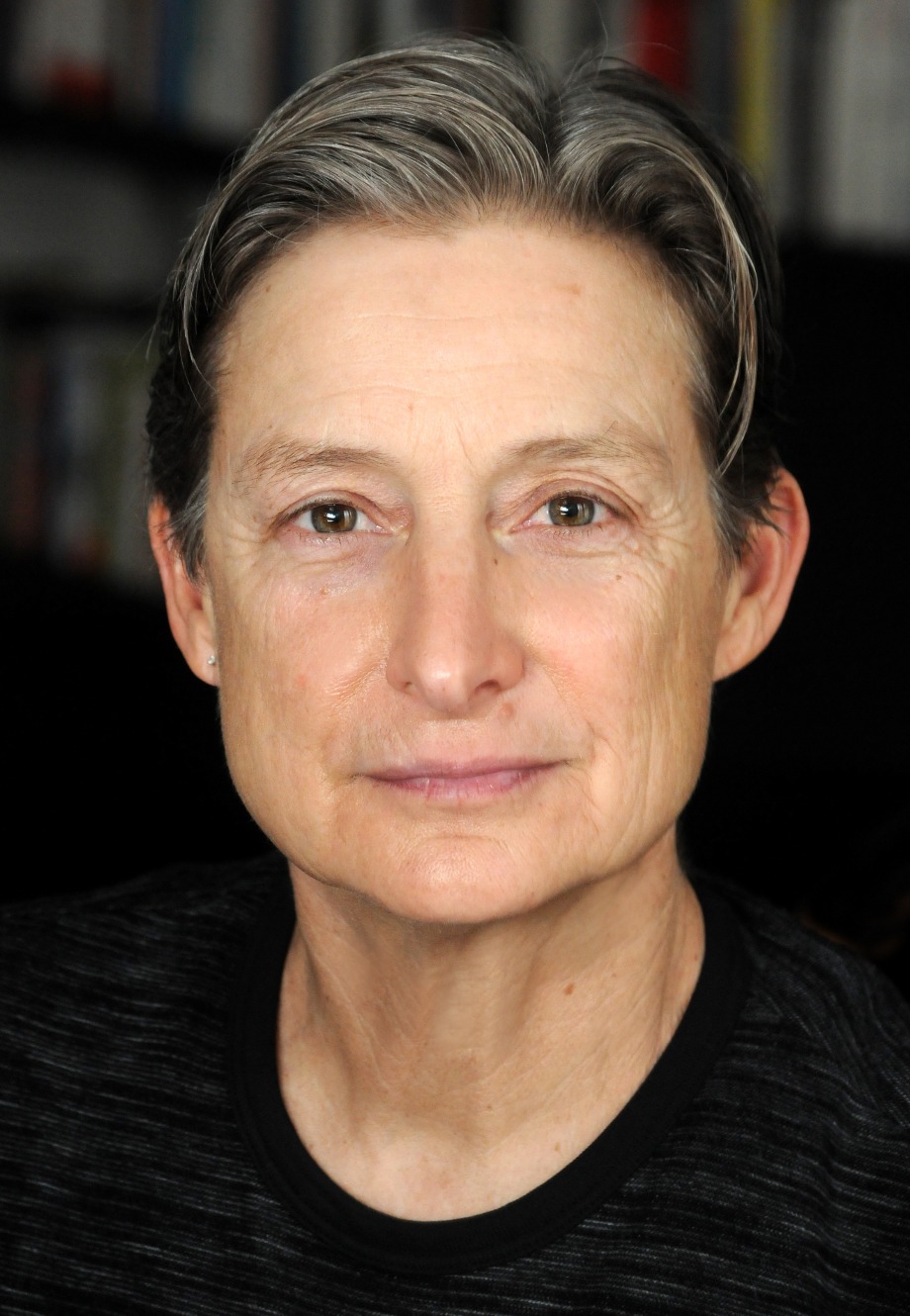
The blurring of gender binaries and a symbiosis of humanity and technology became key themes in feminist science fiction around the turn of the century, inspired by gender theorists like Judith Butler, who maintains in her 1999 book Gender Trouble that gender is performative and socially and politically regulated, and Judy Wajcman, who argued in her book TechnoFeminism (2010) that technology and gender are co-constructed.
The expansive worldview of fourth-wave feminism (2012 onward) is mirrored in ‘solarpunk’ utopias that highlight post-capitalist economics, queer inclusivity and ecological harmony. Popular author Becky Chambers experimented with gender-fluid characters in works like her Wayfarers series (2014–2021) and others.
I love this conversation between Dex and Mosscap in A Psalm for the Wild-Built, book 1 of Chambers’ Monk and Robot series (2021–2022):
“Do you have a gender?”
“No.”
“Me neither.”
Globalization of sci-fi futures
The past two decades also saw the rise of postcolonial science fiction in the wake of a new market for non-Western voices. These new novelists interrogate colonial legacies while centering local myths and languages. A notable work is the anthology So Long Been Dreaming (2004) by 19 writers from the ‘third world’ and their diaspora.
Prominent feminist voices in the postcolonial sci-fi genre include Jamaican-born Canadian writer Nalo Hopkinson whose novel Midnight Robber (2000) is a Caribbean-infused space tale exploring exile, violence and survival through a Black girl’s journey. Canadian novelist and critic Larissa Lai’s cult classic Salt Fish Girl (2002) weaves Chinese mythology, genetic engineering, queer theory and diasporic identity.
Nigerian-American writer Nnedi Okorafor’s books feature African female protagonists resisting imperial necropower and genocide. American writer Rivers Solomon’s dystopian science fiction features neurodivergent Black protagonists and non-normative relationships, amid the lasting impact of historical trauma.
South Asian feminist science-fiction writers in this period who experiment with trans or nonbinary characters include Manjula Padmanabhan and Vandana Singh. Both highlight gendered systems built on patriarchal oppression, ecological exploitation and neocolonialism.
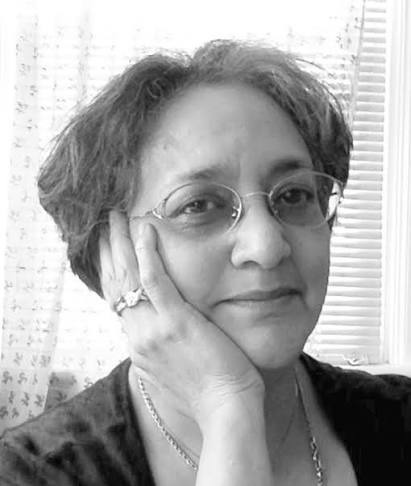
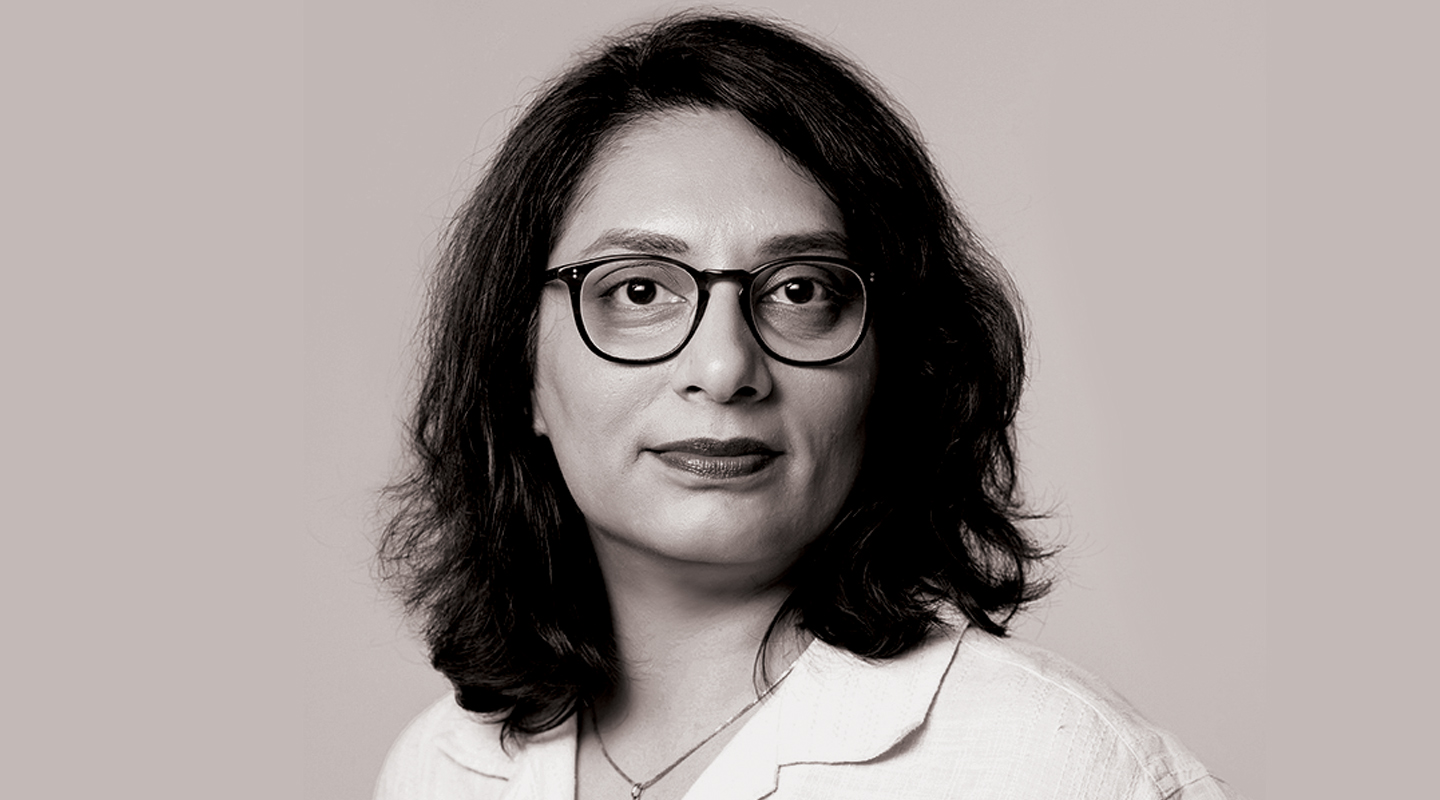
Pakistani writer Bina Shah’s Before She Sleeps (2020) is a dystopia of patriarchal practices and reproductive slavery in an authoritarian Islamic society.
Indra Das’s The Devourers (2015) is a gender-bending science-fiction fantasy set in Mughal and modern India that queers the idea of progress and humanity. In one scene, the protagonist describes his same-sex lover thus: “I see man and woman both, I see a being so human that it becomes inhuman, an animal perfection.”
A space of our own
In her essay on cyberfeminism, American sociologist Jessie Daniels notes that it allows people who are excluded from mainstream society to be protagonists in the creation of revolutionary new technologies on their own terms.
This ideology extends to feminist science fiction as well, which offers us new imaginaries of identity, community, politics, economy and technology, and opportunities of what queer theorist Jen Jack Gieseking terms “messing with injustice”.
It’s telling, if unsurprising, that a common feature of feminist postcolonial writing and sci-fi narratives is the rejection of the limitations of gender and sexuality. As anthropologist Gayle Rubin says in her famous 1975 paper The Traffic in Women, “The dream I find most compelling is one of an androgynous and genderless (though not sexless) society, in which one’s sexual anatomy is irrelevant to who one is, what one does, and with whom one makes love.”
Indeed, I can’t imagine a better future for humankind than this – where patriarchal systems are dismantled, biological abilities equalized by technology, and where gender is redundant. The future is nonbinary, and that’s worth thinking about.
Discover more from eShe
Subscribe to get the latest posts sent to your email.
0 comments on “The future is nonbinary: how SB Divya and other feminist sci-fi novelists portray gender”