
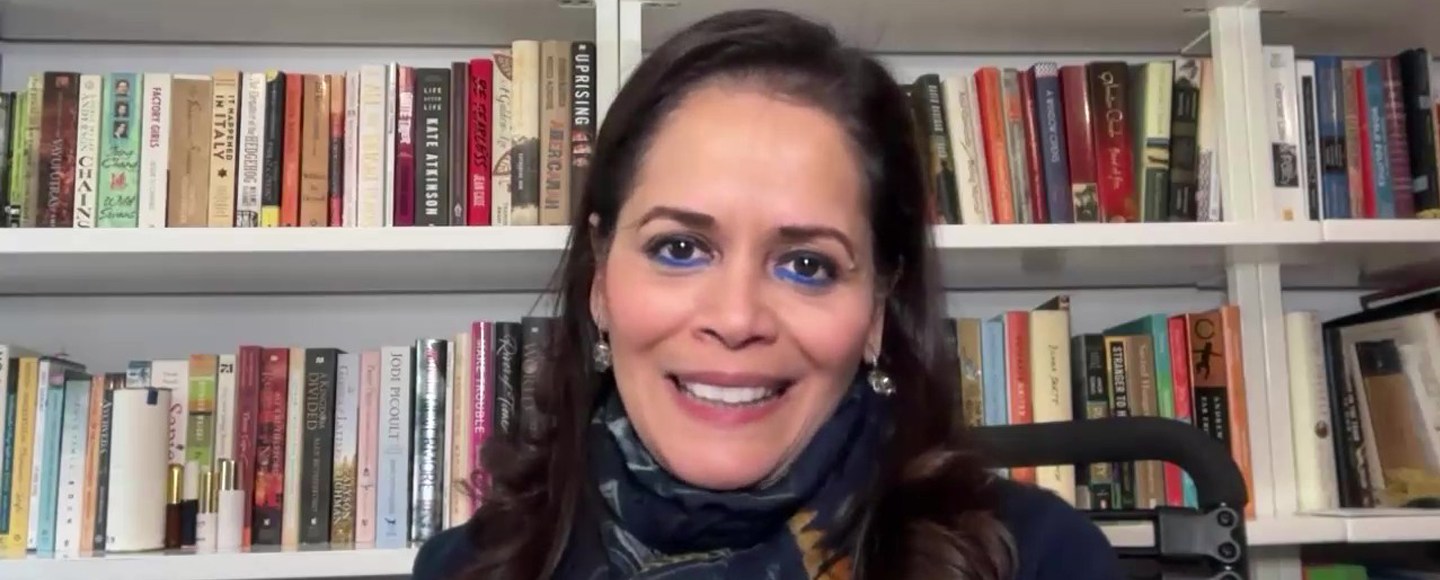

Every morning, S. Mona Sinha’s mother would set aside a fistful of rice in a separate container. At the end of the month, she would give it away to someone in need. Growing up in Kolkata, Sinha found the ritual mildly amusing. Only later did she understand what her mother had been teaching her about generosity and sharing what one has with others.
Sinha learnt about the culture of giving long before she knew the term philanthropy. Years later, when she came to the United States to study at Smith College, someone she had never met paid for her education. Her advisor encouraged her to pursue a career on Wall Street, assuring her that she could compete with any man. And during an internship in Washington, DC, a well-wisher opened her home to her for six months. Each experience taught her that one could invest in another person’s future without knowing them personally.
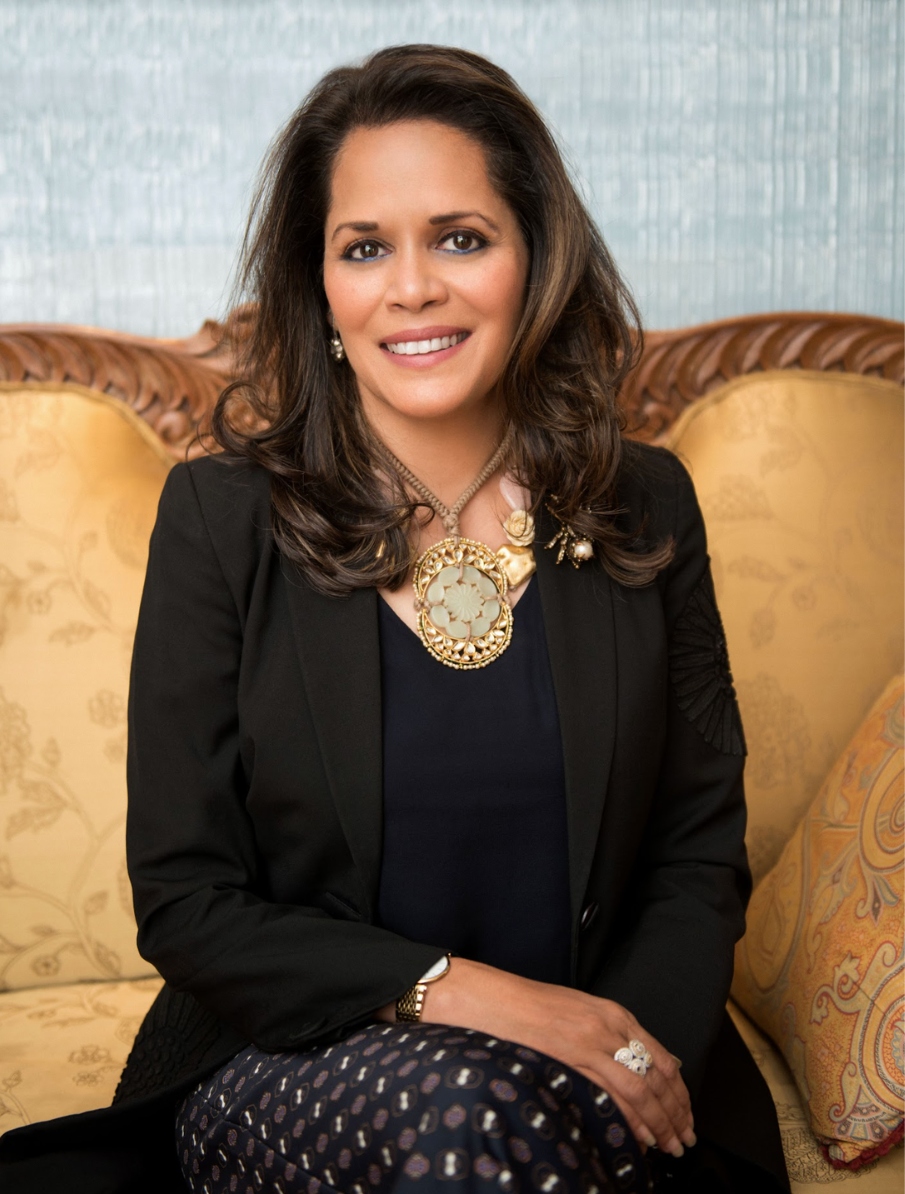
Today, Sinha is the chief executive officer of Equality Now, an international organization working to end discriminatory laws and advance justice for women and girls. Over a career spanning more than 25 years, she has supported over 90 organizations and helped mobilize more than $1 billion for women’s rights and economic empowerment. This summer, she was inducted into the U.S. National Women’s Hall of Fame.
Speaking with eShe founder and editor-in-chief Aekta Kapoor during the opening keynote of the South Asia Union Summit 2026, Sinha reflected on how these experiences shaped her understanding of power, leadership and feminism.
Having worked on Wall Street, in corporate America and even within feminist organizations, she has seen how people hold on to power, often fearing that sharing it will leave them with less. Her experience has taught her otherwise.
“When you give power and share power, you actually gain a lot more,” she said, adding that the pie itself grows.
She brings this thinking to Equality Now, which works not only to change discriminatory laws but also the systems around them. For Sinha, sharing power also means investing in local leaders who understand their communities and can hold institutions accountable.
“The solutions are always local,” Sinha said. “Even though we can bring the best of the global to any country, the people on the ground and the leadership on the ground is what holds it accountable.”
Laws are the foundation, not the ceiling
For decades, women and girls have fought discriminatory laws and advocated for equal rights. While legal protections have improved, discrimination continues in everyday life. Responding to a question on whether this is due to inadequate laws or something more deeply embedded in societies, Sinha responded: “It’s both. I think the laws are the foundation, not the ceiling.”
She pointed out that while laws are essential for women to access justice, changing them does not necessarily change the attitudes and behavior within families and communities.
“And let’s face it, the laws were never written by us or for us. It was written by patriarchy,” she said.
Growing up as the youngest of three daughters, Sinha often heard people tell her family, “It’s too bad you don’t have a son, you know; you don’t have a legacy, you don’t have someone to inherit.”
She questioned why sons inherit more than daughters and why women lack equal rights to marital property. She also described child marriage as “state-sanctioned rape”.
“Legal equality and lived equality are two sides of the same coin. You can’t have one without having the other,” she said.
Sinha stressed the importance of financial independence, especially for women facing domestic violence. Without their own income or resources, many cannot leave abusive relationships. She encouraged women to maintain their professional skills, even during career breaks for caregiving.
Shifting the shame from survivors to perpetrators
Talking about a world where a majority of people live under autocracy at present, Sinha highlighted that “the only things that beat an autocracy is women’s movements.”
Responding to a question about women who had inspired her and changed her idea of social justice, Sinha recalled Equality Now’s annual gala, where the organization honored Gisèle Pelicot, the French woman who waived her anonymity during the trial of her husband and the men who sexually assaulted her while she was drugged.
What stood out to Sinha was Pelicot’s refusal to remain silent and her insistence that shame should change sides. “Shame doesn’t belong to the women who are violated. Shame belongs to the men who violate them.”
She questioned how society talks about sexual violence and why the focus so often falls on the woman rather than the person responsible. “Instead of saying she was raped, we should change the narrative to say a man raped her. Put the onus on the people who actually do the harm, not on the people who are harmed,” she said.
Sinha also spoke about Pelicot’s daughter, Caroline, who has been raising awareness about the misuse of medications to drug people without their knowledge.
She referred to Virginia Giuffre, who spoke out against Jeffrey Epstein and accused Prince Andrew of sexual abuse, as another example of a woman who challenged powerful people.
What interested Sinha was how ordinary people could stand up to systems that seemed too powerful to challenge and pull together widespread support.
“For every person who speaks out, there are, I would posit to say, hundreds of women who have gone through the same experience,” she said, explaining how one person’s courage can encourage others to come forward.
She called it the “power of narrative and exposing harm.”
Sinha acknowledged that South Asia has laws that are intended to protect women, but implementation remains difficult. The challenge is not only to change discriminatory laws but also to ensure that women can use the legal protections available to them.
Why is feminism facing a backlash?
Kapoor then turned to the growing resistance to feminism, including the rise of the manosphere and questions about whose voices are actually being represented by mainstream feminism.
“Power is not a zero-sum game. Leadership is not a zero-sum game. We actually benefit from having diverse voices in our ecosystem,” Sinha responded. “We learn much more from difference than we do from sameness.”
“Power shared is power supercharged.”
Sinha echoed Kapoor that some men feel threatened by women’s progress. “There are lots of men who feel like they’ve lost out because women have made gains, and that’s not true,” she said.
Sinha suggested three approaches to bringing change: listening, learning and leveraging. This means hearing different perspectives, being open to changing one’s views and using those lessons to bring about change.
She drew on her experience as an executive producer of To Kill a Tiger, the Oscar-nominated documentary about a father in rural India who fights for justice after his daughter is sexually assaulted. He faced opposition from his own community, including women who were more concerned about the futures of the accused boys than the girl.
When the film was later screened in the same village, “Some of the people who were the biggest oppositional voices came back and said we were wrong,” Sinha recalled.
“Feminism sometimes gets a bad rap,” she said. “It’s not that women are asking for any more than men. We just don’t want any less,” she said.
And while she recognized the economic benefits of gender equality, she insisted that women’s rights should not have to be justified by their economic value. “Justice is justice wherever it is,” she said.
When fighting patriarchy becomes exhausting
During the audience discussion, Bidhi, a young activist from Nepal, raised a question about the exhaustion of challenging patriarchy every day.
“From household to workplace, to society, to the roads you walk in, everywhere you have that struggle,” she said. “That’s how power wins, by exhausting you, right? So how do you suggest women like me keep the spirit?”
“You can’t operate from a glass half empty,” Sinha responded. “You’re strongest when you take care of yourself.”
She encouraged young women to find joy, build friendships and seek support from women who share her values. She also suggested questioning everyday expectations at home, including why girls are denied opportunities simply because they are girls.
“Find sisterhood and friends who think as you do,” she said.
Sinha acknowledged that she, too, faces resistance when raising these issues with people back home in India. But she encouraged young women to keep questioning traditions, while accepting that not every battle can be won.
Equality or equity?
Another audience member, US-based activist Fauzia Deeba, questioned whether women should aspire to more than equality.
“Why would we even want to be equal?” she asked, pointing to women’s biological abilities and contributions. “We actually deserve much, much, much more, not equal, rather more. But let’s begin at least for the equal.”
She asked Sinha to explain the difference between equity and equality.
“Equity means, in some ways, equal opportunity, so you have access and you’re not left out of rooms,” Sinha responded.
Drawing on her Wall Street experience, she recalled how women had to prove themselves in male-dominated workplaces while continuing to face sexist remarks.
She explained that equity also means considering people’s different circumstances, including poverty and disability, rather than assuming everyone has the same opportunities.
“Equity and equality are related, and both need to be talked about,” she said.
Sinha ended by recalling how women participated in South Asia’s independence movements, yet their contributions often went unrecognized.
“Your freedom is not because all the men went fighting for you,” she said. “Your freedom is because there were lots of women who were on the streets involved, supporting movements.”
Read more about eShe South Asia Union Summit 2026 here.
Discover more from eShe
Subscribe to get the latest posts sent to your email.
0 comments on ““Power shared is power supercharged”: S. Mona Sinha on feminism and the fight for equality”