
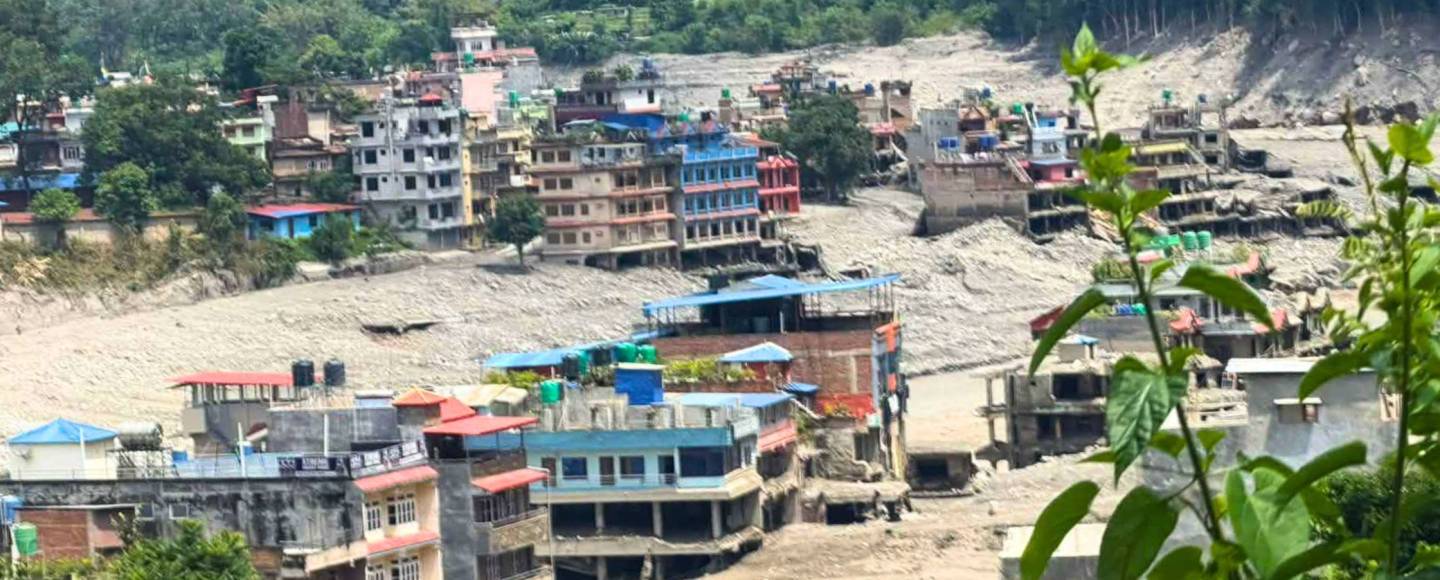

“We were getting ready for our morning meal when we got a flood alert,” says a 64-year-old survivor residing in an old-age ashram in Nuwakot, Nepal, describing the events of 26 August.
“I was served my food and was just about to eat when the flood was suddenly upon us. It happened so suddenly that I did not think at all. I went up to my room on the third floor. But I worried about people with disabilities living on the ground floor,” she narrates in a video sourced by eShe.
The ashram housed 35 or 36 persons, whose ages range from their 60s to 90s. “Now, five of our residents are missing. We still do not know what happened to them or where they are,” she says.
Twelve days after devastating floods swept through Nepal, first-response civil-society volunteers and the Red Cross describe a crisis that did not end with the rescue, especially for women and children waiting for safety and privacy in crowded shelters.
According to the latest government disaster report issued by the National Disaster Risk Reduction and Management Authority, 1,341 people have died and 4996 people remain out of contact across the affected areas. More than 13,104 people have been rescued, while nearly 5,929 injured people have received medical treatment, with 21,465 security personnel mobilized in the response to date.
Australian tunneling expert Arnold Dix, who is helping teams in the rescue operation at Trishuli 3A, said in an interview, “Silence is not evidence of death.” His words seemed prophetic when 64-year-old Chandrika Shrestha was rescued alive from the ruins of her house in Betrawati, Nuwakot, after 10 days of the flood.
Rescuers heard weak cries and worked through the wreckage to get to her. She had been missing together with four relatives. On the eighth day, her family had given up hope and performed funeral rites for her using an effigy made of kusa grass, a ritual practiced when a body cannot be recovered.
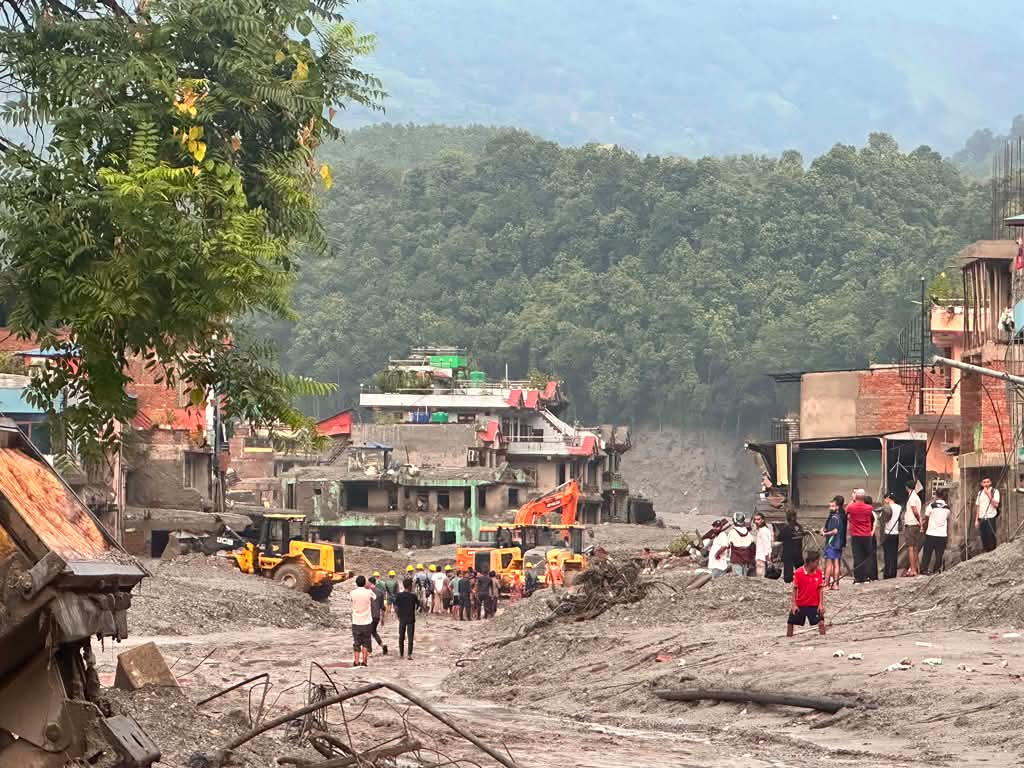
The same day, three others, including a Chinese national, were pulled alive from hydropower tunnels in Rasuwa, according to local media reports. These miraculous rescues show what numbers cannot: even 10 days later, there are still people waiting to be found.
And yet, rescue is only one part of the response – recovery and rehabilitation are still a long way away – especially for women, who are disproportionately affected by natural disasters. Not only are women 14 times more likely than men to die during such calamities, female survivors often face more severe economic impacts, which shortens their lives and increases morbidity.
How the response began
The Nepal Red Cross Society‘s emergency response began around 9.05 am on 26 August, when its president, Bishal Kumar Bhandari, received a call from a contact in Rasuwa. “There is a flood coming that the world has never seen,” the caller told him.
Bhandari activated the Red Cross Emergency Operations Center immediately and contacted the International Federation of Red Cross and Red Crescent Societies for support within an hour. Teams were dispatched to Bidur and Trishuli with relief materials.
About two hours later, Bhandari reached Bidur and saw the destruction along the Koshi River. “It was scary. We didn’t dare to look at the Koshi River,” he tells eShe on a phone call.
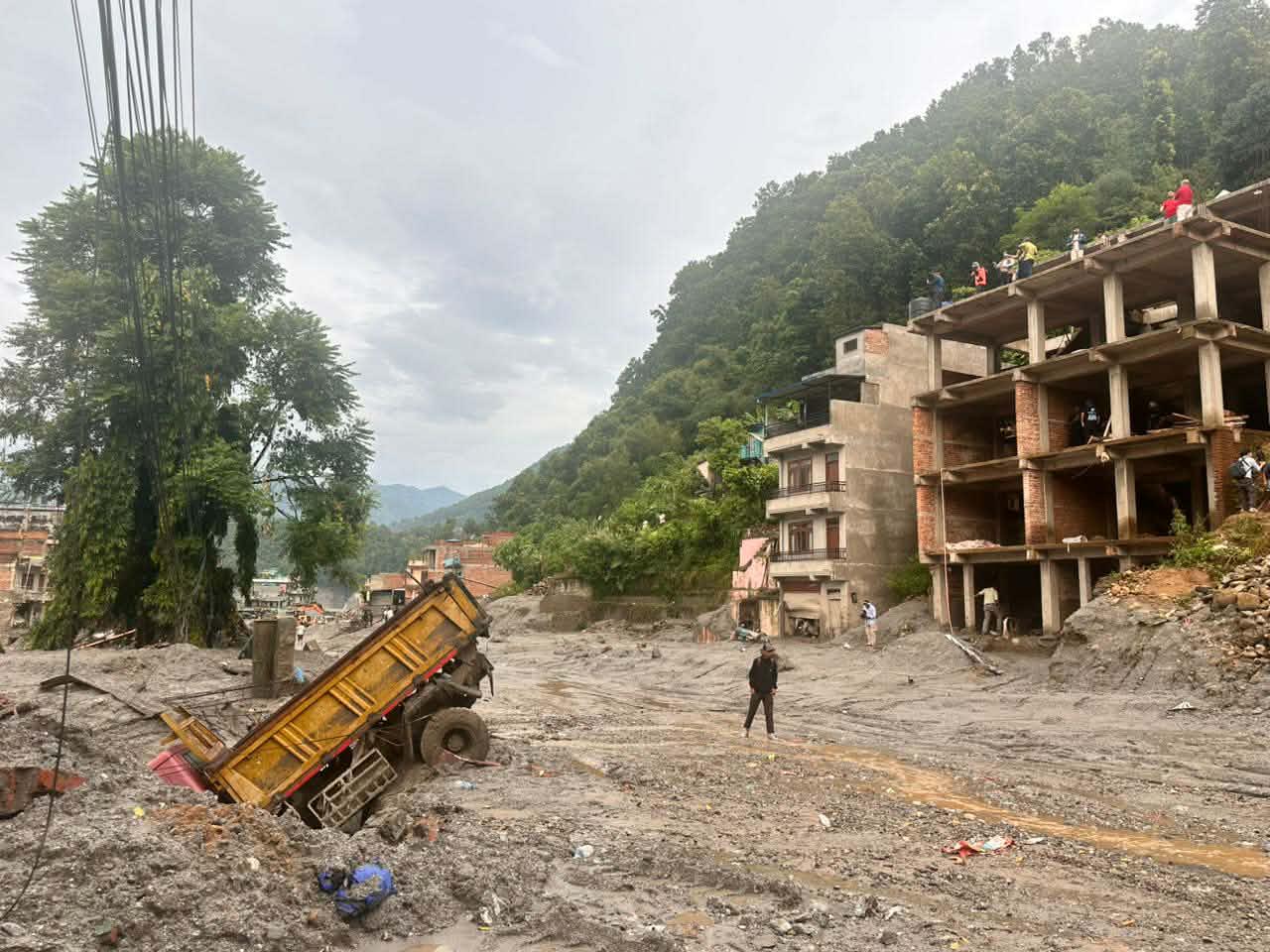
By nightfall, communications remained limited and information about affected communities was scarce. Four public buildings had already been converted into shelters, housing around 1,200 people.
Thirty-six hours after the disaster, youth activist Gagan Bahadur Gautam arrived in Bidur by motorcycle. He was attending the South Asian Conference in Kathmandu when the floods struck.
He contacted the NGO Federation of Nepal, which was already preparing a response, and offered to volunteer. He served as a focal point. A group of seven volunteers soon grew into a wider effort involving civil-society organizations, local government and other responders.
By the time Gautam arrived, people had moved to higher ground and were standing on the hillsides, looking down at the destruction. Homes and other structures had been swept away or collapsed. Mud, debris and floodwater covered the landscape.
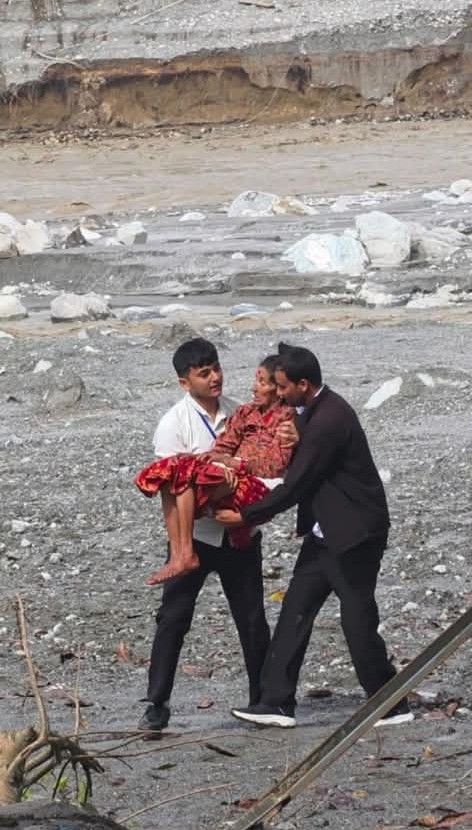
Confusion reigned at shelters. Even as dozens of rescued people arrived, families of others waited for news of relatives. Information was limited, communication was disconnected, and it was difficult to know who was missing, who had been rescued, and what each community needed.
“Everyone was in trauma,” Gautam says. “There was confusion. Where do we start from?”
Mobilization at scale
The response that followed involved thousands of people across government, military, and civil-society lines.
According to Bhandari, around 5,000 Red Cross volunteers, formally and informally mobilized, took part in the response. Their presence also helped bring information from communities that formal responders could not always reach. “Our volunteers are our asset,” Bhandari says.
More than 10,000 Army personnel were mobilized on day one, according to Gautam, with helicopters flying into Rasuwa and affected parts of Nuwakot to bring people to safety.
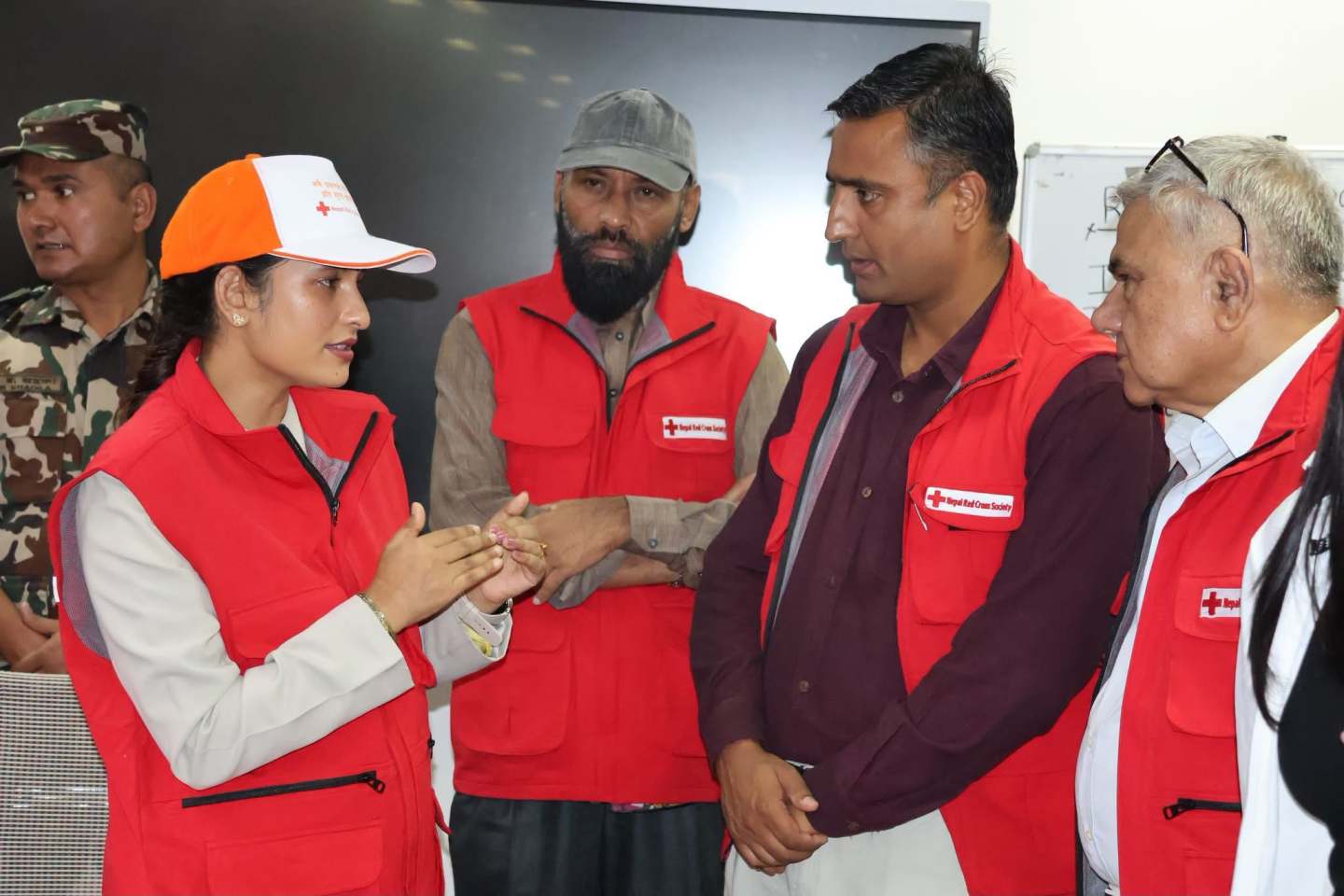
The government has adopted a “One Door” policy for relief coordination, with the Army and police leading rescue and relief operations. Gautam says civil-society organizations were not immediately permitted to participate directly. After negotiations, his group began working alongside the official response and later coordinated with the National Disaster Risk Reduction and Management Authority on data collection and relief records.
He adds that his group was the first civil-society organization to work with the Army on relief and rescue efforts.
On the fifth day, Gautam’s team received information that 14 young workers at a hydropower project needed rescue. They relayed the details to the Army rescue team, and the workers were rescued.
By the 10th day, Gautam says the response had grown more organized. Shelters were functioning more systematically, local governments were taking on a greater role, and psychological first aid and water, sanitation and hygiene support – including sanitary napkins – were being incorporated into the response.
The gaps that remain
Both responders pointed to the same underlying problem from different vantage points: information did not move as quickly as the emergency demanded.
Bhandari affirms that though Nepal does have disaster-response structures in place, when roads, communications and infrastructure are damaged, it becomes difficult to quickly establish who needs help, where people are sheltering, and what resources are required.
He also points to bureaucratic procedures that can slow a fast-moving response, saying some processes need more flexibility to let responders act as circumstances change by the minute.
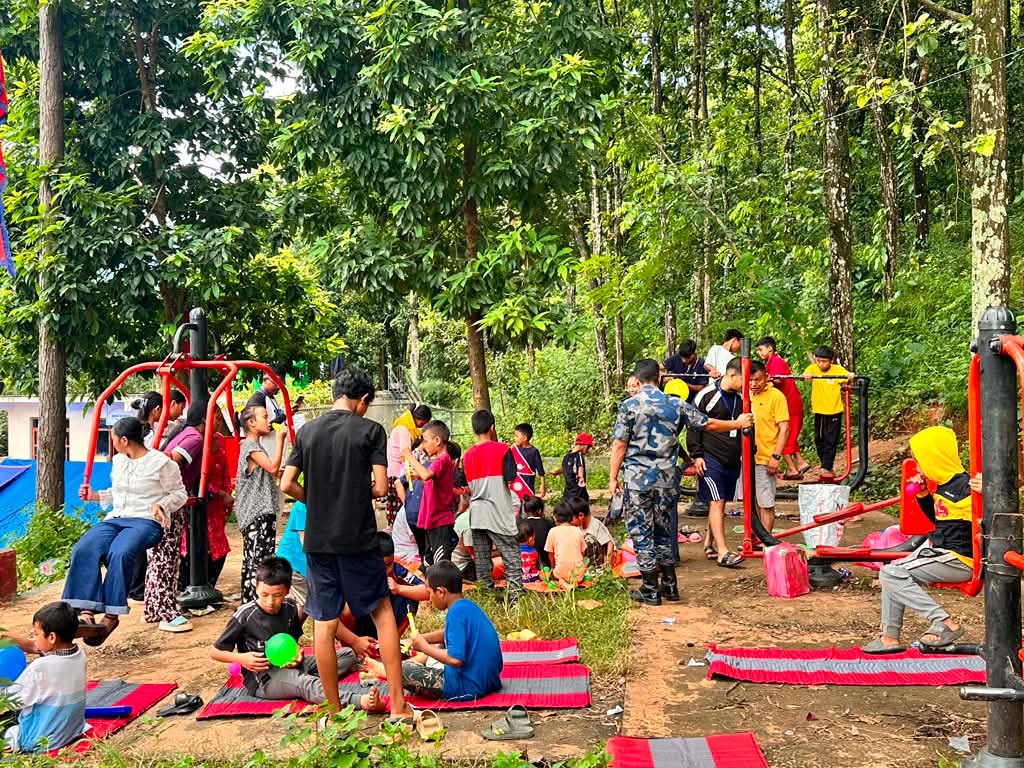
The needs change once people reach shelters. Bhandari says the relief response exposed particular concerns for women and girls, including a lack of privacy, sanitation and hygiene in shared shelters. Women were staying alongside men, while female security personnel were also lacking.
For those menstruating or pregnant, he says, these conditions made an already difficult situation harder. Evidence suggests that violence against women and girls increases in disaster settings.
Children face another challenge. Gautam says many were struggling to process the loss of their homes and the sudden disruption of their lives. “They are all saying, ‘Our houses are gone. Everything is gone’,” he says.
What comes next
The priority now is to strengthen systems before the next disaster arrives.
Bhandari says Nepal needs to prioritize early warning, rapid information sharing and coordinated action among responders. These systems can help ensure that information reaches the right people and response efforts are activated quickly when a disaster occurs.
Gautam echoes the need to establish information systems, train volunteers and strengthen communication channels as part of preparedness.
But preparedness is not only about how quickly a response can be activated. It also means anticipating what different groups will need when disaster strikes. As Bhandari states, women, children and people with disabilities must be prioritized in disaster planning and response.
The experiences of both Bhandari and Gautam point to a larger gap: while responders can mobilize quickly after a disaster, gender and intersectionality also matter in disaster risk reduction because of persistent structural barriers for vulnerable populations, including barriers to information, mobility constraints and limited resources for recovery.
Lead image: Yogesh Kaphle
Discover more from eShe
Subscribe to get the latest posts sent to your email.
0 comments on “Nepal flood responders highlight critical barriers to relief for women and children”