


By Meenakshi Dawar
A daughter once walked through our assisted living facility in Gurugram, India, on a video call from another country. Her mother needed a room, her father needed dementia care. Her brother lived in the same city, but she was coordinating everything between meetings, thousands of miles away.
Another working professional visited our facility alone before her mother could consider moving in. She walked through the corridors and sat in the common areas, assessing the place on her mother’s behalf. She evaluated a place she had never lived in while imagining the daily life of someone she had known all her life. Her visit was also preparation for a difficult conversation at home – she needed enough confidence in the facility to explain why it might be the right choice.
These cases leave me with a question that goes beyond individual families: why is it so often the daughter who steps forward first? Sons, spouses, and other relatives care deeply for aging parents, yet the responsibility for noticing details, making calls, comparing options, and following through often settles on one woman.

When women are expected to absorb the emotional and administrative work of a family, their care can be mistaken for an obligation rather than a contribution that others must share. The question is not whether daughters should care for their parents, but why their care so often becomes the default – and why the rest of the family is allowed to remain involved without being equally responsible.
From one daughter to another
My understanding of these women’s decisions is shaped by my own family experience. I lost my mother when I was young. My brother lives abroad, and I felt the responsibility of looking after my father while continuing to manage my work and other commitments.
I had to remember that my father needed more than practical arrangements. He needed someone to call, speak with and listen to him. Losing my mother changed how I understood my relationship with him and the responsibilities that remained.
That experience makes me particularly attentive when a daughter approaches me with questions about nursing support, food, physiotherapy or overnight supervision for a parent. The families who approach us often need more than a room or an attendant. They need help determining what kind of support an older person requires and how to organize it.
One sister coordinated arrangements remotely for a sibling recovering from a spine fracture. Another daughter sought a temporary stay for a parent recovering from a stroke, unsure whether the parent would eventually be able to return home.
The responsibility also involves details that can seem small to anyone outside the situation. A daughter arranging care for her 80-year-old father, who had dementia, and her 76-year-old mother, who was developing eyesight problems, was particularly attentive to their food preferences and individual needs. She wanted the arrangements to reflect the personalities and limitations of both parents, rather than treating them as a single care requirement.
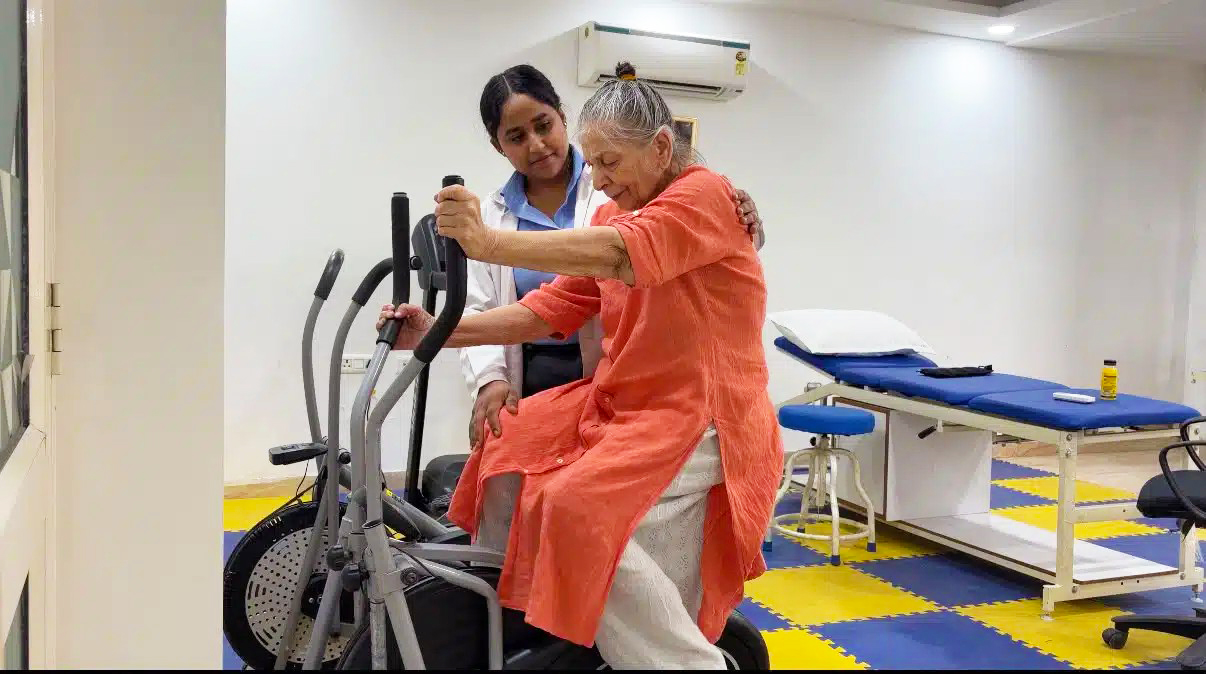
Each situation required practical decisions about care, recovery and supervision. In these cases, one person – almost always a woman – became the main point of contact, following up on arrangements while other relatives remained informed.
The default caregiver
Women do not carry this responsibility because they are inherently better at caring. Sons, spouses and other relatives provide substantial care, too. Yet gendered expectations often make daughters the default organizers. Parents may find it easier to discuss intimate concerns with them; families may assume they will manage things better. And, as I have often seen, whoever responds competently during the first crisis can become the permanent contact for every crisis that follows.
The Government of India’s Time Use Survey 2024 found that 41 percent of women aged 15–59 participated in caregiving for household members, compared with 21.4 percent of men. Women providing this care spent close to 140 minutes a day on it, against 74 minutes for men.
In the US, a 2014 study found that daughters devote 12.3 hours per month to parental care compared to just 5.6 hours for sons. Further, sociologists have noted the ‘substitution effect’: if a sister is present, the brothers’ caregiving contributions go down as if by default.
Terming this the daughterhood penalty or daughter tax, journalist Kelli Maria Korducki states that unpaid family care costs American women an average of $295,000 in lost wages and retirement savings over the course of a lifetime.
And the costs are not always financial. They include interrupted life plans, broken sleep, guilt about living far away, anxiety about making medical decisions without adequate training and pressure from relatives who may offer opinions without sharing the responsibility.
There is also the grief of watching a parent who once managed an entire household gradually need help managing daily life.
Love across countries and cities
One daughter in India was preparing for her 85-year-old mother’s arrival from Japan. Although they lived in different countries and time zones, the daughter knew her mother’s preferences well. Before her mother landed, she had already given detailed instructions about how the room should be arranged and anticipated how her mother might react to the move.
Her planning reflected an intimate knowledge of her mother’s habits and personality. Distance limited her physical presence, but she remained closely involved in the transition.
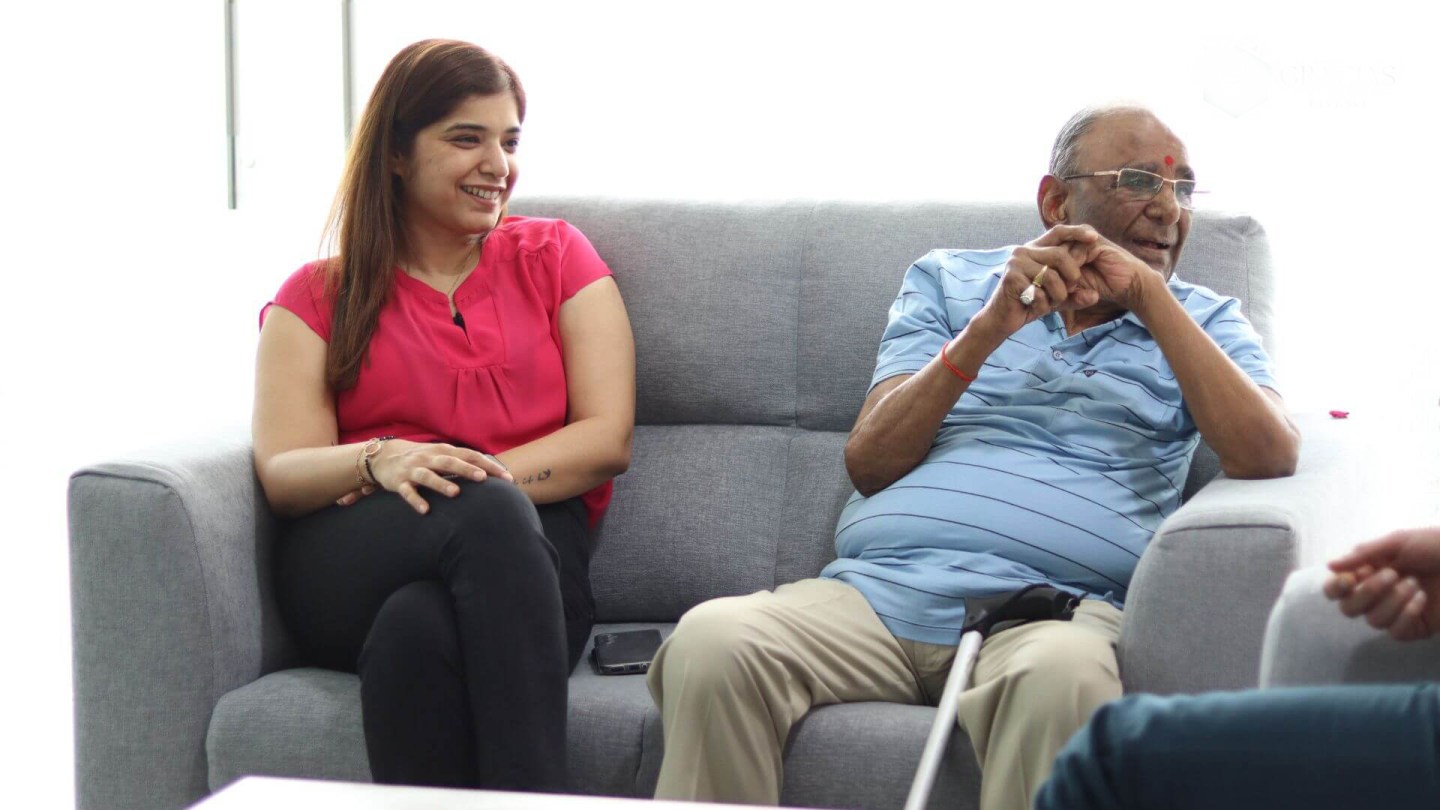
In another case, three daughters spent more than two hours evaluating our facility for their hospitalized father. They examined the infrastructure, food, and available facilities because their father had not yet seen the place himself. They wanted to understand whether it could provide the comfort and support he would need after hospitalization.
Each family had different concerns, but the daughters were trying to make decisions on behalf of a parent who could not yet fully assess the options.
Holding everything together
After years of speaking with families at our facility, I no longer find it surprising that a daughter is holding everything together. What stays with me is the question beneath her practical enquiries: if everyone cares, why does nobody else have the time to be consistently present?
I do not want to tell these women how strong they are. They already know what they have had to manage. I want families to share the work, professionals to provide reliable information and daughters to know that asking for help is not a failure of love.
When women who are strangers to one another recognize this burden, something like sisterhood emerges. We listen because we understand that another woman’s difficult decision may resemble our own.
I carry my experience of losing my mother into these conversations, but I also carry what these daughters have taught me: that care is not one heroic act, or one final decision. It is an ongoing practice of noticing, adapting and showing up.
A daughter should not have to prove her love by carrying everything alone.

Meenakshi Dawar is founder and CEO of Gracias Living in Gurugram. She works closely with older adults and families making decisions about care, recovery and life after illness.
Discover more from eShe
Subscribe to get the latest posts sent to your email.
0 comments on “When daughters become the default for eldercare and difficult life decisions”