


By Neha Sharma
For diasporic writers, home is rarely a fixed place. It can be a childhood room, a parent’s memory, a language carried across oceans, a political struggle witnessed from afar, or even silence that becomes meaningful only after distance has intervened.
For the eShe panel at the Ananke Literature Festival 2026, US-based poets Kashiana Singh, Anita Nahal and Pramila Venkateswaran came together for a conversation titled “The Diaspora Lens: Writing Between Here and Home”.
Held on 15 August to coincide with India’s Independence Day, the panel began with opening remarks by Sabin Muzaffar, the Dubai-based founder and publisher of Ananke magazine. Held online under the theme Fault Lines: An Unmasking, the literature festival this year examines the visible and invisible fractures that shape lives across nations, communities and the self.
The panel was moderated by Shailaja Rao, executive director of eShe, film programmer at Seattle International Film Festival and a founder of South Asian Lens.
The conversation repeatedly returned to one paradox: sometimes it is distance from home that makes home visible.
Kashiana Singh, author of Dualities of Albireo (2025), Witching Hour (2024) and others, opened the literary conversation by reading a new, unpublished poem, “None of It Happened and All of It Is True”, which explores how even people who share the same childhood can carry radically different memories of it.
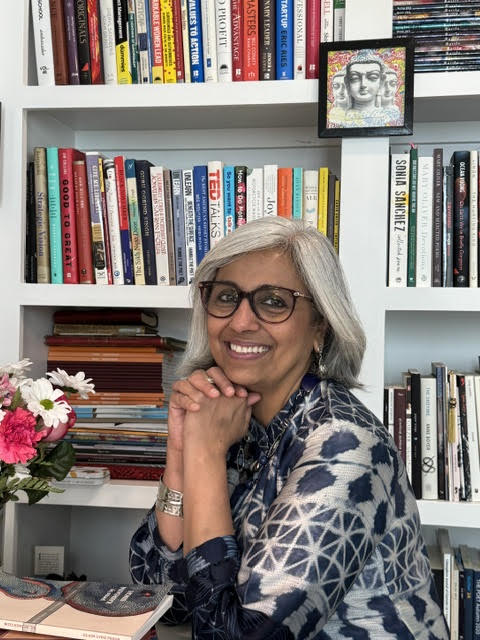
Based in Apex, North Carolina, Singh is an alumnus of the VONA Foundation and the Martha’s Vineyard Institute of Creative Writing. She is managing editor of Poets Reading the News and president of the North Carolina Poetry Society.
“Neither of us is lying,” she writes. “Childhood is not a country we can return to together.”
Her poem ends with an image of memory as a mala – each bead carrying a fragment of a shared past, while the invisible thread continues to hold the beads together.
For Singh, the idea of the threshold is central to her writing. A poem may begin at the threshold of an image, a memory, a time of day or, significantly, the distance between here and there. “I write the most sincerely when I’m at some kind of a threshold,” she said.
That threshold can be physical as well. Singh said that although she has traveled to India several times recently, often for family caregiving or work, she finds it difficult to write while actually there. “When I’m on the soil that I came from, I actually cannot write as much,” she said. “It’s when I board the plane back that all the writing starts pouring out.”
Distance, then, is not merely geographical. It creates the emotional space necessary for memory to become language.
Pramila Venkateswaran, former Poet Laureate of Suffolk County, Long Island, NY, and co-director of the Matwaala festival, similarly spoke about the creative possibilities of distance. Childhood memories, she said, often become more vivid when viewed from far away.
“I find it’s much easier for me to write about something that happened way back in the past,” said Venkateswaran, who leads writing-to-heal workshops in New York. “I can talk about it in a much more vivid manner.”
Her approach to writing is also deliberately disciplined. She described poetry as sadhana – a daily practice, much like that of a dancer or musician. She writes by hand every morning, sometimes beginning with only a few lines, an image, a word or a remembered conversation.
“I really believe in the motor connection between my fingers and my brain,” she said, explaining why she continues to write in a journal rather than on a laptop.
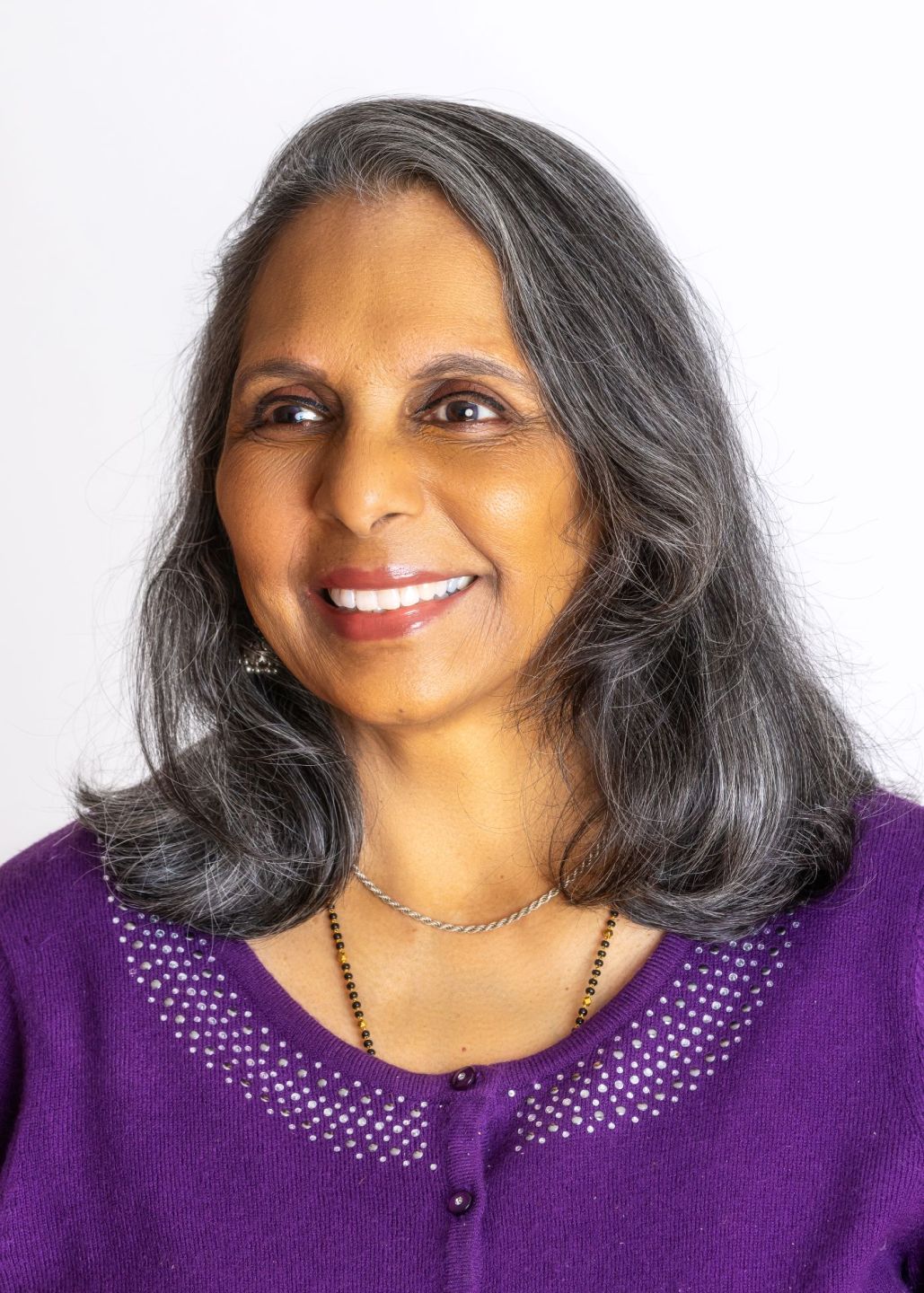
But an image can also become a bridge between seemingly different histories. Venkateswaran recalled hearing the word satyagraha during the eulogy for civil rights leader John Lewis and being transported immediately into images of Lewis on the Edmund Pettus Bridge and of the struggle for India’s independence.
The resulting poem, “Satyagraha”, brings Mahatma Gandhi and Lewis into the same imaginative space. For Venkateswaran, that connection illustrates the condition of the transnational poet. “I am neither there nor here but I am in the moment of being a transnational poet involved with matters of justice,” she said.
Justice, in fact, emerged as a recurring language shared by all three poets.
Anita Nahal, poet and author of Animals (2025) and 16 other books, said she is often moved to write when an event or injustice affects her deeply. Her subjects can emerge from the news, an image, memory or an emotion. “I’m led by emotions,” she said. “If I feel strongly about something I will write.”
A professor at a university in Washington, DC, her poetry often engages with questions of justice, including gender, race, war and violence. In her poem “What’s Wrong With Us Kali Women?”, she invokes the Hindu goddess Kali to challenge patriarchy, colorism and the policing of women’s bodies.
“There’s nothing wrong, nothing wrong,” the poem insists. “That’s your fear labeling us.”
The poem’s Kali becomes not simply a religious figure but a metaphor for women who refuse to remain within the boundaries imposed upon them. For Nahal, writing about injustice is also connected to empathy. “The greatest feeling that one can have is empathy,” she said, describing how she responds to stories of suffering involving people of different ethnicities or religions.
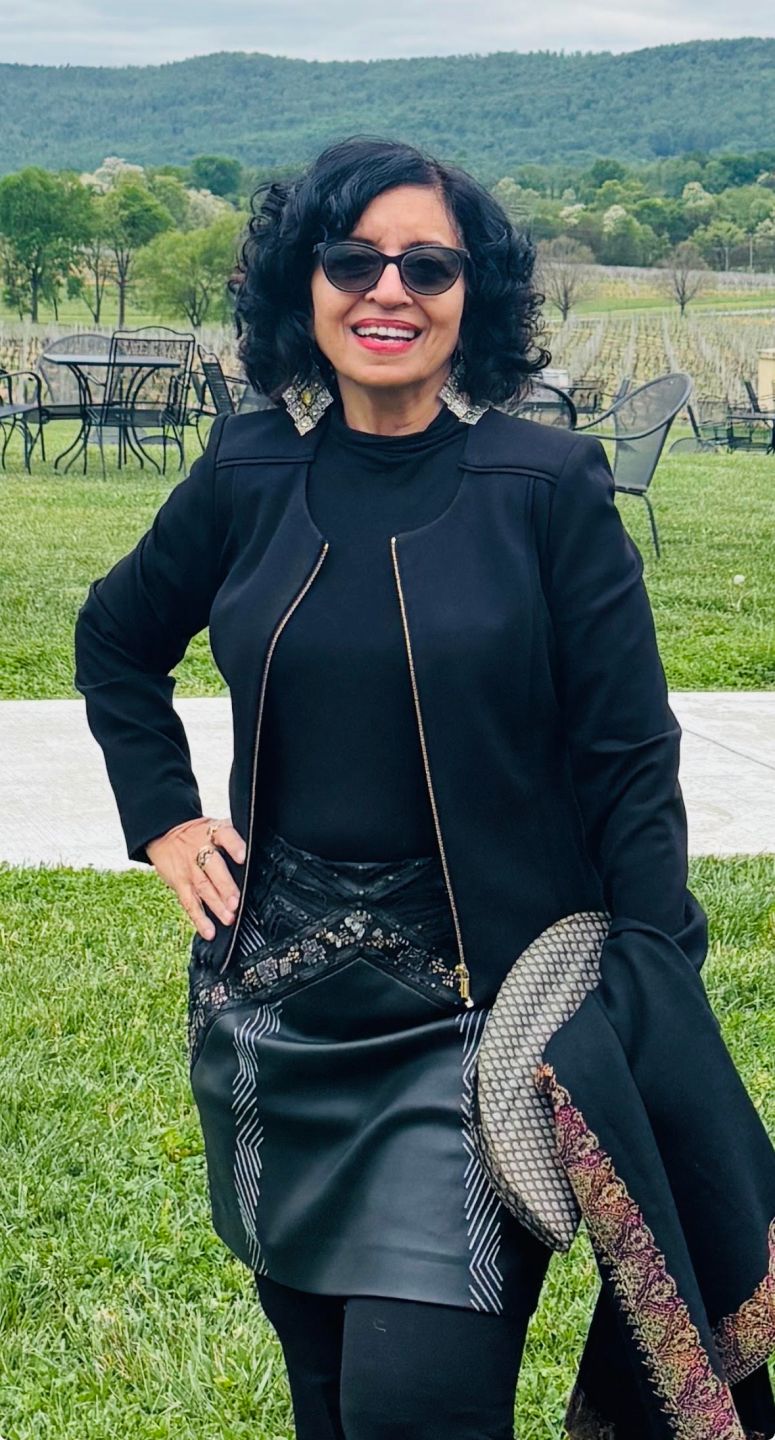
Her historical training has shaped this approach. Nahal’s doctoral work was in US history and her postdoctoral research focused on African-American women’s history. She has subsequently explored parallels and differences between women of color in India and the United States.
The discussion also raised a more difficult question for writers working across cultures: how does one write about another community without appropriating its experience?
Venkateswaran, whose scholarship has examined Tamil Dalit feminist poetry, said research and positionality are essential. In her work on Dalit poetry, she said, she explicitly acknowledged her own social position rather than pretending to speak from the experience of the writers she was studying.
“One has to really study and immerse oneself into that ‘other’,” she said. “Then only then we’ll be able to write about it so that one is not superficial or doesn’t make very cursory judgments.”
Nahal echoed the importance of empathy but stressed caution. Feeling strongly about another person’s suffering does not automatically give a writer the authority to speak for them. Her own historical training, she said, helps ground her responses to such subjects.
The conversation eventually returned to perhaps the most defining feature of diaspora writing: language itself.
Singh argued that diasporic writing often contains a language beneath the apparent language of the text – an emotional vocabulary made up of family sayings, food, mythology, gestures and memories. “The diasporic writing often lives in translation even when no word is literally being translated,” she said. The emotional landscape carried by migrants and their descendants, she suggested, is inherently multilingual.
Venkateswaran has experienced that linguistic layering in her own work. Her poetry has increasingly returned to Tamil literature, and her book Tamil Dalit Feminist Poetics grew out of her engagement with Tamil Dalit poets and their work.
Her collection We Are Not a Museum, meanwhile, explores the Jewish community of Kochi and incorporates Malayalam, Judeo-Malayalam, Hebrew and even German. “These languages, you know, confluence,” she said, explaining how the combination captures what it means to live as a Jewish person in Kerala.
For the diaspora writer, language therefore becomes more than a vehicle for storytelling. It becomes evidence of a life lived across cultures.
Singh’s own Partition poem, “Mangroves”, offered perhaps the most visceral expression of that idea. Written from the perspective of her father’s return to the place of his childhood after Partition, the poem moves through haunted houses, railway platforms, memories and inherited trauma.
Singh revealed that although her father had returned to Pakistan when she was in college, she could not write about the experience until 15 years later, after she had moved to the United States. “I could not put pen to paper,” she said.
A later political moment in the US became the trigger. Events surrounding elections and the Mexico border wall brought the inherited history of Partition back into focus, demonstrating how diaspora memory can be activated by the politics of the present.
That, perhaps, is the central paradox of writing between here and home: the two places are never entirely separate. They speak to one another through memory, politics, family, language and injustice.
For these poets, diaspora is not simply a condition of being away. It is a creative space – a threshold where two histories can meet, where languages can overlap, and where memories that seemed dormant can suddenly become urgent. As Singh put it, the diasporic emotional landscape is multilingual even when the words on the page are English.
And perhaps that is why, for writers living between places, home is not necessarily somewhere to return to. It is something that keeps returning to them.
Discover more from eShe
Subscribe to get the latest posts sent to your email.
0 comments on “Writing between here and home: how diaspora poets chart distance, memory and justice”