

By Farah Ahamed
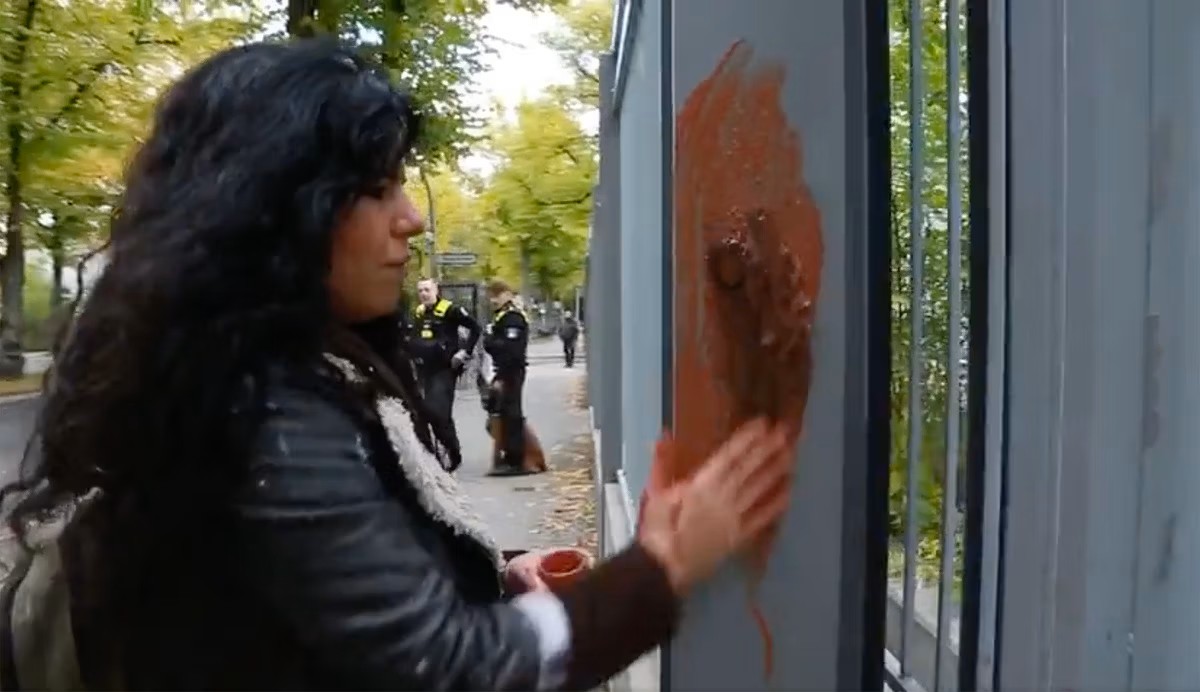
At the height of the Iranian women’s revolution in September 2022, sparked by the killing of Mahsa Amini, Kurdish artist Zehra Dogan wrote Zen, Zindagi, Azadi – Women, Life, Freedom on the walls and railings outside the Berlin Embassy using a mixture of henna, hair and menstrual blood. She was arrested by the authorities and imprisoned.
In an interview with BBC in 2019, Dogan explained that for her menstrual blood was a political weapon. It was the medium through which she expressed kinship with women around the globe living under oppression. In her artistic intent, menstruation is personal, political, communal and universal.
Dogan’s activism evoked the primal bond shared by all humanity – menstruation. Every person exists because their mother had a period, and in this sense, everyone is metaphorically connected through it.
Solidarity around menstruation, arguably, should be instinctive, but it is not. Many recoil from menstruation because it requires confronting deeply held assumptions. Nonetheless, in some places the rituals around it allow for a fostering of connection, while in others, menstrual art forms inspire kinship.
Where I grew up in Kenya, the Swahili word for solidarity is harambee, which means ‘pulling together’ or ‘to come together’. Harambee is generally associated with fundraising but in the early days of Kenya’s independence it was a rallying cry by the first president to encourage citizenship and nation-building.
In this essay I suggest that seen through the lens of harambee, the menstruation experience fosters spaces of sisterhood, inspires artistic activism, challenges stigma, and becomes a source of collective action. Dogan is an instance of an artist using menstrual blood as paint to illustrate her harambee, or global solidarity.
A different form of solidarity around menstruation is shown by the Kalasha women who live in the Chitral valley, Pakistan. They follow a culture where they are azat, or free, and possess chit, or choice.
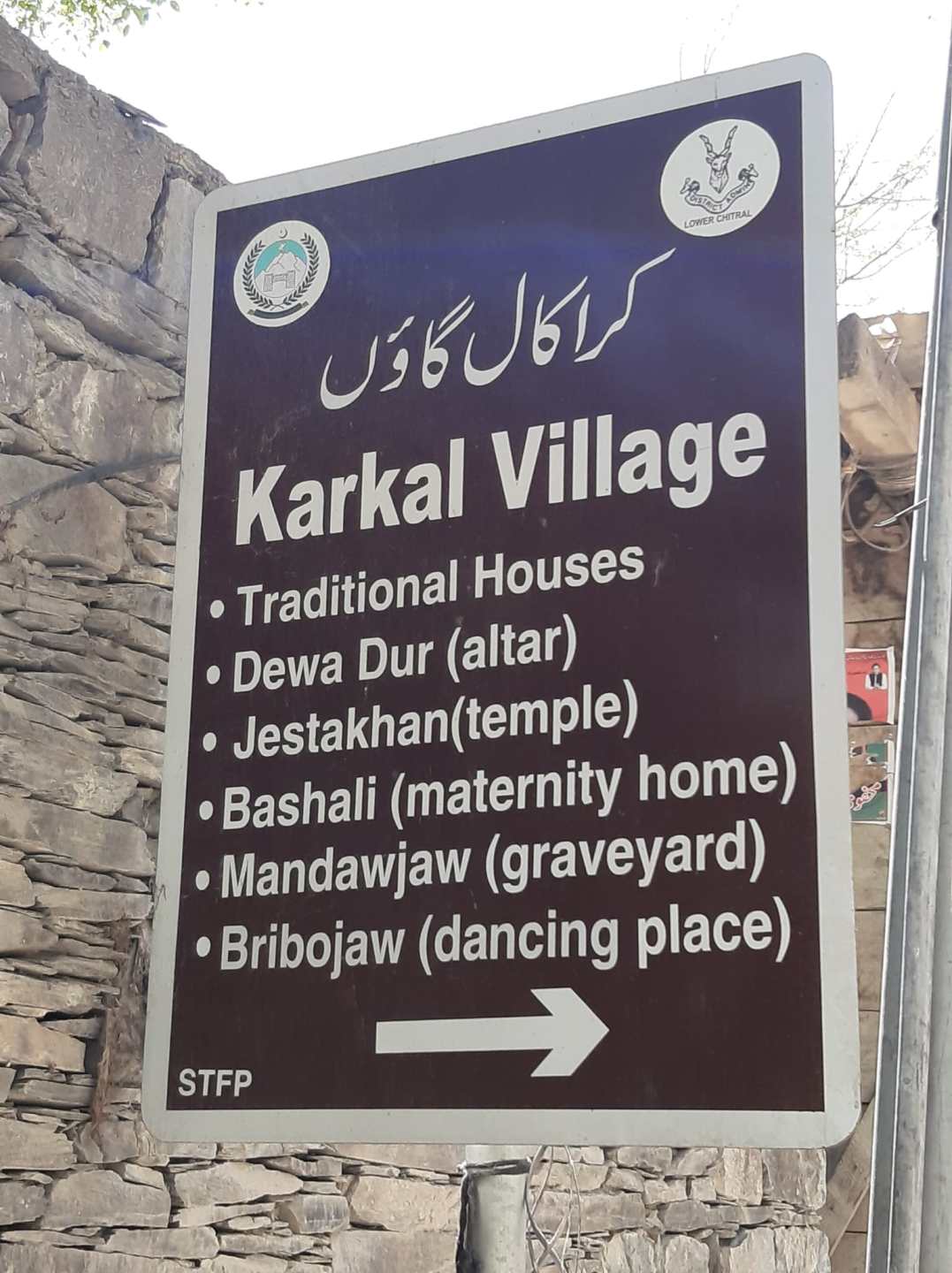
Across the Kalash village, there are wooden signs pointing to the Bashali, or maternity home where women go during menstruation to rest and give birth. The Bashali is a communal space created and curated by Kalasha women to foster female kinship. It is closed to outsiders and shielded from male entry.
In 2022 while visiting Pakistan, I spoke to the Kalasha women, and learnt how time spent inside the Bashali strengthened their sense of agency and collective identity. They told me about Dezalik, the goddess of fertility, and childbirth and believed she possessed life-giving powers, protected them and reinforced their connection to the divine feminine and to one another.
The bonds of Kalasha female solidarity begin with a girl’s first period when she is initiated into the Bashali. At the end of her first menstruation, the women in the Bashali wash the girl’s clothes and decorate her with beads to celebrate her transition into womanhood. She returns to her home reassured that she belongs to a dependable tradition of sisterhood.
Inside the Bashali, women speak openly about sex, menstruation and reproductive health. They share advice, humor and their experiences. Younger girls learn sewing, beadwork and embroidery from older women. Through time spent in the Bashali, rituals and relationships are passed on through multi generations.
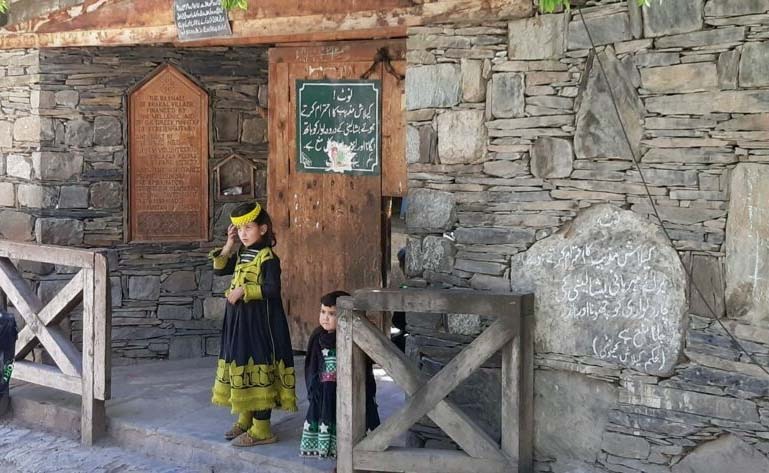
The Kalash practice of Bashali demonstrates another form of harambee illustrating how female kinship, craft making and cultural rites endure around menstruation.
Similar to Dogan, another example of an artistic practice that embodies universal female kinship is Raqs-e-Mahvaari. This was a dance choreographed by Pakistani dancer Amna Mawaz Khan to illustrate the movement of the menstrual cycle through her body.
To emphasize how maternal care shaped female identity across generations, she wore her mother’s salwar kameez. Her feet were painted red and, as she danced, she left crimson footprints across the floor. This was to show her solidarity with women who unexpectedly menstruate and stain their clothes and are humiliated.
Yet by deliberately placing these marks before an audience, and through dance gestures, Khan transforms a moment of embarrassment into an act of visibility and resistance. Through movement, she reclaims bodily autonomy and the space of the dance, chaar deewar or four walls, while showing her harambee with women who experience period stigma and shame.
A different form of menstrual solidarity is at the heart of the crochet work of Turkish artist Azadeh. She wanted to highlight her experience of what it was like having for her when she had her first period at eight years old after her mother had died.
Too ashamed to ask her father, she confided in a neighbor, who explained to her what menstruation was and also taught her how to crochet. Her neighbour’s kindness shaped Azadeh’s relationship with menstruation and craft making. Her art, A Period Piece, presents a crocheted image of a menstrual pad stained with blood. Azadeh made this from wool collected from charity shops.
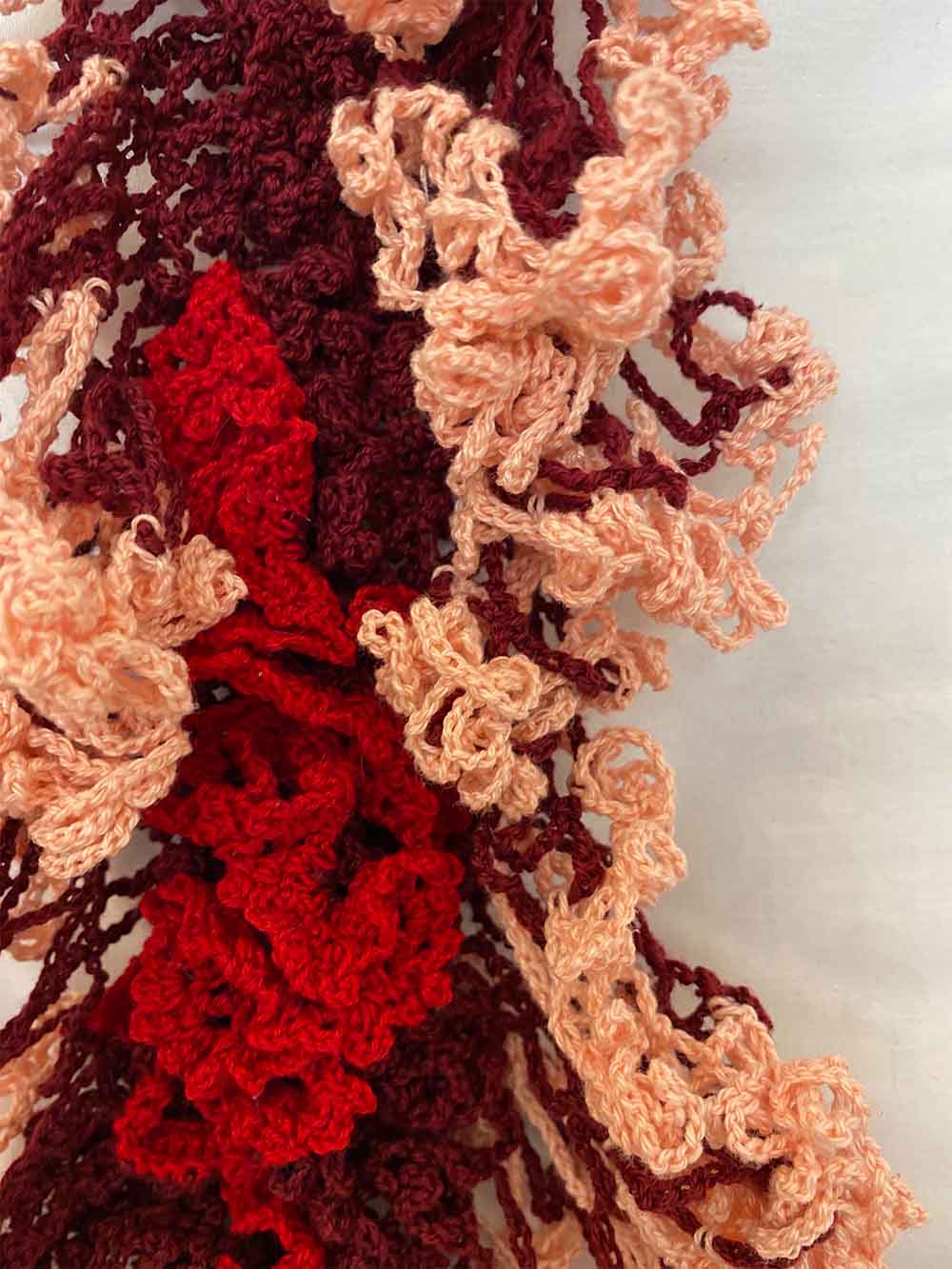
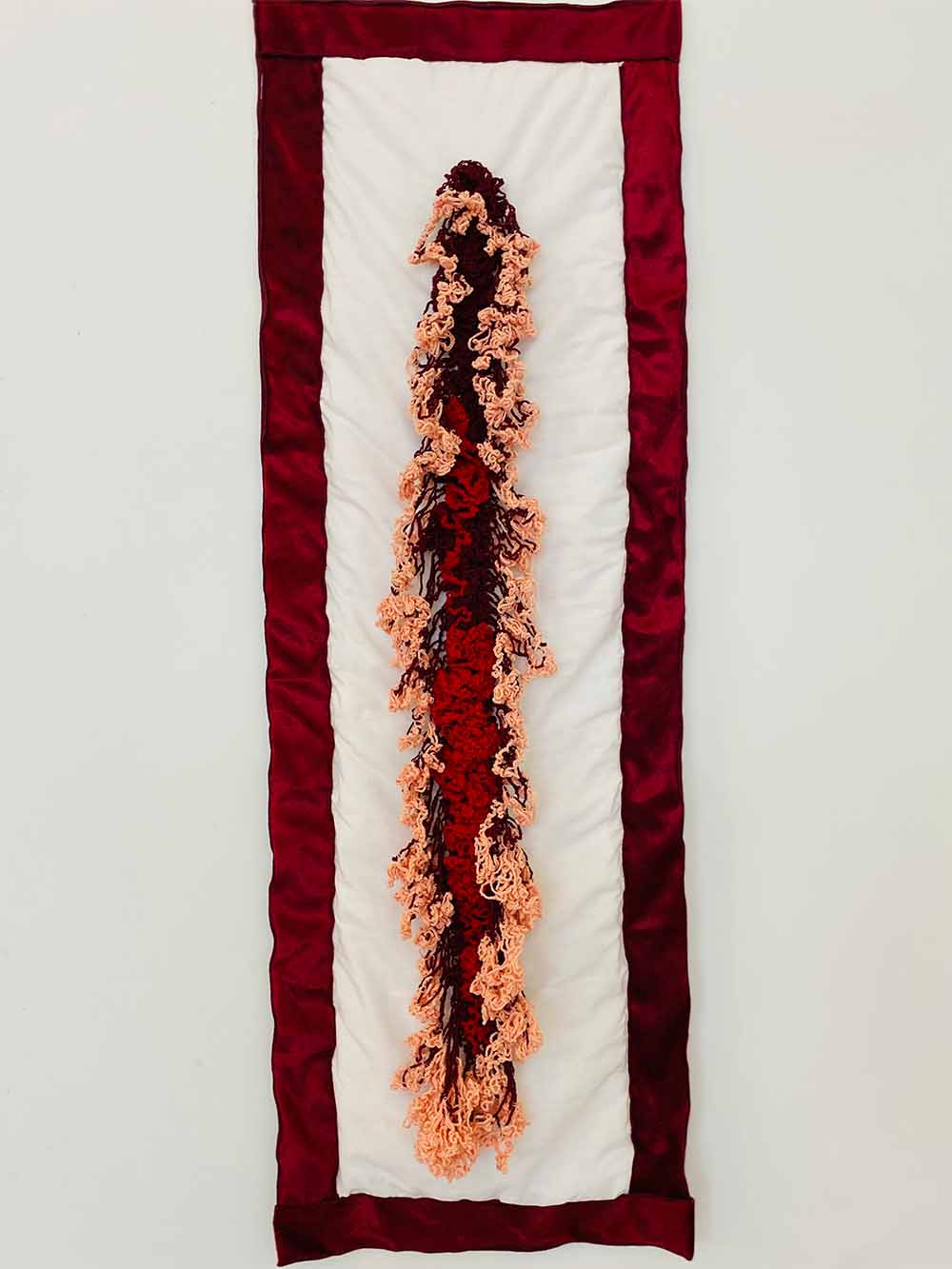
For her, using the threads donated to the shops by unknown women to specifically make menstrual art was a way to form a connection and preserve a chain of female experience that went beyond herself.
A similar relationship between materials and menstruation and how it builds or extends harambee is highlighted in the work of the Indian nonprofit Goonj, who recycle discarded textiles into reusable cloth pads and distribute them during disasters. In this way Goonj turns ordinary fabric into a carrier of harambee; a solidarity is created through the transformation and sharing of cloth for menstruation forming an unexpected relationship between strangers.
Yet making menstruation visible does not always result in solidarity – it can also provoke resistance. Amsterdam-based Indian artist Rah Naqvi’s embroidered representations of underpants, menstrual pads and tampons, decorated with crimson sequins and beads to represent bloodstains, sought to challenge menstrual stigma and extend the conversation around menstrala or period art.
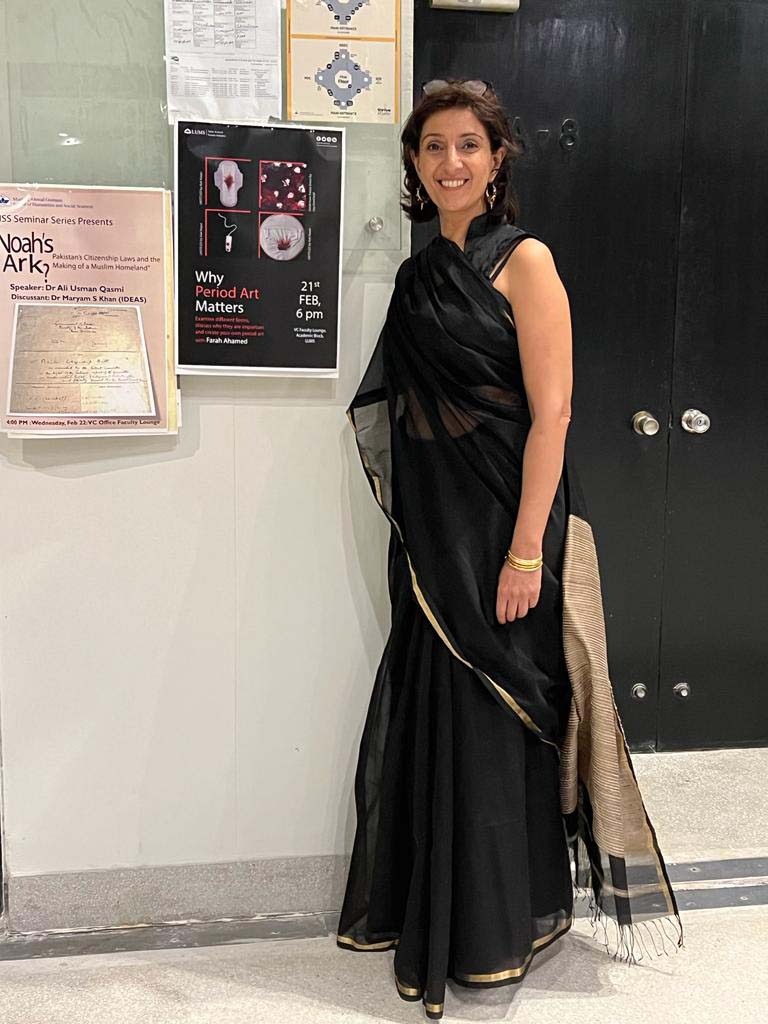
However, when Naqvis’s work was displayed on a poster for a menstrual art workshop in Lahore, it provoked accusations of promoting immorality. The response revealed not only society’s discomfort with menstruation but also its deep anxiety about the power of menstruation to embolden female collectives.
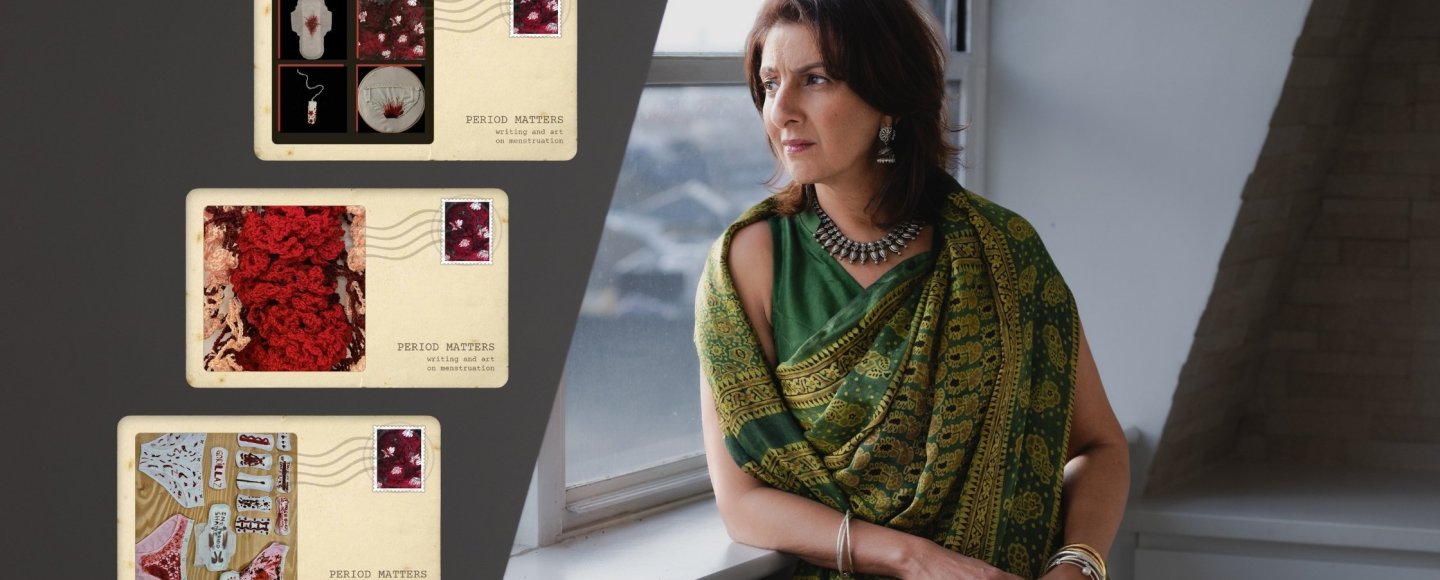
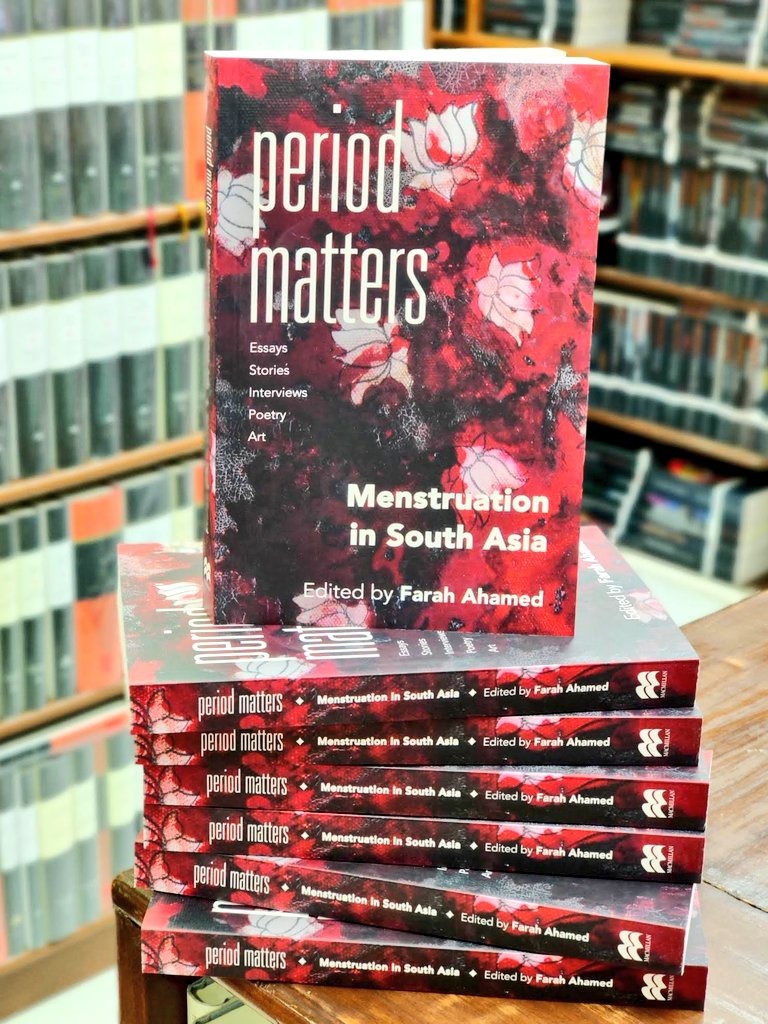
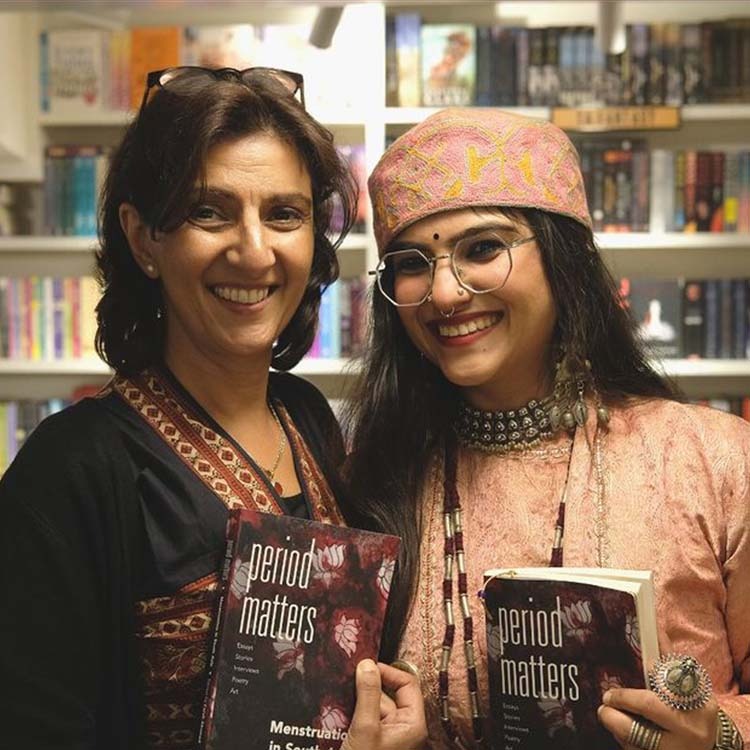
Indian artist Lyla FreeChild also explores the symbolic power of menstrual blood in her work, Adya Shakti, and a detail of her painting appears on the cover of the anthology Period Matters: Menstruation in South Asia (Pan Macmillan, 2022), which I edited.
In Adya Shakti, FreeChild depicts lotus flowers floating in a sea of menstrual blood around the bleeding goddess Lajja Gauri, as a way of reclaiming the lotus from its association with India’s ruling party, the right-wing Hindu nationalist BJP, and repositioning it within a feminine, life-giving framework.
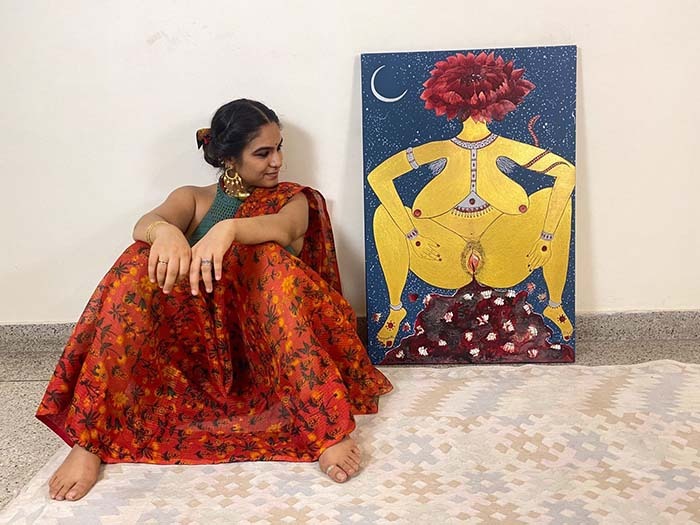
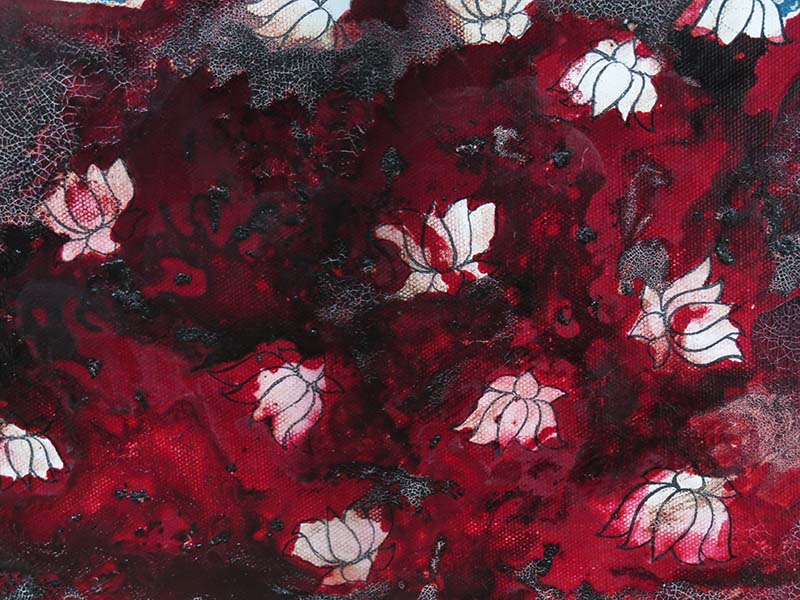
Like Dogan’s intervention on the Berlin Embassy walls, and Mawaz Khan’s dance, FreeChild demonstrates how menstrual art is a medium to express harambee: on the one hand solidarity and resistance and on the other a reaffirmation of menstrual blood as a life-giving, regenerative force that connects humanity.
Religious interpretations reveal competing meanings around menstruation, which impact whether there is harambee or the opposite around the experience. In southern India, the Sabarimala temple became the focus of a legal debate around periods, because women of reproductive age were forbidden from entering the temple.
Various explanations are offered for the restriction, including beliefs that menstruating women might pollute the sacred space, tempt the deity, or distract male pilgrims. However, in 2018, two women entered the temple, arguing that exclusion violated their constitutional rights to equality, freedom of movement, and freedom of worship. Their actions sparked widespread protests.
Particularly striking was the fact that many women opposed the challenge, and appeared at the demonstrations carrying banners declaring “Ready to Wait”. The controversy demonstrated how even though menstruation is a shared experience, it did not automatically produce a single, unified female reaction. It also revealed how religious belief, cultural values and political identities could fracture female alliances as readily as they could strengthen them.
A contrasting example appears at the Kamakhya temple in Guwahati, where the goddess Maa Kamakhya is believed to menstruate once a year for four days. During this time the Ambubasi Mela is held in her honor and her menstrual cycle, presented as a time of divine feminine power, becomes a community celebration.
As part of the festival, the temple remains closed, and thousands of devotees, both women and men, gather outside its gates to pray, chant and fast. On the final day, Maa Kamakhya’s statue is bathed, the temple reopens, and there is feasting and dancing.
Unlike Sabarimala, where menstruation becomes grounds for exclusion, Kamakhya transforms it into a shared, sacred event unifying the whole community. The different temple rituals reveal how in religious contexts menstruation possesses no single meaning and can generate division or harmony.
The importance of solidarity around menstruation becomes clearer when it is absent. In 2022, during a road trip across Multan, I spoke to a woman sitting outside the Hazrat Sheikh Sadan Shaheed shrine in Muzaffargarh, Punjab, Pakistan. Amina described how she had been ostracized by her nomadic community because she had not conceived after two years of marriage. The other women interpreted her continued menstruation as evidence that she had been cursed by God.
Amina spoke of feeling betrayed by her own body and isolated from her community. She tied colored ribbons at the shrine and prayed for divine intervention, believing that pregnancy would restore her place amongst the other women. Her story reveals how the absence of female kinship around menstruation can deepen marginalization.
In contrast to Amina’s experience, Erum, a woman incarcerated in a jail in Pakistan, described how inmates came together to help each other manage their menstruation. She explained how it often happened that the women menstruated simultaneously, and this placed pressure on their limited supplies; pads and painkillers were scarce and carefully shared.
There were often inmates who held on to their caste or religious biases, but when it came to menstruation, they showed compassion and understanding. They tore their dupattas into strips to create reusable menstrual cloths and distributed them to whoever needed them. These pads were washed and passed on again.
Everyone realized survival depended upon mutual care, transforming menstrual management into a practical form of harambee. Under extreme circumstances, a necessary solidarity around menstruation prevailed.
The examples here reveal how the menstruation experience, although natural, biological and common to all humanity does not automatically result in a connection. Harambee is not an inevitable consequence of menstruation but represents a possibility that communities may choose to embrace or resist.
Seen through the lens of harambee, menstruation reveals the human capacity to recognize shared vulnerability, build communities of care, and resist the forces that seek to oppress and divide.
An ordinary bodily process ultimately reveals extraordinary truths: that solidarity often grows from the experiences we are taught to hide, and one of humanity’s most universal experiences can also become one of its most profound sources of connection.

Farah Ahamed is a human-rights lawyer based in UK and Kenya. She is a widely published writer and the editor of Period Matters: Menstruation in South Asia (Pan Macmillan India, 2022). Read more of her work at www.farahahamed.com.
Discover more from eShe
Subscribe to get the latest posts sent to your email.
0 comments on “Harambee: menstrual blood and the politics of solidarity”