
When Dipisha KC saw the first video of floodwaters surging through Rasuwagadhi, near Nepal’s border with Tibet, her heart “dropped into her stomach”.
“I panicked when I saw the video,” says the 23-year-old program manager and youth developer with the Bhutanese Community of Central Ohio (BCCO), where she has volunteered since she was 13. “I immediately felt that we needed to help Nepal.”
Elsewhere in Ohio, Yogita Khanal, 35, was turning a Teej festival gathering into a local relief effort. In Madison, Wisconsin, Kalpana Rizal, 45, was helping bring Nepali and Bhutanese Nepali neighbors together at a vigil. Each woman understood Nepal’s loss through her own family’s past.
Across the Bhutanese Nepali American community, people wanted to give but many did not know where or how to send money. The GoFundMe campaign Bhutanese Americans United for Nepal Flood Relief gave them an immediate shared channel.
Coordinated through BCCO with community leaders and organizations nationwide, it began with a $25,000 goal. It had raised $114,877 from 840 donations when contributions were paused. BCCO transferred the donation to Nepal’s Prime Minister’s Disaster Relief Fund.
The figure tells how much the community gave. The lives of KC, Khanal and Rizal help explain why.
“Nepal gave me a home”
Kalpana Rizal was about nine or 10 when her family fled southern Bhutan.
Her late father, Padma Lal Dhakal, was a respected community leader who served as the gup, or village headman, of Lamidara Block, now known as Mendrelgang Gewog, in Tsirang, Bhutan, during the 1980s before the expulsions began. His family traced its roots to Taplejung, Nepal. Rizal says he spoke publicly about preserving the Nepali language and culture, and was imprisoned for that. With him still in jail and security forces entering villages, the family left in the middle of the night.
Her father later joined them in a refugee camp in Jhapa, Nepal.
“In Bhutan, I lost my house, my bedroom, my school, everything,” she says. “Nepal gave me a home.”
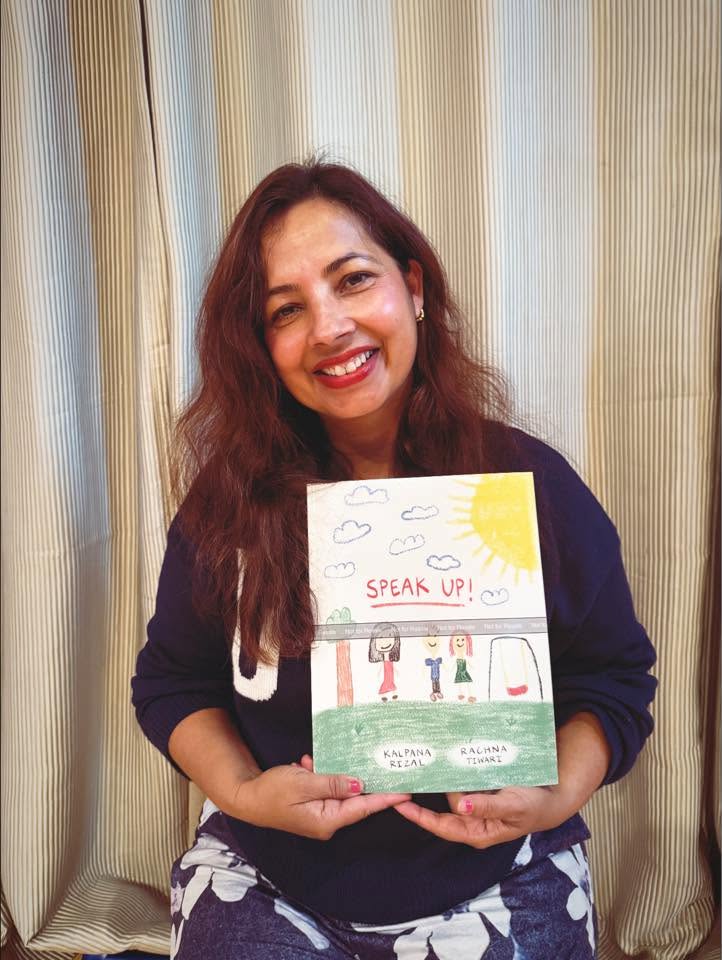
Rizal’s great-grandmother’s life embodied the family’s history of displacement. Seven decades after migrating to Bhutan from Nepal as a baby, she returned at the age of 70, not as someone coming home, but as a refugee. She spent the next 14 years in a refugee camp in Nepal and died there in the land of her birth.
That history shaped how Rizal understood the suffering caused by the floods.
“We lost our homes, land, money and country. We know that pain,” she says. “We know what it means to lose everything and become homeless overnight. We do not want anyone else to go through that.”
She adds: “Nepal had limited resources and was facing its own political challenges, but it still gave us shelter. India was closer, but it did not take us in. If Nepal had not accepted us, where would we have gone?”
At the vigil in Wisconsin, Nepalis, Bhutanese Nepalis and members of the Tibetan community gathered and contributed to Nepal’s official relief fund. Rizal’s aunt Mangala Sharma, who had returned from Kailash Mansarovar only two weeks earlier, began to cry as she spoke.
“Nepal gave me shelter. Nepal is everything,” Rizal recalls her saying. “How can we help?”
That attachment to Nepal has carried into the next generation. Rizal’s older daughter was born in Nepal and her younger daughter in the United States. Both identify as American and Nepali, and both volunteer in their community.
“We live as one Nepali samaj (community),” Rizal says. “We love Nepal, and we are Nepali.”
What women carry forward
For Yogita Khanal, the floods were not a distant disaster unfolding on a screen. Two members of her extended family had gone missing while traveling towards Kailash Mansarovar.
“Malai nai pareko jasto bhayo,” she remembers thinking. It felt as though it had happened to her.
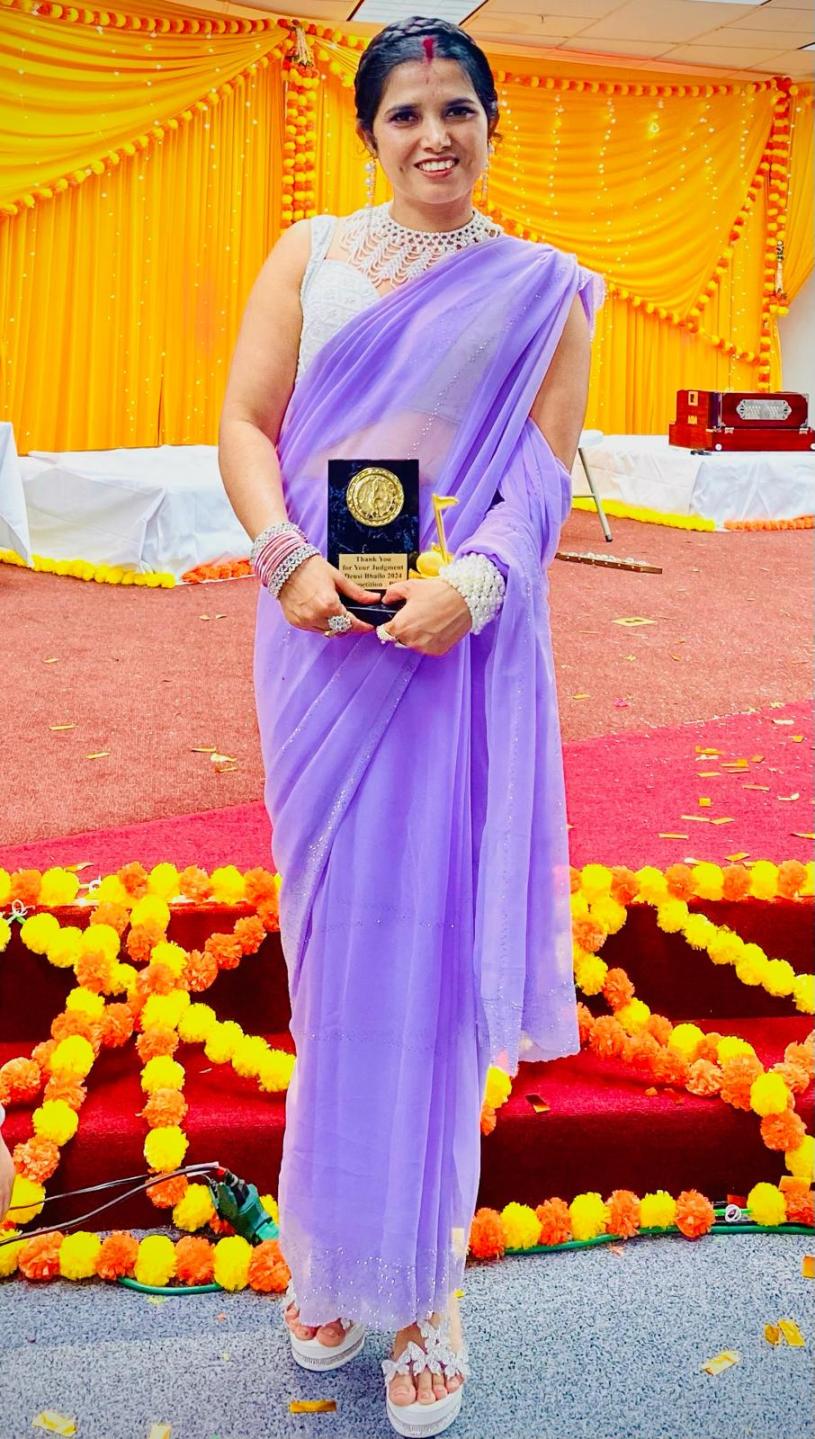
Khanal founded the women-led Nepali Cultural Dance Club in Reynoldsburg, Ohio. Its members had been preparing for Teej, but celebration no longer felt appropriate while families in Nepal were grieving. Instead, their gathering became what she describes as a place to share sorrow and discuss how they could help.
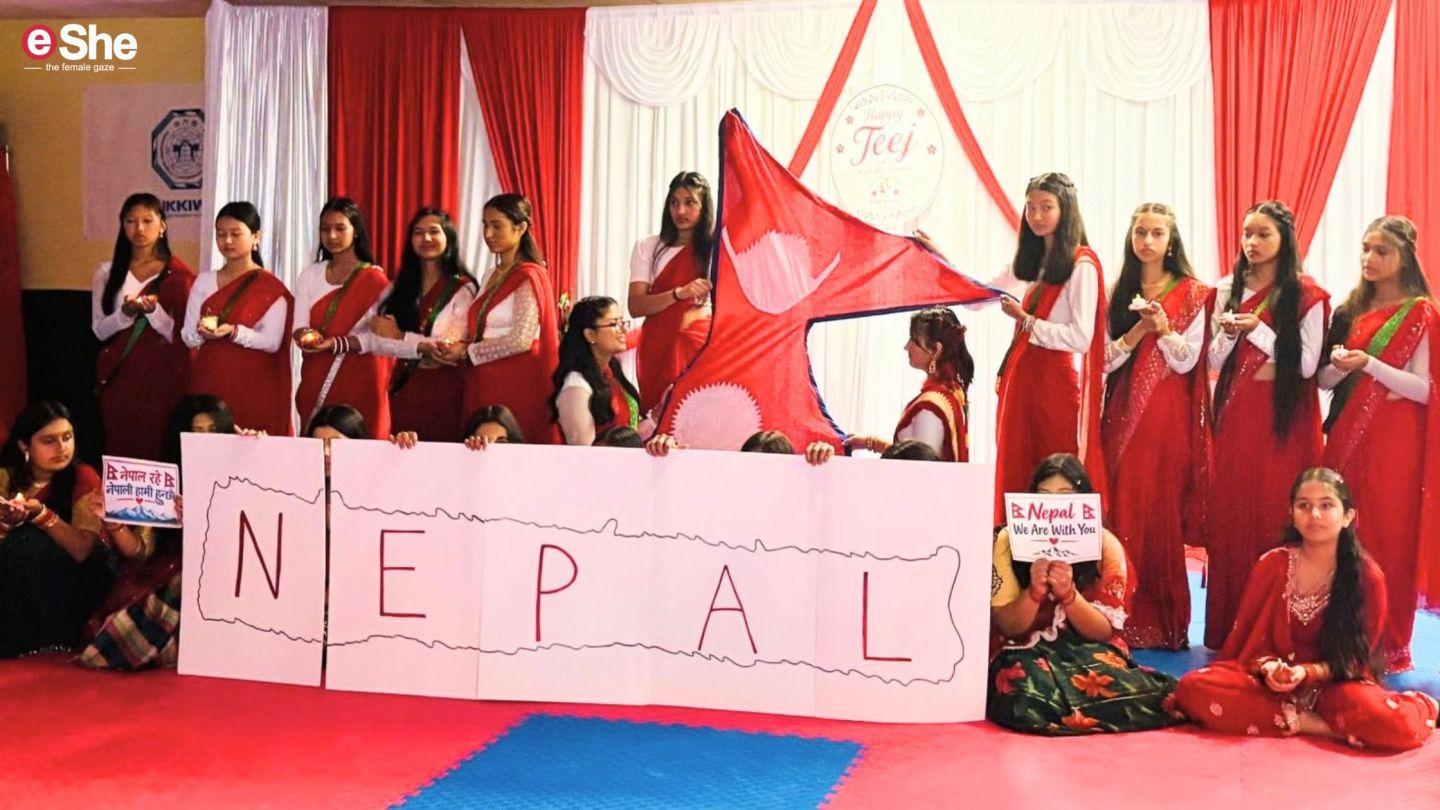
The group held a candlelight event and raised $436 from about 25 to 30 members. It was a small part of the larger relief effort, but it reflected how the campaign spread through cultural groups, family networks and community gatherings across the United States.
Khanal was born in Bhutan and taken to Nepal when she was two. She grew up in a refugee camp and moved to the United States at 17. As a child, she believed she was Nepali. It was only when she saw Bhutan listed as her birthplace on a school document that she began to understand the history that had made her a refugee.
Khanal remembers children from the refugee camp being called Bhutaney when they went to a nearby settlement to play football. Some residents complained that the refugees had nothing of their own and were using resources that belonged to local people.
“As we grew older, they made us feel that we were not part of them,” she says.
Her family, she says, had been driven from Bhutan for speaking Nepali and preserving Nepali culture. In the refugee camp, they continued to celebrate festivals like Teej, Dashain and Tihar. Those traditions became a source of continuity in a life shaped by displacement.
That history now informs the work of her dance club. For 13 years, Khanal and other women have volunteered their time to teach Reynoldsburg children Nepali dances, festivals and the meanings behind them. The club includes both Bhutanese Nepali and Nepali families and introduces children to traditions from different communities and ethnic groups.
The work was inspired by her father, who volunteered as a Nepali-language teacher in the refugee camp. “My father used to say that language and art go together,” Khanal says.
Her care for the children is also shaped by memories of camp life. Water was distributed only twice a day according to hut numbers, she recalls. If a family missed its turn, it could go without water. Today, she makes sure children receive water and snacks after dance lessons.
For Khanal, preserving Nepali culture is not simply about performance. It is a claim to an identity that displacement could not erase.
“We are Nepali,” she says. “Nepal is ours. If Nepal itself does not remain, what meaning would our language, art and culture have?”
Naming both histories
Dipisha KC represents a generation whose earliest memories of Nepal begin inside a refugee camp.
As a child, she remembers being happy because the adults around her worked to make camp life feel normal. Only later did she understand that families were surviving on fixed food rations distributed once every two weeks.
“Looking back now, everyone was struggling,” she says. “But no one refused food to another person. We only had each other.”
That memory of collective care shaped how KC approached the flood response. She helped establish the GoFundMe and managed much of its digital circulation.
As the campaign moved beyond its original $25,000 target, she watched hundreds of smaller contributions build into a national response. Businesses, organizations, families and individuals gave what they could. Some donors had no direct connection to either Bhutan or Nepal.
“It was the accumulation of so many people coming together. Everybody gave what they could,” she says.
Women were central to carrying the appeal through social media, email and personal networks. KC says their videos and messages translated figures on a fundraising page into the experiences of families who had lost homes and loved ones.
“Women brought humanity to it,” she says. “It was not just a number on a screen.”
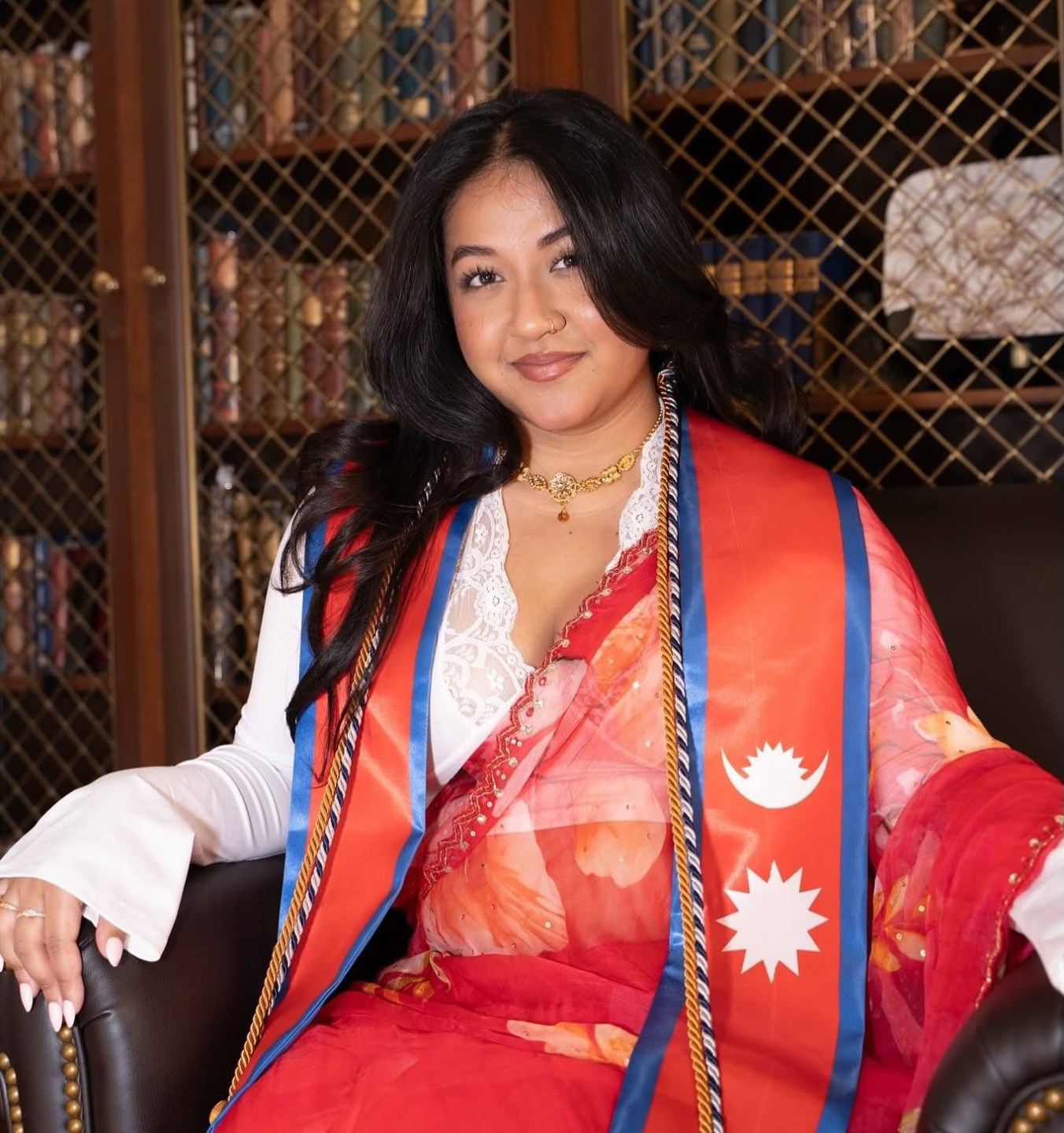
For KC, the campaign also brought questions of identity to the surface. Born in Nepal, she moved to the United States at eight and grew up believing that being Nepali was an unquestioned part of who she was. That certainty fractured in college, when Nepalis who had initially welcomed her as one of their own pulled back after learning that she had grown up in a refugee camp for those expelled from Bhutan.
For the first time, KC understood that her belonging could be conditional. She considered herself Nepali, but not every Nepali considered her one of them.
KC now deliberately identifies as Bhutanese Nepali.
Nepal represents the country of her birth and the relationships that shaped her childhood. Bhutan represents the history of expulsion and persecution her family endured. Refusing to erase that history has also shaped her education: she studied global security and human rights at the University of Virginia and advocates for reconciliation in Bhutan.
“I have so many relational ties to Nepal, but I also know everything my family went through in Bhutan,” she says. “Leaving that out would be a disservice to my identity.”
A home they could not fully claim
The community’s identification with Nepal has not always been returned.
Sudarshan Pyakurel, executive director of BCCO, describes Nepal as “a home that never became home”. His grandfather came from Panchthar, Nepal, and when his family fled Bhutan in 1992, they believed they were moving towards an ancestral homeland.
Nepal gave them refuge, Pyakurel says, but not always the recognition they had expected. “It is a home we were never able to claim as our own,” he says. “But it is still a spiritual home.”
That distance has sometimes followed Bhutanese Nepalis to the United States. The two communities share language, culture, food, religion and festivals, but they do not always share the same understanding of who can claim a Nepali identity.
Still, the impulse to support Nepal is not new. After the 2015 earthquake, when many Bhutanese families were still rebuilding their own lives in the United States, BCCO members went door to door and collected about $5,000 for the Nepal Red Cross. Communities in different cities organized similar efforts, often separately and with limited resources.
The flood campaign brought those networks together on a far larger scale. It did not resolve the complicated question of belonging. But it demonstrated that the community’s attachment to Nepal had survived displacement, rejection and another migration across the world.
KC says the donations should not be read as a demand for recognition or repayment. “There are no strings attached,” she says. “We want to give back to a country that once gave to us.”
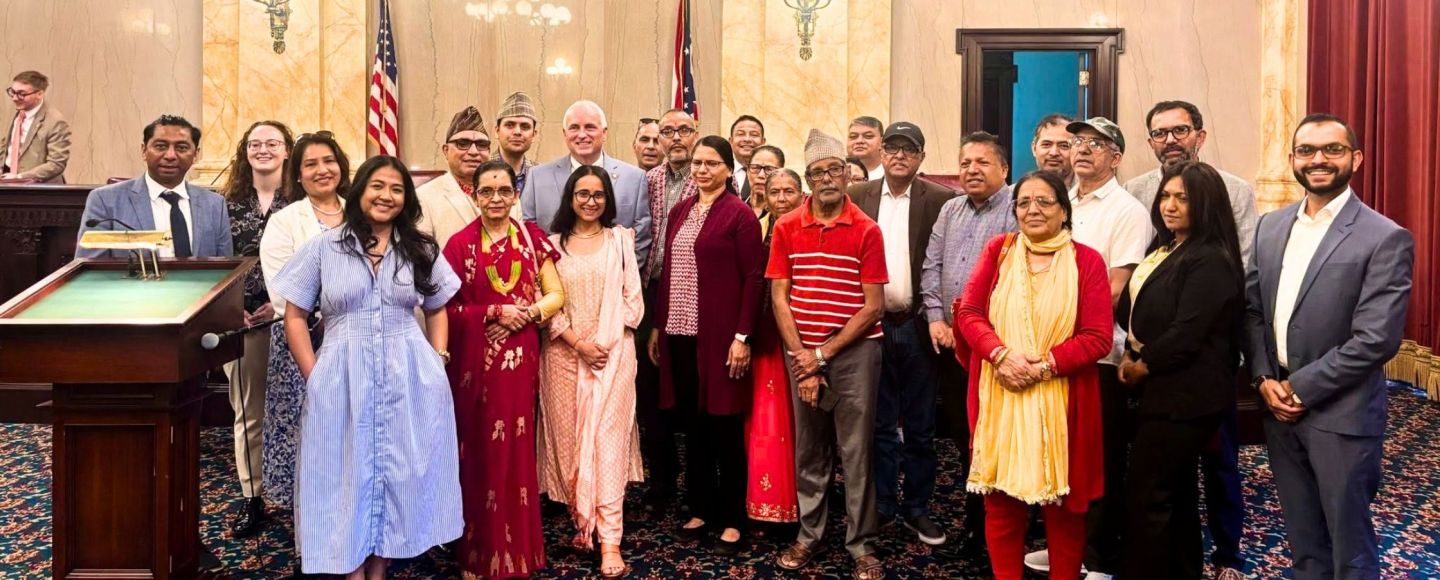
Lead image: Bhutanese Community of Central Ohio (BCCO) in June 2025 at the Ohio Statehouse in Columbus, Ohio, at the third hearing for Senate Resolution 69, “Recognize Bhutan’s Responsibility for Oppressing 120,000 Citizens”.
Discover more from eShe
Subscribe to get the latest posts sent to your email.
0 comments on “Bhutanese Nepalis in US raise $114,000 for Nepal flood relief – three women share why”