
SEATTLE, WA: Why is the South Asian independent film industry so gatekept, and how can those barriers be dismantled? How can independent filmmakers find distribution and audience after completing their films? What needs to be disrupted in the current film ecosystem?
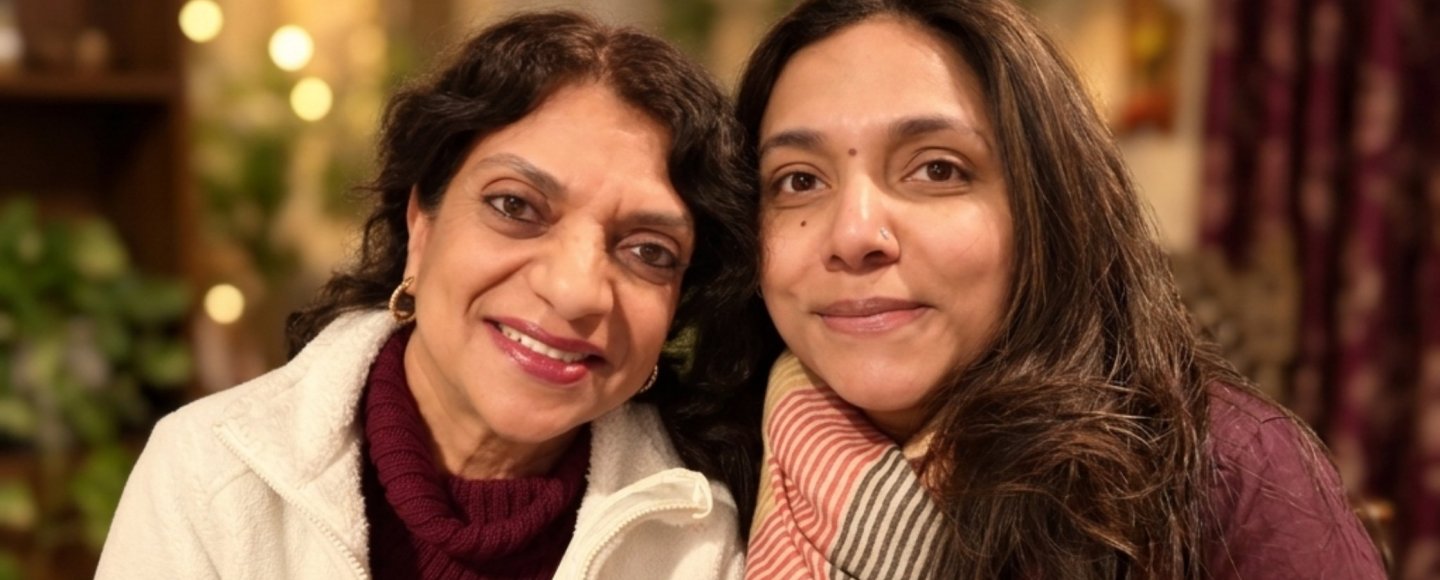
These were some of the questions that led Seattle-based Shailaja Rao and Sandhya Nathan to set up their new initiative, South Asian Lens (SAL), a year ago.
The collective operates as a virtual, volunteer-led space focused on knowledge sharing, community building, and cross-border collaboration between film industry professionals in South Asia and the diaspora.
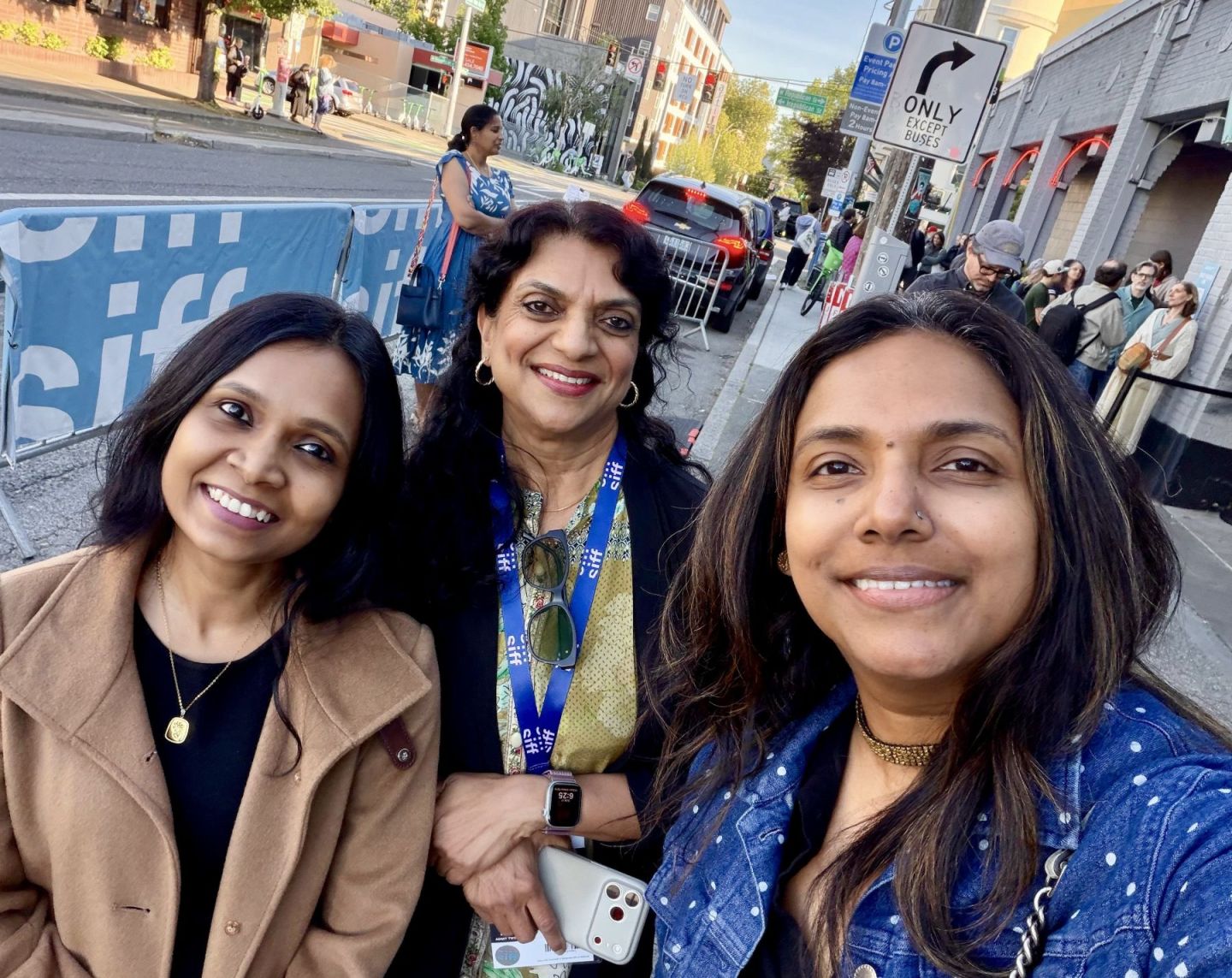
Shailaja Rao, drawing on her experience in Seattle’s South Asian film circuit including as a film programmer at the Seattle International Film Festival (SIFF), observed that diaspora filmmakers frequently reached out to her individually with questions about scripts, festival submissions, and next steps – revealing a clear gap in communal knowledge-sharing.
Sandhya Nathan, coming from a background in community organizing and systems change, joined as a thought partner and co-founder, motivated by the desire to disrupt the gatekeeping that characterizes the film industry.
“When Shailaja came to me with the seed of an idea, I was equal parts skeptic and excited… What drew me in was the idea of challenging what the mainstream image of South Asia looks like, and creating pathways to knowledge, resources, audience and community for stories from corners I hadn’t been exposed to,” Nathan said in an eShe TV conversation.
Rao added: “Festivals are short-lived – two or three days – and communication gaps emerge afterward. A virtual, perpetual space felt like the answer. The goal is to bridge South Asian artists in the region with those in the diaspora, strengthen cross-border partnerships, and make knowledge publicly accessible rather than paywalled.”
Challenges facing independent South Asian filmmakers
Both founders identified systemic and practical obstacles that independent South Asian filmmakers – particularly those in the diaspora – routinely encounter.
At the macro level, the film ecosystem is deeply gatekept: information about festival submissions, distribution and funding is available but not readily accessible, and success often depends on being in the right place at the right time with the right connections.
“Systems are designed to favor a few,” Nathan said.
At the practical level, the most commonly cited challenges are funding and distribution. Grants for filmmakers are few and increasingly scarce, particularly as arts funding continues to decline. Once a film is completed and has gone through the festival circuit, filmmakers are often left without a clear path to distribution or streaming platforms, explained Rao.
The journey can also be deeply isolating, as the fraternity of peers tends to dissipate as everyone becomes absorbed in their own projects.
Nathan also highlighted the absence of a “pay-it-forward” culture in the industry – while filmmakers do mentor others at an individual level, there is no systemic, consistent mechanism for passing knowledge forward.
Bolstered with the support of industry stalwarts like filmmakers Gursimran Datla, Priya Vasisht and Tathagata Ghosh, SAL aims to fill this gap by documenting pathways and archiving the cultural memory of the North American South Asian diaspora film community.
Independent cinema and the question of representation
The eShe TV conversation also addressed the perception – and reality – of how South Asian films are received by Western audiences. The dominant image of South Asian cinema for many non-South Asian audiences is Bollywood, which operates with a very different narrative structure and a massive distribution and marketing machinery that independent cinema simply does not have.
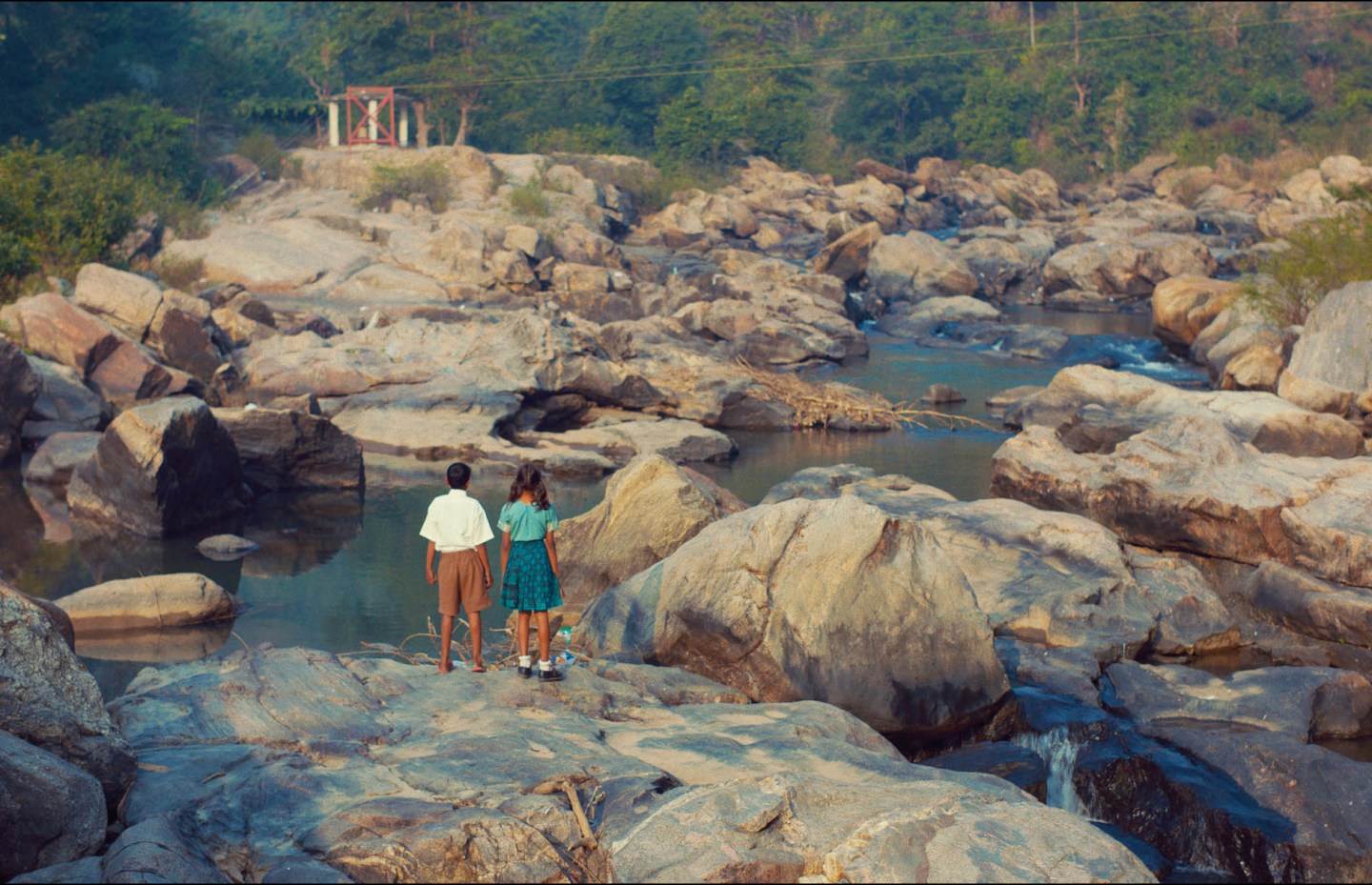
Rao challenged the notion of “poverty porn”, arguing that authentic independent cinema – particularly films featuring women’s stories and regional language narratives – is genuinely popular among general audiences, including non-South Asians. She cited films like Roid (from Bangladesh, now Bangladesh’s Oscar submission) and Shape of Momo as examples of films that packed houses at SIFF, with audiences that were predominantly non-South Asian.
Both founders emphasized that independent cinema has the capacity to generate empathy, expand worldviews and challenge biases. Nathan reflected on how a film about children in Afghanistan during Ramadan – light-hearted and effervescent rather than grave – exposed her own assumptions about what stories from that region must look like.
SAL’s programming philosophy is not defined by theme but by a commitment to stories that celebrate the aspirations and humanity of the communities they depict, rather than sensationalizing or exploiting them, she added.
SAL’s key initiatives and programming
SAL has developed several concrete initiatives in its first year. Their ‘fireside conversations’ are in-depth conversations with filmmakers, producers and industry professionals about the unglamorous, behind-the-scenes realities of making and distributing films. All sessions will be recorded and made freely available on SAL’s YouTube channel.
The inaugural fireside conversation, “Parenting AI: From Reportage to Feature” (free registration here), scheduled for 11 October 2026, features the team behind Humans in the Loop – a film that qualified for the 98th Academy Awards for screenplay, and is now on Netflix.
The feature film was inspired by journalist Karishma Mehrotra’s 2022 article “Human Touch,” which reported on the women doing data-labeling work in India. The film’s writer-director Aranya Sahay, executive producer Biju Toppo, and lead actor Sonal Madhushankar will discuss “how reporting became a script and then a feature, what research and relationship-building with a community should look like before a camera rolls, and what ethical storytelling and AI use look like in practice”. Elizabeth (Liz) Sankarsingh, an actor, producer, and arts advocate, will moderate the discussion.
Built for emerging filmmakers, cinema studies students or anyone curious about the craft, the session pairs a 75-minute recorded fireside conversation with a 45-minute unrecorded ‘community lab’, an open space to talk with the panelists and each other.
“Peer consultations are unrecorded, providing a safe and non-competitive space for filmmakers to share challenges and support one another,” Rao explained.
SAL also has an archiving initiative led by US-based filmmaker Chithra Jeyaram to document the cultural memory of the South Asian diaspora film community and create accessible records of pathways and blueprints for filmmakers.
The full interview is also available as a podcast on Spotify.
Read more about SAL here. Register for the inaugural fireside chat here.
Discover more from eShe
Subscribe to get the latest posts sent to your email.
0 comments on “Seattle women launch South Asian film initiative for independent creators”