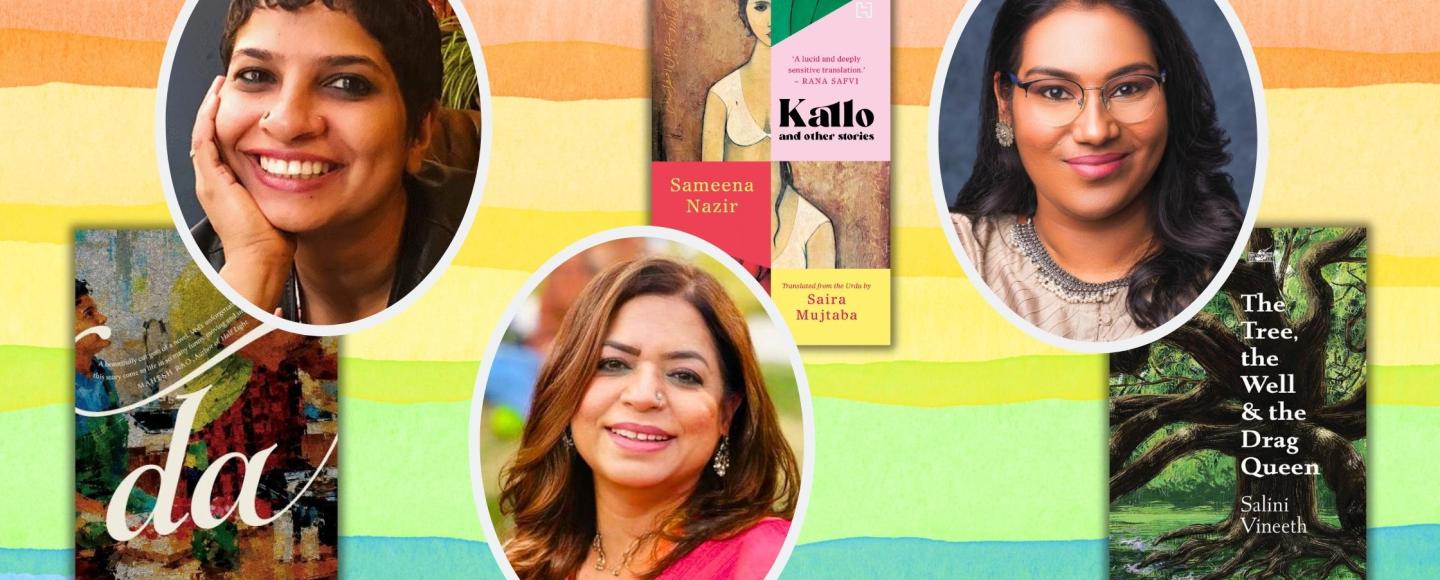

A gay single father, a non-binary drag queen who defies gender norms, and two women who find bliss in each other’s company – South Asian women writers are disrupting familiar cultural tropes in fiction to explore wider human experiences.
The books feature queer characters navigating social and familial structures as they assert identity and authenticity. They also challenge laws and social norms that seek to constrain them.
For some characters, this resistance is quiet and subtle, whereas for others, it’s the center of their existence. These books render their protagonists with depth, ensuring that sexual orientation and gender identity aren’t reductive clichés but integral to their layered personalities.
These nuanced portrayals unsettle stereotypes and help non-LGBTQIA+ readers understand a queer person’s journey, joys, challenges, dreams and aspirations in a world that insists on confining gender and sexuality within rigid boundaries.
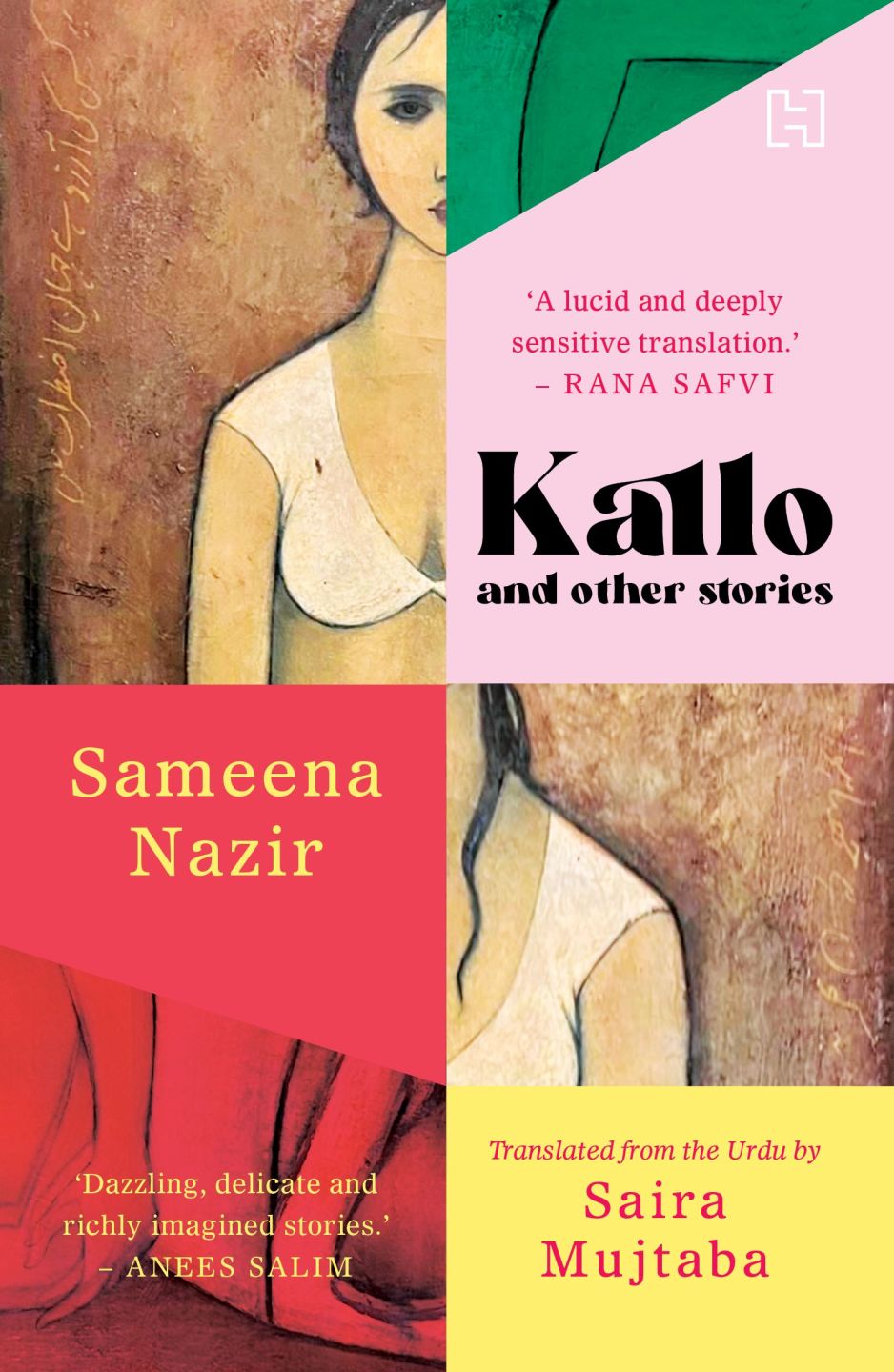
Kallo and Other Stories
By Sameena Nazir, translated from Urdu by Saira Mujtaba
In Kallo and Other Stories (Hachette India, 2026), acclaimed Karachi-based writer, trained actor, playwright and producer Sameena Nazir features the myriad shades of women’s rebellions. In the titular story, “Kallo”, this rebellion takes the form of a relationship between two women, Kallo and Mushtari Bano. In other stories, rebellion is a restrained act of dissent, like Miss Razia rediscovering her body. In the story “Bi Amma”, a woman lets go of conventional norms of femininity and becomes a mustache-wielding matriarch.
The collection, translated by Lucknow-born, New Delhi-based broadcaster Saira Mujtaba, includes six stories and two plays, each titled after its female protagonists. In these stories, Nazir weaves in queerness without labeling the relationships. However, they’re full of tender moments like Kallo adorning Banu with a string of jasmine flowers, a romantic gesture in South Asian culture.
First published in Urdu in 2021, Nazir’s stories refuse to put tidy labels around queer desire, allowing the reader to draw meaning. They show how women flourish and shine when they have autonomy over their body and mind.
Excerpt:
“Kallo cried a lot that night. She complained to the Almighty and also asked for His forgiveness. Her heart grew anxious to catch one last glimpse of Bano Begum. She thought to herself that Hakim Shatari wouldn’t have put the chain on the door yet. She could go and meet Bano Begum under some pretext or the other. After all, she deserved one last kiss from her beloved, though she didn’t know if it was in her fate or not.”

The Tree, the Well & the Drag Queen
By Salini Vineeth
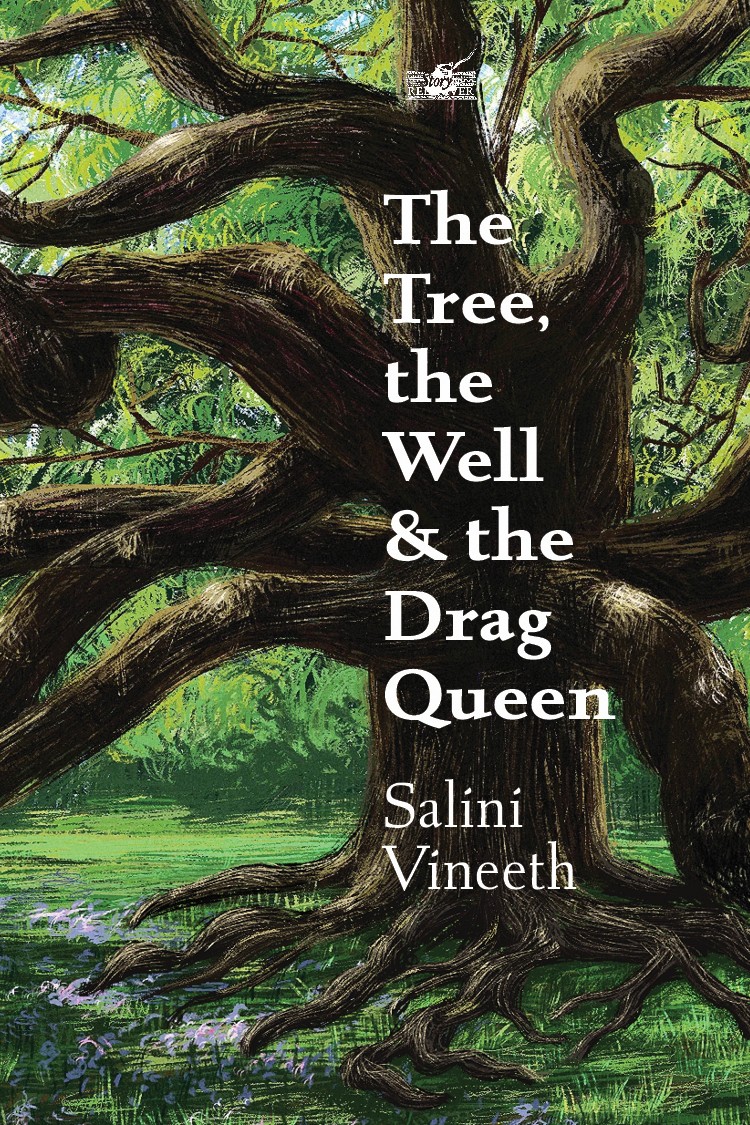
In Salini Vineeth’s novella, The Tree, the Well & the Drag Queen (Red River, 2026), the protagonist’s gender identity takes center-stage. It’s the story of a Mumbai drag queen returning to their ancestral village in Kerala to confront an unusual opponent, a demonic jackfruit tree.
The 120-page novella blends multiple genres like gothic, folklore and queer narrative as it follows the non-binary protagonist’s quest for freedom and authenticity, setting the journey against mythical elements from South Asian culture.
Assigned male at birth, the protagonist is in a constant conflict with their sense of self and what family and society expect them to be. Other characters include an anthropomorphized tree – the antagonist – that manipulates and controls the protagonist’s family for generations, and an ancestral well that hides many secrets.
Salini Vineeth is a Kerala-based fiction writer, editor and translator. She worked as an engineer for a decade before turning to full-time writing in 2019, and has since then published six books and over 30 short stories.
This latest novella oscillates between the real world of the drag queen and the magical world of the village, introducing readers to non-binary gender identity and drag as a performance art.
Excerpt:
“I imagined appearing on the roll call without my eyebrows. My supervisor would fire me on the spot, or maybe he would get a heart attack even before he could fire me. When would I be free to paint my nails or shave my brows? Maybe Sashay Studio would open a way for me. It would let me be the person I really was. Neither man, nor woman. Nor anything in between.”

Da
By Arathi Menon
In Da (Pan Macmillan, 2026) a tender and emotionally charged father-son narrative, London-based author and columnist Arathi Menon individualizes the bond between a teenage boy and his fiercely protective adoptive father, whom he calls Da.
But this is not a traditional father-son relationship prevalent in South Asian culture. Da is Ved’s adoptive parent, who doesn’t believe in the traditional patriarchal role of a father. The novel is set in India in 2013, when, as per Article 377, homosexuality is a crime.
Da is gay, and he has to face the immense psychological and societal pressures of navigating through a society where homosexuality is punishable, and vigilante violence threatens the queer community.
The novel juxtaposes the harrowing reality of living a secret life against the tender, domestic joys of a parent helping his child navigate school dances, first relationships, and more.
Narrated by 13-year-old Ved, Da captures not only the tender moments between a father and son, but also India’s transformation leading up to the 2018 dismantling of Article 377. It shows how an outdated law has the power to grip a whole community in fear, and how an act of courage and empathy can change the lives of a large number of people.
At its core, Da is a tender story of a boy caught between devotion and fear, chronicling the everyday courage it takes to love someone the world refuses to accept.
Excerpt:
“I hang up and realize what Alok means when he says homosexuals are a minority. It means your life is unimportant and your struggles are not even worthy of mention. It means that you are invisible. I think about the judgment all the time. I feel I have been judged. The ruling has walked into my door, into my life and is sitting on the sofa, watching my Da turn sadder and sadder. I blame the judges for my unhappiness.”
Discover more from eShe
Subscribe to get the latest posts sent to your email.
0 comments on “3 evocative new works of fiction that explore queer experiences in South Asia”