


Of the 11 books that won the International Booker Prize from 2016 to 2026, 10 were translated by women – including the two books translated from Indian languages. Of the eight books that won the National Book Award for Translated Literature (USA) since its relaunch in 2018, all eight were translated by women.
Are more women taking up translation to English – or are they just finally getting their due on book covers and visibility through international awards? Either way, it’s an encouraging sign of change in the publishing industry.
According to scholar and translation theorist Rita Kothari, professor of English and co-director of the Ashoka Center for Translation at Ashoka University, there have always been more women translators than men. “And also, sometimes, women take risks in a way that male translators don’t seem to do,” she adds.
Kothari has an interesting theory why this is so: “I think that women navigate different social worlds all the time. The world of their in-laws, the world of their own parents, the world in which they live. They are the ones who show versatility at a social level. And so, I think, that they are also in that sense very natural translators, not only in a linguistic sense, but in every sense of the word.”
She shares her own personal story as a first-generation English-speaker in a Sindhi family, and then marrying into a Gujarati joint-family household. “Obviously, the onus of picking up their language was on me, right? They don’t know anything about my language. In a sense, I became the translator. So, I think translators also sometimes emerge from a position of minoritization, not from the majority,” says Kothari.
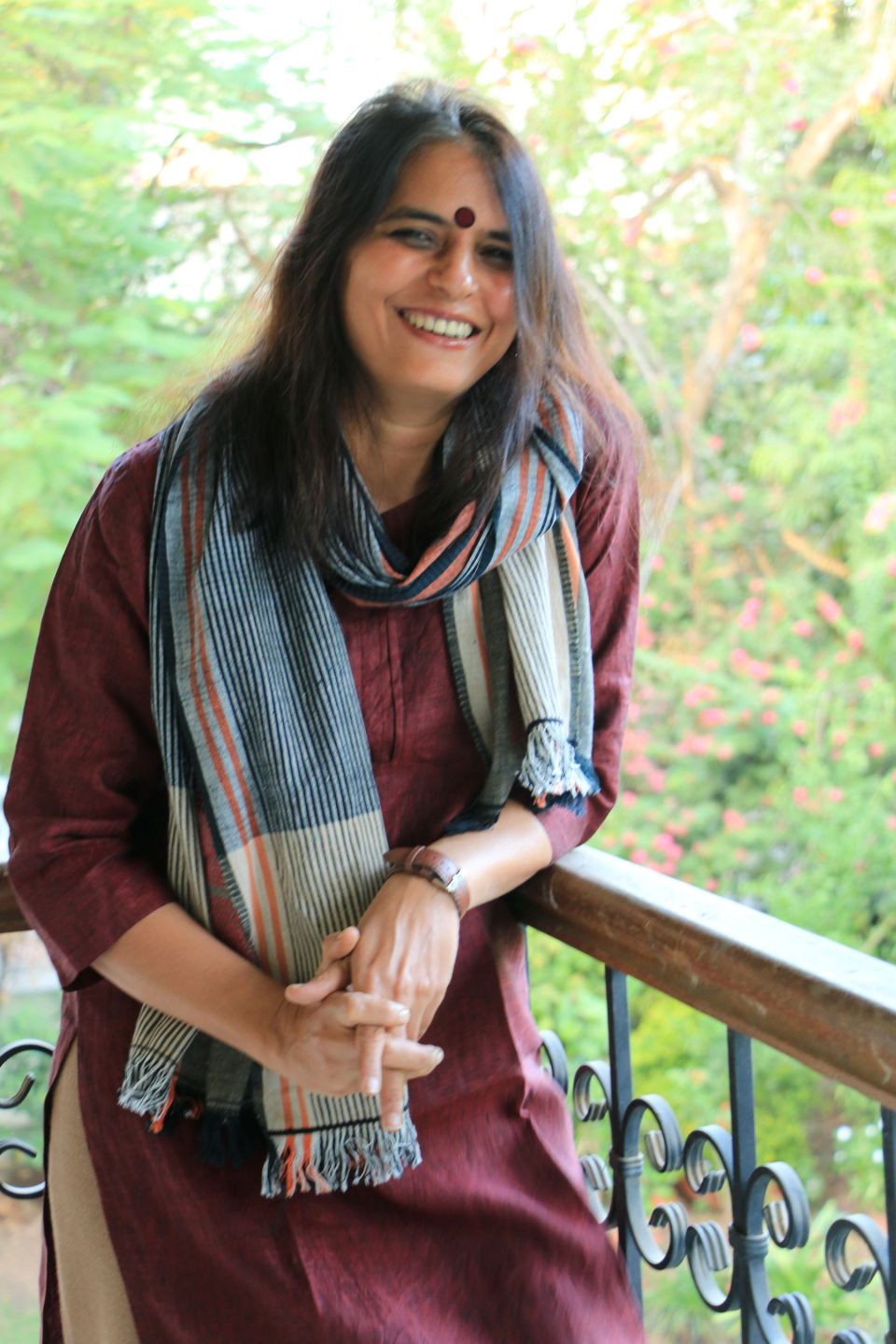

Her latest book Uneasy Translations: Self, Experience and Indian Literature (Bloomsbury, 2024) dwells on her own personal journey intertwined with academic reflections around self, language and translation. “Words are thrown at women in real life and in stories. And when women who translate also notice this, they throw them back, baring them of any euphemism,” she writes in the book.
At Ashoka Center for Translation, Kothari has headed a collaboration with feminist publisher Zubaan Books to bring out a series of books called Women Translating Women (WTW). About 12 WTW books have been published so far since the launch of the project in August 2022, a month celebrated as Women in Translation Month to highlight books written by women, non-binary, and transgender authors in languages other than English.
“Genderedness is not just about the body, it’s also about the effect language produces at a particular time. A woman reader can understand not only what women say but also what they don’t say, or just hint at,” Kothari explains of the rationale behind selecting women translators for books written by women, especially fiction.
Her reasoning is echoed by Trisha De Niyogi, COO and director at Niyogi Books, a Delhi-based women-led boutique publishing house with an entire imprint, Thornbird, dedicated to fiction translations from Indian languages to English. “Women translate women more accurately,” states Niyogi.


“If one truly loves the original language and the book, one is more likely to do a better job at translating it. It requires a lot of passion for a person to become a translator,” Niyogi says, admitting that the pay for translation is still not enough to make a full-time career.
She credits older publishers like Zubaan, Katha, Kali for Women, and Seagull for making Indian-language books translated to English mainstream in India. “It’s been 30 years of cumulative effort by Indian publishers, along with support from the National Book Trust. Multinational publishers picked up the trend from 2015 or so, and there has been huge growth since then, including translation grants,” she says.
This has fed into all aspects of translations, including those of books by women and queer authors, she says, explaining why her team is always on the lookout for women and gender-diverse translators.
With more than half of their entire portfolio dedicated to translations, Niyogi believes that – though Bengali and Urdu remain all-time favorites for translations – translations from Nepali, Assamese, Andamanese or lesser-known Indian languages also do well in English due to “the novelty” factor.
Perhaps this was part of the reason that prompted multinational publisher Hachette to publish Dr Abha Purbey’s heartrending novel Gulabiya (2026) translated from a rare language like Angika to English.
Angika – spoken by millions across Bihar, Jharkhand and parts of Nepal – is not mentioned in the Eighth Schedule of India’s Constitution – which only mentions 22 languages. Translated by Shivangi Pandey and Tejaswi Rawal, the book was shortlisted for the Armory Square Prize for South Asian Literature in Translation.

“Abha Purbey manages to pack a lot of meaning and events into some hundred pages and it’s possible to some extent because of how dense an Angika sentence can be. English is a bit lighter in comparison. One has to constantly invent idioms in the language when translating. This is both the most challenging and the most rewarding part,” says Pandey, who identifies as gender-agnostic.
She adds: “I don’t see myself as a woman, which is largely why I translate. The translator gets to live in the walls of text and stay unseen. This place is free of performance. I quite enjoy the idea of this.”
Like Kothari, she too agrees, that “Traditionally, translation has been a space dominated by women and queer people. It’s part of the reason why translators have struggled to have as little as one’s name on the cover. Things are changing for the better now though.”


Her co-translator Rawal says she was compelled to take on the project due to the history of Angika and its struggle to be recognised as a language in its own right. “The question of what ‘counts’ as a language is interesting to me,” she says.
Rawal shares that though the temporal cadences of Gulabiya were quite challenging to translate and could sometimes appear ungrammatical in English, once she got into the flow of translation, the “ambiguity became a dreamlike haze”. Echoing Niyogi’s words on the passion required to translate, Rawal adds, “I do think that there is something inherently rewarding in the act of translation and the care it takes to get to know a language and text intimately in order to bring it to new readers.”
While the entry of multinational publishing houses in the domain of translation has been one reason for the spurt in translated literature, there is no doubt that Indian translations winning international awards has also been an impetus for more initiatives and events in the field.
One of these is an upcoming panel discussion and readings by “exciting voices in writing and translation from South Asia” organized by UK-based literary journal Lakeer on 20 September titled ‘Voices Across Borders: Who Gets Represented?’

The lineup features Deepa Bhasthi, the first Indian translator ever to win the International Booker Prize for her translation of Banu Mushtaq’s Heart Lamp from Kannada into English, who says she loves all the challenges of translation: “Wrestling with two cultures, two linguistic histories, two contexts, two time periods… and keeping these two tracks going in the head all the time when I’m translating… I love playing with languages and these challenges are fun, which is why I continue to do it,” she tells eShe.
It’s notable that – like many other renowned translators such as Jayasree Kalathil and J. Devika – Bhasthi is an author herself. Translation, she says, is only a very recent and occasional part of her writing practice. “In India, many, many of us lead multilingual lives, so it is not a unique or rare experience. I draw from all the linguistic cultures I have access to when I write, from all the worlds that access to different languages gives me. I do believe it has added layers to my writing that I probably wouldn’t have developed if I only read and wrote in one language,” she affirms.
“Translations have to be propped, supported and encouraged in a country like ours,” says Mita Kapur, founder of Siyahi literary agency in Jaipur that has over 600 translations in its portfolio. She notes that nonfiction works better for Indian language translations, but adds that fiction translated from any language into English also sells well.
“Indian translations have been very well-received internationally too,” she shares, “not just the ones that have received awards.”

Just as women translators are stepping into the spotlight, the age of artificial intelligence (AI) and translation apps is also upon us. Would this affect the publishing industry? Rita Kothari – whose book Translating India: The Cultural Politics of English (2003) had predicted the popularity of Indian languages translated to English well before the boom – believes that while AI may become good enough to translate “pedestrian nonfiction” or books that have already been translated, it is “tone-deaf” and cannot replace human translation for all kinds of writing.
“If in the literary writing, there is a certain tentativeness, or irony or doubt, AI doesn’t get it. For example, it cannot get right a certain kind of ambiguity or ambivalence with which a writer has used a pronoun. It always uses ‘he’ as the default gender,” she says.
She is excited about the buoyancy in the industry. “I was at a bookshop in Hyderabad, and the Indian writing in English section was quite small compared to the works in translation. Do all books become Banu Mushtaq or Gitanjali Shree? Certainly not. But the point is that this particular archive is constantly full of surprises for us.”
Discover more from eShe
Subscribe to get the latest posts sent to your email.
0 comments on “Women translators are leading the boom in Indian language translations to English”