


By Julia Dutta
August – a month of independence in the Indian Subcontinent – is always a reminder that freedom can mean different things to different people. While India marked its 80th Independence Day this month, and the US observes Women’s Equality Day on August 26, questions of identity, belonging and the right to determine one’s own life remain deeply contested.
Globally, adoption debates are increasingly centered on children’s right to know their origins, preserve their identity and reconnect with birth families. It is against this larger backdrop that Antara Mukherjee’s Beyond Our Births (Bloomsbury India, 2026), a literary debut about diaspora, participation stories, borders, migration and belonging, acquires particular resonance.
Set largely in Kolkata and stretching across the India-Bangladesh borderlands, the novel begins in 1990 with five-year-old Nimki being abandoned by her parents in a hospital where her mother is delivering a fourth child.
She finds shelter with the Sengupta family in Kolkata, but the distinction between shelter and home becomes central to her life. Bina Ma, who works with an NGO caring for displaced women and children, takes Nimki into her household. She already has two children, Ira and Rudra.
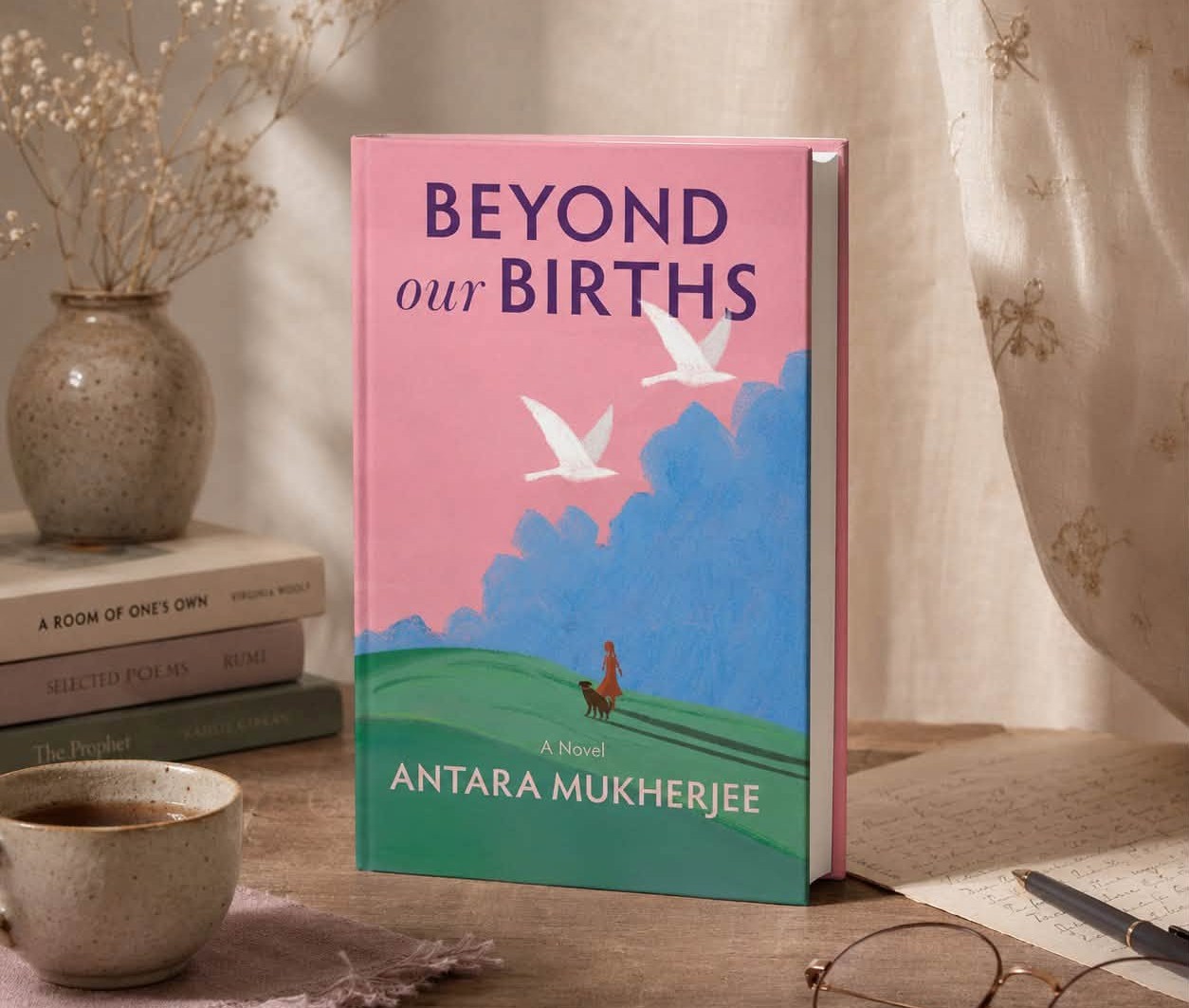
Nimki is given a roof over her head, but not quite a place within the family. She helps with household chores and grows up alongside Ira and Rudra, learning English from them while remaining outside the educational opportunities available to them. She longs for her mother’s affection and for the home she remembers, even as the years in Kolkata reshape her understanding of herself.
The author is particularly effective in depicting this uneasy space between gratitude and deprivation. Nimki is neither entirely an outsider nor truly a daughter. Her experience exposes the class divisions within an educated, middle-class Bengali household, where kindness can coexist with hierarchy. The novel refuses the easy idea that providing shelter automatically creates belonging.
Then comes the event that changes everything. Ira becomes the target of a sexual assault, which Nimki witnesses. Her information helps the family rescue Ira. But the incident has wider consequences. Retaliation follows, including demands for money and a brutal attack. The family decides to leave India and move to the USA, but before doing so, they must trace Nimki’s biological parents.
Now that they had to leave everything behind, Bina Sengupta wondered how overnight her identity would be that of an immigrant in a foreign land. Her home would smell of curries, her expensive wardrobe would portray her regional identity and her English would bear a native accent. Her skills and reputation would have to be backed by certificates and reference letters. Her daughter would be introduced as unstable depressed youth and her husband would be accepted by their huge-heartedness towards a person of color.
Antara Mukherjee, Beyond Our Births
While Bina Ma mulls over her own migration to another land, Nimki – who has spent nearly seven years with the Senguptas – is reluctant to leave the only life she knows. Yet the discovery that she was born Muslim and the decision to return her to her biological family in Bangladesh force another rupture. She crosses not merely a national border but a religious, cultural and class boundary.
Back in Bangladesh, Nimki discovers that returning to one’s birth family does not necessarily mean returning home. Her parents live in poverty, and her father regards another daughter as an additional burden. The possibility of an early marriage looms over her. The girl who had once dreamed of education and a different life in Kolkata now finds herself confronting another set of social restrictions.
This is where Beyond Our Births becomes more than a story of displacement. Nimki’s struggle is also about a young woman’s refusal to accept the life prescribed for her. She has little formal education, but her exposure to English and to another world has given her a sense of possibility. She wants more – not simply material comfort, but autonomy.
Her eventual escape takes her back across the border. She remembers an elderly monk she had encountered at a temple in Kolkata and sets out to find him. The journey is difficult, but Nimki’s determination carries her to a remote village in Bengal, where she finds something she has been searching for throughout the novel: acceptance without conditions.
The novel’s most compelling insight is that birth can determine circumstance without having to determine destiny. Nimki’s journey from a borderland childhood to Kolkata, back to Bangladesh and finally to another part of Bengal becomes a journey towards selfhood.
The storyline is particularly poignant and meaningful at a time when India’s national politics and media rhetoric are replete with language that dehumanizes migrants, especially those of Bangladeshi origin, terming them ‘infiltrators’ and ‘termites’.
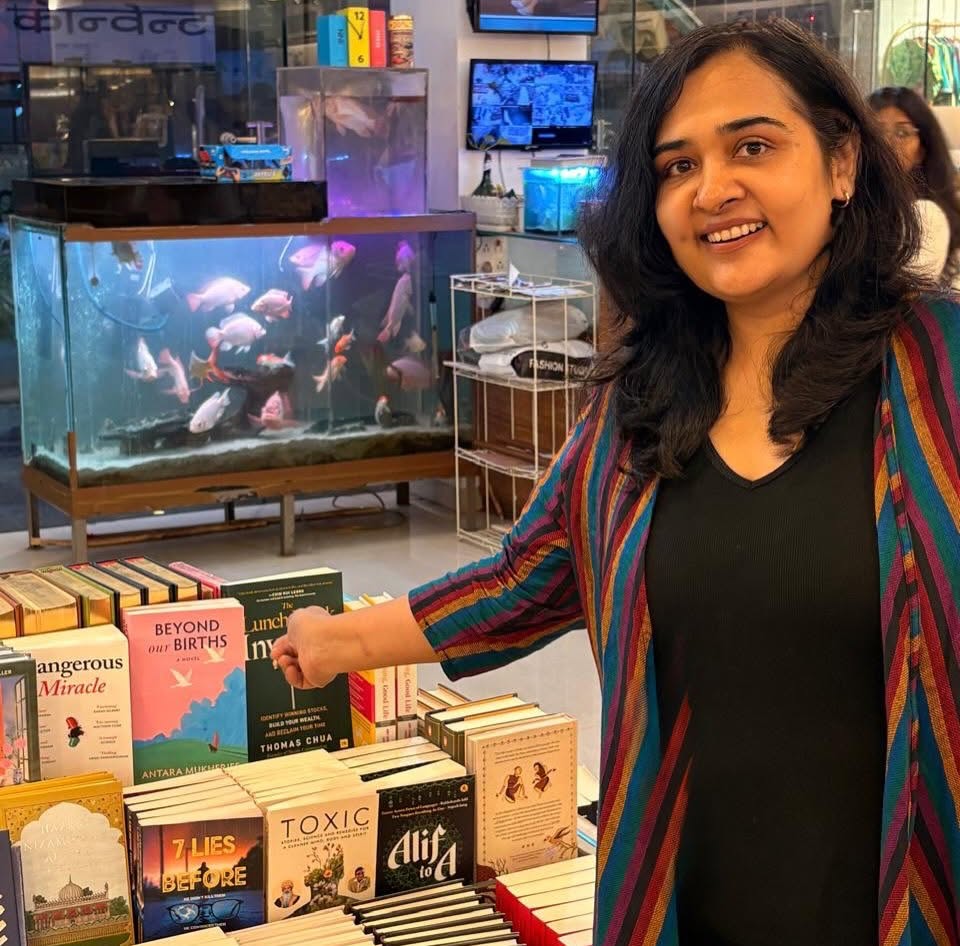
Mukherjee, a Mumbai-based writer whose work has appeared in several prestigious journals and publications, brings to the novel a strong literary sensibility. An alumnus of the Kolam Writer’s Workshop and the Himalayan Emerging Writers Residency Programme, she also received mentorship through the Asian Women Writers’ programme.
Written over a decade, Beyond Our Births is richly observed and often lyrical – though it may be a tad too long for modern readers. Mukherjee pays close attention to landscape, food, domestic routines, memory and the textures of everyday life. Her locales and borderlands are not merely backdrops; they shape the emotional geography of the novel. The result is a book that will appeal particularly to readers interested in anthropology, migration, South Asian literature and the lived realities behind political borders.
For the Subcontinent and its diaspora, the novel carries an especially powerful message. Borders may divide nations, religions and families, but identity cannot be so neatly contained. Nimki’s story asks whether we are defined by where we are born, the family that raises us, the culture we inherit – or the choices we eventually make.
Julia Dutta is an author, writer, blogger, poet and advertising professional cooling her heels as of now, finding joy and happiness living in places close to the river, surrounded by greenery and simple people. When not cooking, she spends her time reading and reviewing books. She blogs here.
Discover more from eShe
Subscribe to get the latest posts sent to your email.
0 comments on “‘Beyond Our Births’: a story of borders, belonging and choice in the Subcontinent”