

WASHINGTON, DC: As June approached, I noticed that my calendar was full of events, volunteer opportunities I’d signed up for, and celebrations connected to Juneteenth in Washington metropolitan area. This weekend, in particular, is packed with races, from the RunJuneteenth race held on 13 June, to the You Matter Juneteenth Freedom run being held today, 19 June.
How did a moment from African American history become so integrated into my life as a South Asian living in DC?
Officially recognized as a federal holiday only recently in 2021, Juneteenth dates back to 1865, when – two years after President Abraham Lincoln signed the Emancipation Proclamation – enslaved African Americans in Galveston, Texas, were belatedly informed that the Civil War was over and that they were free.
My connection to Juneteenth began in 2024 through Pacers Running, where Elyse Braner, director of people + culture and community marketing, became a mentor in my journey with the DC metropolitan community, starting with my first turn as a course marshal at the Juneteenth Half Marathon and 10K run in Stanton Park. Since then, I found myself coming back each year as a volunteer, participant and community member.

This experience has helped me to reflect on history, listen to different experiences, and engage deeply with the community around me. It has also reminded me to think about belonging in a more grounded way, about identity, inclusion and what it means to share space with people whose histories and experiences may differ from my own.
I also became curious about how other women connect with this day. So, I reached out to five women around Washington metropolitan area who shared what Juneteenth means in their own lives.
Michanda Myles
Model, triathlete and podcast host of Tri Beginner’s Luck (DC)
Juneteenth reminds me of everything this country does not want us to have: freedom.
Growing up in Georgia, I did not know about Juneteenth. I started learning about it in college and through cousins who began celebrating the holiday. It was not until I saw how it began shifting the behaviors and perspectives of people around me that something clicked. This is liberation. When your ancestors were free and did not even know it. That truth started to resonate with me on a much deeper level.

In so many ways, Black people are still operating in a system where they are not fully free. They did not know they were free then, and so many are still psychologically bound now.
We have freedom, but we were not always free. Juneteenth, to me, is a reminder that we are no longer slaves or bound, even when this country does not choose to fully recognize that. And when everyone is truly free, this country will be truly free.
As a Black woman in the endurance space, as an emcee, a podcast host, an athlete, and a business owner, I have had to learn to show up fully as myself, bringing all of me to everything I do, including culturally, and to accept opportunity where I am wanted and valued.
When I stand at the finish line of the Juneteenth Half Marathon and 10K, I actually feel free to be me. This race is not pretentious. It is about showing up and getting it done. And that spirit is something I carry with me. That has been transformational, and I am so grateful for it.
True allyship on Juneteenth looks less like social-media posts and more like asking yourself what systems you participate in that keep people psychologically bound, and then doing something about it. It is about showing up for those who have been oppressed and marginalized, and being an advocate for laws to change so that everyone has true equality and equity. That is what meaningful solidarity actually looks like.
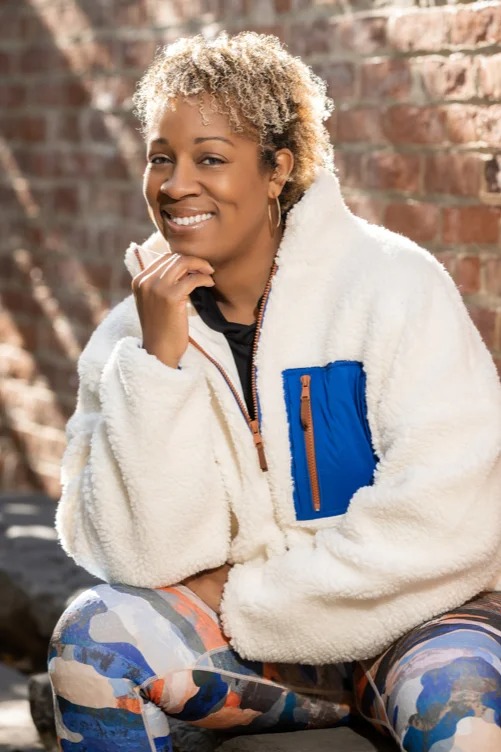
Jamicka Edwards
Army veteran, marathoner, author, founder of You Matter Foundation For Life and You Matter Juneteenth Freedom 5K Run (Alexandria)
Juneteenth represents both a celebration and a reminder. It celebrates freedom, resilience and the strength of those who endured generations of injustice, while also reminding us that freedom delayed is freedom denied. For me, it is a day to honor the sacrifices of those who came before us, reflect on how far we have come, and recognize the work that still remains.
Meaningful allyship and solidarity on a day like Juneteenth go beyond statements of support on social media. It looks like listening, learning, having difficult conversations, amplifying voices that have historically been marginalized, and taking action to create opportunities and remove barriers.
True solidarity is demonstrated through consistent commitment throughout the year, not just on one day. It is about standing together in a way that promotes understanding, equity and community for everyone.
That is why our Juneteenth Freedom 5K brings people of all backgrounds together through movement, service and scholarship – because honoring freedom is not just about remembering history, but about building stronger communities for the future.
Dr Samia Kirchner
Associate professor of architecture and urban design, Morgan State University (Baltimore)
Since 2019, I have worked with Plantation Park Heights Urban Farm (PPHUF) farmers in preparing for Juneteenth and the carnival, which has changed how I understand freedom. Juneteenth marks the delayed announcement of emancipation to enslaved Black people in Texas in June 1865, freedom promised earlier but withheld in practice. That delay echoes in the ongoing struggles Black communities face for secure access to land, clean water and nourishing food in ‘redlined’ neighborhoods of Baltimore.
On the farm, Juneteenth is not only a date in history; it is a living practice of the commons. I see land, water and food held not as private assets, but as shared responsibilities and shared abundance. The soil we prepare, the rain we pray for and harvest, the crops we tend together – these become a collective refusal of the idea that Black neighborhoods should live with scarcity, pollution or displacement. In this space, land and water are reclaimed as sites of care, not control.
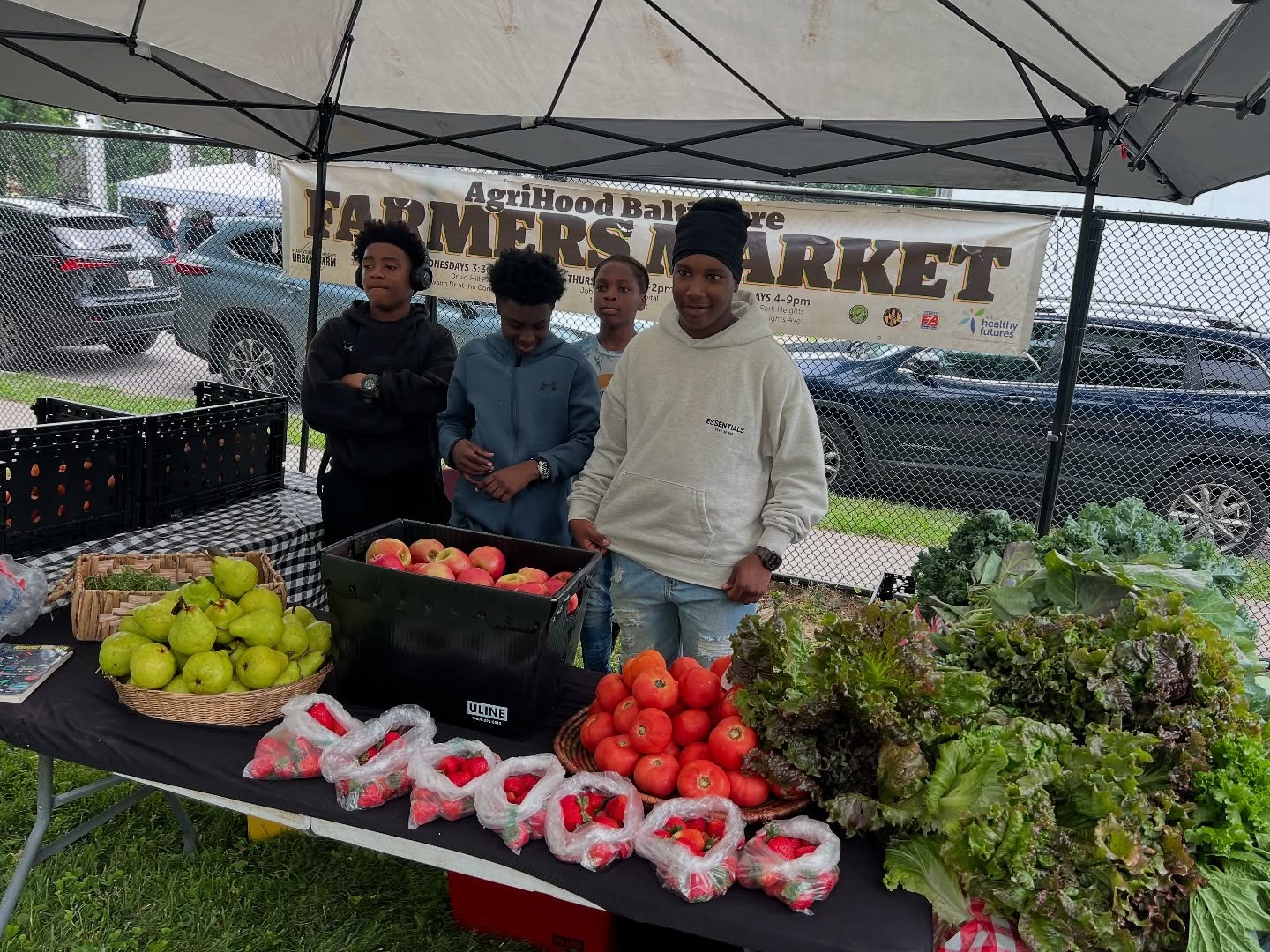
As we co‑create the carnival – planning music and storytelling, setting up tables, washing produce, cooking food – I witness freedom being practiced in the community. The work we do side by side turns ordinary tasks into acts of co‑ownership and mutual protection. Celebration itself becomes a way of asserting that Black lives, stories and cultures are central to this place, not marginal to it.
As a university‑based urban designer of South Asian origin working alongside PPHUF, Juneteenth invites me into humility, deepening my commitment to co‑creation rather than extraction. It calls me to listen more carefully, to follow Black leadership, and to treat my institutional role as a resource to be placed in service of the commons, supporting community visions for land, water and food justice.
For me, Juneteenth on this farm is a yearly reminder that emancipation is not complete until Black communities have the power to shape and share the commons that sustain life.
Dr Uzma Anzar
Educator and human development professional (Arlington)
Juneteenth commemorates the arrival of the news – albeit two years late – to a community of slaves in Galveston, Texas, to finally end human bondage in the United States. It symbolizes the universal human pursuit of freedom, dignity and equality.
Philosophically, this event resonates with the experiences of millions of women in South Asia as well. Although during the past 40 years, many, many women in South Asia have experienced significant educational, social and economic gains, millions of them remain in bondage and in educational, social and economic deprivation.
What is very interesting is that these women were emancipated by their religions and religious sages centuries ago, but because the social narrative, messages and interpretations are still controlled by a few elites (mostly men), the news of their freedom and basic rights are yet to reach them.
Tejaswi Pandey
Educator and IT professional (Alexandria)
Juneteenth is not my story to claim, but it is a freedom story I deeply respect and choose to stand beside. As a South Asian woman, it reminds me that liberation should matter to all of us, even when the history is not our own. This year, I ran my very first 10K trail run for Juneteenth. Honestly, my body was not ready. I signed up the morning before at 6 am, and I had only started running a month earlier.

But my heart was ready. The race took place in Southeast DC, just blocks away from DC Prep Public Charter School in Anacostia, where I work as a substitute teacher. That made every step feel personal. I thought about the predominantly African American student community I get to see, teach and learn from. I thought about their joy, their brilliance and the future they deserve.
For me, running that day was a small way to honor the history behind Juneteenth while also looking forward. It was about showing up for the next generation, helping close the gaps that still exist, and uplifting a community that has carried so much strength. The first two miles were steep and hard, but I kept going because the purpose felt bigger than me. Juneteenth reminds me that support is action, love is action, and showing up matters.
RESOURCES
On Juneteenth (2021): In this acclaimed blend of history and memoir, Pulitzer Prize-winning historian and Harvard professor Annette Gordon-Reed traces the origins and legacy of Juneteenth through her own experiences growing up in Texas.
The 1619 Project – A New Origin Story (2021): In this expansive collection of essays, history and creative writing, Pulitzer Prize-winning investigative journalist Nikole Hannah-Jones and a team of scholars re-examine American history through the legacy of slavery and the contributions of Black Americans since 1619.
Juneteenth – Our Day of Freedom (2022): In this accessible children’s history book, novelist, poet and children’s author Sharon Dennis Wyeth recounts the story of Juneteenth, explaining how news of emancipation finally reached enslaved African Americans in Texas and why the day remains a powerful symbol of freedom.
Juneteenth with Yasmin (2022): In this children’s book, acclaimed Pakistani-American author Saadia Faruqi introduces young readers to Juneteenth through the experiences of Yasmin, a Pakistani-American girl who learns about the holiday’s history and significance while celebrating with her community.
Miss Juneteenth (2020): Written and directed by Channing Godfrey Peoples, this acclaimed film follows a former Miss Juneteenth winner who hopes her teenage daughter will succeed where she could not, offering a poignant exploration of Black womanhood, ambition and community in Texas.
South Asians Can be Allies for Black Americans by Pratika Yashaswi, Seema, 16 June 2021
Juneteenth Isn’t Enough: How Indian-Americans Can Use Their Pasts to Help Another Present by Ayanna Gandhi and Srishti Prabha, India Current, 17 June 2021
Lead image: Darius Digital Co
Discover more from eShe
Subscribe to get the latest posts sent to your email.
0 comments on “What does Juneteenth mean to you? Women in Washington DC tell us”