

The 16 Days of Activism Against Gender-Based Violence, observed from November 25 to December 10 every year, calls attention to the multiple ways in which violence against women is normalized, concealed and sustained. Yet one of its most persistent blind spots remains the violence that takes place within marriage.
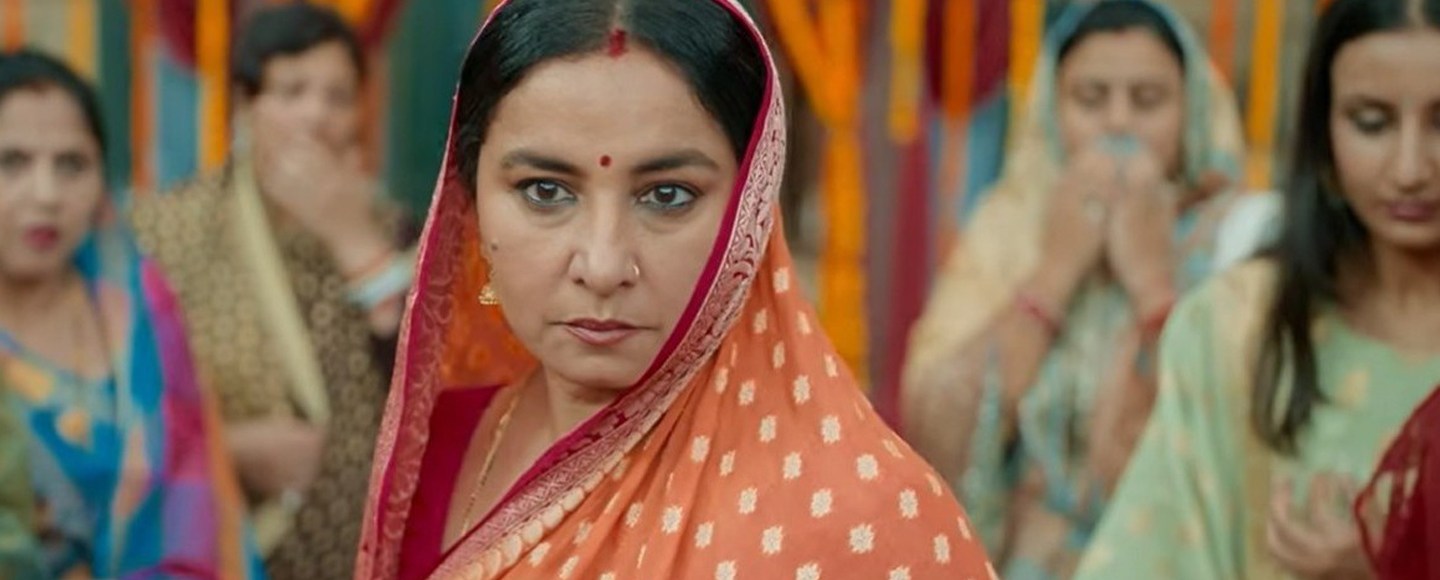
Across South Asia, a woman’s right to refuse sex after marriage continues to be constrained by laws that either explicitly exempt husbands from rape charges or recognize marital rape only under limited circumstances – a topic that gained widespread attention this year after the release of the Hindi-language social drama web series Chiraiya (lead image) on JioHotstar, which is a remake of the Bengali web series Sampurna (Hoichoi, 2022).
Now, a new report, Challenging the Marital Rape Exception in South Asia, published this week, brings this legal lacuna into sharp focus. Produced by Equality Now and the South Asian Movement for Accessing Justice (SAMAJ), the study examines the legal position on marital rape across all eight South Asian countries.
At the heart of the study is a deceptively simple proposition: marriage cannot constitute permanent, irrevocable consent to sex. Equality Now’s regional representative for South Asia, Ranjeeta Silwal, tells eShe: “What struck me most was the stark variation in how marital rape is treated across South Asia, alongside the reality that laws in every country in the region, except the Maldives, continue to fall short of fully recognizing marital rape.”

Silwal adds that it is striking to see how legal frameworks across South Asia actively reinforce the invisibility of sexual violence within marriage. “Particularly shocking is how marital status continues to dictate whether sexual violence is legally recognized as rape, the circumstances under which survivors can seek justice, and the severity of the punishment,” she notes.
Even where marital rape is criminalized, like Nepal and Bhutan, it is often treated as a lesser offense carrying lighter penalties than non-marital rape. “This,” she says, “sends a dangerous message that violating a woman’s bodily autonomy is somehow less serious when committed by her husband, reflecting a deeply entrenched patriarchal understanding of marriage that subordinates women’s sexual autonomy to marital exceptions and marital entitlement.”
Ultimately, the report underscores that marital rape is not simply a gap in criminal law; it is a manifestation of structural inequality that legal systems of South Asia continue to reproduce, in different forms and to varying degrees.
Afghanistan: The reversal of hard-won protections
Afghanistan’s trajectory is particularly devastating. The 2009 Law on the Elimination of Violence Against Women (EVAW) criminalized rape without exempting husbands. It offered a framework through which women could report violence and seek protection.
However, following the Taliban’s return to power in August 2021, the institutional infrastructure supporting these protections was dismantled. Specialized family courts, prosecution units and mechanisms for responding to gender-based violence were disbanded. Under the current system, marital rape is neither recognized as a criminal offence nor meaningfully prohibited.
Decrees issued in 2026 have further restricted women’s ability to leave abusive marriages, making the possibility of seeking justice even more remote.
Bangladesh: A constitutional challenge awaits resolution
Bangladesh’s Penal Code of 1860 exempts husbands from rape liability when their wives are older than 13. The provision contradicts the country’s statutory protections against sexual violence involving minors.
The landmark legal challenge emerged in 2020, following the death of a 14-year-old child bride who suffered severe injuries after her husband continued having intercourse with her on their wedding night despite her bleeding.
Four rights organizations filed a public interest petition challenging the marital rape exception as unconstitutional and discriminatory.
In November 2020, the High Court Division issued a Rule Nisi, asking the government to explain why the provision should not be declared unconstitutional. The case remains unresolved. Amendments to rape legislation in 2026 did not address marital rape.

Bhutan: Criminalized, but not equally punished
Bhutan stands apart from several of its neighbors because it explicitly criminalized marital rape through its Penal Code of 2004. Sections 199 and 200 recognize coercive or forced sexual intercourse within marriage as an offence.
Yet recognition has not translated into equality before the law. Marital rape is classified as a petty misdemeanor, carrying a prison sentence of one month to one year. Rape outside marriage, including rape of a married woman by someone other than her husband, is classified as a third-degree felony, punishable by five to nine years.
A 2021 amendment strengthened the classification of rape outside marriage but did not eliminate this disparity. Thus, the same violation of bodily autonomy is treated as less serious when the perpetrator is a husband.
India: Marriage continues to qualify consent
India’s legal position remains among the most contested in the region. Section 63 of the Bharatiya Nyaya Sanhita (BNS), 2023, does not consider marital rape a crime if the wife is aged 18 and above. Section 67 recognizes a limited offence involving non-consensual intercourse when spouses are living separately.
The significant judicial intervention came in Independent Thought v. Union of India (2017). The Supreme Court ruled that marital rape exception could not apply to wives aged 15–18, bringing the provision into alignment with the Protection of Children from Sexual Offences Act, 2012. It recognized that married girls could not be denied protections available to unmarried girls.
However, the judgment did not address the rights of adult women.
A subsequent constitutional challenge in RIT Foundation v. Union of India (2022) resulted in a split verdict at the Delhi High Court. One judge argued that consent, rather than marital status, must determine whether an act constitutes rape; the other maintained that marriage justifies differential legal treatment. The matter is now pending before the Supreme Court and is due to be heard in December 2026.
The Maldives: When a survivor’s case changed the law
The Maldives offers the region’s most significant example of legislative reform. Until 2021, marital rape was criminalized only under exceptional circumstances, such as ongoing divorce proceedings or a period of separation. Even then, punishments were considerably lower than those for rape outside marriage.
The turning point was Prosecutor General’s Office v. Ibrahim Shah, widely known as the Ziyada Naeem case.
Naeem was sexually assaulted by her husband, from whom she had been living separately for five months. She died a week later while receiving medical treatment. In October 2020, the High Court overturned the Criminal Court’s initial decision not to convict, finding sufficient medical and witness evidence of forced intercourse and lack of consent. Her husband received a three-year sentence.
The case triggered public outrage and sustained civil society mobilization. Campaigners worked alongside parliamentarians and international partners to build support for reform.
In November 2021, Parliament amended the Sexual Offences Act, repealing Section 20 and extending the definitions of rape and sexual assault to married couples. The Maldives became the only South Asian country to criminalize marital rape in all circumstances under the same penal framework as non-marital rape.
But there remains one inconsistency: the Penal Code retains a rebuttable presumption of consent between spouses.
Nepal: A landmark judgment, followed by incremental reform
Nepal’s progress has been driven substantially by feminist litigation. In 2002, the Supreme Court ruled in Forum for Women, Law and Development (FWLD) v. His Majesty’s Government that marriage did not extinguish a woman’s rights to equality, dignity, self-determination and bodily autonomy. Forced sexual intercourse within marriage, the court held, constituted rape.
The judgment directed the government to introduce specific penalties for marital rape. Legislative amendments followed in 2006, criminalizing the offence, although the punishment was substantially lower than that for rape outside marriage.
Another important case, Jit Kumari Pangeni (Neupane) v. Prime Minister (2008), challenged this unequal sentencing framework. The Supreme Court found the disparity irrational and discriminatory, noting that lighter sentences could allow convicted husbands to return to the marital home and resume abusing survivors.
Nepal’s National Penal Code, 2017, subsequently increased the maximum punishment for marital rape to five years. However, the penalty remains is still lower than the six-to-20-year sentence prescribed for rape generally.

Pakistan: A legislative opening, but uncertain justice
Pakistan’s legal history is more complicated. The marital rape exception was removed from the definition of rape through the Protection of Women (Criminal Law Amendment) Act, 2006. The 2021 amendments retained this position. In principle, therefore, non-consensual intercourse within marriage can be prosecuted under Section 375.
However, the absence of clear appellate-level judicial recognition has created considerable uncertainty.
An important development came in August 2026, when a special court in Lahore convicted a man of raping his wife under Section 376 of the Penal Code and sentenced him to 10 years in prison, alongside compensation for the survivor. Unlike earlier cases, this was a recorded conviction under the primary rape provision itself.
Nevertheless, this remains a trial court decision, with the legal position yet to be settled by superior courts. A separate Lahore High Court ruling has also highlighted the continuing judicial resistance to recognizing marital rape explicitly.
Sri Lanka: Protection only after separation
Sri Lanka’s Penal Code continues to recognize marital rape only under limited circumstances. Section 363, amended in 1995, allows prosecution when spouses are formally or informally separated. Within an ongoing marriage, a husband is generally exempt from rape liability.
The situation is further complicated by the Muslim Marriage and Divorce Act of 1951, which does not prescribe a minimum marriage age, leaving Muslim girls particularly vulnerable to sexual violence within marriage.
Proposed legislative amendments in 2016 and 2017 failed to bring about reform. Although government representatives have subsequently indicated an intention to criminalize marital rape, no corresponding legislative change has followed.
The politics of consent
Across these eight countries, the report identifies a recurring pattern of resistance to reform. Arguments about protecting the family, preserving religious and cultural traditions, preventing false accusations and maintaining marital stability are repeatedly invoked to justify the continued exclusion of husbands from rape laws.
But these arguments rest on an assumption that marriage grants men an enduring entitlement to women’s bodies as a transfer of sexual ownership.
Further, Silwal adds, “The underreporting of rape, particularly marital rape, reflects far more than survivors’ hesitation to come forward. Marriage is deeply embedded in social, economic, and familial structures. Reporting can entail severe risks, including social stigma, economic insecurity, family pressure, retaliation, loss of support networks and social isolation.”
She adds that the pervasive notion that actions within a marriage constitute a private matter continues to silence survivors and discourages institutions from intervening.
When laws are not enough
While asserting that “repealing marital rape exceptions sends an unambiguous message that married women deserve the same legal protections against sexual violence as anyone else,” she hastens to add that statutory reform by itself does not guarantee that survivors can safely report offenses, have their complaints taken seriously, or pursue justice without risking their safety, dignity and livelihoods.
“Justice systems must ensure that survivors who come forward are not subjected to further victimization, whether through insensitive questioning, victim-blaming, moral policing, coercive pressures to reconcile, intrusive medical procedures, or discriminatory attitudes from legal actors.”
She calls for survivor-centered justice systems equipped with accessible legal aid, safe shelters, psychological and economic support, specialized training for police and judicial officers, and sustained initiatives to dismantle social norms that normalize sexual violence within marriage.
“The challenge is not only to make marital rape visible in law, but to make women’s bodily autonomy, consent and right to live free from violence recognized and respected within marriage, in their families, community and institutions,” she states.
As the 16 Days of Activism once again foregrounds the continuum of gender-based violence, the report is a reminder that the preservation of the “family” cannot become a justification for protecting sexual violence against women and girls.
Discover more from eShe
Subscribe to get the latest posts sent to your email.
0 comments on “Marriage is not consent: new study examines South Asia’s fight against marital rape”