
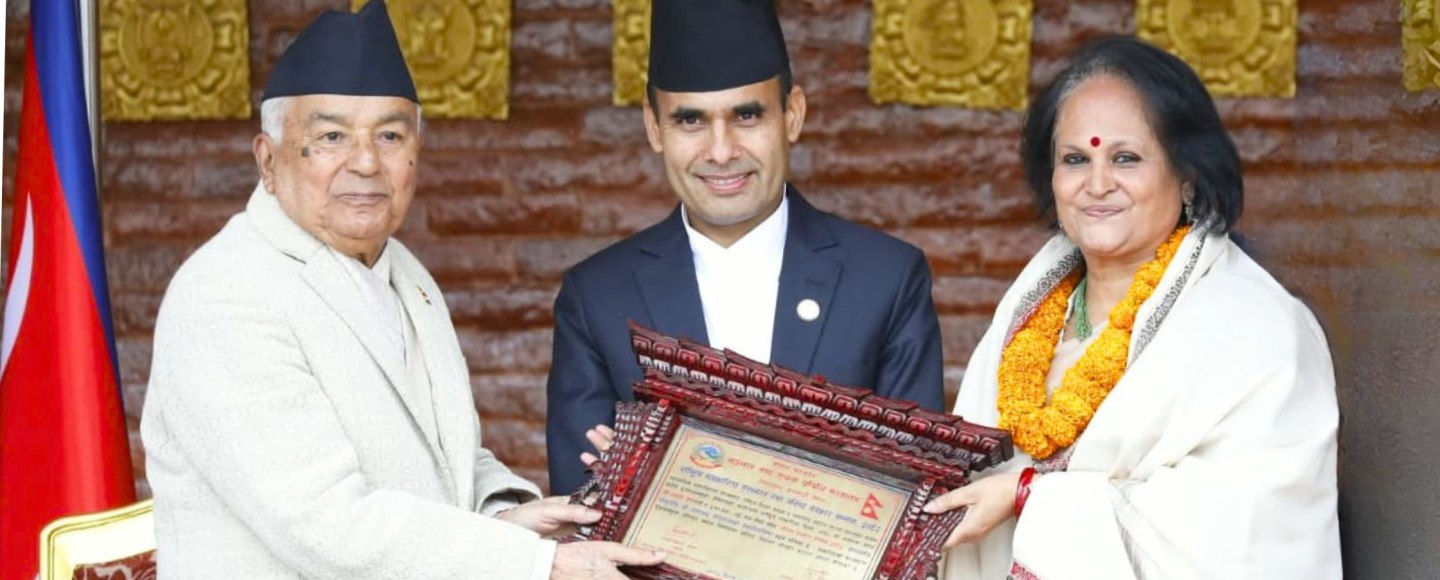

Namrata Sharma believes she would never have won Nepal’s coveted National Journalism Award this month had it not been for a change in government in her country, now being led by a 35-year-old engineer-rapper turned Prime Minister.
“There was a system in Nepal – as in other South Asian nations – in which journalists ‘belong’ to different political parties. It’s not just an association; some even hold formal membership. In the past, the awards would alternate amongst them: this year if NC got it, then it would be UML next year, and the Maoist next,” she says, referring to the three main political parties – Nepali Congress, Communist Party of Nepal (Unified Marxist–Leninist) and Communist Party of Nepal (Maoist Centre) – that dominated Nepal politics in the past.
“People like me never got these awards,” states Sharma, who is a former Chair of the Centre for Investigative Journalism Nepal (CIJ-N) and the recipient of several other accolades in her 35-year career, including for her reporting on human trafficking of Nepali workers by restaurants in Luxembourg, and on antiquities stolen from Nepal making their way to the renowned Metropolitan Museum of Art in New York.
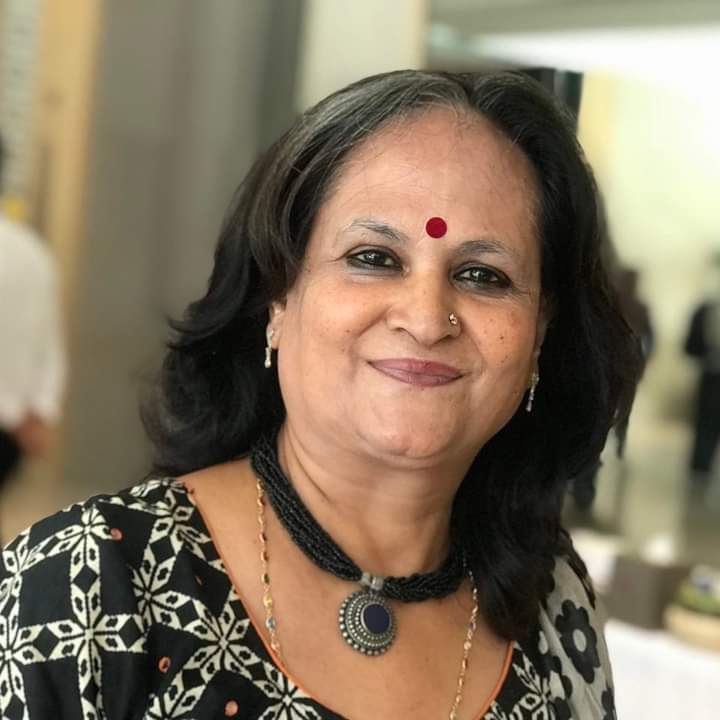
Now, however, with the rise of a youth-centric new political entity – Rastriya Swatantra Party or RSP – which came to power after the ‘Gen-Z revolution’ of October 2025, a space appears to have been created in Nepal for independent nonpartisan journalists like Sharma.
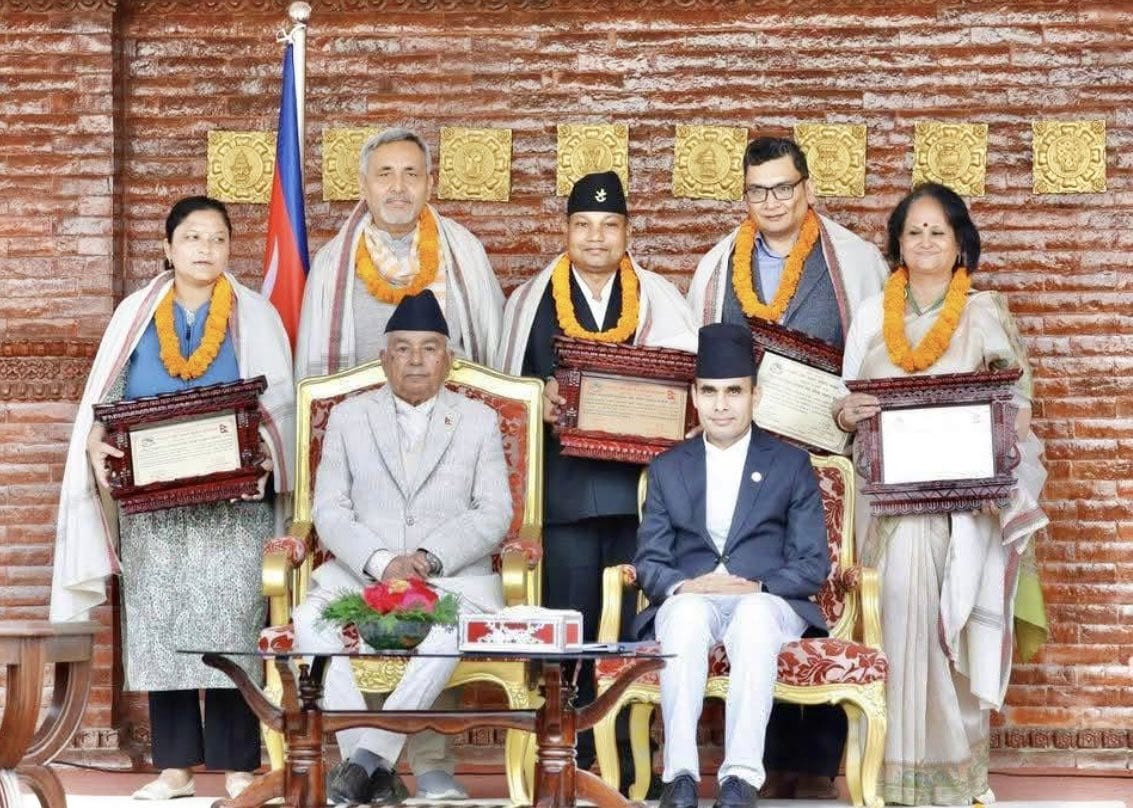
The Kathmandu-based journalist and human-rights advocate was among five scribes – including two women and a Dalit journalist from the Madhesi community – to be honoured by President Ram Chandra Paudel on Baisakh, the 24th day of the Nepali calendar (falling on 7 May this year), which is celebrated as Journalism Day in the country. Each of the five journalists was awarded NPR 200,000 in cash along with a certificate of recognition.
“All five of us have been reporting for donkey’s years,” grins the Kathmandu-based veteran journalist over a Zoom interaction. “But we joked that we could never get a national award – you have to be on ‘somebody’s side’ if you want one.” Sharma credits the RSP for making a strong statement about press freedom and inclusivity by awarding independent journalists soon after coming to power.
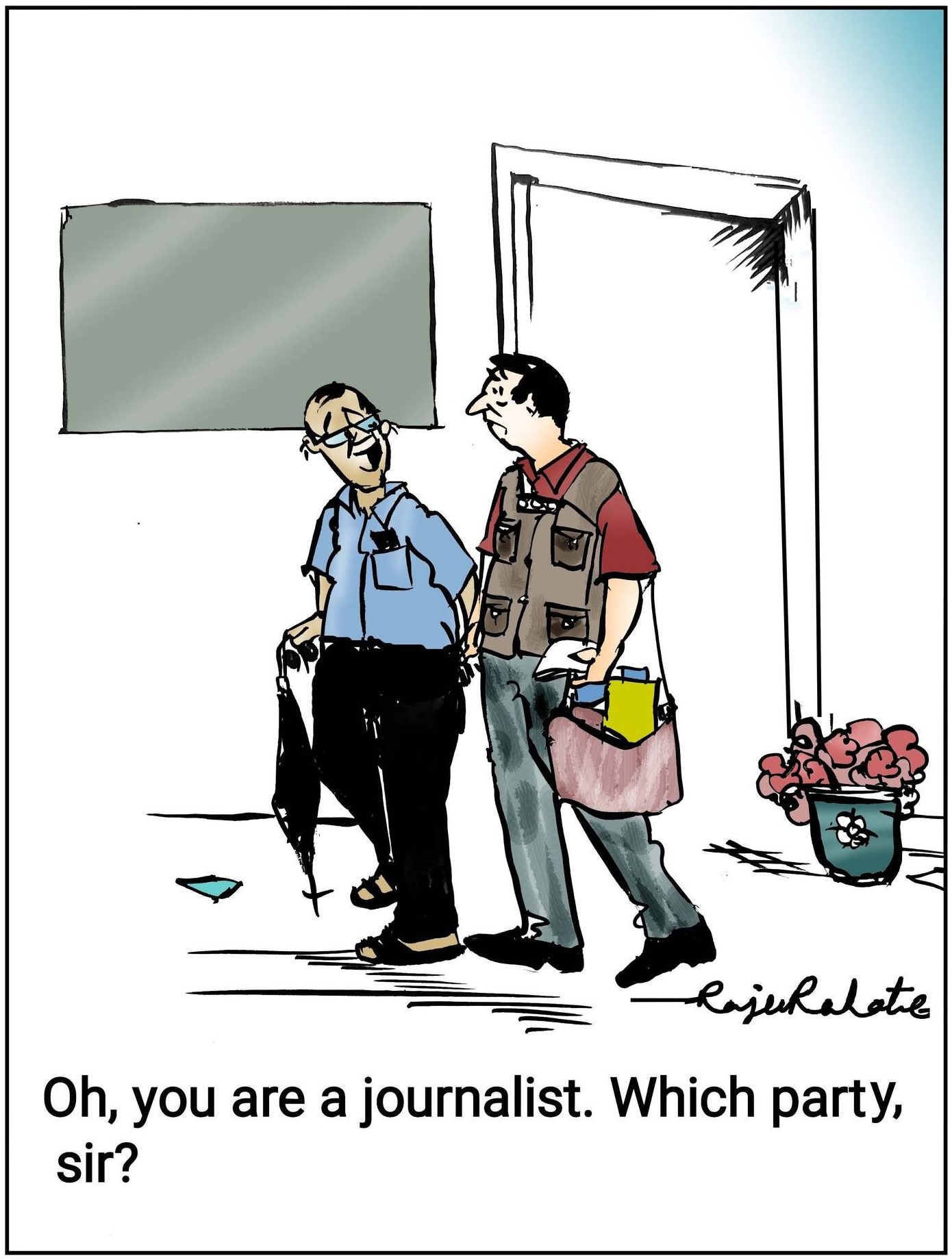
Besides partisanship in both government-owned and corporate media, Sharma also identifies several other ongoing challenges for journalists in Nepal. “There have been threats to journalists covering local governance and corruption stories. There is also self-censorship driven by low pay and intimidation,” she says. Legislative loopholes in digital laws such as the Electronic Transactions Act, 2063 (2008) could potentially be used to curtail press freedom, she adds.
While, she says, killings of journalists are rare in Nepal compared to neighbouring South Asian countries, two deaths did occur in 2025 — one during arson attacks on media houses by violent pro-monarchy demonstrators.
And yet, Sharma maintains, Nepal’s press freedom is relatively strong compared with the rest of South Asia. She notes that journalists have played a pivotal role in uncovering corruption, advocating for human rights with a focus on gender and minority rights particularly since 1990, and supporting democratic transitions.
To their credit, Sharma says, the current government has also stated its commitment to protecting press freedom and freedom of expression. At a recent meeting of about 50 editors at Prime Minister Balen Shah’s office, journalists emphasized that press freedom must be enshrined in the Constitution without conditions or exceptions, and that the right to privacy for public figures should not be used as a shield to hide misuse of public resources.
“We’ll have to wait and give the new government a chance to make it happen,” says Sharma, who currently serves as media coordinator for the Nepal National Commission for UNESCO.
Nepal’s political landscape underwent a dramatic transformation in September 2025, when a youth-led uprising – largely organized through social media – resulted in the overthrow of the government then headed by KP Sharma Oli of the UML party.
The movement, driven by Gen-Z citizens mostly under 26 years of age, was rooted in years of accumulated frustration over rampant corruption, nepotism and the inability of successive governments to complete a full five-year term, says Sharma.
The government’s decision to ban social media just two days before planned peaceful protests on September 8th served as the immediate trigger, as social media represented the primary communication channel for this generation. When police killed schoolchildren during the protests, the situation escalated rapidly.
And yet, Sharma says, “No one expected a change of regime in that way.”
Following the revolution, Sushila Karki, a former Chief Justice known for her anti-corruption stance, was elected as interim head of government through a process facilitated by the Gen Z movement via the Discord app. She successfully conducted elections within six months.
Balen Shah, who had previously served as Mayor of Kathmandu after contesting independently with no political background, declined an initial request to become Prime Minister. “It was a strategic decision,” says Sharma.
Shah instead joined RSP, a coalition of independent candidates, and was fielded as their prime ministerial candidate. The RSP won a near two-thirds parliamentary majority, defeating most senior leaders of the Nepali Congress, UML and Maoist parties. At 35 years old, Shah is now one of the youngest heads of government in the world.
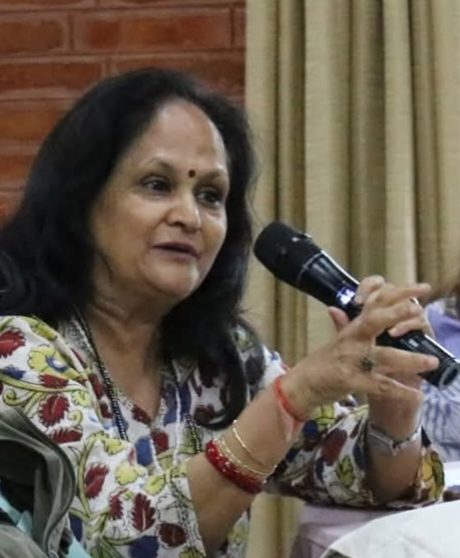
Though Sharma is cautiously optimistic about the rise of RSP, she takes a level-headed position about its political future, especially considering a hasty spate of ordinances they have passed since coming to office just two months ago.
“They had a detailed 100-point agenda for the first 100 days in office, covering a wide range of reforms,” she explains, including the clearance of illegal squatter settlements along the banks of Kathmandu’s rivers such as the Bagmati and Manohara; judicial reform targeting politically appointed judges; and the formation of an unusually small cabinet that for the first time fulfils the constitutional requirement of 33 percent women ministers.
But even though these steps are consistent with the government’s pre-election mandate, they’re moving too fast and riling too many feathers, Sharma avers. “No doubt they are taking strong and bold steps. But I also feel that this party is doing exactly what we tell our children not to do, or what our parents told us – don’t rush into things.”
The 62-year-old grandmother recounts receiving an unexpected phone call on 3 May this year – which is coincidentally celebrated as World Press Freedom Day – from the Ministry of Communication and Information Technology informing her of her nomination for the Baristha Patrakar Samman (Senior Journalist Award).
“I just kept quiet for a while, and then I asked, ‘Are you sure you’ve got the right number? I am a journalist who works a lot, but I never get these awards’.” The person on the phone laughed and assured Sharma she was the journalist they had in mind. “So that was interesting,” she says.
During the award ceremony on 7 May, she says the awardees appreciated the speech given by Dr Bikram Timilsina, Nepal’s new Minister of Communication and Information Technology, who stated that the five journalists had been chosen based on their work and credibility, and that his government wanted to break the tradition of awarding journalists based on political-party affiliations.
Sharma insists that the award’s significance for her is not about personal recognition but the validation of independent journalism in her country. “I think we should look at the broader sense of press freedom: if journalists are not allowed to work freely in any country, democracy is threatened,” she says. A youth-led government in Nepal has just set an example for other South Asian countries to follow.
Discover more from eShe
Subscribe to get the latest posts sent to your email.
0 comments on “Nepal’s Gen-Z revolution brings independent journalists to the spotlight”