

By Suman Bajpai
The Chanderi Eco Retreat Festival (on until 28 February 2026) was the nudge I finally needed. For years, this storied little town in Madhya Pradesh had hovered on my bucket list – half-myth, half-memory, shimmeringly wrapped in the same delicate, handwoven fabric that made it famous. When I heard that the annual festival was on, promising cultural showcases, textile trails and an immersive stay in a specially created tent city, I booked my trip without hesitation.
The journey to Chanderi isn’t exactly seamless. Without a direct flight from Delhi, I found myself on a sleepless early-morning Vande Bharat to Lalitpur, followed by a quiet one-hour drive through fields and low hills. But when you’re on the brink of discovering one of India’s most atmospheric textile towns, these small inconveniences feel like initiation rites.
Chanderi lies in the Ashoknagar district, a place that today feels like a mofussil town but once sat at the heart of power politics, coveted by dynasties for its strategic location between Malwa and Bundelkhand. You will see history everywhere here – the town boasts of approximately 375 historical monuments.
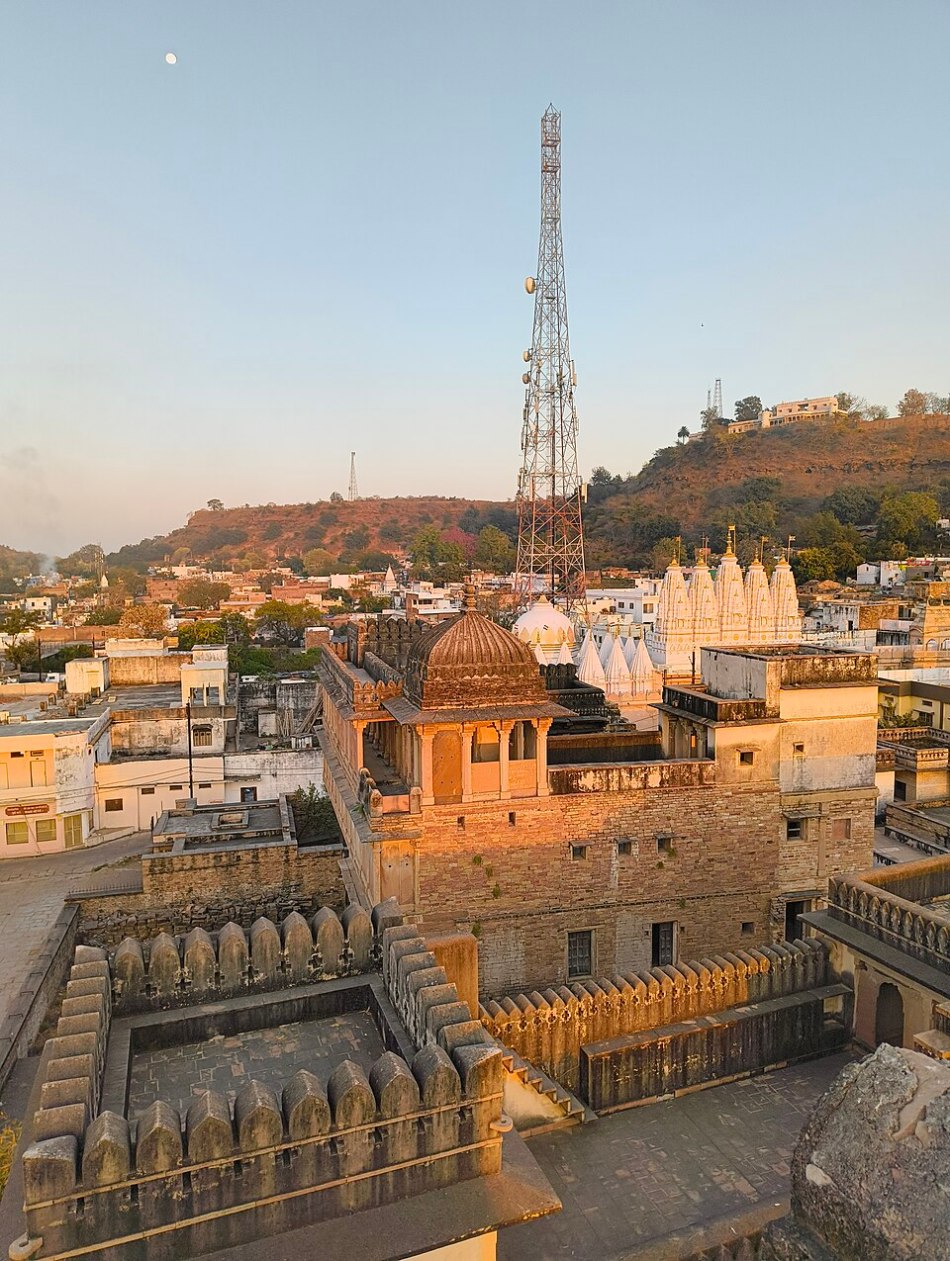
The morning after the festival’s inaugural cultural events – folk performances, craft displays and irresistible local hospitality – it was time to explore. Chanderi’s lanes or ‘galis’, narrow and serpentine, are best experienced on foot, though distances between monuments can make that impractical. Auto or cycle rickshaws are hard to come by. A hired car from the Lalitpur or Jhansi railway station or from the modest car rental service in Chanderi is your best ally.
But don’t rush the lanes. They are Chanderi’s soul.
Whitewashed homes line the alleys, interrupted by bursts of cobalt blue or marigold yellow. Cows wander past in their decorative finery – bright bows, beads, ribbons – looking like they, too, are part of the festivities. In these winding galis, you stumble upon shrines, schools, dargahs, libraries, all coexisting with the rhythm of daily life.
Most evocative, though, is the hum of the looms. Chanderi has long been a weaving town, and its weavers are the custodians of a craft so subtle, it almost feels like poetry written in silk and zari. Through open doors, I caught glimpses of weavers bent over their work; no one seemed to mind a quiet visitor pausing to watch.
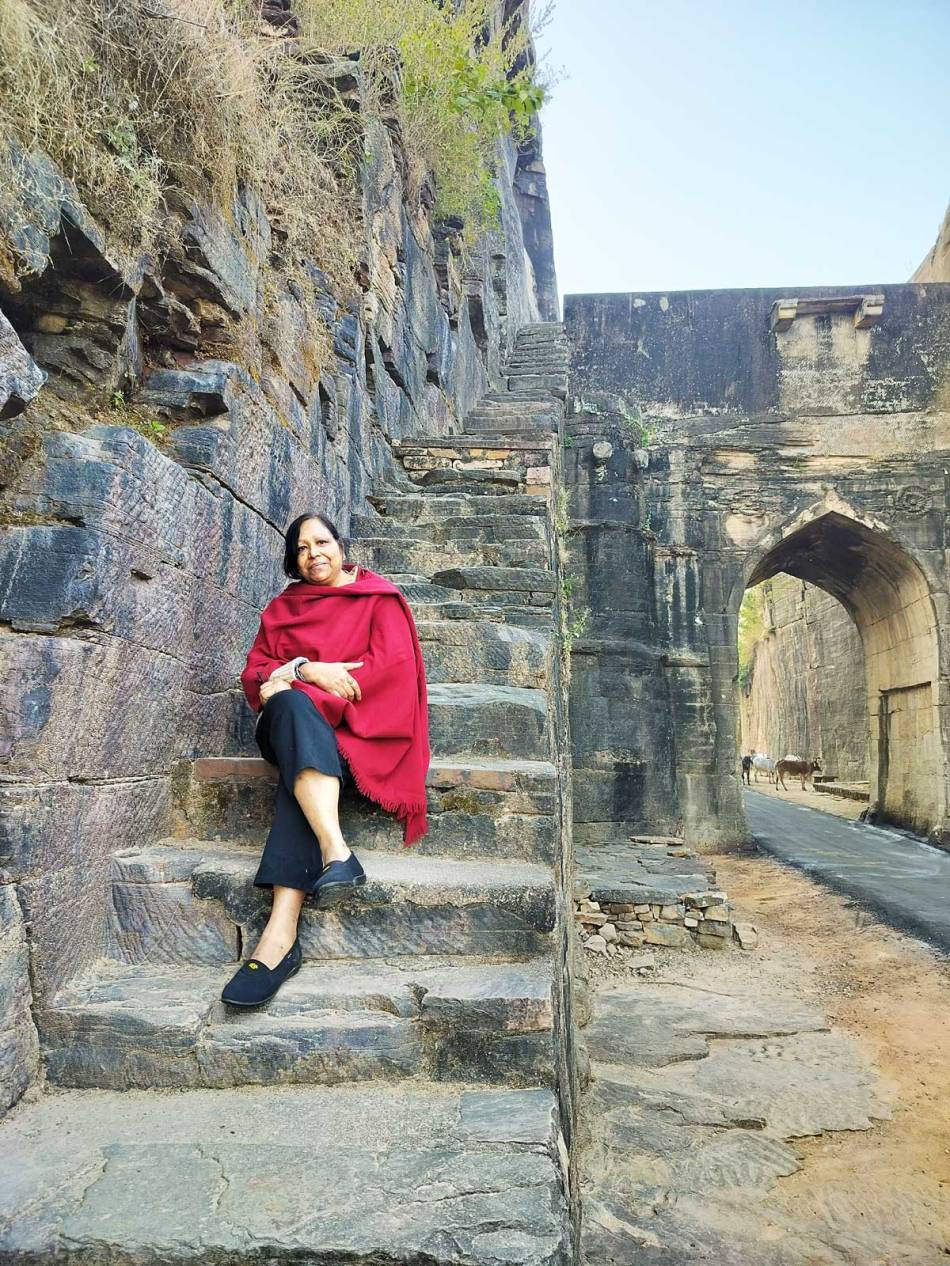
To the south of Chanderi lies Kati Ghati, a dramatic stone gateway carved into the hillside. Built in 1495, the gateway – over 10 metres high and 25 metres wide, and also known as the Malwa Gate – was cut manually into the rock to allow travellers from Malwa and Bundelkhand to enter the town.
It isn’t ornate; there are no elaborate carvings. Its beauty lies in its audacity. Standing before it, I couldn’t help wondering about the labourers who carved a mountain for the sake of a gate.
A short drive uphill brought me to the Chanderi Fort – also called Kirti Durg in honour of Raja Kirti Pal who made it in the 11th century – perched 200 metres above the town. All subsequent rulers who conquered Chanderi – Alauddin Khilji, Babur, and the Bundela kings, among others – left their mark on the architecture of the fort, which measures about two kilometres in length and about a kilometre across.
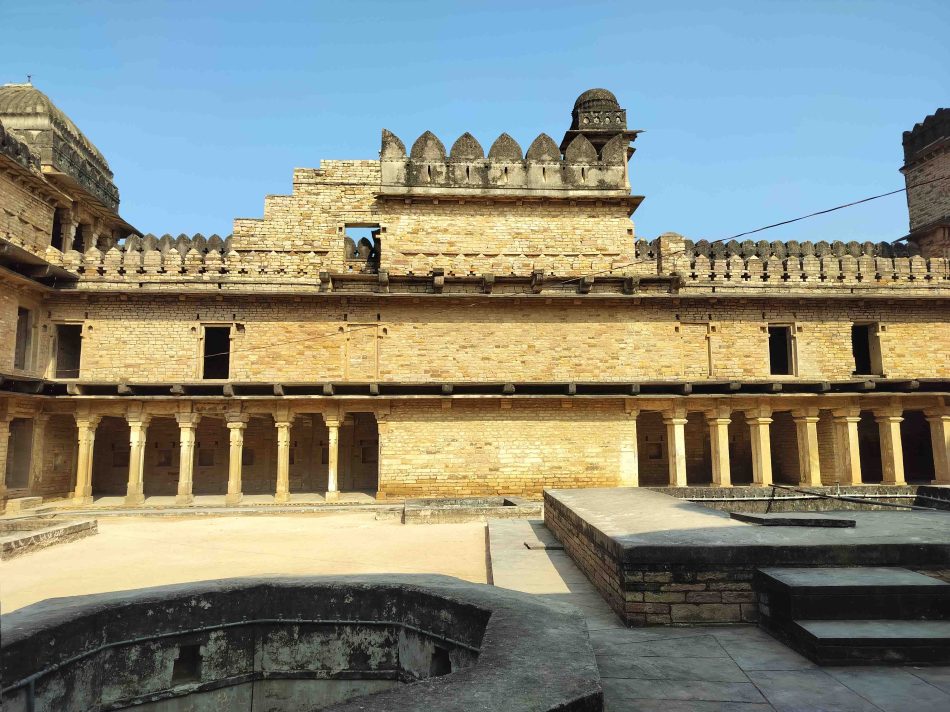
The climb, today manageable by car, once involved passing through three massive gateways – only the last, ominously known as Khuni Darwaza (“blood-soaked gate”), survives. My guide narrated macabre stories of prisoners hurled from the fort walls during the reign of the Malwa Sultans, their battered corpses displayed at the gate.
Inside the fort complex, I walked towards the Jauhar Smarak, originally the primary source of water in this region. A tall plaque reminds us that over 600 Rajput women are believed to have committed jauhar (self-immolation) at this spot when Babur besieged Chanderi in 1528. It is difficult to stand by the still water and imagine that fury of fire and grief.
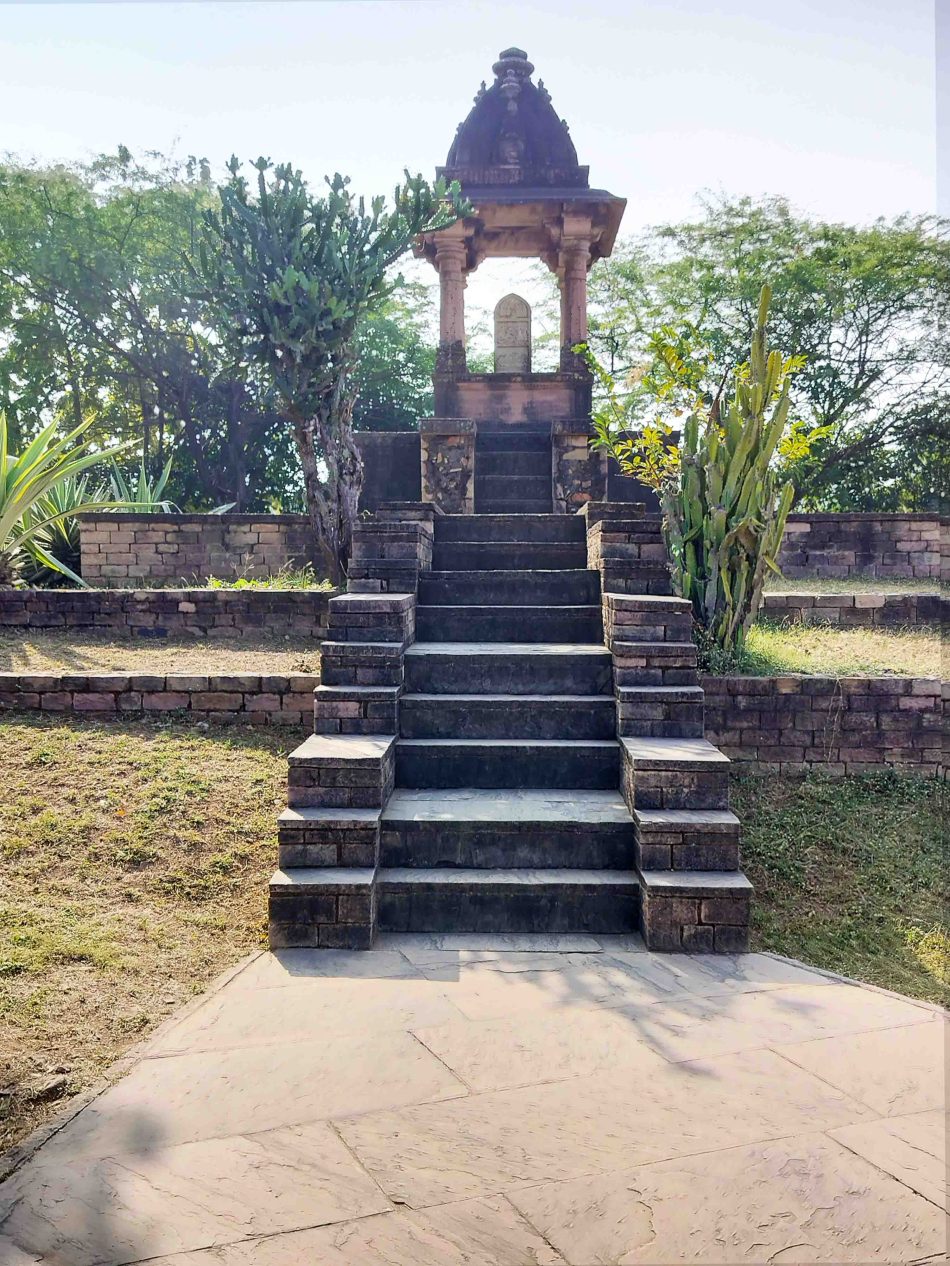
Just beside it lies something gentler – the samadhi of Baiju Bawra, the legendary dhrupad singer and the court musician of Raja Mansingh of Gwalior.
But the monument that left the deepest imprint on me was Shehzadi ka Rauza, perhaps Chanderi’s most beautiful tomb. Set in a forested patch near Parmeshwar Tal outside the town, the mausoleum feels almost like a secret – reachable via a short walk from Delhi Darwaza or a longer drive.
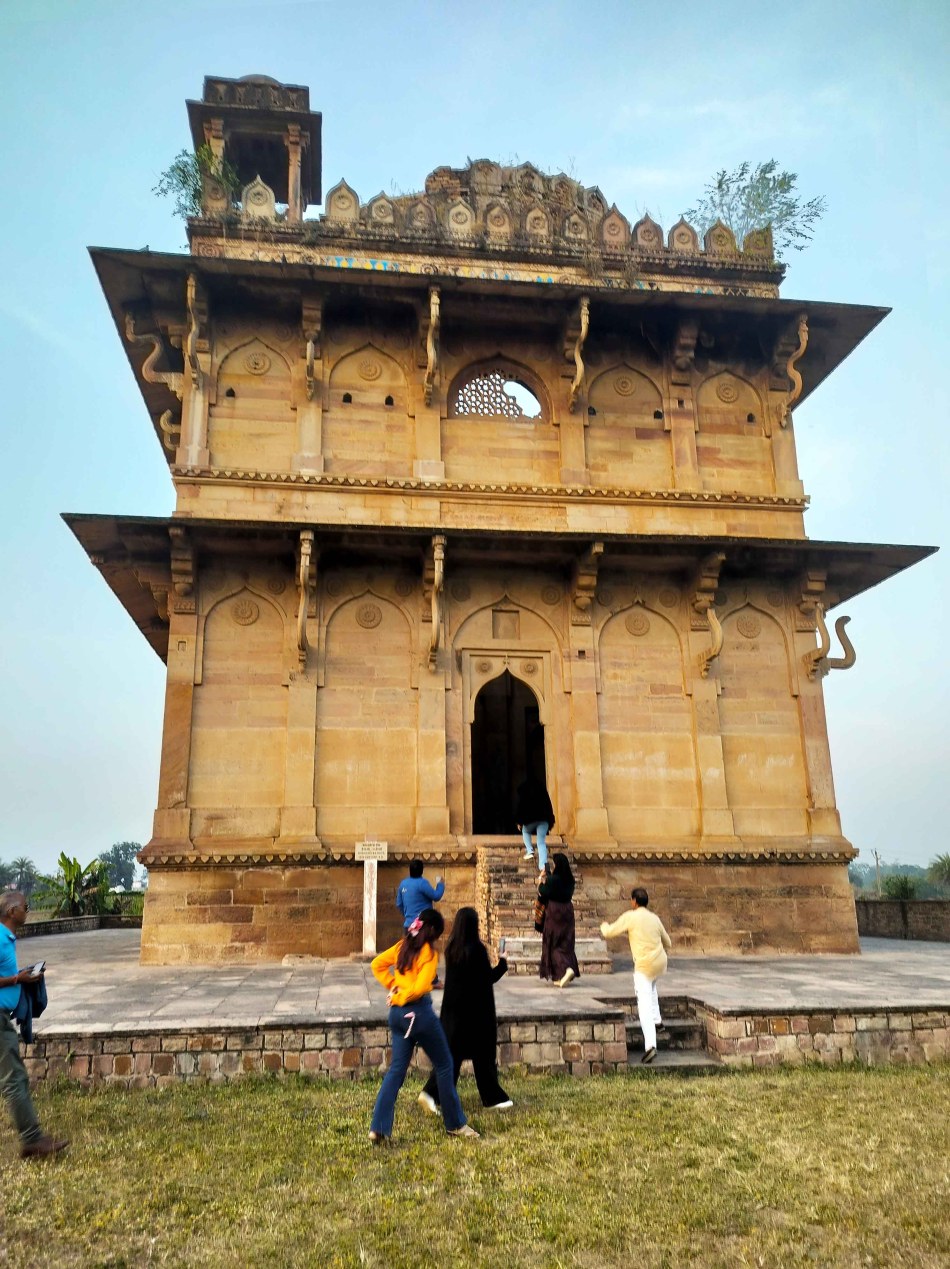
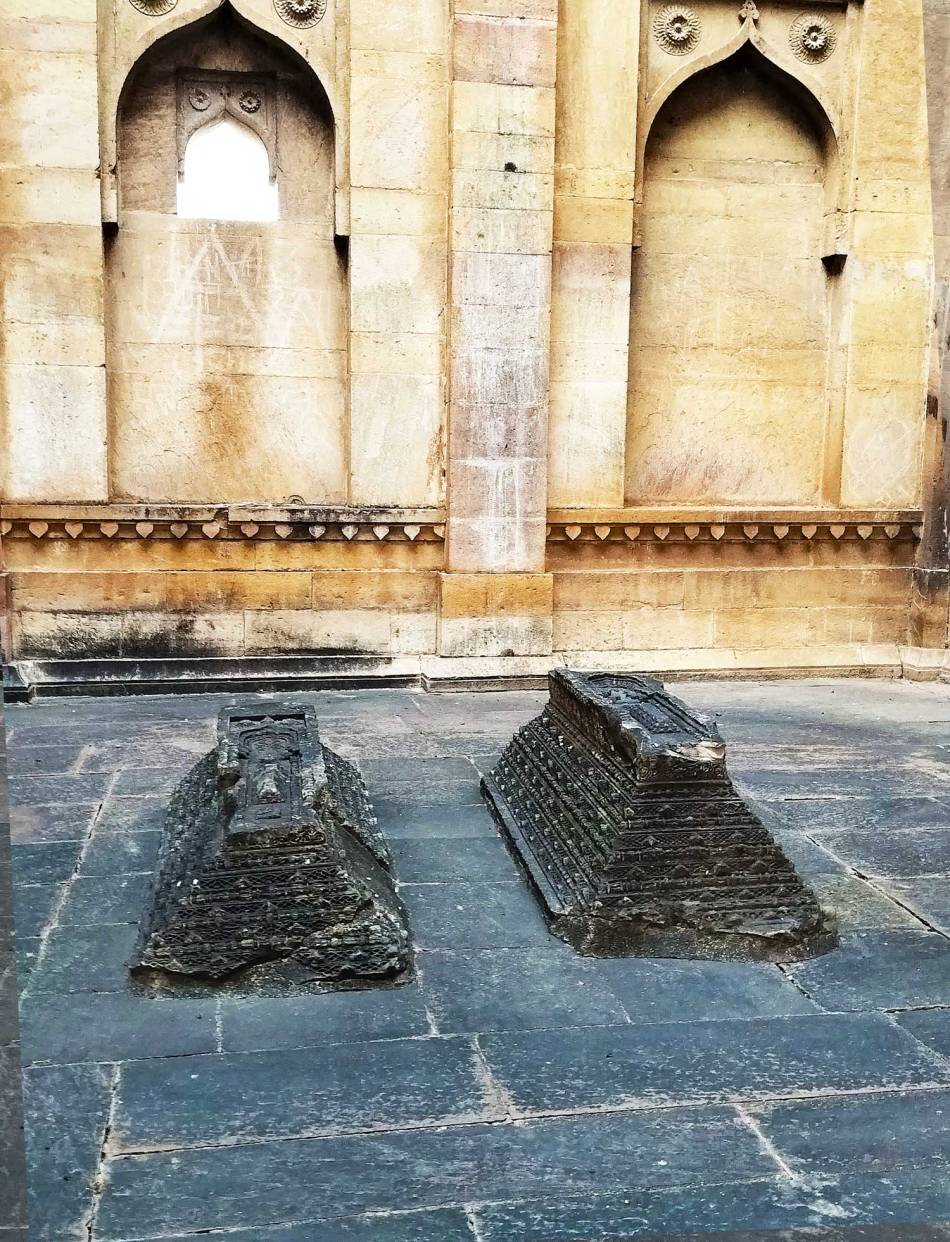
Legends breathe through its walls, estimated to be constructed in the 15th century. Princess Mehrunissa, the story goes, fell in love with an army chief. Her father disapproved and plotted the young man’s death. Mortally wounded, he returned to Chanderi and cried out in agony. Recognising his voice, Mehrunissa ran to him — only to witness his last breath. Heartbroken, she took her own life.
Two carved stone plaques mark the spot where they died, and the king, devastated after his daughter’s death, built the mausoleum with a moat around it, vowing to keep the couple together in eternity. It is said he visited the tomb every evening in his boat. Today, the tomb’s jaalis and carvings – some intact, others weathered – seem to carry both love and lament.
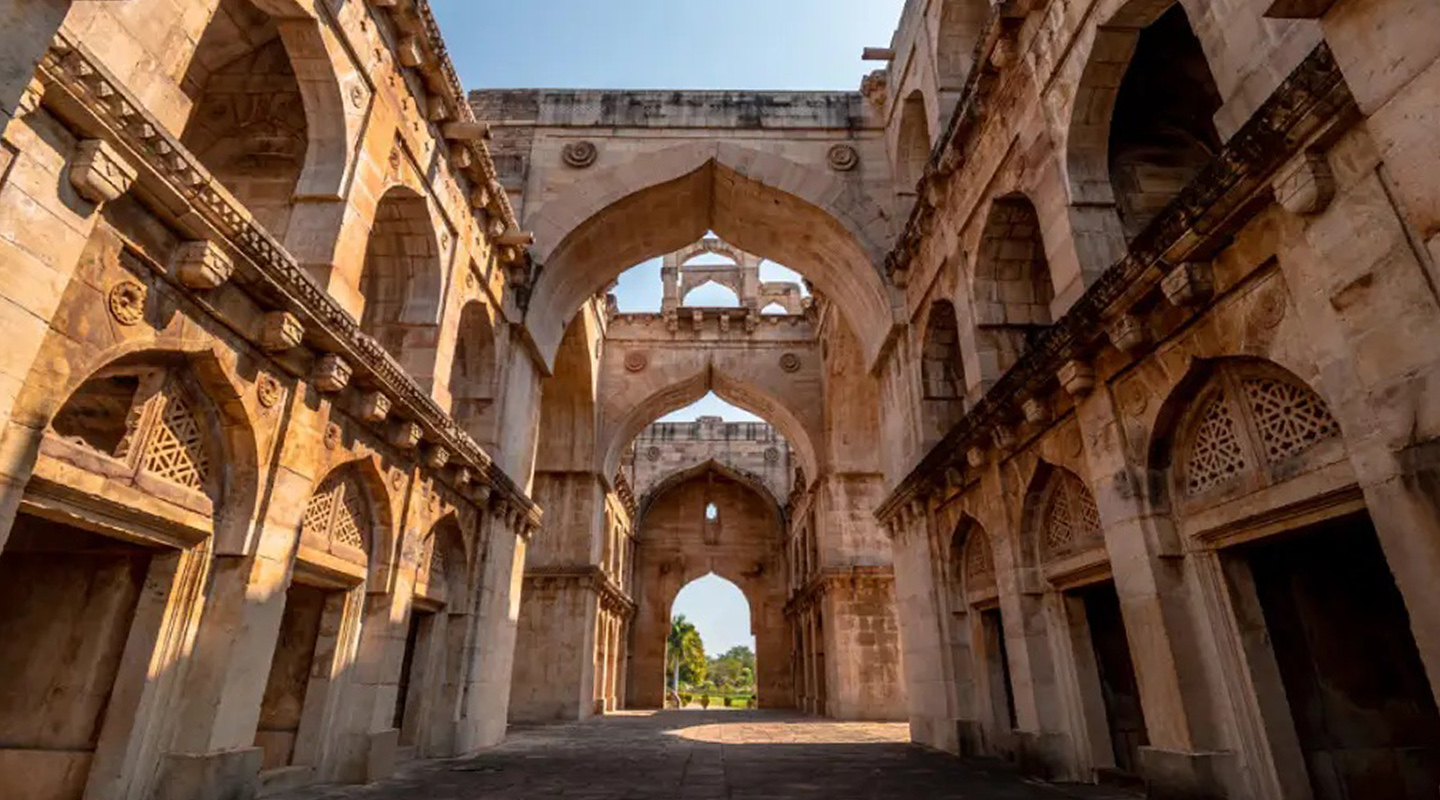
From tragedy to triumph – my next stop was the stately Koshak Mahal, a 15th-century architectural marvel attributed to Mahmud Shah Khilji. Some say he had it built for his wife Koshak, who gave birth to their child there; others say it was a victory monument.
Once believed to have seven storeys (today only three and a half survive), the palace stands in landscaped gardens, its symmetry and scale astonishing even now (lead image). Each of the four sides has a grand arched entrance. Inside, a network of intersecting passages divides the structure into four quadrants, creating interplay of light and shadow that feels almost cinematic.
It is not surprising that tourists and filmmakers – including those behind the hit movie Stree – are drawn to Chanderi.
I ended my exploration at Handloom Park, a settlement of weavers where every house hums with the sound of looms, the khat-khat steady and mesmerising. The village itself is charming – homes painted in bright pinks, greens, blues; artwork blooming on walls.

Tradition defines Chanderi: cottons as light as mist, silks that shimmer like monsoon clouds, motifs handed down through generations. Despite changing times, the craft has endured.
There was so much more I wished to see – museums, temples, stepwells – but my time was running out. The Chanderi Eco Retreat Festival had been my entry point, but what lingered was something deeper: the feeling of walking through a living tapestry.
Like its legendary weave, Chanderi stays with you – light, delicate, beautiful, unforgettable.
The Chanderi Eco Retreat Festival runs from 28 November 2025 to 28 February 2026. Find more information at MP Tourism.

Suman Bajpai is a freelance writer, journalist, editor, translator, traveller and storyteller based in Delhi. She has written more than 30 books on different subjects and translated around 160 books from English to Hindi. Her latest novel is The Naga Story (2024).
Discover more from eShe
Subscribe to get the latest posts sent to your email.
0 comments on “Inside Chanderi’s Eco Retreat Festival: where looms, legends and living heritage converge”