


By Meenal Rajapet
It began when I was nine, with the arrival of a puppy who became my world. I was always enamoured by animals but Spots’ presence deepened that connection. At 11, an article about how we’re conditioned to disconnect from how meat makes its way to our plates lingered in my mind, making me uneasy at mealtimes. By 12, I tried vegetarianism. It wasn’t easy in a non-vegetarian household, but the seed was planted.
Around that time, I read about an actress who apologised for wearing fur after feeling discomfort when she looked at her own dog. This opened my eyes to the connection between my pet and other animals. At 23, working in the animal-protection sector sharpened my focus on the impact of our food systems on animals and the environment. I also realised how accessible a vegan lifestyle is in India.

Yet, making the full switch was harder than I anticipated. I struggled with nutrition and meal planning. As it turned out, I got a job at the global nonprofit Vegan Outreach and discovered their ‘10 Weeks to Vegan’ programme. The professional became personal, and what once seemed overwhelming became a sustainable lifestyle shift!
The realities of dairy
Growing up, I believed dairy farms were places where cows lived peacefully, grazing in open fields. I thought of milk as a natural and gentle part of life and a gift from gau mata or the cow – an animal significantly entwined with the Indian culture I grew up in. But as I learned more, the reality of modern dairy farming shattered that image.
One of the most heart-wrenching practices I discovered was the separation of mother cows from their calves shortly after birth. This happens because the milk meant for the calf is redirected for human consumption. Cows are deeply maternal, and being taken away from their young leads to visible signs of stress and sorrow.
What struck me even more was learning about the practice of using the calf’s skin to create an ‘artificial calf’ also known as a khal bachcha. This skin is sometimes stuffed and placed near the mother to simulate her calf’s presence, encouraging her to keep lactating.
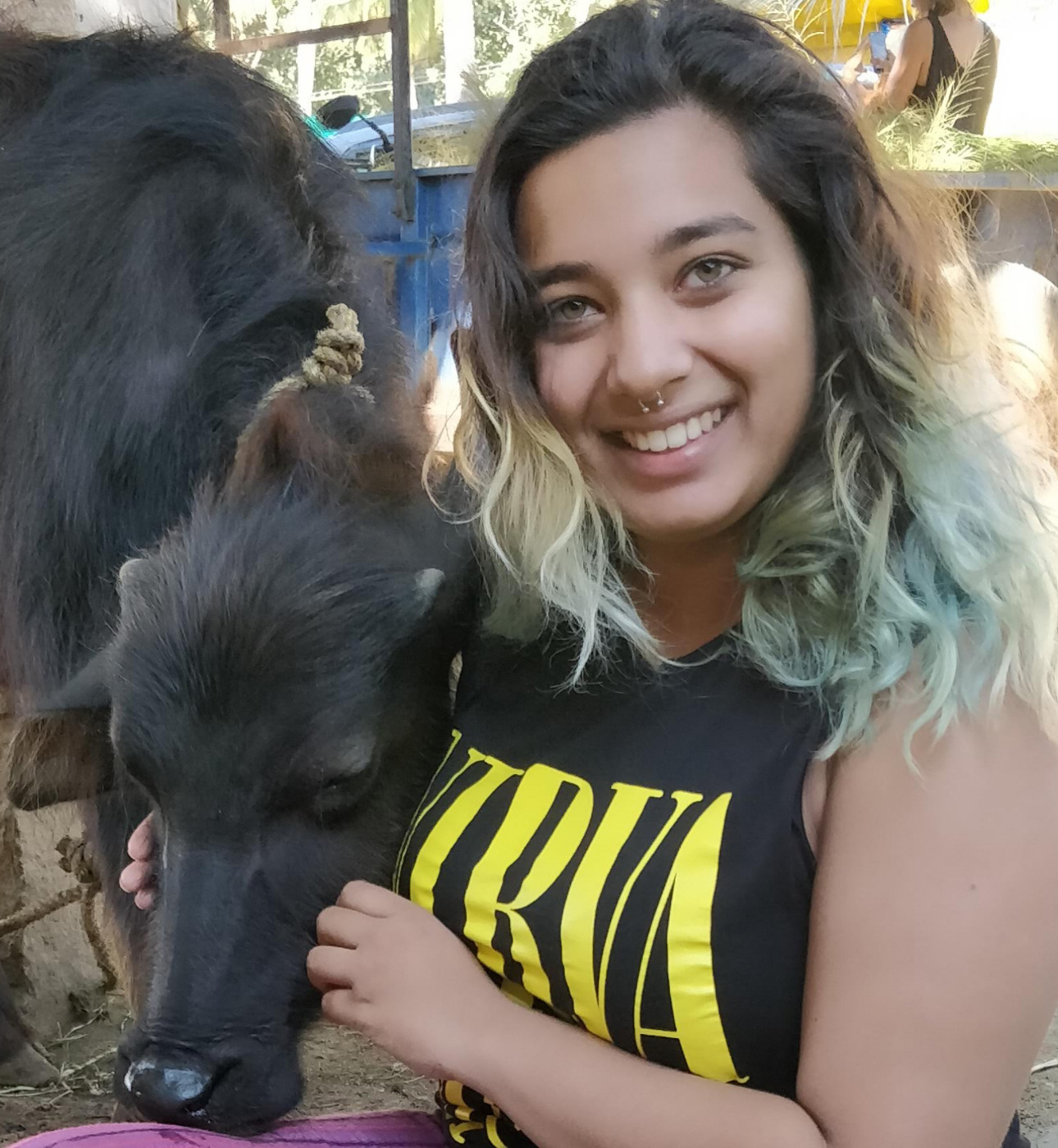
Learning about this practice was deeply unsettling and made me question my choices. I realised that, by consuming dairy, I was indirectly supporting a system that prioritised production over the wellbeing of animals.
Animal agriculture affects the planet too
With food production responsible for over a fourth of global greenhouse gas emissions, our daily habits have the power to reshape our impact. Data from Our World in Data highlights the vast carbon footprints of commonly consumed foods.
Beef, for instance, has an astonishing carbon footprint of 99.48 kilogram of CO₂ per kilogram of food product – more than any other food. Even items like poultry, cheese and eggs, though lower, still contribute to greenhouse gas emissions.
In contrast, plant-based foods such as pulses, soy milk and root vegetables have significantly smaller footprints (1.79 kg, 0.98 kg and 0.43 kg respectively), showcasing an environmentally friendly alternative to high-emission foods.
While my journey was driven by wanting a better world for animals, many people choose veganism to address environmental challenges. Take Ramyashree R., for instance, who found her motivation in understanding the ecological impact of her food choices.

“I always wanted to adopt an animal-free, environment-friendly and healthy vegan lifestyle. I did plenty of research and took guidance from a vegan mentor, who helped and informed me about things that the internet couldn’t tell,” she shares. For Ramyashree, a student from Bengaluru, going vegan wasn’t just about personal health – it was about taking responsibility for the planet.
Individual choices can lead to collective environmental benefits, underscoring the power of dietary shifts in combating climate change. For instance, producing one litre of buffalo milk requires approximately 4,546 litres of water. That’s the equivalent of taking about 227 bucket baths! Is the water waste and animal distress worth it for just a few glasses of milk?
The impact extends beyond animals. According to the United Nations, animal agriculture is a leading contributor to greenhouse gas emissions, deforestation and water depletion. A global shift toward plant-based eating could reduce food-related emissions by up to 70 percent. Such a shift would not only mitigate climate change but also reduce pollution and support biodiversity recovery.
A healthier choice for us
The environmental toll of animal-based foods impacts our health too. For many, including me, the switch to a plant-based diet felt right – not just for the environment and animals, but for personal wellbeing. Realising this made the journey feel all the more rewarding. This was also the case for Rohaan Naskar.

A fitness enthusiast and athlete from Kolkata, Rohaan says, “My diet always had a lot of animal protein. I had no idea how to replace it with vegan options.” Rohaan then signed up for the ‘10 Weeks to Vegan’ programme, where he learnt about getting adequate proteins from clean plant-based sources. “I made a diet chart and started following it. I feel more energetic and healthier now,” he affirms.
The health benefits of a plant-based diet lead to lower rates of high blood pressure, lower risk of cancer, significantly lower cholesterol levels, and lower risk of type-2 diabetes. By avoiding animal products, people also eliminate exposure to antibiotics and hormones like oxytocin, commonly used in factory farming to increase milk production.
These substances can have long-term health implications, including antibiotic resistance and hormonal imbalances. With nutritional awareness, our protein needs are also easily met through a variety of plant-based sources, from legumes and tofu to whole grains, making a balanced and healthful diet entirely achievable.
Is it natural to eat meat?
I come across this idea often – that eating meat is simply part of nature. But today’s food systems are far from natural. This image portrays what a natural ecosystem looks like:
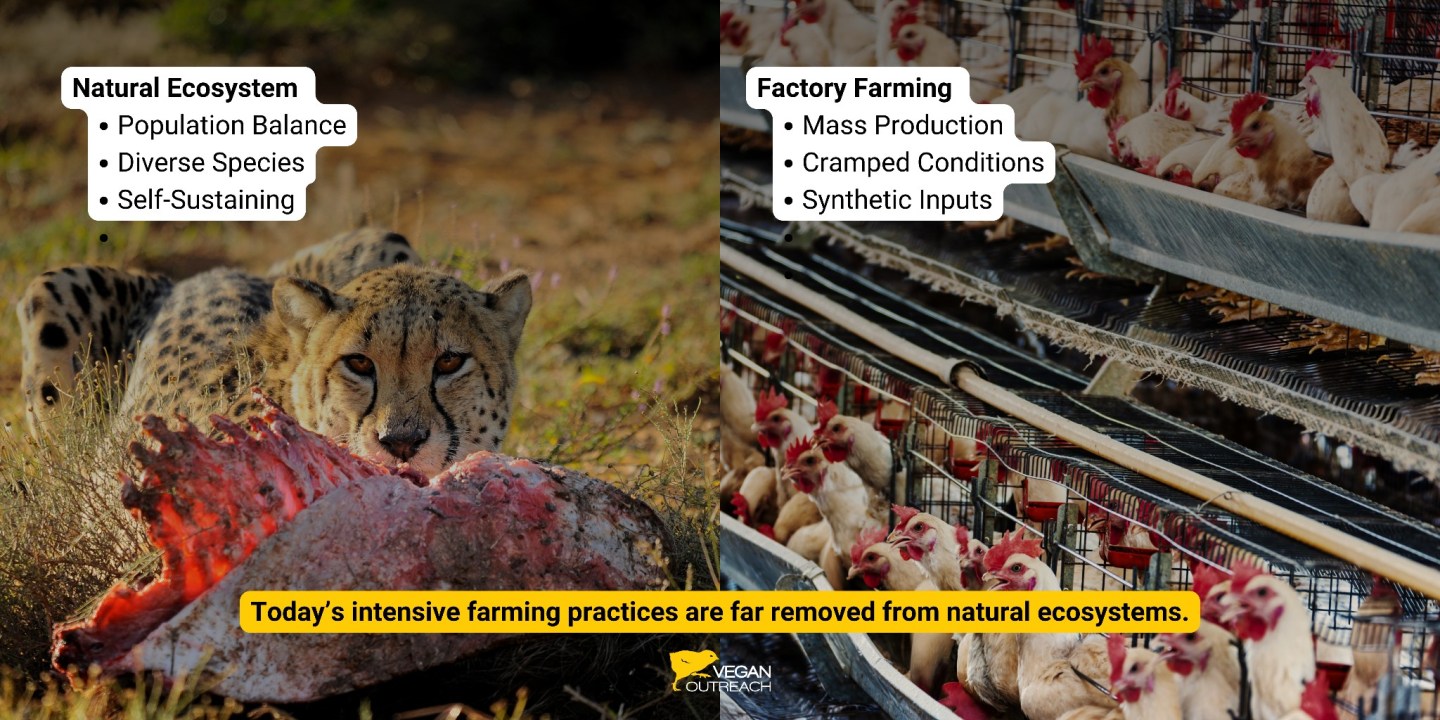
In natural ecosystems, animals live in harmony with their environment, supporting biodiversity and maintaining ecological balance. This allows for natural population control, habitat diversity, and minimal human interference.
In contrast, factory farming disrupts this balance. It is a human-designed system prioritising mass production and profit. Animals are confined in restrictive spaces, deprived of natural behaviours, and subjected to synthetic interventions like antibiotics and hormones. This approach leads to environmental degradation, besides raising significant ethical concerns.
The call for change
In recent years, several Indian celebrities have embraced veganism, using their platforms to inspire change. Actress Sonam Kapoor Ahuja transitioned to a vegan lifestyle due to lactose intolerance and her commitment to animal welfare. Similarly, Sonakshi Sinha adopted veganism to support environmental sustainability, while Jacqueline Fernandez has been an advocate for plant-based living, even opening a vegan restaurant in Mumbai.
This growing movement reminds us why World Vegan Month matters. As a child, reading articles about animal welfare opened my eyes and changed my life, helping me understand that plant-based eating aligns with both our ethical values and the planet’s needs. Awareness is powerful – it’s the first step in rethinking our choices and building a more compassionate world.
Meenal Rajapet is a digital communications professional and animal-rights activist based in Hyderabad. Register for the ‘10 Weeks to Vegan’ programme here.
Discover more from eShe
Subscribe to get the latest posts sent to your email.
 eShe
eShe 
Thanks. More later soon in detail.
LikeLike