

By Natasha Sharma
There is a particular kind of comfort a dead woman provides to society.
She doesn’t change her mind. She cannot contradict you. She doesn’t bang at your door asking you for more than you are prepared to give. And she cannot hold a mirror to your face at a moment when you’d rather remain unseen.
A dead woman is finally manageable.
Indian history has always been aware of this; it has percolated into our cinema too. Sometimes with grief, sometimes with relief, and sometimes with both at once. We’ve perfected the art over centuries of mourning the women who made it impossible to tolerate them while alive. Of mourning the women we made it impossible to keep alive.
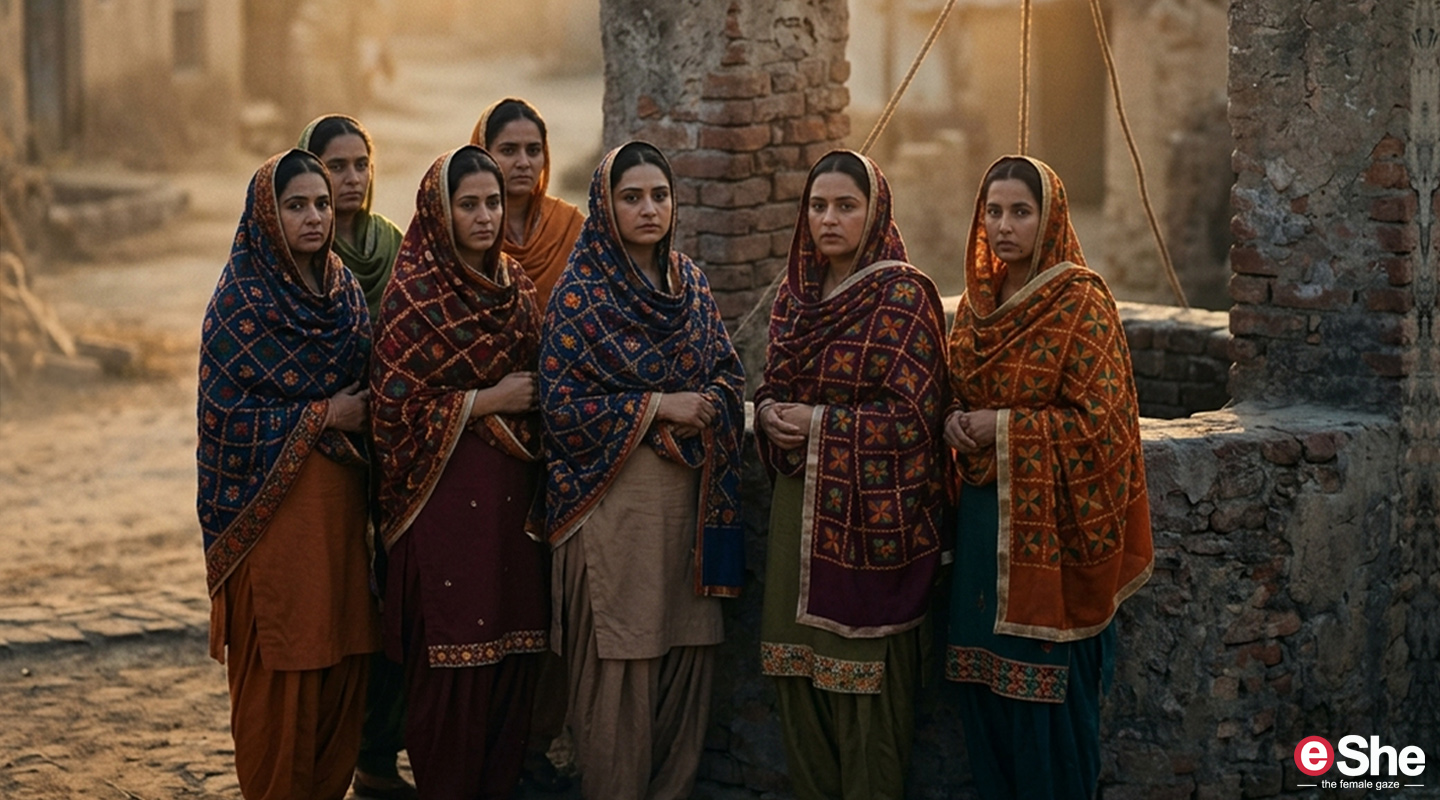
Having spent months researching the 1947 Partition for my first novel, Beneath Divided Skies (2024), I found myself returning to this image again and again. In the village of Thoa Khalsa, nearly 90 Sikh women jumped into a well. They dressed up first. Some in their best clothes. Some in wedding finery. Phulkari dupattas and scarves, embroidered over months, passed from mothers to daughters, as tokens of a prosperous life, of inter-generational love.
They jumped because they feared rape, conversion and abduction. A terror so immediate and so certain that death felt like the more dignified choice.
But they were not the only ones who died that day, or in the days to come across India.

Many women were killed by their own fathers, brothers, husbands – the protectors in their family. Men who decided, with love or fear or whatever twisted sense of duty they carried, that a dead woman was preferable to a violated one. That honour, once lost, couldn’t be returned. That death was the cleaner outcome.
And here is what our history, and we, did with that. Both sets of women – those who died by their own hands or those of their men – were called martyrs. Shaheed. Brave. People remembered them, celebrated their sacrifice, and even venerated them.
The women who survived – the ones raped, forcibly converted, made pregnant, forced to deliver, abort, or leave their children behind – those women came home to families who shunned them. Families that didn’t know what to do with a woman who had lived through the thing she was supposed to have died to prevent.
The ones floating in their phulkari finery were saints. The ones that sank and surfaced were tainted.
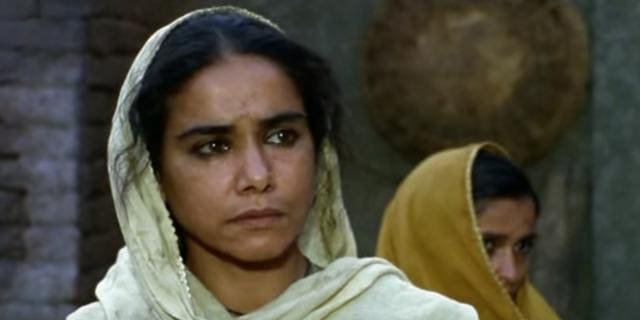
Bhisham Sahni’s 1974 novel Tamas, telecast in 1988, didn’t shy away from this horror. The television serial that many of us watched from the safety of our living rooms showed what happened to women during Partition with an honesty that most storytelling preferred to avoid: that death had made the first group pure. That survival had made the second group a problem.
Phoolan Devi didn’t jump into any well.
The tribal woman was gang-raped by the upper-caste Thakur men in the village of Behmai. They violated her, paraded her naked and humiliated her. And then, when she had the means and the moment, she fought back – with a gun. Phoolan Devi, along with her gang, returned to Behmai, and allegedly killed the men who had raped her.
And society couldn’t process her actions, or what she had done. Not the rape. But the retaliation. A woman had dared to avenge herself. She believed her violation was worth a response. And decided they didn’t get to simply walk away.
Society jailed Phoolan for 11 years without a trial. After her release from prison in 1994, she fought with all her might against an unofficial biopic about her, Bandit Queen, even threatening to self-immolate outside theatres running it.
What was her objection? It was a film the upper-caste male director claimed was an “unadulterated truth” about a woman he had never interviewed, never shown to her, never verified for veracity.
Her rapes depicted on screen, her story told by someone who had never even asked her what her story really was: shown as unadulterated truth.
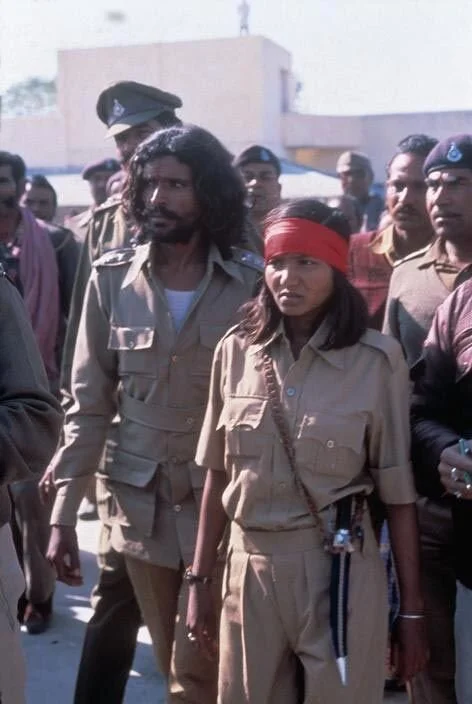
Bandit Queen, the film, won the National Film Award for Best Hindi Feature Film, and several other Indian and international awards. Even today, it holds a 96 percent rating on Rotten Tomatoes.
Phoolan Devi twice became a member of the Indian Parliament and continued fighting the criminal charges that had been reinstated against her, the version of herself that the world preferred to the real one. Years later, Thakur Sher Singh Rana shot her dead. A revenge for killing the men who had sexually assaulted her.
Bandit Queen became a cult classic after her death. An opera was made about her life. Biographies were written. Academic papers.
The woman and the icon had finally, in death, become the same person. One who couldn’t seek revenge for her life, the one who stayed still, like the 18-foot gold-plated statues of her taken down for lack of official permission.
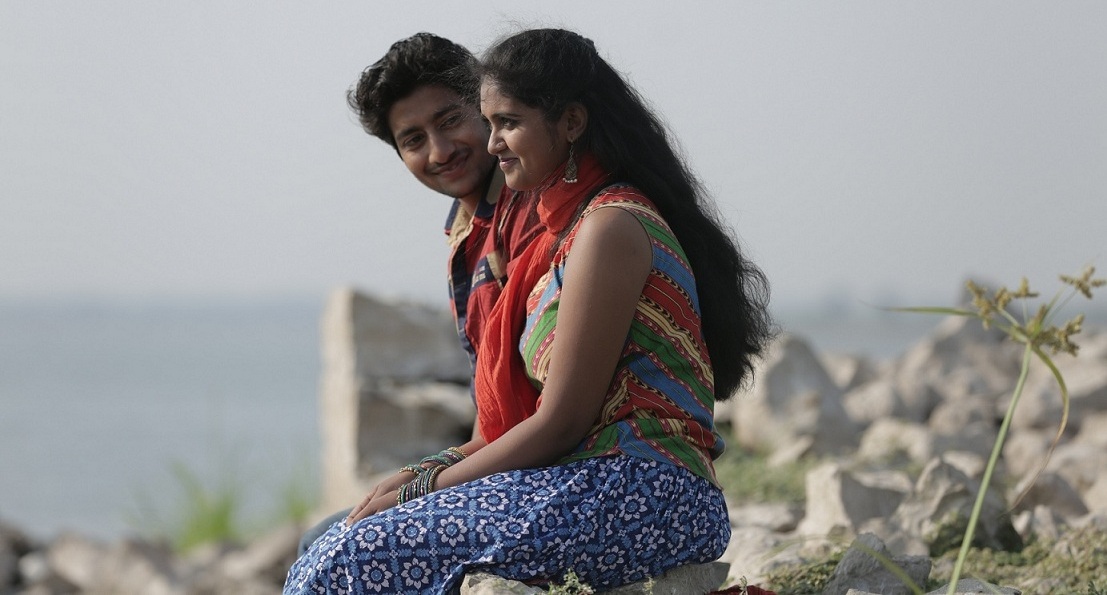
Archie didn’t want to be anyone’s icon. She just wanted to love the boy she had chosen in life.
In Nagraj Manjule’s Sairat, a 2016 Marathi-language film about honour killing, Archie is a girl in Maharashtra who falls in love across a caste barrier. After facing her family’s ire, she and her partner elope; they build a small life and have a child.
Her family finds them.
The film’s last minutes are almost silent. A child walks through rooms, his bloody footprints across the floor. We understand before we see.
Archie alive was an inconvenience. She was a girl who had crossed every boundary her family had built around her, whose choices couldn’t be tolerated without cost. Because choice by itself is not permissible, and choice of a different caste is unforgiveable. Reversed only by death.
Archie dead became a love story. The audience that had spent two hours watching her make her love impossible wept at the end. Praised the film. Shared it. Called it a masterpiece of Indian cinema.
Different stories. Different eras. Different ways of being inconvenient. And the same ending.
A woman who is silenced, whether by her own hand, by her family’s hand, by a bullet outside her home, or by the logic of family honour, becomes safe to mourn, to celebrate, to make myths about. Her death resolves the problem of her. It closes the question she kept insisting on asking.
It is like killing a pesky insect. The buzzing stops. The room feels calmer. The problem solved.
The question worth sitting with, and the one I cannot stop asking, is not why we mourn these women after they are gone. It is why we make it so difficult for them while they are here.

Natasha Sharma is a Pune-based IT professional and writer. Her stories and op-eds weave social awareness and humour, and have been published on various media platforms. Her debut book Beneath Divided Skies dwells on love, sacrifice, and the resilience of the human spirit in the face of adversity. Her latest novel, The Seventh Swar, is the first in a mystery trilogy about a female Mumbai-based detective.
Lead image: AI generated
Discover more from eShe
Subscribe to get the latest posts sent to your email.
Inconvenient Women is a powerful, thought-provoking piece that shines a light on voices often pushed to the margins. It captures the courage, contradictions, and quiet rebellions of women who refuse to fit into society’s neat boxes. Sharp, relevant, and deeply engaging—this is the kind of writing that stays with you long after you’ve finished reading.
What a poignant article! I got goosebumps, I got angry, I got the mad urge to cry… This article invoked multiple emotions. There used to be a serial whose title song was Tu Na Aana Iss Desh Meri Laado. When I heard it for the first time, I wondered why such a song that has so much negativity. But then I lived in the age of Nirbhaya, Priyanka and many others, and I often thought about the song. And it became easier to relate to it. Loved your article ♥️ – Deepa Vishal
Thank you, Deepa.
Your words hit hard. The ripples are never ending. Thank you for writing this.
Thank you, Sangeetha.
Disturbing. Because there is so much truth to it. Well written. Natasha, you’re a writer with a deep sensitive soul. And you’re able to put to paper exactly as your heart thinks and feels. That’s a very special talent. God bless.
Thank you, Ajay!
Beautifully written, truly evocative, women’s history at its best!
The author could be invited as a Visiting Professor in Creative Writing in English /Gender Studies to a leading University in India !
Congratulations!
Prof Sachidananda Mohanty
sachimohanty@yahoo.co.in
Thank you so much for this lovely comment. I am truly honoured!
Very interesting article and well written