

By Nethra Anoop
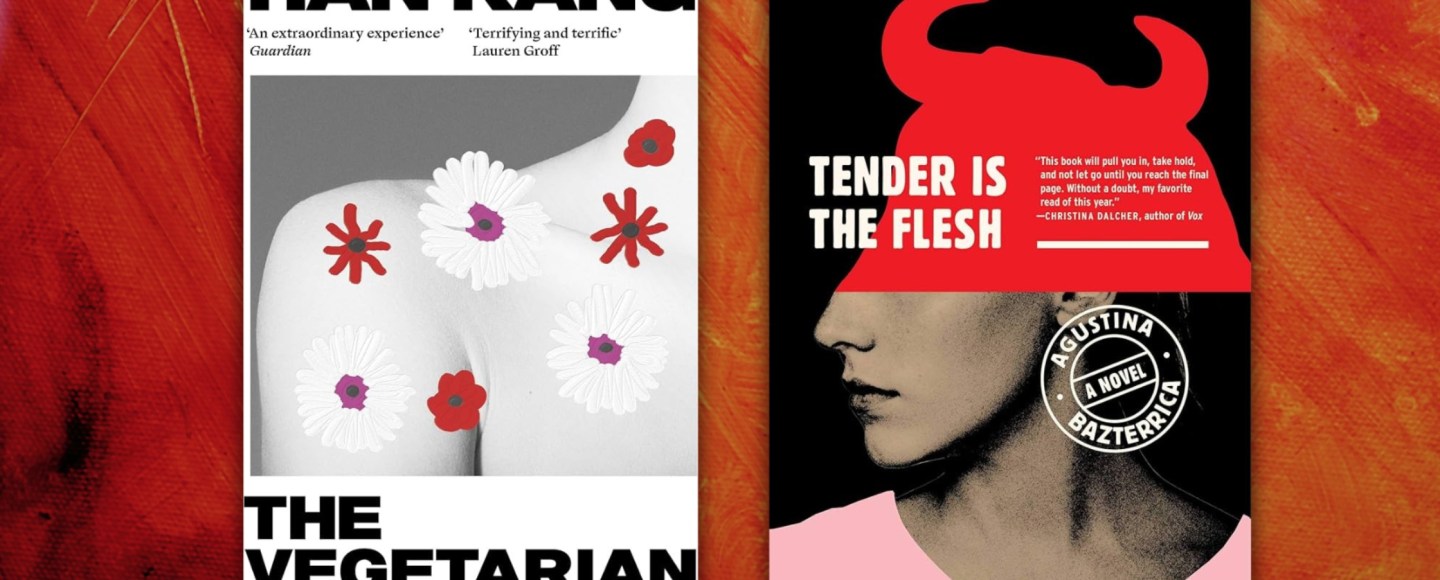
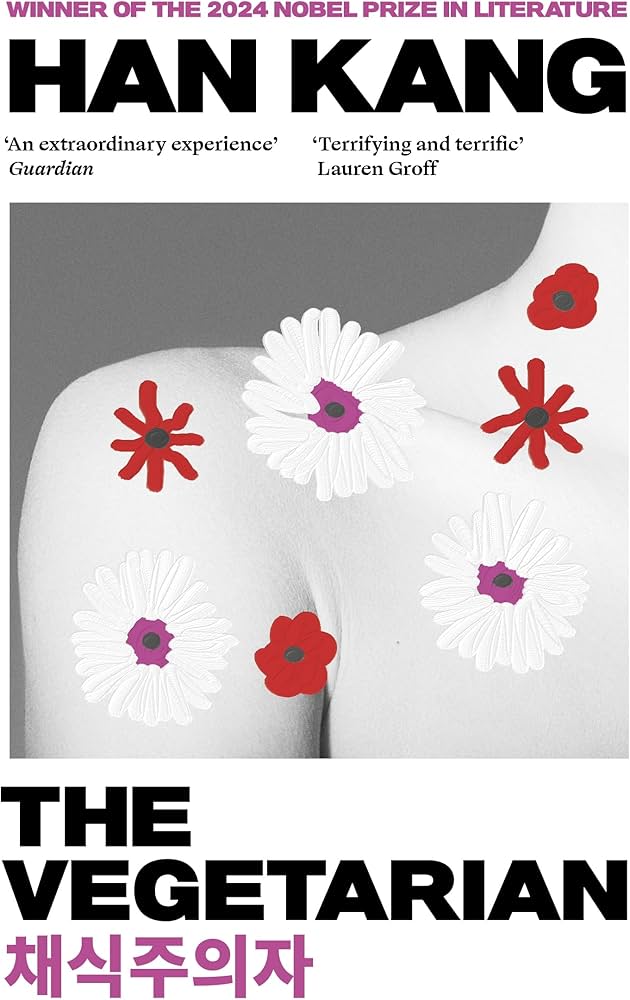
The first time I read South Korean author Han Kang’s Nobel Prize-winning novel The Vegetarian, a single sentence inflicted upon me the weight of a thousand: “It’s your body; you can treat it however you please.” But it is evident that, in most cases, the body of a woman does not truly belong to her.
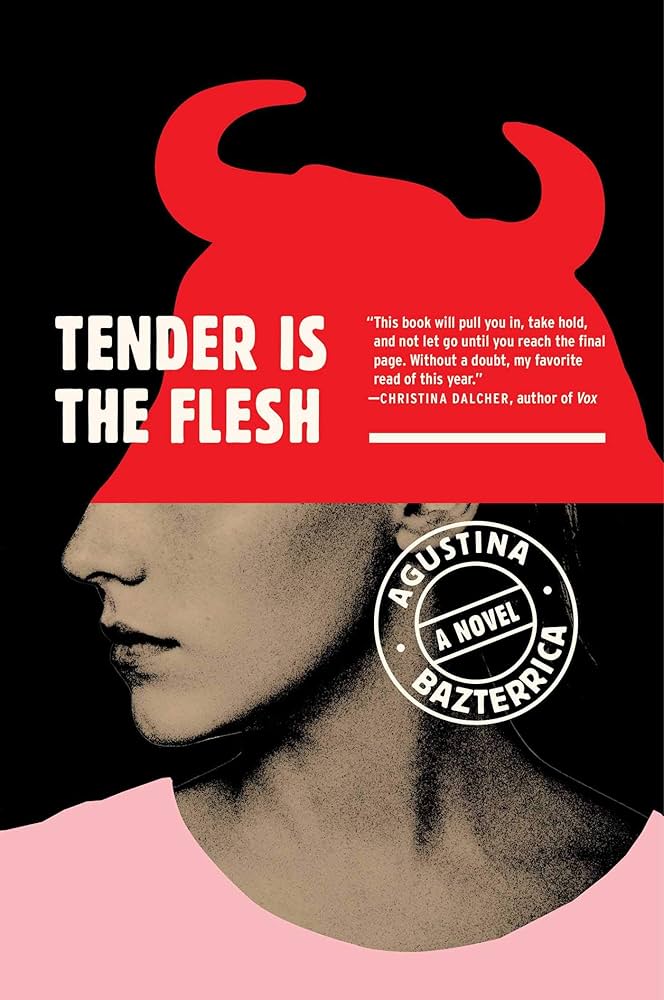
While The Vegetarian (2007) explores how the rejection of meat leads to loss of autonomy, Tender Is the Flesh (2017) by Argentine writer Agustina Bazterrica – a dystopian novel about state-sanctioned mass consumption of human meat – shows how female autonomy can be stripped through the consumption of meat as well. Be it consuming or abstaining from meat, the patriarchy uses this as a way to strip the woman of her identity.
Both novels act as a commentary on patriarchy and how patriarchal values are so intrinsically embedded in something as liminal as choosing to eat or not eat meat. Yeong-hye’s rejection of meat in The Vegetarian is not just a personal choice. In the eyes of her father, husband and other male figures of the family, it is a threat to the family name and social standing. A simple act of becoming a vegetarian unfolded a series of horrifying events, revealing the troublesome side of male authority.
In one scene, her father forces meat into her mouth and slaps her when she refuses to eat. This scene makes one wonder, what if Yeong-hye, instead of rejecting meat, started overconsuming it? Ideally, we would expect her father to be pleased, but realistically, I believe she would be given far worse consequences over the reasons of ‘body weight’ and ‘appearance’. As the book progresses, she is treated as a disease, institutionalised and ultimately erased by her own family.
Bazterrica’s Tender Is the Flesh entirely flips the moral scale. In this book, consuming human meat is industrialised, normalised, and even encouraged under careful state sanctioning. The descriptions of events inside the meat-processing plants are gruesome, disturbing and highly sex-oriented. Female bodies are disturbingly sexualised, used relentlessly for breeding, and ‘harvested’ without consent. Here, to consume meat is to consume identity, to erase certain voices and uplift certain others.
Yeong-hye’s vegetarianism is less about diet and more about defiance. It is about breaking free and discovering individuality. This passive rebellion is a front against everything society expects a woman to be – obedient, docile and submissive.

But in Tender Is the Flesh, the system is so ingrained and internalised that there is no room for rebellion. Even the few that are disturbed by it are made complicit. Those bred for slaughter, especially women, are dehumanised. By using desensitised language such as ‘head’, ‘livestock’, and ‘special meat’, the body, particularly the female body, is stripped of agency and voice.
Cultural context drastically affects the idea and significance of meat consumption. Taboos related to meat-eating exist in almost every culture – pork is prohibited in Islam, the majority of Hindus do not consume beef, Western cultures are against the consumption of animals that are generally considered pets, while many East Asian countries tend to include a more versatile range of meat in their cuisine.
But throughout these cultures, meat can be seen linked directly to masculinity. Be it a film scene showing men handling the barbeque, or who gets the leg piece from the Sunday lunch chicken curry in an Asian home, meat becomes a woman’s short end of the stick all the while providing authoritative superiority to the men.
But how is this possible? How can both consuming and rejecting meat lead to the same outcome for a single sex? The answer perhaps lies not in meat-eating but in a system that favours one sex above the other. Women are often considered ‘secondary citizens’ and hence expected to consume ‘secondary food’. This can vary drastically from culture to culture – from some having to turn vegetarian to others not being allowed to eat certain parts of the cooked animal.
This duality – which is seen in both books, one of abstention and one of consumption – is a reflection of how bodily autonomy for women is always a negotiation and never a fixed asset. Whether it be Yeong-hye’s family prohibiting her vegetarianism or a nameless woman being farmed like cattle, the message being conveyed by the patriarchy is the same: autonomy is not hers to choose; it’s ours to give, and we choose not to.
Again, how is this dominance determined? Who has the right to decide? And why does that right not apply to anyone?

This question can be vaguely answered using Val Plumwood’s theory of ecofeminism. Val Plumwood, an Australian philosopher well known for her work on ecofeminism and anthropocentrism, argues that there is a logic to domination that acts through certain dualisms like human/nature, male/female, mind/body, etc. Women and nature are considered under the same category: controllable, passive and in this case ‘consumable’. Meat becomes a metaphor for this duality.
In India, eating is a highly political affair in a lot of households through what, when and where. The men are served first – a clean table, piping hot food, choicest pieces and large servings. After men are done eating, the women eat on a table filled with waste, cold food, unwanted pieces and smaller servings.
Some Indian cultures blatantly forbid women to eat meat at all, while in some other cultures, a woman has to stop eating fish and meat if she is widowed. In families with limited means, eggs are reserved for sons while daughters are denied. These acts reflect the highly political nature of ‘eating’ and how controlling this is, synonymous with controlling an individual.
Both Tender Is the Flesh and The Vegetarian have an extremely unsettling undertone because of their proximity to reality, to the world where we all can envision ourselves in the near future. Both novels show how food becomes yet another means of controlling women and enforcing patriarchy. The female body is an entity that has historically been refused autonomy; the fact that the mundane act of consuming or refusing meat is used as a weapon shows how ingrained gender discrimination is in human societies.
Finally, we revert to our earlier question: who has the right to decide? It’s definitely not the women whose bodies are at stake, and it definitely shouldn’t be the people who willingly put female bodies at stake.
So perhaps the question should not be about ‘who’ but ‘what.’ Decisions were made, whether it be on consuming meat or becoming vegetarian; decisions were made, and actions were taken.
But at what cost?

Nethra Anoop is a student of English and Cultural Studies at Christ University, Bangalore. An avid reader and writer, she has co-authored two children’s books, one of which is published on Amazon.
Discover more from eShe
Subscribe to get the latest posts sent to your email.
 eShe
eShe 
Good work. Congrats Nethra.
LikeLike