

By Aparna Dedhia
In India, masculinity has long been a rigid script – strength without softness, control without care, emotional repression mistaken for stoicism. But a quiet revolution, stitched together through deeply personal and public acts of unlearning, driven by the efforts of committed individuals across India, is now attempting to tear that script apart.
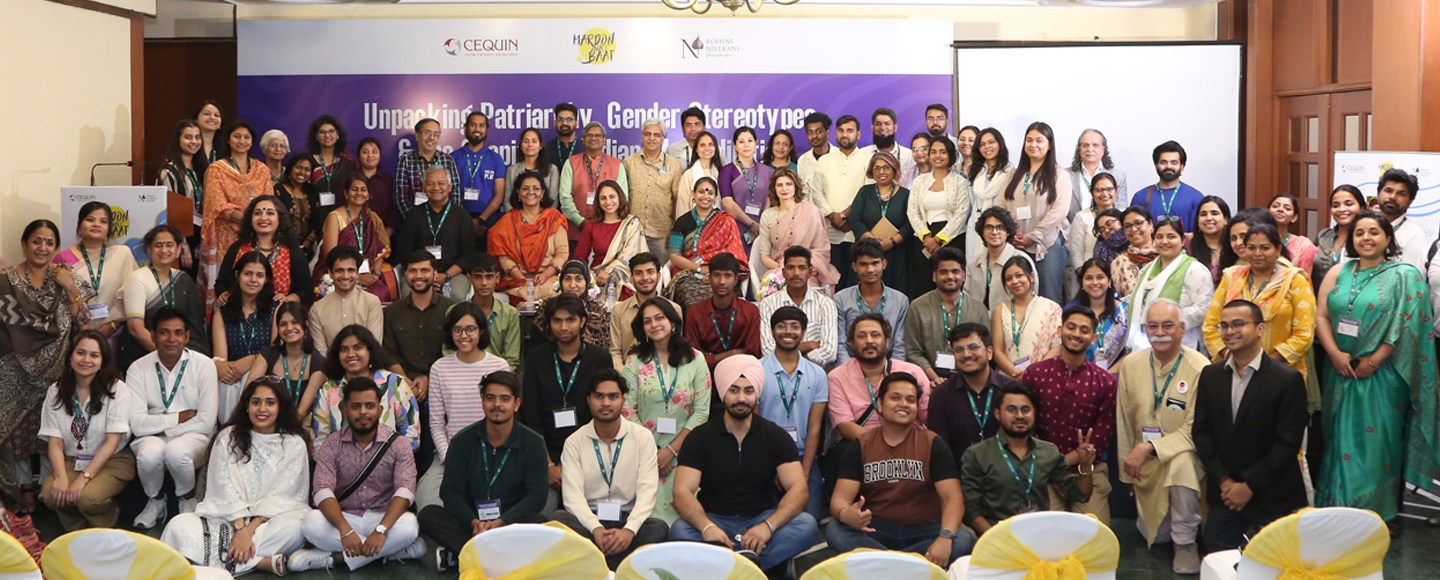
Many of these individuals and organisations came together last month at a national conference in Delhi titled ‘Mardon Wali Baat: Unpacking Patriarchy, Gender Stereotypes and the Shaping of Indian Masculinities’, organised by the nonprofit CEQUIN (Centre for Equity and Inclusion).
Chaired by award-winning social activist Sara Abdullah Pilot, the NGO is helping to reshape what it means to be masculine in the public eye by cultivating a league of 42 social-media influencers from North and Central India. These boys are not just trending – they’re transforming.
Anchoring Pilot’s cultural insurgency with institutional heft is her cofounder Lora Prabhu, a former development professional who brings a lawyer’s lens and an activist’s fire. Her mission: to ensure that emotional openness online translates into structural change offline – in schools, homes, workplaces.
Fifteen years ago, Pilot and Prabhu left their careers at UNIFEM and came together to found CEQUIN as a bold, grounded force for women’s empowerment. Supported by the likes of philanthropist and author Rohini Nilekani and the UN Resident Coordinator for India Shombi Sharp, the idea was to create a platform where women and girls could challenge systemic oppression, reclaim public spaces and emerge as self-reliant decision-makers.
“We’re not just pushing for inclusion,” says Pilot, “we’re building a future where equity is the default, not the demand.”

Their approach aligns with a growing socio-cultural chorus that the next wave of feminism needs to focus on men. Considering that transforming and educating men would automatically make homes and public spaces safer for women, the NGO has launched campaigns to dismantle toxic masculinity and to celebrate male allies.
What began as advocacy – their 2009 gender-violence report even made its way to the Indian Parliament – has evolved into activism that puts the responsibility of tackling gender-based violence on men. Their campaign Mardon Wali Baat (loosely translating to ‘bro code’), for instance, redirects male behaviours and redefines masculinities.
Similarly, their WOW Men Awards celebrate allies and grassroots initiatives such as Awaaz Uthao and Mewat’s youth leadership programmes, which have been instrumental in reshaping mindsets, one conversation at a time.
From their first campaign Respect Women Respect Delhi with the Delhi Daredevils cricket team in 2009, to the various leadership workshops they have conducted across Delhi, Haryana and Rajasthan, CEQUIN has mobilised over 10 lakh boys so far, transforming them into ‘Agents of Change’.
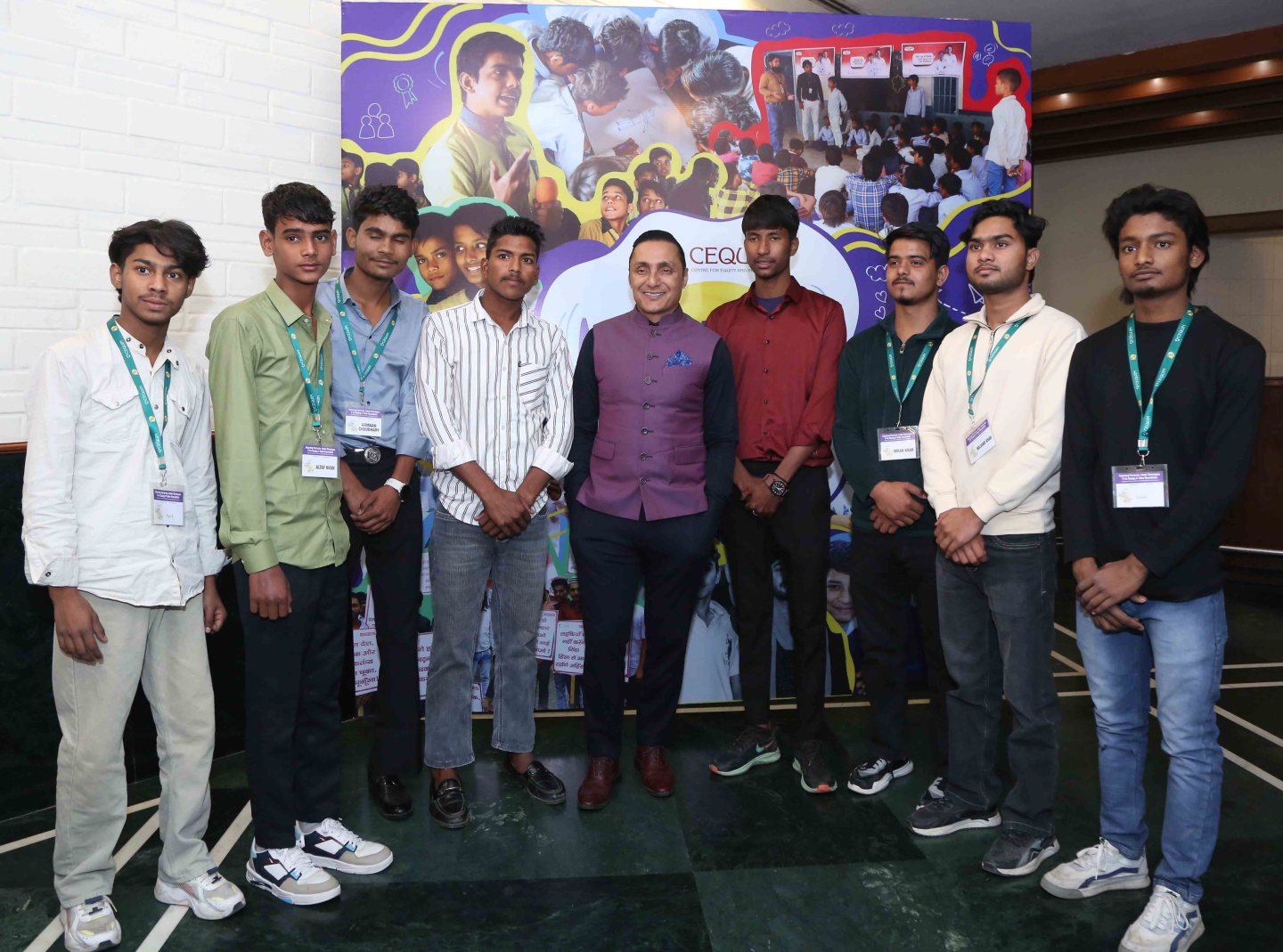
Activities have included converting Delhi’s parks into spaces of resistance through sports, with actor-activist Rahul Bose leading on the football front and cricket legend Virender Sehwag championing safer, more inclusive public spaces for girls.
Suma Varughese, former editor of Life Positive and Society magazines, captures the essence of this new movement: “It is high time men stopped anchoring their identity in gender and began to see themselves simply as human beings – or better yet, as souls. Only then can they unshackle themselves from patriarchal conditioning and relate on equal terms – not just with women, but across races, species and life itself. As long as superiority is the lens, exploitation, oppression and control games will persist.”

Masculinity, in its current form, isn’t strength – it’s silence, control, distance. But across India, the façade is beginning to crack. At a panel titled ‘Baaton Baaton Mein: Initiatives Engaging Men and Boys in Gender Transformation’ moderated by Nida Ansari of CEQUIN, the message was clear: to shift culture, we have to engage the ones whom culture protects. To me, Ansari didn’t just steer a discussion, she curated a provocation.
Harish Sadani, founder of MAVA (Men Against Violence and Abuse), traced his arc from penning a column to mentoring thousands of boys and men. “Masculinity isn’t a badge – it’s a burden,” he said, advocating for the freedom to express one’s emotions without being shamed.
Satish Kumar Singh of the Azad Foundation brought gravitas forged in four decades of practice. His mission: reframe caregiving not as sacrifice but as shared human liberation. “Normalise care. Don’t assign it,” he urged his audience.

From the heartland of Rajasthan, Yogesh Vaishnav of Vikalp Sansthan spoke of transformation rooted in soil and soul – his tools not commandments but conversation, street theatre and patient co-creation. “You cannot preach change,” he said. “You have to co-create it.”
In city classrooms, Aleena Varghese of The Gender Lab is planting seeds early. “We’re not fixing boys, we’re freeing them,” she said, flipping the script boys receive before they can spell masculinity.
The panel offered a blueprint, a field guide for a future where masculinity is not demonised, but detoxed. Where men aren’t sidelined, but centred as co-authors of a more just, more humane world.

As Pilot put it, “We never wanted to build a fortress around women. We wanted to change the landscape they walk through – so they no longer have to walk alone.” As many of the conference participants made clear, true liberation begins when we shift from a mindset of power and dominance to one of shared humanity.
Indeed, patriarchy sprouts in life’s quiet corners, in the intimate margins of everyday moments – where boys are taught not to cry, not to feel, not to break. If gender equity is to materialise, we must rewire the code we raise our sons with.
The intricate web of influences that shape adolescents do not operate in isolation; they are shaped by peers, families, schools, and broader community structures. Effective gender awareness initiatives recognise this complexity, engaging the entire ecosystem rather than focusing on individuals alone.
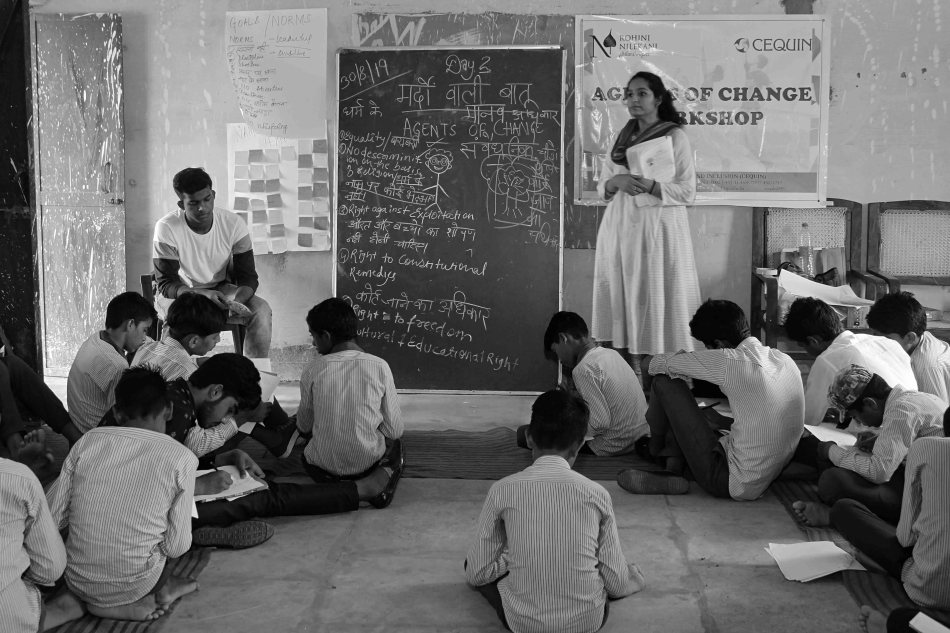
A boy who learns about gender sensitivity at school carries that awareness home, subtly influencing his siblings and parents. A teacher who models respectful behaviour becomes a role model, inspiring students to emulate the same. A peer group that actively discusses gender equity fosters an environment where questioning biases becomes the norm.
These ripple effects, when sustained, shift perspectives across generations, slowly dismantling the scaffolding of inequality. The Netflix web series Adolescence mirrors this societal conditioning. It’s not just a tragedy – it’s a warning. When boys are shamed for being sensitive, when masculinity is defined solely by dominance, anger becomes their only outlet, perpetuating the cycle of harm.

Punita Sachdeva, an educator and former headmistress of a co-ed school in Delhi-NCR, believes gender equity begins with fairness and open dialogue. At her school, she fostered empathy by ensuring every child was heard without bias, advocating for a level playing field where girls excel in sports and boys cook – not through imposition, but by allowing them to follow what resonates with their soul. As a mother, she encourages her son to understand the female perspective while learning from his balanced insights, believing true equity lies in giving children a voice and truly listening.
In CEQUIN’s new short film Mardangi Unloaded, content creators from around India share how they went from following restrictive patriarchal codes to valuing all shades of being human.
Saurabh Julum from Mumbai, Harshit Pandey from Lucknow, and Shivam Dutt and Harjot Pawar from Delhi aren’t just influencers – they’re digital rebels rewriting masculinity byte by byte, post by post.
A former mechanical engineer, Julum’s posts on quiet love hit hard. Pandey breaks the gym-bro mould by advising his followers to compliment boys not just for being ‘strong’ or ‘tough’ but also for being ‘caring’ and ‘empathetic’. Dutt (below) brings mental health into the conversation while sharing fashion and lifestyle content. Pawar uses satire to challenge sexism.
In a context like India, these men are charting a new path for the next generation. In their spaces, vulnerability isn’t weakness; it’s a weapon against patriarchy. Each reel, each raw confession, is a fracture in the fortress of toxic masculinity.
These men aren’t just coaxing their peers to “do better”. They’re inviting them to be whole. And in that wholeness lies the quiet, revolutionary truth: that the courage to feel is the future of manhood.
These committed individuals are redefining what it means to be a ‘mard’ – a man whose power lies not in domination, but in connection, vulnerability and care. And in this transformation, lies hope – not just for men, but for all of us.
Discover more from eShe
Subscribe to get the latest posts sent to your email.
 eShe
eShe 
No problem in musculinity it may be used to protect poor innocent women and not to further oppress and prsecute them. Let us use all our force musculinty and resorces for the betterment of our womenfolk. What is bad in it? Shakeel
LikeLike