

By Reeti Roy
An old proverb goes, “A son is a son until he gets a wife, but a daughter is a daughter all her life.” The line is often quoted as praise for a daughter’s loyalty and devotion. Yet in the film Meghe Dhaka Tara, Ritwik Ghatak’s haunting 1960 masterpiece, that sentiment carries a darker implication. It is not simply affection; it is an obligation that stretches across an entire lifetime.
Set in a refugee colony on the edges of Calcutta in the aftermath of Partition, the film follows Nita, a young woman who becomes the emotional and financial backbone of her displaced family. Dutiful and endlessly accommodating, she supports everyone through her modest income. Her parents depend on it. Her siblings rely on it. Her brother’s artistic ambitions are sustained by it.
What begins as care gradually hardens into expectation. The more she gives, the more indispensable she becomes, until her sacrifice fades into the background of daily life.
While we frequently discuss the ‘motherhood penalty’ – the documented decrease in wages and perceived competence women face after having children – Nita embodies a less-discussed but equally devastating structural burden: the daughterhood penalty.
The ‘hidden infrastructure’ of the home
Nita’s tragedy lies not in a single moment of betrayal but in the slow accumulation of demands placed upon her. In many ways, the film anticipates conversations that continue today about the unequal distribution of care within families. Across societies, daughters often assume a disproportionate share of emotional and practical responsibility, forming the ‘hidden infrastructure’ that sustains households during times of uncertainty.
This is a statistical reality. A widely cited 2014 study by sociologist Angelina Grigoryeva at Princeton University found that daughters devote more than twice as many hours to parental care as sons – 12.3 hours per month for daughters compared to just 5.6 hours for sons.
Even more tellingly, Grigoryeva found a ‘substitution effect’: the presence of a sister often reduces the caregiving contributions of brothers, suggesting that responsibility quietly shifts toward daughters by default.
In the film, Nita’s elder brother, Shankar, dreams of becoming a classical singer. His talent is real, but his ability to pursue that dream is sustained by Nita’s steady labour. She works, earns, and sacrifices so that he can rehearse and refine his art. Their relationship carries genuine affection, but it also reveals a quiet asymmetry. His future expands even as hers contracts.
The displacement catalyst
To understand why this imbalance feels so relentless, one must look at the specific trauma of the refugee colony. Ritwik Ghatak, himself displaced by the upheavals of Partition, portrayed refugee life as a profound moral dislocation. Families who had once belonged to the Bengali bhadralok middle class suddenly found themselves stripped of property and social standing.
Within Nita’s household, the burden of adaptation falls almost entirely on her shoulders. Her father, an educated man who still clings to the dignity of his former status, refuses to accept factory work. This rejection of available labour is rooted in pride and grief for a vanished world, yet the consequences are immediate.
By rejecting practical income, he unintentionally levies a ‘displacement tax’ directly on Nita. In this vacuum of masculine authority, the family ‘outsources’ its survival to the daughter, occupying her life as if it were the only territory they have left.
This is where the film’s emotional insight becomes especially sharp. Nita’s sacrifices are not openly demanded; they become naturalised within the rhythms of family life. Gender scholar Naila Kabeer has observed that women’s contributions within families are often treated as extensions of their moral character rather than as labour in their own right. When care is framed purely as love or duty, it becomes difficult to recognise the inequalities embedded within it.
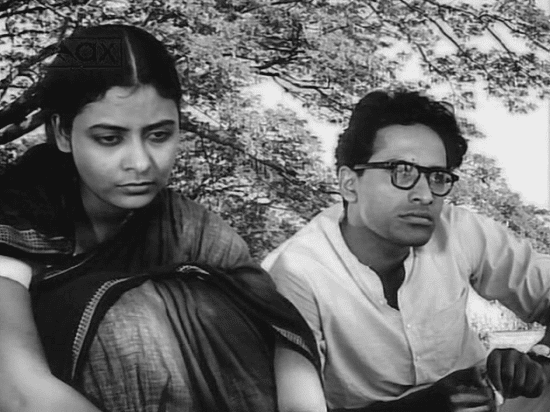
Nita embodies this paradox. Her devotion is sincere, but that sincerity becomes the very reason she is taken for granted. Her earnings are treated as a shared family resource rather than the product of her own effort.
According to the International Labour Organization, women perform about 76.2 percent of all unpaid care work globally. In India, data from the National Sample Survey Office (NSSO) shows that women spend nearly five times more time on unpaid domestic work than men.
Like Nita, many women are admired for their reliability even as those qualities erase the possibility of an independent life. A 2024 study in Research on Aging found that midlife women who are caregivers for parents or in-laws experience 4.2 to 9.5 percent wage loss, even without reducing their working hours.
The ethical fracture and final betrayal
The cruelty of the situation becomes most visible in the film’s intimate betrayals. Sanat, Nita’s lover, eventually abandons her for her younger sister, Geeta, whose life is less burdened by responsibility. His decision is portrayed not as villainy, but as pragmatism. In the fragile economy of the refugee colony, love becomes a luxury that only the secure can afford.
Liz O’Donnell, author of Working Daughter, would describe Nita’s reality as a ‘double whammy’: the societal expectation to be an extraordinary daughter, and a domestic reality where her labour must compensate for the paralysed pride of the patriarch. As her father retreats into intellectual nostalgia, Nita is thus destroyed by the accumulated weight of displacement, class prejudice and emotional betrayal.
The cry for recognition
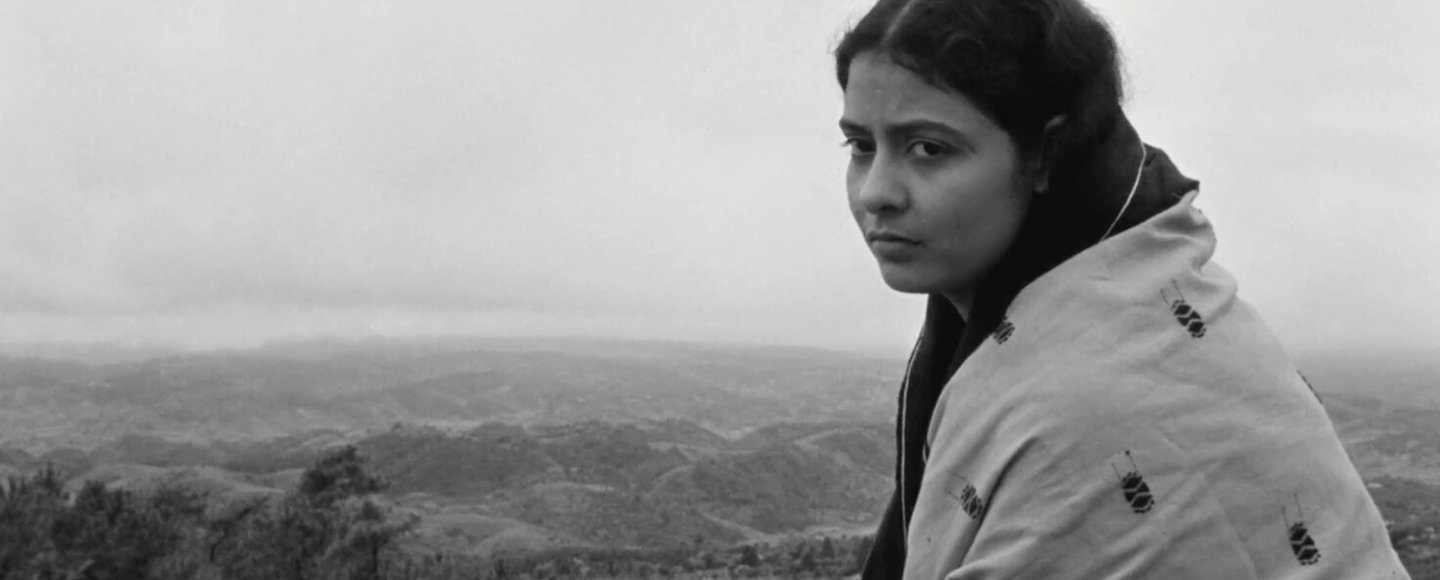
By the time Nita contracts tuberculosis, her body seems to carry the accumulated exhaustion of years of silent sacrifice. She is eventually sent away to the hills, leading to one of the most devastating moments in Indian cinema. Standing before the mountains, her voice trembling, she cries out: “Dada, ami kintu banchte cheyechhilam.” Brother, I too wanted to live!
The line resonates because it is a cry for recognition. For years, Nita has fulfilled the role expected of the dutiful daughter, her own desires receding behind the needs of others. In that moment, the weight of everything she has surrendered becomes impossible to ignore.
More than six decades after its release, Meghe Dhaka Tara continues to feel uncannily contemporary. We see this ‘refugee logic’ in modern migrant and struggling communities worldwide, where the eldest daughter often sacrifices her own future to provide stability the displaced parents can no longer offer.
To change this, we must move beyond viewing care as a feminine trait. There is no ‘care gene’; it is learned behaviour, shaped by families and culture. Real change requires structural support: workplaces that provide flexibility, policies that protect caregivers from career penalties, and a fundamental shift in how we raise both boys and girls.
Nita’s cry still echoes because it asks a simple question: How often do we notice the person whose sacrifices make everyone else’s lives possible?
Behind the stability of many families lies the quiet effort of a daughter whose own life risks being deferred indefinitely. It is time we finally see the ‘good daughter’ as a person who also deserves to live.

Reeti Roy is a writer, cultural commentator and creative entrepreneur whose work explores memory, art, identity and social justice. She holds a BA in English Literature from Jadavpur University and an MSc in Social Anthropology from the London School of Economics. Her essays and criticism have appeared in several news portals and journals.
Lead image: Actor Supriya Choudhury as Nita in Meghe Dhaka Tara (1960)
Discover more from eShe
Subscribe to get the latest posts sent to your email.
 eShe
eShe 
Spot on and brilliantly written
LikeLike