

By Nilova Roy Chaudhury
An Afghan woman journalist, who must remain unnamed for her personal safety, learnt earlier this year that she had received an international media award in Delhi for her efforts to uphold women’s rights inside Afghanistan.
The journalist, whom I will call Karishma, was part of a collective of Afghan women journalists who strived to keep the world informed about what was happening to her and other women since the Taliban assumed power there in August 2021.
Karishma, along with thousands of women, had lived for 20 years in a Taliban-free Afghanistan, since 2001 when the Northern Alliance, a group of Afghan resistance fighters aided by the US and allied forces and supported by India, ousted the previous Taliban regime from power. This had enabled two decades of awakening for Afghanistan’s women.
I met Karishma online when she, along with several of her colleagues, joined South Asian Women in Media (SAWM), a collective of leading women media professionals from eight countries across South Asia.
We talked about ways in which SAWM could try to carry women’s voices beyond Afghanistan, so that people could realise the true face of the Taliban.
We nominated Karishma, who was inside Afghanistan, for an award for media excellence in India. To our delight, she won the award. When notified, she pulled out her passport, looking forward to a brief reprieve outside Kabul from her faceless life.
However, shockingly, Karishma did not get a visa to come to India to receive the award, despite many requests to the Indian government, including from SAWM members.
Disappointed and hurt, she hit out at those in India who had nominated her. That India could turn down legitimate visa requests from people like her seemed extremely unfair.
“We do not want charity, we just want a chance,” she told me and other colleagues in India, to our great shame.
The organisation offered to have the award delivered to her in Afghanistan, but that brought her under the Taliban’s critical scrutiny. Her personal safety was compromised and her family members threatened for receiving recognition abroad for writing the truth about her situation.
Highlighting how our offers of assistance had made her life and those of the scattered few women who still tried to function as journalists inside Afghanistan more difficult, Karishma wrote an email, which really scared me:
“On February 5, 2025, I received an email regarding the award we were to receive. As stated in the email, the award was supposed to be delivered to me in Afghanistan through Mr. Javid. However, since receiving your email, I have personally encountered serious challenges. I am under severe threats from anonymous individuals who appear to be aware of my past work. These threats have significantly escalated, and unknown people have even come to our home in an attempt to arrest us. Currently, my husband and I are living separately in undisclosed locations, far from our family, in order to protect ourselves. This situation has become extremely dangerous, and I am deeply concerned for my safety and the safety of my loved ones.”
Karishma has since gone underground. The Taliban have restricted the internet across Afghanistan so that such stories do not filter out.
Meanwhile, astonishingly, though Karishma couldn’t get a visa, India recently laid out the red carpet for the Taliban Foreign Minister Amir Khan Muttaqi to visit India.
In New Delhi, bilateral discussions focused on trade and strategic regional security issues. I can safely assume that the question of Karishma’s security and the misogynist Taliban’s efforts to efface women did not enter the discussions.
India made no outreach to the Taliban during their first tenure between 1996 and 2001. In fact, it actively opposed that regime, providing tacit support to the Northern Alliance led by Ahmed Shah Masood, which ousted Taliban 1.0.
Today, India’s outreach to the Taliban has made matters worse for women in Afghanistan, as they try to cope between a ruling regime that is stifling their existence because of their gender and an international community that appears to have nearly forgotten and doesn’t care that they lurk in the shadows.
I could not trace Karishma or any of the others in the SAWM Afghanistan group; their numbers do not seem to exist.
Even among journalists who did manage to flee in 2021, fear remains – and a reluctance to talk. They are bitter at being forced to leave their country; they feel guilt for leaving family members behind; and they are anxious that family members may be punished for any indiscreet comments they make that are critical of the regime.
After four years in power, the Taliban regime 2.0 has complete control of the troubled, landlocked nation, leaving the international community with little choice but to deal with them. But for its beleaguered women, like Karishma, it is important that people worldwide retain focus on their stories.
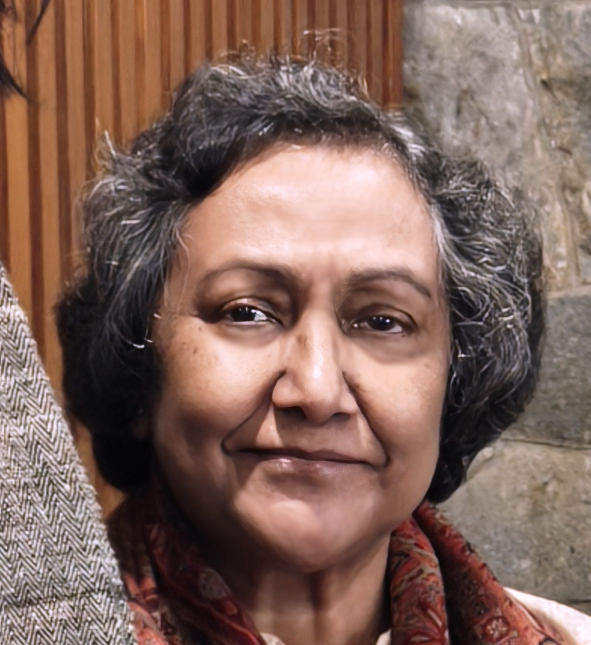
Nilova Roy Chaudhury is a New Delhi-based senior journalist who mostly writes on foreign policy issues. She is associated as a Senior Fellow with the think tank Women In Security, Conflict Management and Peace (WISCOMP).
This article is co-published with Sapan News
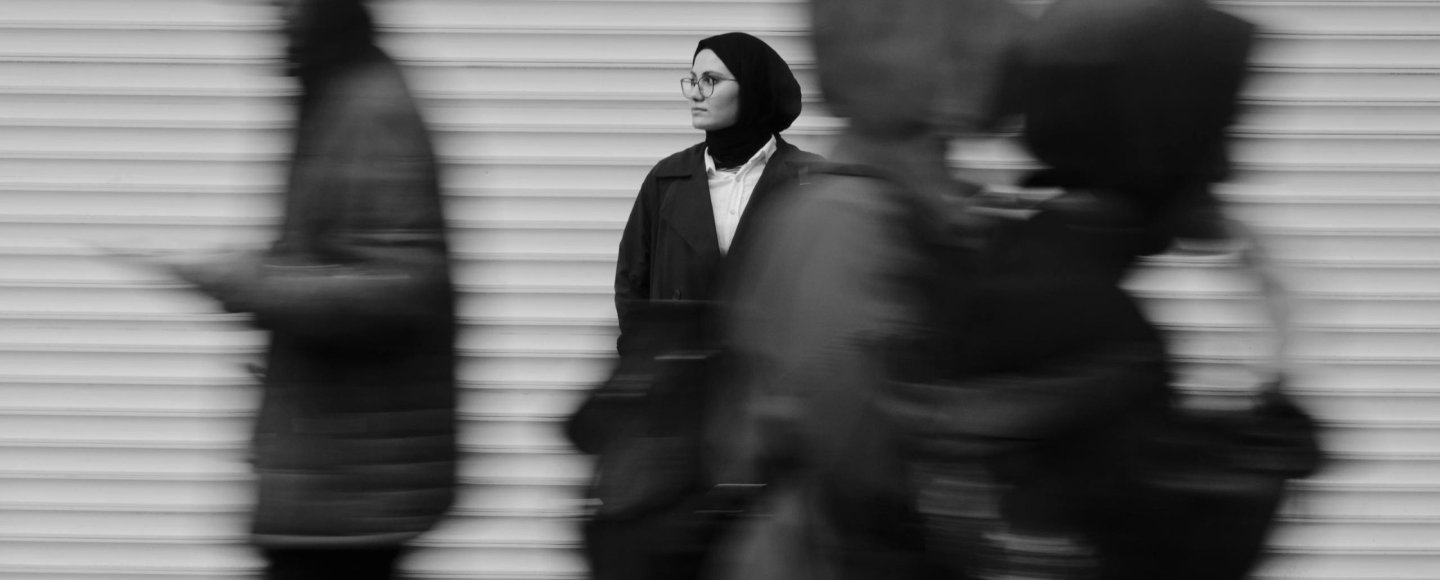
Lead image: Ayşenaz Bilgin (for representative purposes only)
Discover more from eShe
Subscribe to get the latest posts sent to your email.
 eShe
eShe 
0 comments on “Afghan journalist receives award in India but is refused a visa and forced into hiding”