


By Dr Vaishnavi Pusapati
My first collision with poetry happened in school. The poets we read were long dead, their grim portraits printed in greyscale, their lives sealed in history, their words analysed like scripture. It did not hit me that poetry was a living thing – that people still wrote it, that it could belong to us. I memorized verses for exams and forgot them just as easily. Poetry, then, felt like a museum: distant, reverent, silent.
It was only as an adult that I began to read poetry again. And what a shock it was – to realize that it was alive! The discovery was like stumbling upon a parallel world, one where countless people wrote every day, each word a tiny lantern glowing in the dark. Suddenly, I was no longer a visitor in poetry’s museum. I was inside its labyrinth, mapping my own paths.
At first, I wrote secretly, almost shyly, as though caught speaking a language I was not entitled to. My notebooks became small, uneven worlds where I confessed without expectation, where I could name my own shadows. Writing was both a conversation and a mirror – sometimes comforting, sometimes confrontational.
When I entered medicine, I thought I was stepping away from language and into precision. Yet writing followed me into clinics and wards, into the long, echoing corridors of waiting rooms. It began to shape how I looked at suffering and survival, how I lived and how I interpreted life.
I realized that to diagnose is to translate: to listen, interpret and find the words that fit. Writing, too, is diagnosis – a way of identifying what lives inside you and what longs to heal. It taught me to look closely, to listen to the silence between sentences, to stay with what hurts until it begins to sing.
Then came haiku.
Spring Sequence – “Unfolding”
Dr Vaishnavi Pusapati
mist over the pond –
last year’s reeds
still whisper
a sparrow tugs
the loose thread
of morning light
first rain –
between stones
the smallest green
window open –
the smell of new earth
finds me again
At first, I didn’t know what to make of it – these three short lines, this almost invisible brevity. It felt like walking into a vast hall lit by a single candle. But soon, I understood: the candle was enough.
Haiku became my refuge and my reckoning. In the smallness of its form, I found vastness. Its silence was not absence but space to breathe, to feel, to notice. It demanded attention, patience, humility. It was not about saying much; it was about saying just enough, and trusting the reader to step into the gap.
When I first read:
fog / sitting here / without the mountains
it stayed with me for weeks. The juxtaposition was so stark that I felt it physically, as if the fog had entered my own memory. That is the miracle of haiku: it happens to the reader. It becomes shared experience. That moment of recognition – the meeting of writer, reader, and event – is where the true poem lives.
Summer Sequence – “The Long Heat”
Dr Vaishnavi Pusapati
cicada husk
light gathers
in its throat
a clothesline sags
with bright exhaustion –
no breeze today
late noon –
the snail’s silver trail
melts into glare
temple bell –
even the sound
perspires
I started writing haiku in privacy. It felt like meditation, an encounter with the fleeting, the moment just before it passes. I would find these poems while walking, while waiting, while washing dishes. Sometimes they arrived fully formed, like guests who let themselves in. Other times, they resisted me, demanding to be built carefully, syllable by syllable.
There were nights I sat before a submission form, thinking like Rodin’s The Thinker, erasing one bad haiku after another, chasing that single good one. The process was both absurd and holy.
I learned that haiku can be found – discovered in the living of life – or made, sculpted deliberately from language and memory. The most intriguing ones are those that happen somewhere between the two: glimpsed, not built; earned, not invented.
Sometimes, haiku go unnoticed, like trees falling in a forest with no one to hear. They appear as monostich poems, micro poems, text messages, even in the margins of a grocery list. But even the unseen haiku matter. They teach the writer to pay attention, to live attuned to the small miracles unfolding daily.
Autumn Sequence – “Recollection”
Dr Vaishnavi Pusapati
the path of leaves
returns me
to myself
sunset river –
a single oar
forgets its work
between two breaths
smoke and prayer
change places
harvest done –
the scarecrow faces
another moon
With haiku, I learned that silence can be louder than speech, that grief can coexist with humour, and that even brevity can hold worlds. My haiku now often try to process loss, find lightness in the absurd, and trace the slow art of healing.
Sometimes, writing haiku feels like prayer. Sometimes, it feels like rebellion. Both require faith in what cannot yet be seen.
Writing changed how I move through the world. It trained my gaze to notice: the moth on the windowsill, the rhythm of rain, the way time pauses between heartbeats. Even in grief, I find lines forming, not as escape but as understanding. Writing gives shape to the formless, rhythm to the ache.
Poetry, like medicine, demands empathy. It asks you to sit beside another’s wound and name it without flinching. It also asks you to sit beside your own.
Words have power – over the writer and the reader – to make visible what matters. They can bridge solitude, dissolve distance and reveal that what feels most personal is often most universal.
Over time, I have come to see that writing is not just an act of expression but of communion. Every time I write, I am reaching out, hoping someone, somewhere, will read and think, “Yes, I’ve felt that too.” That moment of recognition is what keeps me writing.
Winter Sequence – “Quiet Occupations”
Dr Vaishnavi Pusapati
the year folds –
pages of the almanac
crisp with cold
empty chair –
my breath takes
the shape of memory
snowlight –
each window
learns to listen
evening hearth –
the silence hums
in low flame
My life has shaped my writing, yes. But more truthfully, writing has shaped my life – given it rhythm, attention and meaning. It has taught me that the smallest words can hold the largest truths.
And if haiku has taught me anything, it is this: brevity is not limitation. It is clarity. It is the art of holding the infinite in 17 syllables.
Writing, like breath, sustains me. It is how I look at the world, how I forgive it, how I stay.
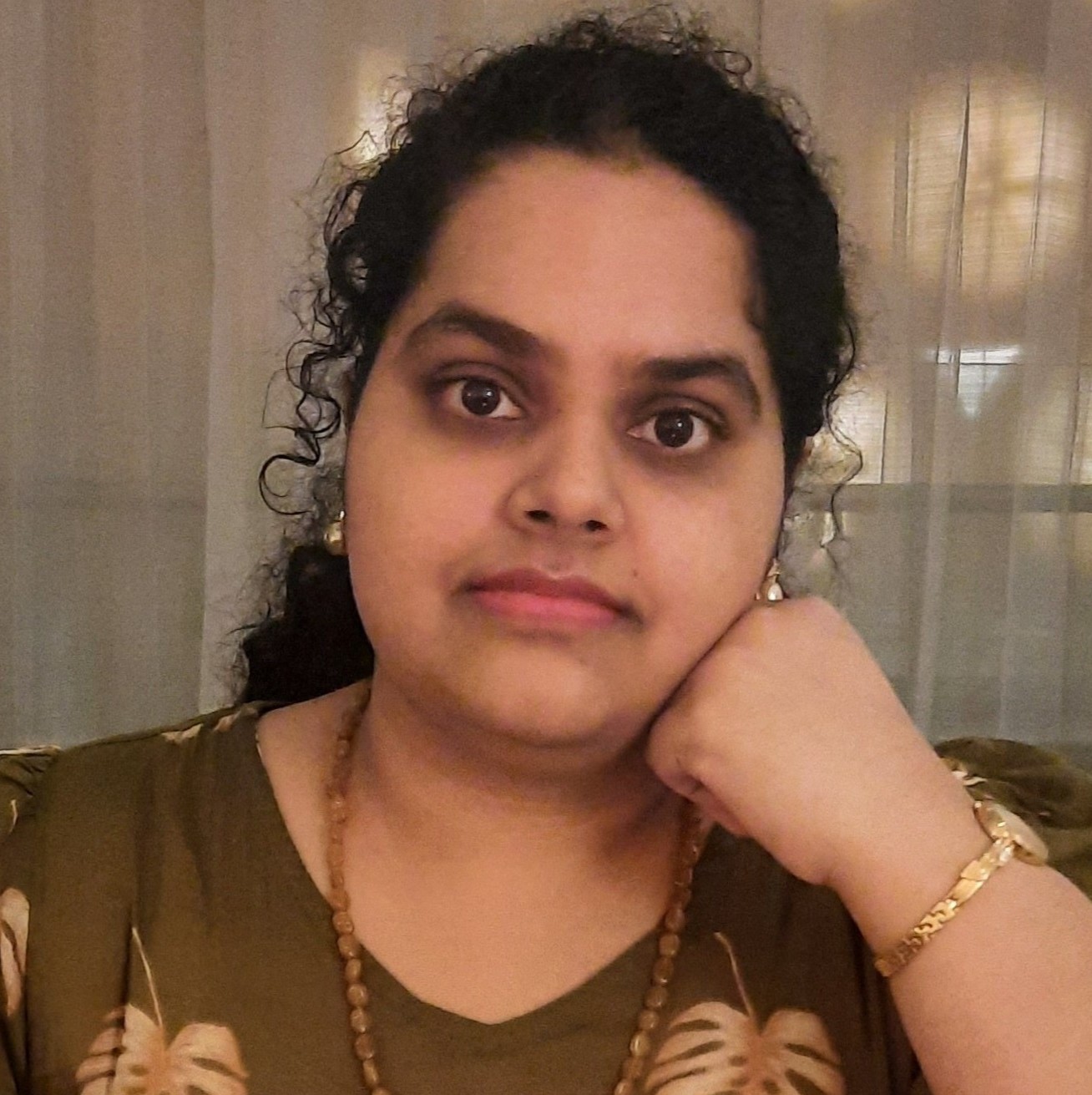
Dr Vaishnavi Pusapati is a Bengaluru-based physician, clinical researcher and internationally published poet. Her creative work bridges the worlds of medicine and art, exploring grief, empathy and the quiet intersections of healing and humanity.
Discover more from eShe
Subscribe to get the latest posts sent to your email.
 eShe
eShe 
Thank you.
LikeLike