
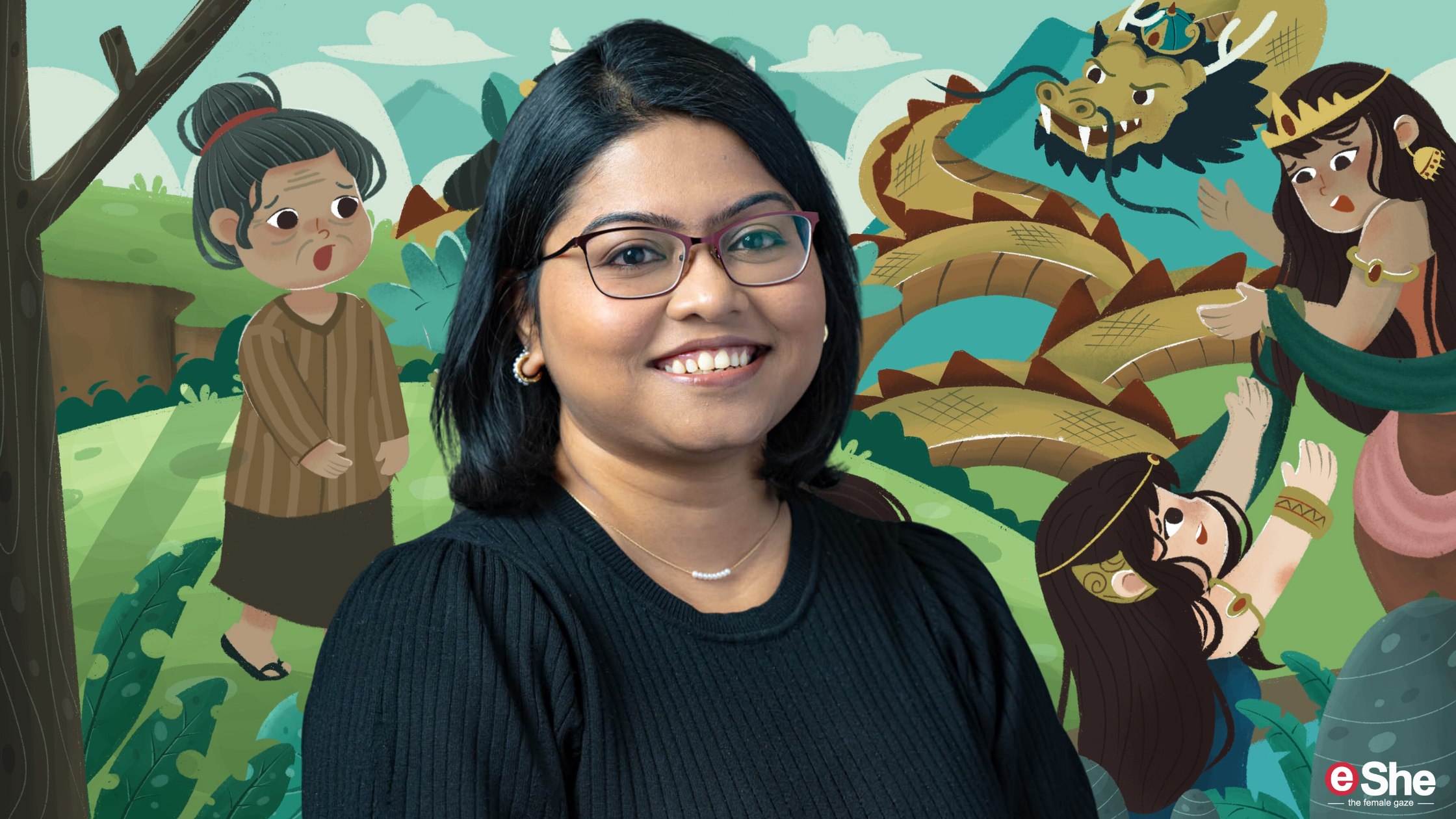

Growing up in Kolkata, India, folktales were an integral part of Shilpa Dasgupta’s childhood. Today, based in Maryland, USA, and working in the field of education technology while raising a teenage daughter, Dasgupta hosts Ohh Folk!!, a podcast dedicated to reviving the long-form storytelling traditions of folktales from around the world.
A former radio jockey and voice artist, Dasgupta draws on India’s rich oral heritage to explore how stories connect generations and preserve culture. Recognised by the American Folklore Society and listed among the top 50 global folktale podcasts, Ohh Folk!! is Dasgupta’s passion project – researched, written, narrated and produced single-handedly.
She researches folktales through archives and academic papers, choosing stories that avoid gender bias and highlight lesser-known traditions. Later in the evening, after her day job at American University in Washington DC is done, she adapts each tale into an audio script, then adds sound design. Her radio background and her husband’s inputs as a music producer help recreate the intimacy of oral storytelling.
“I see this as my small contribution to preserving a global shared heritage and keeping alive the ancient tradition of oral storytelling in a modern, digital form,” says Dasgupta, who is also an actor for an ongoing Bengali theatre production touring across the US.
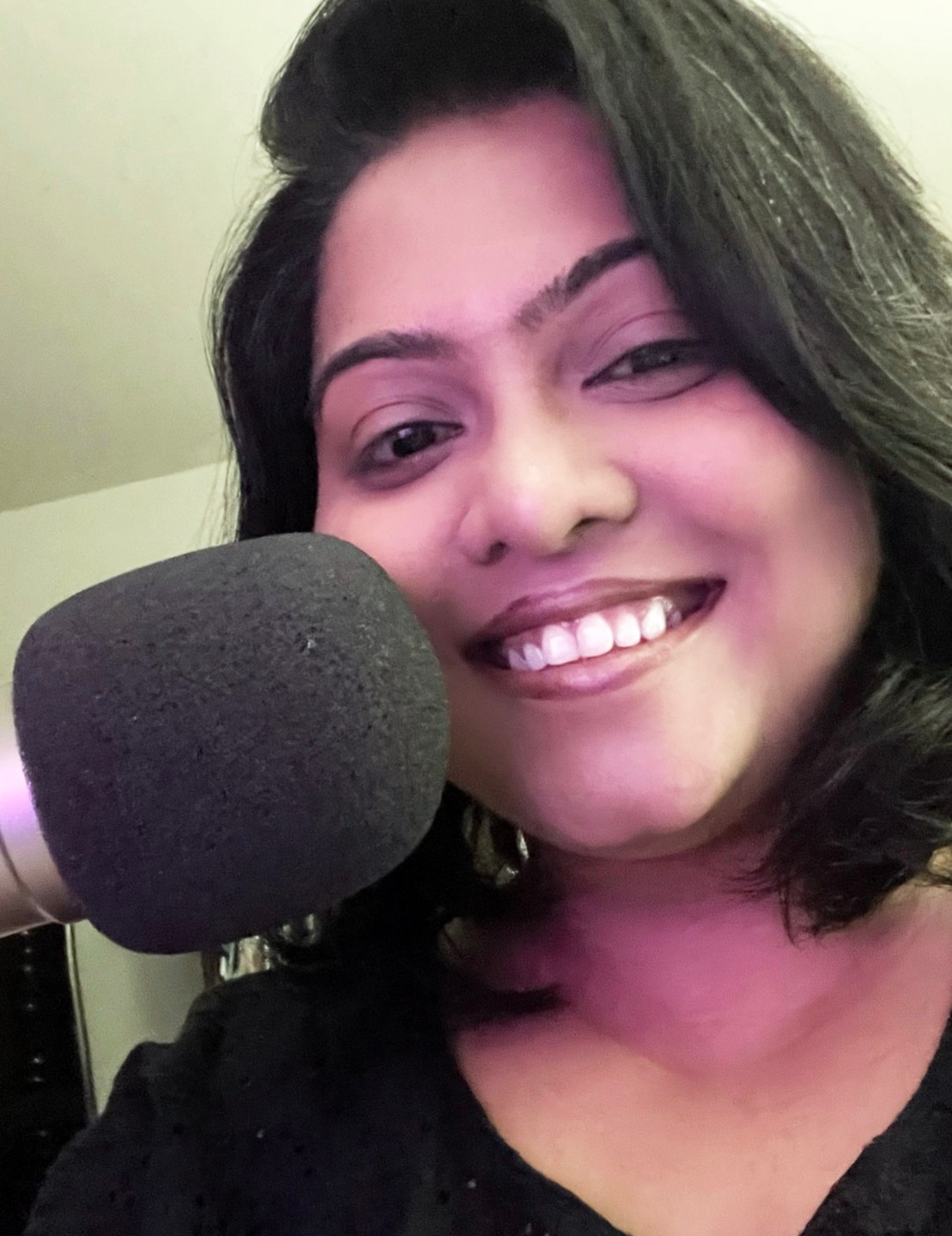
In an era of fleeting attention spans, Dasgupta’s work stands as a quiet return to the immersive act of listening. We asked her about her motivations and learnings.
What first drew you to folktales and what made you believe they still have a place in our fast, digital world?
Folktales have been an integral part of my childhood in Kolkata, West Bengal. Those were days of periodic power cuts. I remember sitting on the open rooftop balcony of my mamarbari (mater uncle’s home) and listening to the elders sharing these folktales under the starry moonlit nights for hours. Time seemed to stand still as their voices transported me into magical worlds.
And not just family, stories were shared by neighbourhood uncles and aunties, the Kashmiri shawl-walas or the suburban sweet-seller lady. Everyone shared their regional stories in one way or the other.
Folktales also came to me through books like Jataka tales, Panchatantra, andmy favourite book on holiday trips, Tinkle. We are the generation that grew up watching Mahabhrata and Ramayana on TV. All India Radio used to air a show called Golpo Dadur Ashor (Grandpa’s storytelling session). Our options were limited but they created a deep impact on me at a young age.
Today, in our fast-paced world of reels and viral trends, I feel the younger generation doesn’t have much that roots them. Trends appear and disappear overnight; everything feels fleeting.
But folktales have endured centuries. They’ve already proven their timelessness by surviving through generations, languages and cultures. If we can bring these stories into the digital space, through podcasts, animation, or other creative forms, we can give these younger folks something meaningful to hold on to: their roots, their heritage, their sense of belonging.
To me, folktales are like a family photo album for humanity – a reminder of where we come from and the values that shaped us. In a world of constant noise, they help us pause, listen and remember who we are.
As someone who started in radio and voice artistry, how has your relationship with sound evolved through podcasting?
What fascinates me most is the idea of radio as a “theatre of the mind”. Listeners only hear voices, sounds and silences and those alone can ignite infinite worlds in their imagination. That, to me, is the purest kind of creative freedom.
Over the years, I have lent my voice to more than 400 commercials, hosted shows as a radio jockey, and performed in numerous audio dramas. Each experience deepened my understanding of voice modulation, emotion and silence – the subtle art of making sound speak without visuals.
When I finally launched Ohh Folk!! during the pandemic, I wanted to create something that echoed the spirit of classic radio – an immersive, audio-only experience that lets listeners build their own images as they listen. Probably this was my way of showing gratitude and give back to radio, my first love.
Every episode I create today is shaped by my early training – the rhythm of breath, the pause between words, the emotional texture of tone. My relationship with sound has evolved from performance to presence. It’s no longer just about being heard; it’s about helping others listen, feel, pause and imagine.

We live in an age of visual overload. What do you think the act of simply listening gives us that scrolling cannot?
Listening is an antidote to visual overload. Scrolling floods us with pre-made images and instant judgements; audio asks us to co-create. When you only have voice, breath and silence, your mind paints the scene. That act of imagination is intimate and deeply personal – it slows you down just enough to feel, not just consume.
Listening also restores attention. Social-media feeds train us to skim; stories train us to stay. A well-told tale has its own rhythm that gently pulls you into sustained focus. I think of it as exercising a muscle we’re losing: the ability to sit with a narrative without needing to tap, swipe, or be visually entertained every second.
There’s also a kind of emotional clarity that happens in audio-only listening experience. Without visuals, we tend to hear micro-shifts in voice and tone – doubt, tenderness, fear, resolve. Those textures build empathy quickly and quietly.
Besides all of these reasons, I think audio gives us permission. Permission to step away from the mirror, of constantly looking a certain way, and relentless judgement. It allows to appreciate and accept an interior life. In a world that asks, “How do you look?”, listening asks, “What do you feel? What do you remember?”
Folktales often reflect deep cultural truths and gendered experiences. Have you noticed recurring themes about women or femininity in the stories you tell?
Folktales are mirrors of society. So, layers of patriarchy and domesticity are pertinent in these stories as well. Across cultures, women often occupy quiet yet powerful spaces within these stories – as nurturers, healers, protectors, or quiet rebels who hold themselves and the entire world around them together.
In some episodes, women take on unmistakably strong and central roles. For instance, in the Weaving Maiden story from Timor-Leste, the act of weaving becomes a metaphor for female creativity and continuity. The protagonist girl literally weaves her world into existence, thread by thread and in the process also saved her community.
In the Forty Girls’ Story from Uzbekistan, it’s not a single heroine but a collective of women whose solidarity and courage define the story’s heartbeat. Even in tales like the Man-Eating Demon from Nepal, where danger looms large, it’s a woman’s intuition and moral strength that transform fear into wisdom.
As a female storyteller, I often find myself drawn to these layers of quiet defiance and resilience. Many of these women are not celebrated warriors or queens. They are everyday figures who resist, nurture and create in subtle, profound ways.
Women have always carried the world’s stories, even when history forgot their names.

You’ve received global recognition, including from the American Folklore Society. How do you balance that validation with your deeply personal, grassroots approach to creating?
I knew from day one that Ohh Folk!! wouldn’t behave like mass entertainment, and I’m not chasing instant gratification or virality. I’m building an intimate, enduring body of work. Recognition felt like a thoughtful nod from the community. It tells me that my craft and effort is visible.
But those honours don’t set my compass, rather they confirm it. My north star remains the same – a combined love for folktales, oral storytelling, and classic radio and bringing them all together into a wholesome immersive listening experience.
Having said that, I also believe that amplification matters. When platforms and institutions recognise the work, more people discover these tales, and that visibility serves a larger purpose to keep these rare stories alive, which will otherwise probably vanish.
Most importantly, I measure impact in quieter ways, a listener message about remembering a grandmother’s voice, a note from someone who heard their culture reflected with care. Any recognition is a pat on the back, but the core purpose is the path.
As long as the episodes feel honest, ethically told, and tender to the traditions they carry, I know I’m doing the work I set out to do – one rare folktale, one listener, one quiet moment at a time.
Discover more from eShe
Subscribe to get the latest posts sent to your email.
WOW