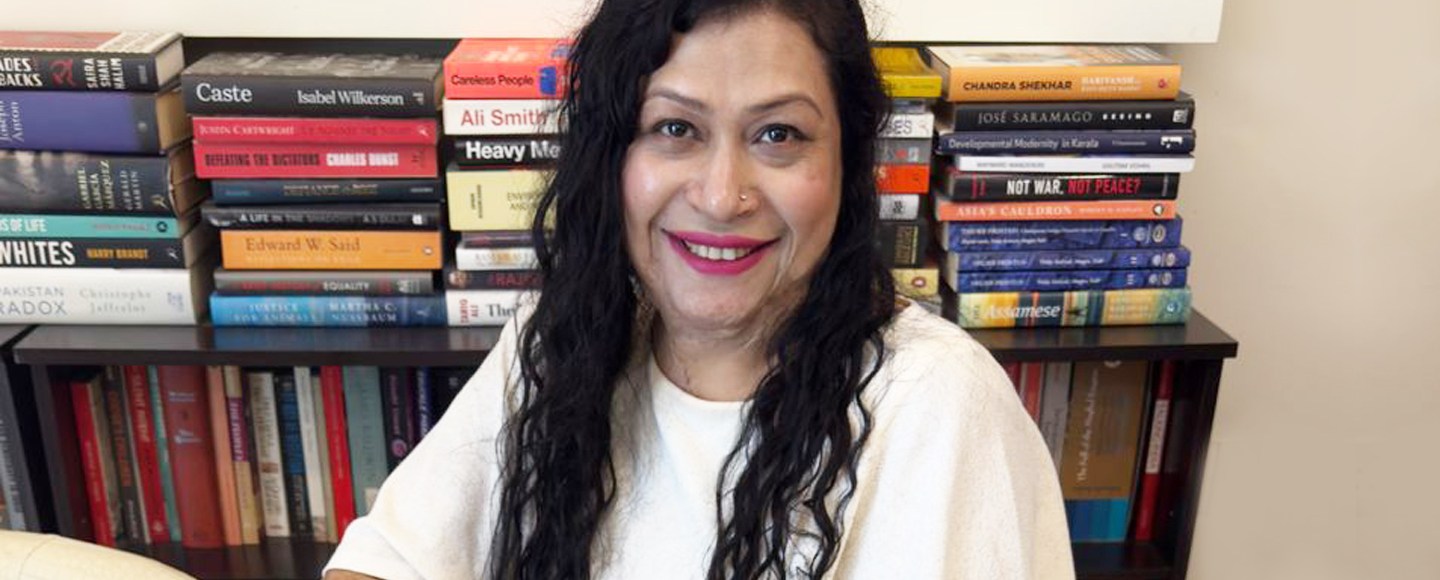

In the latest episode of eShe TV, we feature transformation coach and entrepreneur Prerona Roy, whose own life serves as the greatest testament to the power of overcoming self-limiting beliefs.
Roy sustained 82 percent burns in a tragic kitchen fire accident in her early 20s. Yet – despite the pain, disability and devastation that followed – she rose like a phoenix and completely changed the trajectory of her life through determination and will.
From being a small-town girl in Bengal, she grew into a super achiever in a US-based multinational, and then gave up the corporate life to launch herself independently as a life coach and business mentor. Today she runs three enterprises.
eShe chief editor Aekta Kapoor asked her about how to change our self-limiting beliefs that hold us back from achieving our goals and realising our potential.
Click on the video to hear the full interview, or scroll on below for the key points.
Where self-limiting beliefs come from:
We have them from the time we are born or maybe when we start thinking about things. Over time, we form these beliefs about ourselves. Some of it can be from friends, from teachers, from our parents, from family, from the neighbourhood, our own education… it’s a culmination of things that we go through. It can be our experiences, somebody else’s experiences, things that we consume on television.
Those beliefs can be useful or not-so-useful. ‘Self-limiting beliefs’ has become like a buzzword but it’s not just about limiting ourselves; it’s also about beliefs that hold us back in interactions or how we perceive somebody else. But, of course, we can change that.
Seeing obstacles instead of the bigger goal:
Some people are not open to possibilities. They always look at the challenges. It’s easier to get started if we can shift our perspective, and stop looking at what is holding us back, and rather look at what could be possible.
It is about doing what is required at this very moment – not to think 10 steps ahead. I think taking smaller steps and getting started somewhere is very important.
And the bigger question is: am I dreaming big? Most times, people have so many limiting beliefs that they are not able to look at the possibilities – such as saying, “This is my situation right now, what could be some ways for me to do a little more?”
Maybe somebody is in a mid-career role looking to pivot into entrepreneurship or something different or freelancing – how can you integrate that dream into your current structure? I think that’s a good starting point.
Transforming through the pain:
The pain was so much, so big, that I couldn’t even lay down in a hospital bed. I wasn’t really dreaming of what it would be like five years down the line. It was more about, “Will I live?” The most important thing was that I need to get through this. I have to move my fingers because that was the instruction from the doctor. I focused on whatever was necessary at that point in time.
When people are going through tough times, it is very essential to just take that one little step, whatever is necessary at that point in time. Whether it is to breathe, whether it is nutritious food, whether it is exercise, whether it is to follow medications, whatever that is.
My transformation was a culmination of very small, minute steps that I took every day consistently and that’s about it.
Taking it one day at a time:
It’s this journey you take: you work a little, you explore, you find beauty, you want to explore further, you keep exploring… and that’s life, I feel.
I have not stopped myself. So, after recovery, I just started doing tuitions and then from there I joined an edtech corporation, and then from there to management, from that to getting into consulting… It just kept happening.
Even right now when I have three distinct businesses to handle, it’s just like taking one thing at a time and just living it to the fullest.
What holds women back from building businesses:
Financial freedom is something that women don’t have in their frame when they are growing up. I’ve seen even successful businesswomen who don’t have that frame. It’s not just about earning, it’s about how aware you are about your own finances. That is a very sad situation in India.
I think when we are talking to our daughters, to our female friends, the frame needs to be shifted for them. They need to understand money, they need to be talking about investments, planning finances.
If I talk about this with my female friends, they take a lot of pride in saying, “I don’t understand all that,” but I think we need to shift that. Unless this frame comes in, how is a person going to scale up the business? Because, ultimately, business is about profitability.
The women I meet who run small businesses or medium-sized businesses, it’s like somebody else is taking care of the financials for them. So, I think that frame needs to shift before anything else, before they can see what is the next step. They are so fearful of that – maybe because of things that they have been told, or the conditioning that they have been brought up with.
Reframing the narrative:
I think that’s where mentors or coaches play a great role because they show what’s actually holding you back.
But I would want people to shift from “what’s holding me back?” to “what’s possible for me?”
I think that’s a better frame to come from, especially for someone who’s really being held back with a lot of things. They’re seeing more of the negative things. They should shift the frame to asking: ‘With the resources that I have right now, what’s possible or what is the next thing for me?”
If they start to ask themselves that question every day, I think they’ll get some clarity on where they can go, what they can do, how differently they can approach life. And that in itself will bring a lot of difference.
This interview is also available as a podcast.
Discover more from eShe
Subscribe to get the latest posts sent to your email.
 eShe
eShe 
0 comments on ““My transformation was a culmination of small steps that I took every day, consistently”: Prerona Roy”