
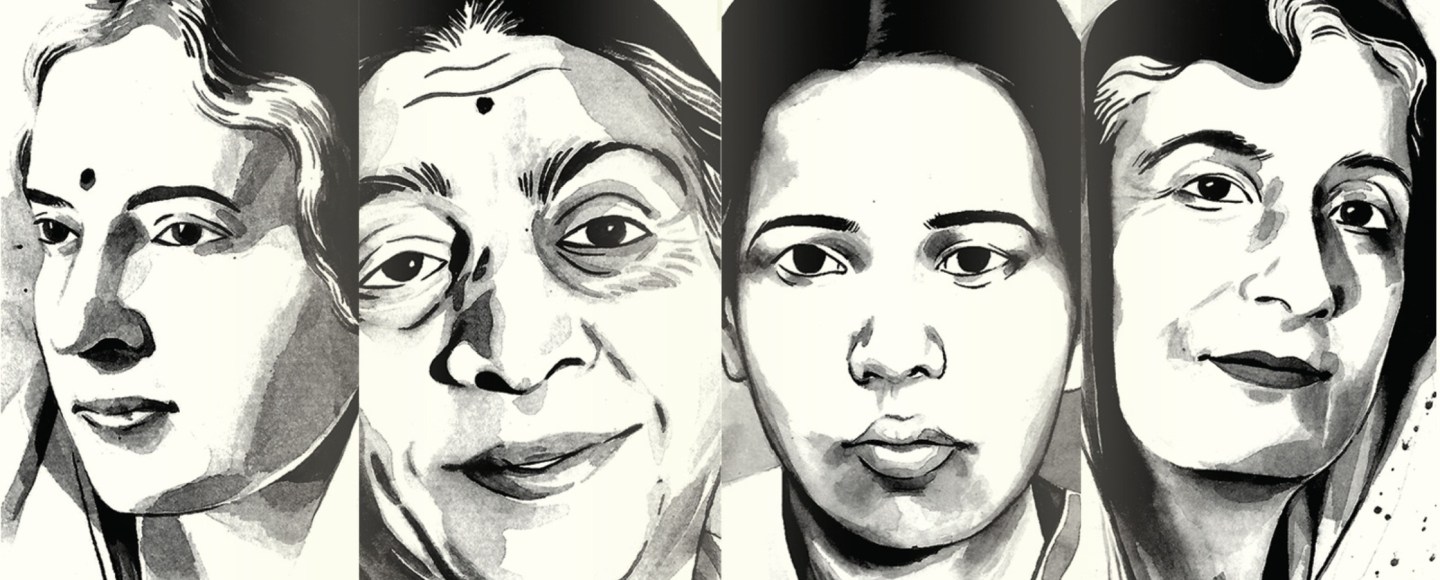

Seventy-eight years ago, on December 9, 1946, India’s Constituent Assembly met for the first time in New Delhi to begin its historic task of drafting the Constitution for Independent India. Over the next three years, these erudite leaders would put forward and debate multifarious views on the Draft Constitution of India, influencing the way we today in the world’s largest democracy live our lives.
The Assembly had 299 members. Only 15 were women.
This year, a new book The Fifteen: The Lives and Times of the Women in India’s Constituent Assembly (Hachette India, INR 799) by Angellica Aribam and Akash Satyawali puts the spotlight on this small group of trailblazers. The portraits offer glimpses into their lives and circumstances, their opinions and worldviews, and their personal and professional struggles as women, as freedom fighters and as nation builders.

The 15 women came from remarkably diverse backgrounds, and yet what brought them together was their intellectual brilliance, passion for social justice, and shared struggles as women in patriarchal societies.
Some of them were born into privilege. Begum Qudsia Aizaz Rasul’s parents hailed from the royal families of Punjab and Haryana, and her father was the chief minister of Patiala state. Hansa Mehta and Leela Roy both belonged to educated, progressive families of administrators, educators and social activists, the former from Baroda in present-day Gujarat and the latter from Sylhet in present-day Bangladesh.
On the other hand, Annie Mascarene’s family had its roots in a marginalised Latin Catholic fisherfolk community, and Dakshayani Velayudhan’s in the ‘untouchable’ Pulaya caste, both from present-day Kerala. They had to fight the everyday battles of social discrimination and financial constraints while educating themselves and working towards their larger mission for India’s independence and the framing of the Constitution.
Despite their differences, all 15 had a fierce will in common.
Interestingly, they also had allies at home – either their own spouses or some other family backing. Take the examples of Malati Choudhury and Ammu Swaminathan, who both lost their fathers as children. Ammu, the youngest of 13 siblings born in Palghat (now Kerala), was 14 years old and home-educated when she married a distinguished lawyer 23 years her senior. Meanwhile, Malati was in her fifth year studying at Visva Bharati – Rabindranath Tagore’s university in Santiniketan – that she met her future husband. In both cases, it was the allyship and unstinting support of their respective husbands that shaped Ammu’s and Malati’s identities as social activists and leaders.

Angellica Aribam, a Manipur-origin political activist working on issues of gender and anti-racism, got the idea for this book while going through the Constituent Assembly debates and the speeches of the women leaders. “Their stories are of resistance and hope,” she says. Co-author Akash Satyawali, a public policy professional, adds, “Each of their remarkable journeys tells us about law and polity as well as presents a glimpse into the multiple Indias that existed – in its perfections and imperfections.”
Indeed, as one browses through this well-researched book, one is struck by the tremendous heterogeneity of the nation and its people. Yet, though the women came from varying backgrounds, socio-economic status, religions and cultural milieus, they all faced personal battles on account of their gender. Despite that, they pushed against great odds to reach the Constituent Assembly, where their inputs helped ensure equal rights for women and the marginalised in the largest and most complex democracy in the world.
Having said that, this book is no hagiography. If anything, it highlights how complicated and difficult it must have been to craft a just Constitution in a country with a multitude of communities, traditions, social systems, languages, faiths and subcultures. At times, even the women leaders disagree with one another – especially on matters of reservation for women and the marginalised.
In addition, some, like Renuka Ray and Sucheta Kripalani, considered more radical forms of struggle, while others like Vijaya Lakshmi Pandit, Rajkumari Armit Kaur, Sarojini Naidu, Purnima Banerji and others staunchly followed the Gandhian principle of nonviolence.

This is an important book that puts forth the female experience and worldview in historical literature otherwise dominated by male figures and versions of events. Through the lives and work of these 15 leaders, one gets a nuanced glimpse into India’s colonial past and fraught Independence, and the micro and macro challenges that dotted its path to democracy.
Sadly, as the authors point out, “most of the challenges these women political leaders faced almost a century ago are still prevalent today”. One hopes it does not take another century for India to actualise the dreams of social justice and gender equity envisioned by the 15 women leaders of India’s Constituent Assembly.
Discover more from eShe
Subscribe to get the latest posts sent to your email.
 eShe
eShe 
Thank you for drawing attention to this publication. Women become invisible in institutional histories and also in pubic memories. I did a study of women’s role in Pakistan’s legislatures. There were only 2 women in Pakistan’s Constituent Assembly but outspoken champions of women’s rights. I hope the book finds its way into Pakistani bookstores, would love to read it.
Khawar Mumtaz
Lahore
LikeLike