

By Asambhava Shubha
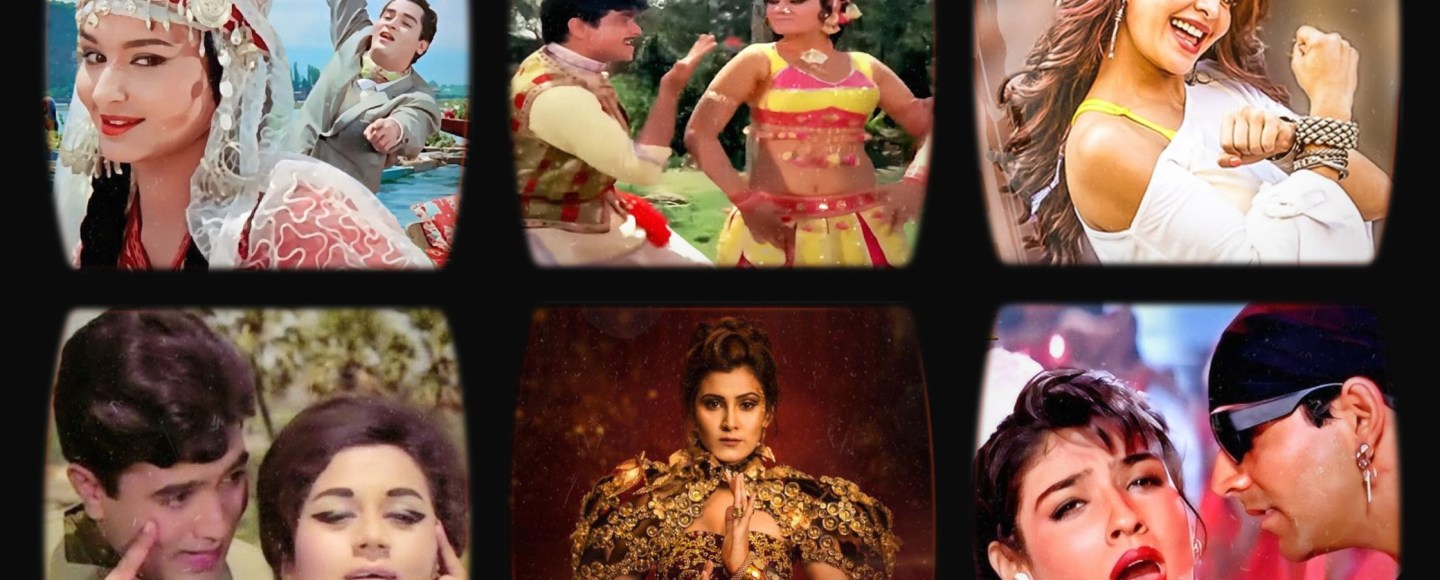
Beauty as an attribute does not seem to be gender-neutral if Hindi cinema is anything to go by. Women are more often than not objectified through songs about their physical features. A 1964 classic written by SH Bihari became an anthem when he praised women with ‘Yeh chand sa roshan chehra zulfo ka rang sunehra’ (This face is glowing like the moon, the hair is coloured golden). By 2018, rapper Badshah was writing, ‘Jahan se hona chahiye wahin se hai tu thick’ (You are thick in the place you should be).
Love songs written for Hindi cinema in the past aimed to establish the hero as a saviour and the heroine being saved or rescued. And so, the male lover expressed freely the beauty he envisaged in the vulnerable female counterpart with dewy eyes and pursed lips. The male-centric films only housed spaces for one protagonist and put them on a pedestal – this jeopardised the way love was displayed and written for the characters.
No wonder the ladies sang to their male lovers about feeling revived and complete in their presence, while the latter had both the liberty and time to compare female beauty with chand (moon) and kali (flower bud).
In a 2017 performance, which garnered over three million views on YouTube, Indian male comic Anirban Dasgupta drills down into the repackaged 2016 Coke Studio version of the 1997 song Afreen Afreen (Praise to her creator). Originally a qawwali written by Javed Akhtar, one of the most celebrated lyricists for Hindi cinema, the male point of view in the song describes the female beauty as “Jism nagma koi, jism khushboo koi, Jism jaise mehakti hui chandni’ (Her beauty is an alluring song, her body is a heavy fragrance, hers is the beauty of scented moonlight) and similar metaphors ornamenting the majority of the song.
The song has only one set of verses towards the middle where the female voice responds. She sings: ‘Nazro ne teri chua, toh hai ye jadoo hua, hone lagi hoon main haseen’ (Your eyes met mine and ever since a spell has been woven, I feel that I have become beautiful). Anirban dissects the approach and quips about how the lyricist would have had to step into the shoes of a female and reimagine romancing himself.

This song pretty much says that the glow of dawn on the face, the dusky twilight of the tresses of the woman, and all that’s hers, is now devoted to her man. After singing mushy paragraphs about how her exquisite beauty is warm and smooth as sandalwood, pure as marble, a beauty of a haunting melody, and more, the singer climaxes with how it is impossible to describe the beauty of his beloved after all.
There’s not only a dearth of adjectives for male beauty but also some sense of unawareness or under-confidence that limit the female character from expressing her side of the story. It feels like a loss of agency, probably because the love hasn’t been empowering enough for the woman to allow her to look at her lover, carefree, and to express herself as impressively and eloquently as the man.
From the gem every Gen X grew up listening to, ‘Chadhti jawaani meri chaal mastani, tune kadar na jaani Rama’ (I’m in the prime of youth with an intoxicating gait and you didn’t care about it) to the famous groove of the nineties, ‘Tu cheez badi hai mast mast’ (You are an awesome thing) to the 2015 Punjabi party favourite, ‘Chittiyan kalaiyaan ve, baby tere hisse aiyaan ve’ (I have white wrists, which are now yours) – the lyricists have mostly been men writing about women, with much of the focus of romantic love being based on the female lover’s appearance.
Of course, there’s no denying the elegant alliteration and figures of speech used over the decades of Hindi cinema to describe female beauty in various forms. Superhit songs like ‘Ek ladki ko dekha toh aisa laga’ (When I saw this one girl, I felt like..), ‘Chaudhavin ka Chand ho ya aftaab ho’ (Are you the full moon, or the sun?), ‘Tere chehre se nazar nahi hat ti’ (I can’t keep my eyes off your face), ‘Gulabi aankhein’ (Rose-like eyes), ‘Phoolon sa chehra tera’ (Your face is like the flowers) are all carved with perfection by some of the best male lyricists from the country.

From then to now, Anvita Dutt, Kausar Munir and Priya Saraiya – the cream of the current female lyricist representation in Bollywood – have a variety of songs to their credit. It is noteworthy to observe how the female perception in the landscape of lyrics views male counterparts or the idea of love portrayed through a love song. Here’s how Anvita Dutt writes a love song titled Sadka (I prayed to love).
Male:
Kuch khwaab dekhe hain
Kuch rang soche hain
Ab maine kal apne
Tere sang soche hain
(I have seen some dreams
I have thought of some colours,
Now I’ve thought of my future alongside you)
Female:
Teri khushboo main bheenge khat mile
Teri rang ki siyahi se likhe padhe sune
Teri baaton ke wo saare silsile
Meri dil ki kahaani si suni kahin bune
(I found some letters drenched in your fragrance
Written with the ink of your colour, I read those writings
All those series of talks with you
Weave the lonely story of my heart)
If one were to use the portions interchangeably, it would not make a difference whether these words were sung by a male or female lover.
Kausar Munir’s work in the film Ek Tha Tiger (There Was Once a Tiger) and the song Laapata (Lost) describe the vision of love from both the male and female perspectives: ‘Le rahe the saansein, Zinda nahi the kabhi hum, Dil yeh tujhko de ke, Dhadkan se vaaqif hue hum’ (I was breathing but never alive, After giving you my heart, I became familiar with heartbeats).
Hindi cinema’s explicit portrayal of beauty through love songs has played a big role in setting the tone for gender perception among audiences and the general public. The two most common metaphors, chand (moon) and phool or kali (flower or bud), have not just depicted female beauty but also been witnesses in the making or blooming of love.
That is a good source of inspiration and an opportunity for the contemporary aspiring and professional writers (especially women) to equalise the range of romantic expression for the sake of beauty – which dwells both in the abstraction of poetry and the eyes of the beholder.
Why wait? I could take a shot at it: ‘Ye chand si sheetal aankhein, saleti honthon main gum shaamein’ (These eyes contain the calmness of the moon, the grey lips where evenings get lost)!
I have to admit it, however, that is slightly discomforting to write this given I cannot recollect any Hindi lyrics raising a toast to the lips of men, let alone their greyish hue. Then again, I remember there’s more work to be done with regards to an equivalent comparison of kali too. Leaf? Nectar? Stamens? Or maybe another flower bud?
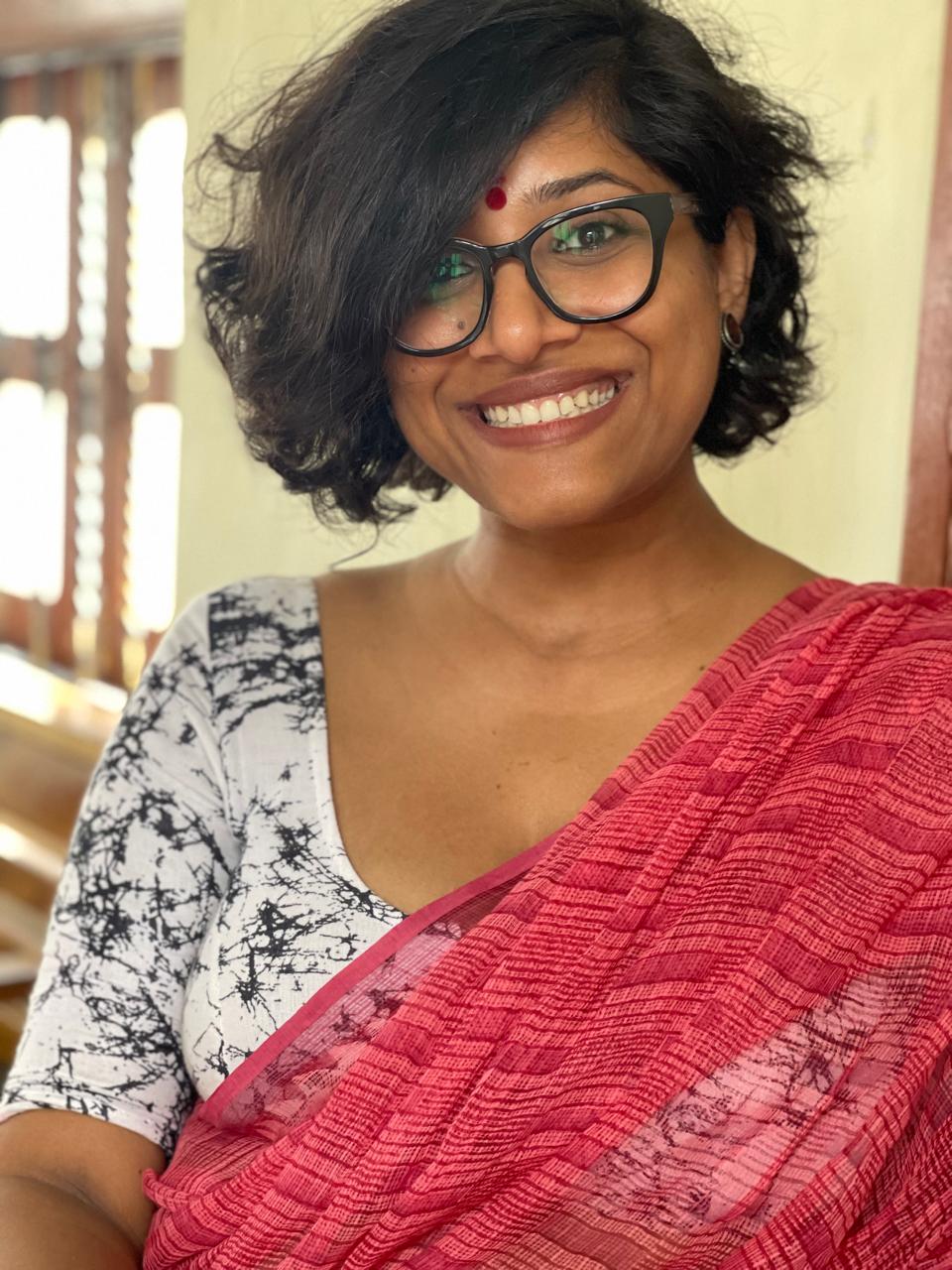
Asambhava Shubha leads Strategy – Experiential Learning & Innovation at an academic institute for the indigenous, the Kalinga Institute of Social Sciences. A native of Bihar and Bangalore, she is a cybersecurity engineer by degree, and she acts, writes and directs documentaries and short films. You can find her on LinkedIn.
Discover more from eShe
Subscribe to get the latest posts sent to your email.
 eShe
eShe 
I think it will take another 100 years, at least, for filmi songs to make odes to beautify men like women. Whole Urdu poetry including Ghalib is in full praise of female beauty attraction love and intimacy etc. While praising a male poet to a male suspected to be considered as gays or homosexuals and nothing else. Hence let us to continue the circle of female charm beauty and attraction. Shakeel
LikeLike