

By Chanda Bisht
Mathematics fills every aspect of our lives, often playing a pivotal role even when we least expect it. Beyond mere numbers, it shapes our understanding of patterns, logic, and problem-solving – a fundamental language that underpins science, technology, and everyday decisions.
Yet, for many, the perception of mathematics remains fixed in childhood sentiment: “Maths was fine when it was just numbers; why did they add alphabets to it?”
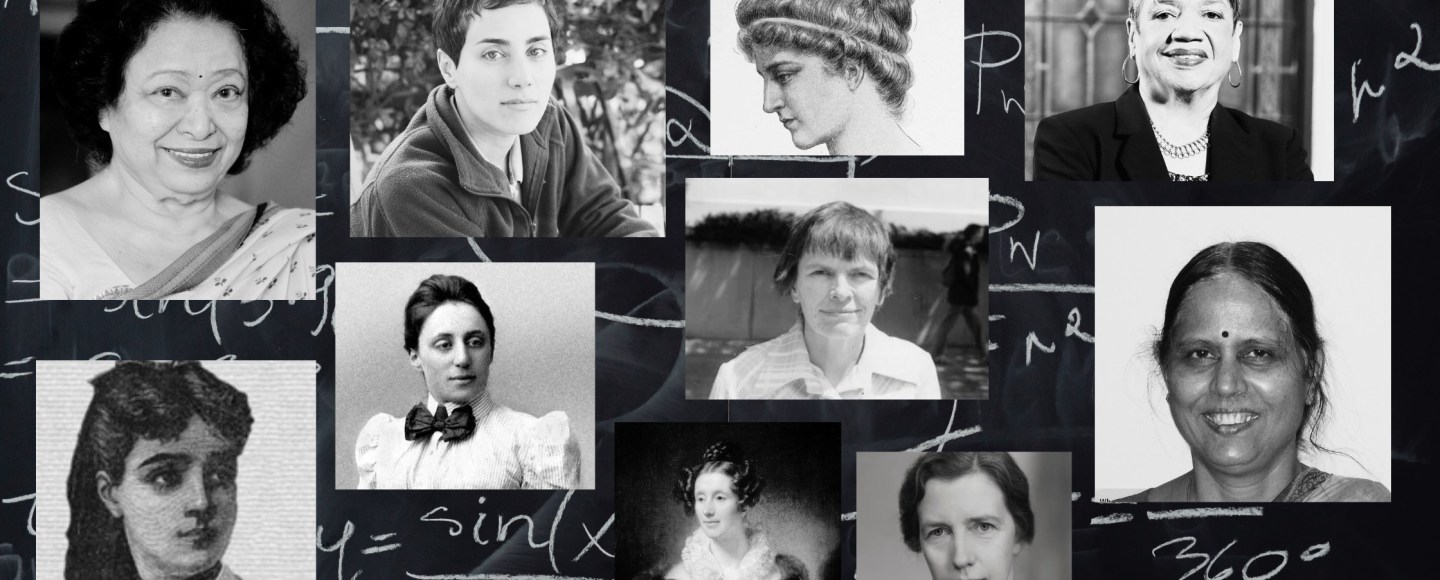
Mathematics, with its ability to be both daunting and elegantly structured, holds a unique allure. As a math-lover in northern India who gets enough negative social messaging on what fields young women can or cannot pursue, it gives me much pleasure to dive into the lives of some seriously awesome women mathematicians.
While the history of science and mathematics is often dominated by male figures, the women on this list made waves in a field where men usually get all the credit. Despite facing societal challenges and institutional barriers, these women have left an indelible mark on the field of math. These are my heroes!

Hypatia of Alexandria: Scholar and Philosopher
Born around 355 BCE in Egypt, Hypatia was a pioneering figure in the history of mathematics. She was not only a mathematician but also a philosopher and astronomer during a time when such pursuits were predominantly male-dominated. As head of the Platonist school in Alexandria, she made significant contributions to geometry, algebra, and astronomy.
Hypatia’s teachings and writings influenced many scholars of her time, fostering intellectual growth and challenging societal norms. Her work in mathematics, particularly her commentaries on mathematical texts and advancements in geometric concepts, cemented her legacy as one of antiquity’s most revered mathematicians.

Sophie Germain: The Pioneer of Number Theory
Moving forward to the 18th and 19th centuries, we meet Sophie Germain. Born in 1776 in France, Germain developed a passion for mathematics at a young age, despite the societal constraints that limited women’s access to education at the time.
She taught herself by studying the works of prominent mathematicians and corresponded under a male pseudonym to be taken seriously in the academic community.
Sophie Germain made significant contributions to number theory and elasticity theory. Her work on Fermat’s Last Theorem provided crucial insights that laid the groundwork for future mathematicians. Despite facing immense challenges due to her gender, Germain’s persistence and intellectual prowess earned her recognition and respect in a male-dominated field.
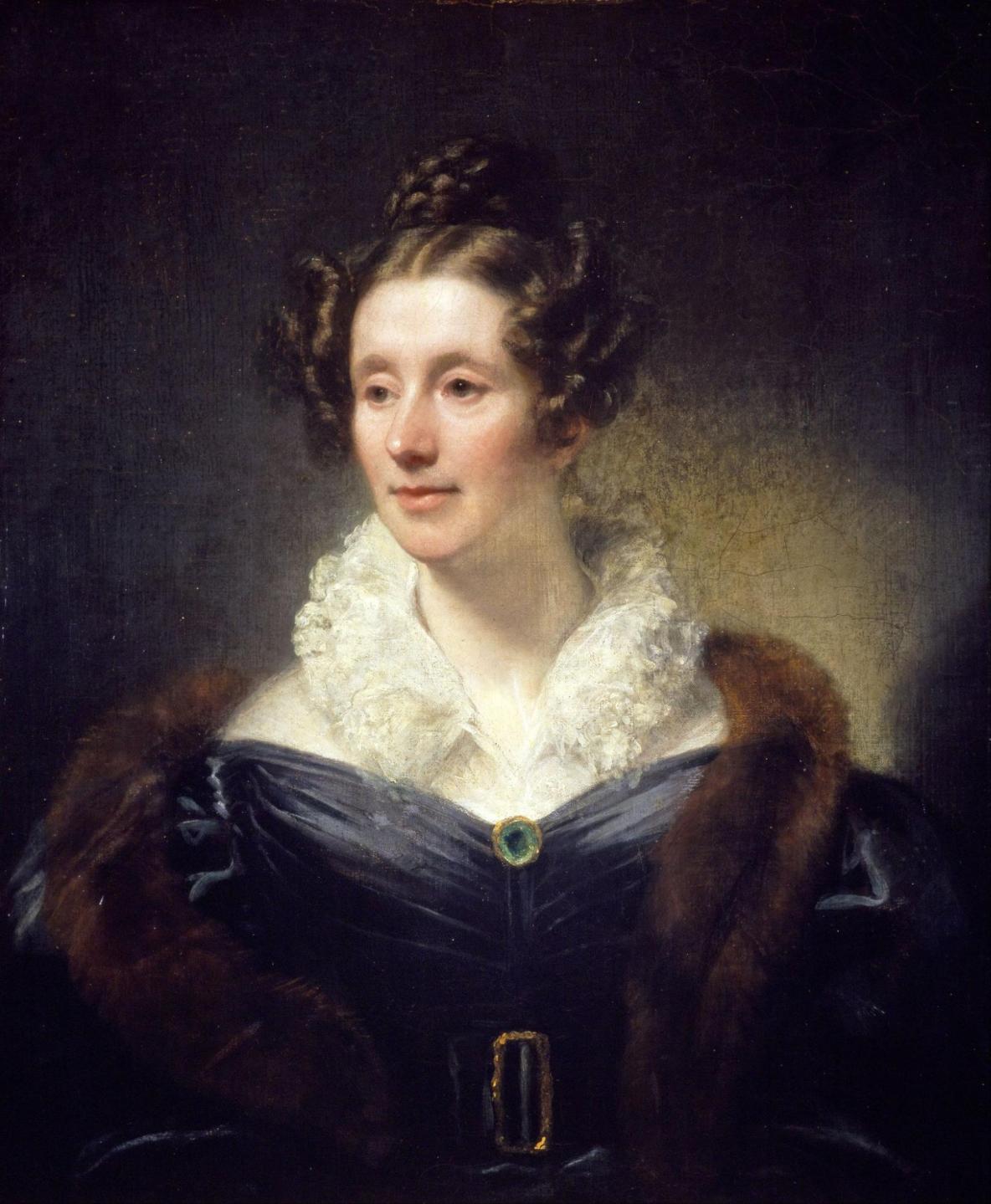
Mary Somerville: The Queen of Nineteenth-Century Science
Mary Somerville, born in 1780 in Scotland, was a polymath whose contributions spanned mathematics, astronomy, and science writing. Somerville College at the University of Oxford is named after her.
Primarily home-schooled and self-taught, she played a crucial role in the discovery of Neptune through her work in celestial mechanics.
Somerville’s work in differential calculus and her ability to synthesise complex scientific concepts made her a pioneer. In 1833, Mary Somerville and fellow mathematician Caroline Herschel, became the first two women to be granted honorary membership of Britain’s Royal Astronomical Society.
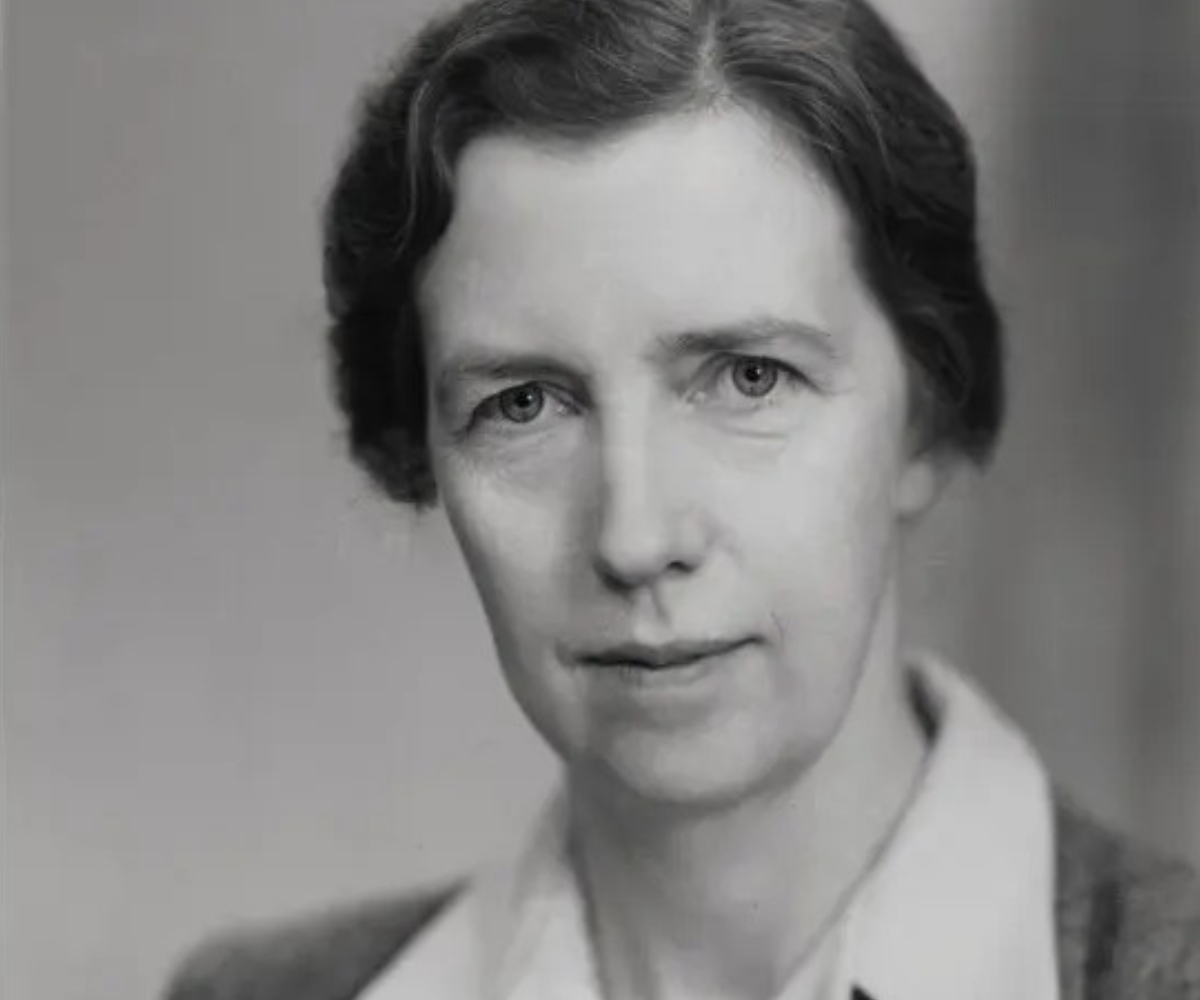
Mary Cartwright: Pioneer in Chaos Theory
Born in England in 1900, Mary Cartwright made significant contributions to the field of mathematics, particularly in the areas of nonlinear differential equations and chaos theory. Her collaboration with J.E. Littlewood on these equations led to the first rigorous analysis of what would later become known as chaotic behaviour in dynamical systems.
Mary Cartwright’s work laid the foundation for modern chaos theory and had a profound impact on various fields, including engineering and physics. Her achievements were recognized with numerous awards, and she became the first woman to serve as president of the London Mathematical Society.

Emmy Noether: The Mother of Abstract Algebra
Moving forward in time, we encounter Emmy Noether, a mathematician whose work has profoundly impacted the field of algebra. Born in Germany in 1882, Noether faced significant obstacles as a woman in academia, such as having to work without pay, and to teach in a senior male mathematician’s name. Despite these challenges, she made groundbreaking contributions to abstract algebra and theoretical physics.
Emmy Noether is best known for Noether’s Theorem, which reveals the deep connection between symmetries and conservation laws in physics. Her work laid the foundation for modern algebra and has been instrumental in advancing both mathematics and physics. After her death in 1935, Albert Einstein wrote, “Noether was the most significant creative mathematical genius thus far produced since the higher education of women began.”

Shakuntala Devi: The Human Computer
Born in India in 1929, Shakuntala Devi possessed an extraordinary ability for mental calculations from a young age. Her talent, often showcased in public demonstrations, earned her international recognition as a mathematical prodigy.
Shakuntala Devi’s calculations were lightning-fast and accurate, surpassing the capabilities of most electronic calculators of her time. Beyond her mental prowess, she played a significant role in popularising mathematics through her books and public lectures, making complex calculations accessible and intriguing to the general public.
A Bollywood biopic on her life, Shakuntala Devi starring Vidya Balan, was released in 2020.

Julia Robinson: Pioneer in Mathematical Logic
Julia Robinson, born in the United States in 1919, made significant contributions to the field of mathematical logic and the theory of computation. She is best known for her work on Hilbert’s Tenth Problem, which deals with the solvability of Diophantine equations. Robinson’s research provided crucial insights and advanced the understanding of these complex problems.
Her work in mathematical logic and decision problems had a lasting impact on the field, and she was the first woman to be elected president of the American Mathematical Society. Robinson’s legacy continues to inspire mathematicians in the realms of logic and theoretical computer science.

Raman Parimala: Algebra’s Trailblazer
Raman Parimala, born in India in 1948, is a distinguished mathematician known for her exceptional work in algebra. She has made significant contributions to the study of quadratic forms, algebraic groups, and Galois cohomology. Her research has provided deep insights into the structures and properties of algebraic systems.
Parimala’s groundbreaking research has earned her numerous accolades. She is a Fellow of all the three Indian science academies: Indian National Science Academy in New Delhi, Indian Academy of Science in Bengaluru, and the National Academy of Sciences in Allahabad.
She won India’s highest science award, the Shanti Swarup Bhatnagar Prize, in 1987. She was one of 11 women in science to be honoured with a Chair in their names in 2020 by the Government of India.

Christine Darden: NASA Mathematician and Engineer
Christine Darden, born in 1942 in the United States, is a renowned mathematician, data analyst, and aeronautical engineer. She is best known for her work at NASA, where she made significant contributions to aerodynamics and the development of supersonic flight.
Darden’s research focused on reducing sonic booms, making supersonic travel more feasible and efficient. Her pioneering work has been instrumental in the field of aeronautical engineering, and she stands as a role model for women in STEM fields.

Maryam Mirzakhani: Breaking Barriers in Modern Mathematics
Lastly, we turn to Maryam Mirzakhani, a modern-day trailblazer in mathematics. Born in Tehran in 1977, Mirzakhani became the first woman and the first Iranian to win the Fields Medal, one of the highest honours in mathematics, in 2014. Her work in hyperbolic geometry, complex analysis, and dynamical systems has been groundbreaking.
Maryam Mirzakhani’s innovative approaches and profound insights into the geometry of Riemann surfaces have inspired countless mathematicians around the world. Tragically, she passed away in 2017, aged 40, due to breast cancer, but her legacy continues to influence and shape the future of mathematics, breaking barriers and setting new standards for excellence.
Discover more from eShe
Subscribe to get the latest posts sent to your email.
 eShe
eShe 
Loved this article ! ❤
LikeLike