
Through her work at the Mumbai-based nonprofit Antarang Foundation, Priya Agrawal has been helping young people in India move from school into real jobs, generating important research about this transition. However, though data helps understand patterns such as employment rates and gaps in opportunity, “it doesn’t always capture what that journey actually feels like,” she says.
So, she came up with a new creative solution – a scalable platform called Art × Evidence that uses creative expression to deepen dialogue about the transition from school to work.
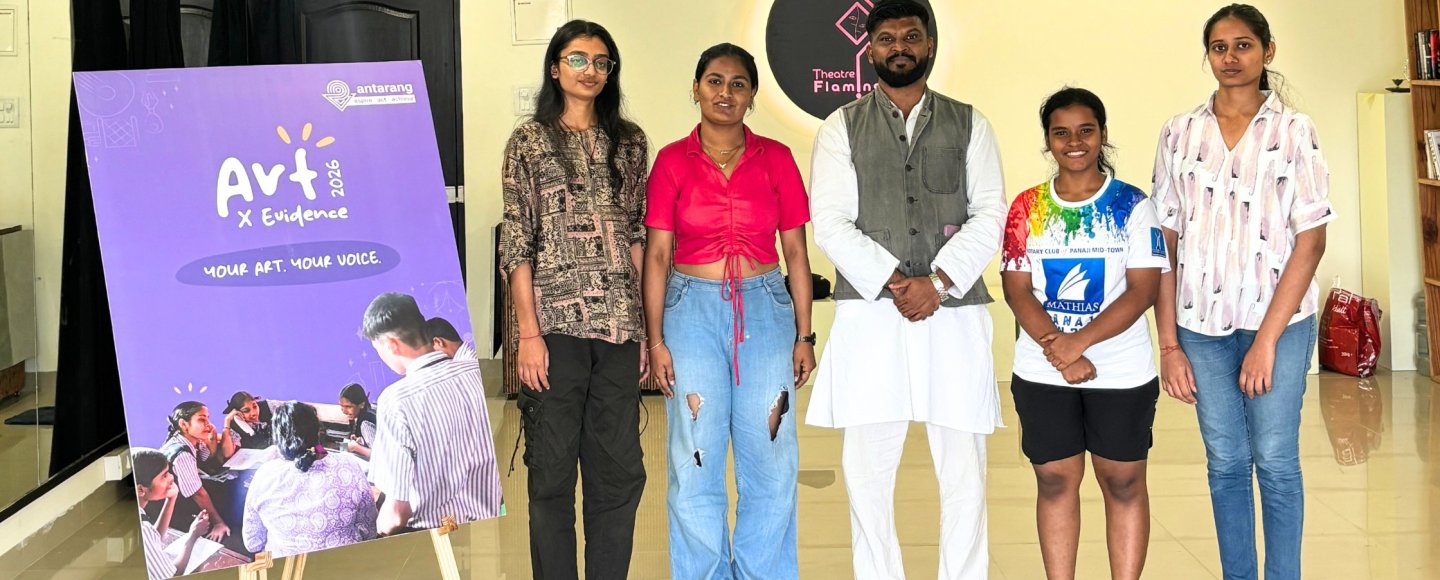
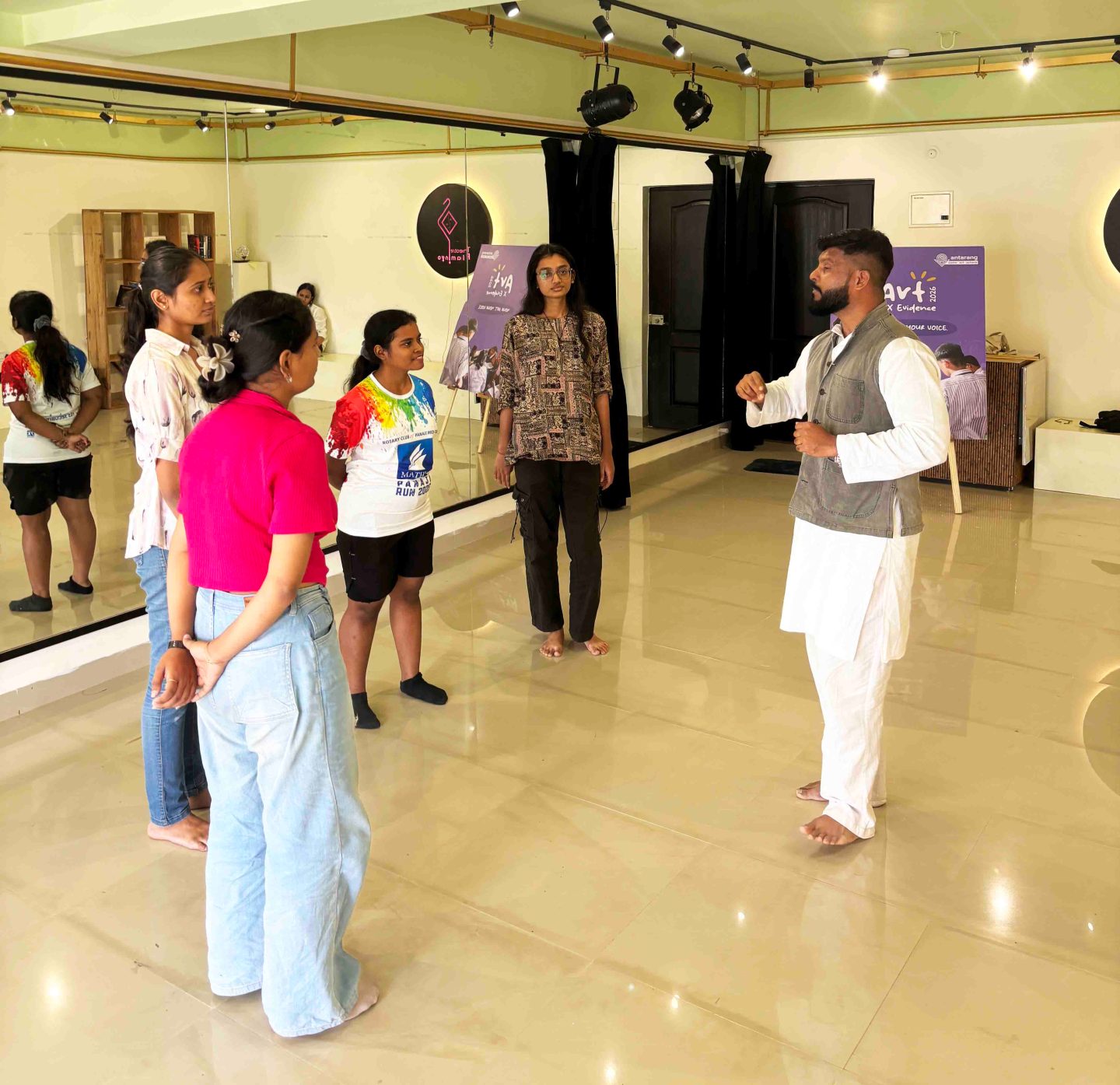
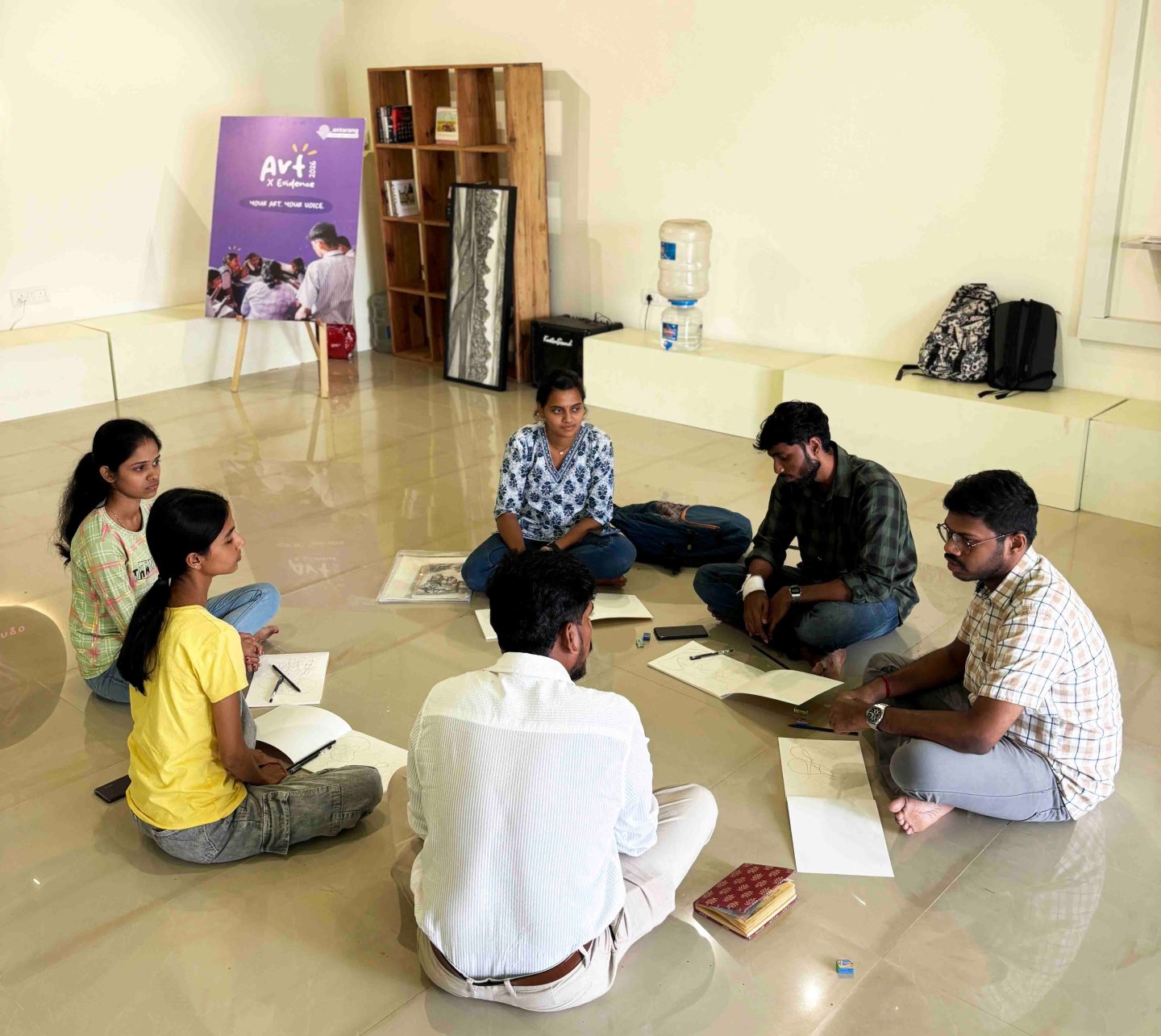
“Art has the ability to humanise data,” says Agrawal. The new initiative launches today as a pilot in the state of Goa, with six mentors and 45 young participants working across writing, movement, visual arts, theatre and design.
“Data on youth employability in India is abundant – reports, statistics, policy papers – but much of it stays confined to institutional spaces and doesn’t always move people to act. When you translate data into something visual or experiential, it becomes more accessible, especially to those who are often excluded from policy conversations, including young people themselves,” explains Agrawal, who founded Antarang Foundation in 2013.
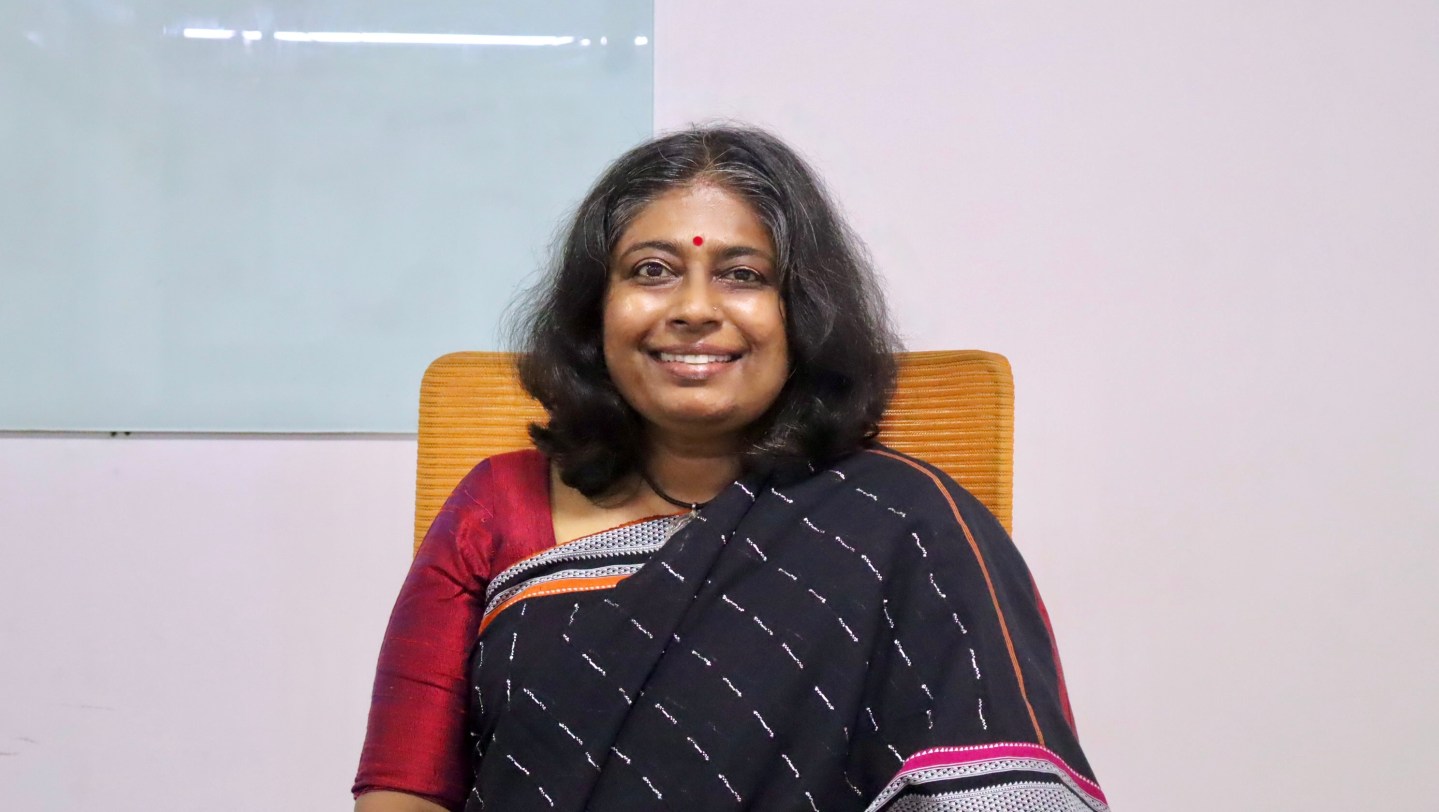
I asked her more about her inspiring new initiative.
Art × Evidence brings research and creative expression into the same space. What inspired you to translate data on youth employability into artistic forms rather than traditional reports or policy conversations?
Art × Evidence was born from the idea that lived experience deserves space alongside statistics. When young people respond to research through poetry, theatre or visual art, they interpret the realities behind the numbers – their aspirations, anxieties and the pressures they navigate while making career decisions.
Art also provides a safe and comfortable way for young people to express themselves. Creation is deeply natural to youth, and using artistic mediums allows them to articulate thoughts and emotions that may be difficult to express in formal settings.
In that sense, art becomes another form of evidence – one that brings us closer to the human experience behind the data.
Female employment among Antarang alumni is significantly higher at 54.6 percent than the national average of 33 percent. What are the everyday barriers – from family expectations to safety concerns – that shape how young girls imagine their professional futures?
Many girls grow up negotiating their aspirations within a complex set of expectations – around safety, mobility, social norms and what is considered appropriate work. In some cases, they are also expected to prioritise household responsibilities or make early life choices that limit their options.
What we’ve learnt is that normalising career conversations for both girls and boys is critical. When young women are given the language and vocabulary to talk about careers – to ask questions, explore options and articulate ambition – they are better equipped to navigate these established norms.
When supported with guidance, exposure and encouragement, girls are able to reimagine what is possible for themselves. The barriers are real, but they are not insurmountable when the ecosystem around them begins to shift.
Many young people carry enormous pressure today: academic competition, financial anxiety and social comparison. Did the creative process in Art × Evidence reveal emotional or personal stories about these pressures that data alone could never capture?
Absolutely. The creative process revealed how deeply these pressures shape young people’s identities and sense of self.
Many participants spoke about the fear of making the “wrong” career choice, the pressure to support their families financially, and the constant comparison they experience – both within their communities and on social media. These are emotional realities that rarely appear in labour statistics.
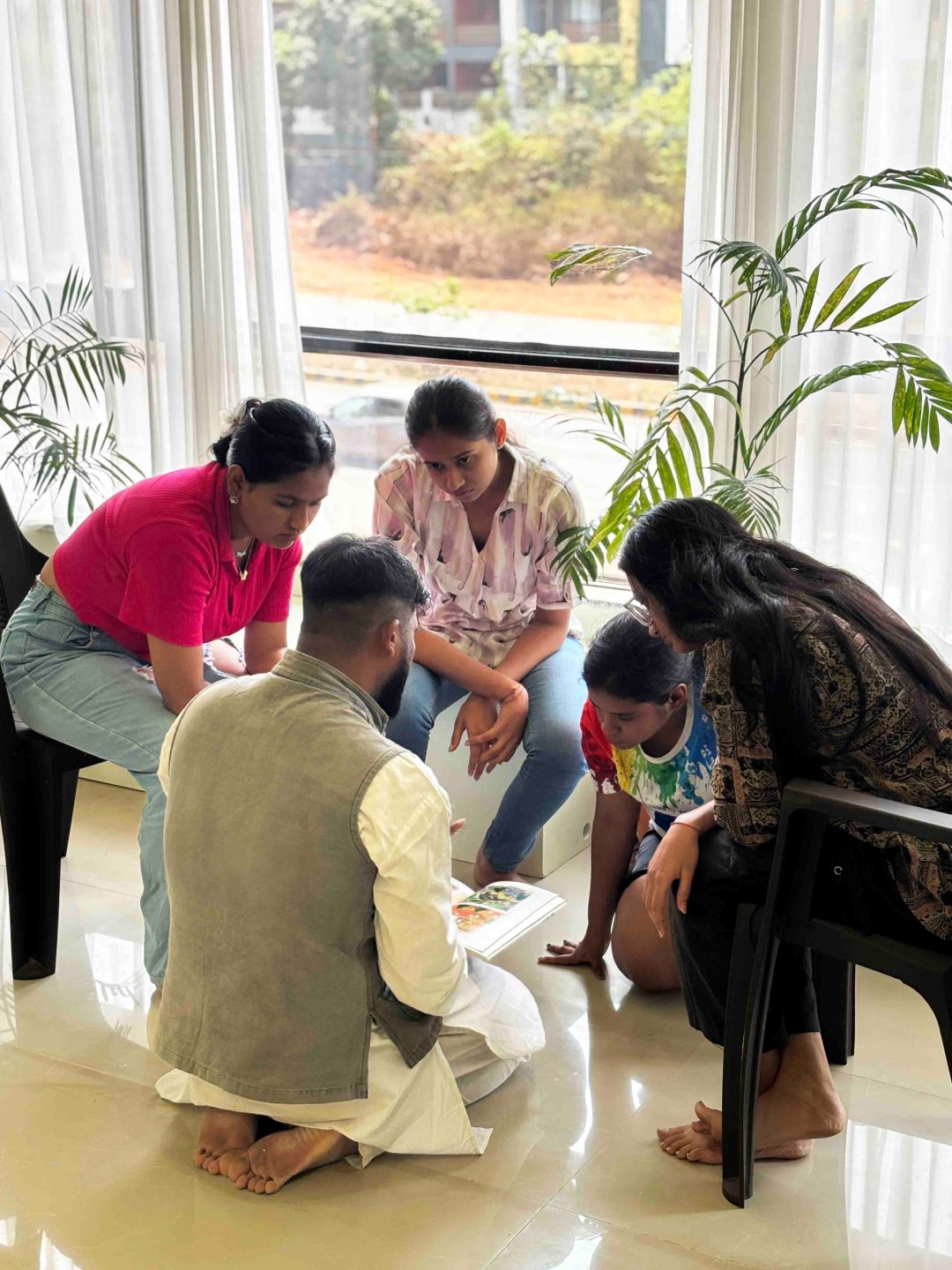
What was particularly striking was how the choice of art form itself reflected these inner states. For instance, some participants gravitated towards crochet – a slow, repetitive practice that offered a sense of calm and control. In a world that often feels uncertain and overwhelming, the act of creating something structured and tangible became grounding.
At the same time, what they created often reflected a search for clarity – finding beauty within complexity, or order within chaos. It was a powerful reminder that many young people are not just navigating external pressures, but also actively trying to make sense of them.
This is something data alone cannot capture – the emotional textures of that journey, and the ways in which young people seek stability, direction and meaning.
Indian society still tends to measure success through marks, degrees and formal credentials. How do we shift the conversation towards recognising informal skills, lived knowledge and diverse forms of intelligence?
Marks and degrees are important, but they cannot be the only measures of potential.
Many young people demonstrate strong abilities – communication, creativity, resilience and problem-solving – that are not always recognised within traditional systems. Expanding how we define success requires alignment across education, industry and communities.
We are also beginning to see this shift at a policy level. Skills and vocational learning are increasingly being recognised as equally valid as traditional degrees, with initiatives like the Academic Bank of Credits under NEP 2020 supporting this change. Career education helps young people identify their strengths beyond academics and understand the many pathways available to them.
At the same time, employers have an opportunity to broaden how they recognise talent. When diverse forms of intelligence are valued, more young people are able to participate meaningfully in the workforce.
As India invests heavily in skilling and employability programmes, what are policymakers still missing when it comes to understanding how young people actually make career decisions after Class 10 or 12?
One of the biggest gaps is that career decisions are rarely made with full information.
Many young people choose education streams based on limited exposure to the world of work. At the same time, parents play a significant role in these decisions, often shaping what is considered safe, practical or desirable.
This is why it is important to actively include parents as part of the career guidance process. When families are informed and engaged, decision-making becomes more supportive and less restrictive.
Alumni role models also play a powerful role here. When young people and their families see real examples of others from similar backgrounds navigating different career pathways, it makes those possibilities feel more real and attainable.
Career decision-making is not an individual process – it is shaped by the ecosystem around the young person. Recognising and engaging that ecosystem is critical to making employability interventions truly effective.
Much of the conversation around employability focuses on skills and training. But for many young girls, the real battle is first believing they are allowed to dream beyond the roles assigned to them. How often do you see aspiration itself being negotiated within families and communities?
Very often. For many young girls, aspiration itself is something that must be negotiated. This is not necessarily a case to challenge families but to meaningfully include them in the conversation.
Families may worry about girls’ safety, financial stability or social expectations, and those concerns are understandable. What we’ve seen, however, is that when families are included in a dialogue about personal growth, employment and aspiration – when they understand the opportunities available and see the confidence their daughters gain – they often become strong supporters.
Empowering girls requires sensitively expanding what the community and their family believes is possible when young women enter the workforce.
There is increasing pressure on young people today to be “successful” very early — financially, socially, even emotionally. Do you think this culture of constant comparison, amplified by social media, is reshaping how young Indians define ambition and self-worth?
Social media has certainly amplified the pace at which success appears to happen. Young people are constantly exposed to curated versions of other people’s achievements, which can create unrealistic expectations about how quickly careers should develop.
One of the messages we emphasise in our work is that career journeys are rarely linear. Growth takes time, experimentation and resilience. We must help young people develop a healthy relationship with ambition – one that values learning and exploration rather than constant comparison or quick fixes.
If you could change one thing in India’s education system to make the transition from school to meaningful work more equitable – especially for girls – what would it be?
It would be to integrate structured, real-world exposure into the core curriculum from an early age for both girls and boys – how to manage your finances, how to create a schedule, how to create boundaries to safeguard your interests.
Every student, especially girls, should have access to internships, mentorships, apprenticeships, and skill-based learning across diverse fields – creative, technical, entrepreneurial and vocational. And these opportunities must be actively facilitated by schools, not left to personal networks or privilege.
For many girls in India, the gap isn’t just about education, it’s about access, visibility and permission. When exposure to careers depends on who you know or where you come from, inequality deepens. Embedding this into the system would democratise opportunity, build confidence and allow girls to imagine and pursue paths beyond prescribed roles.
Education shouldn’t just prepare students to pass exams; it should equip them to navigate the world with agency, awareness and choice.
Antarang Foundation’s Art × Evidence launch will take place today, 27 March 2026, from 5–8 pm at the Sala de Gasper, Club Tennis de Gasper Dias, Goa.
Discover more from eShe
Subscribe to get the latest posts sent to your email.
 eShe
eShe 
0 comments on “Using art to humanise data: youth exhibit interprets employment research in a creative way”