

By Mohua Chinappa
Boong, the first Indian film to win the Best Children’s and Family Film award at the 79th British Academy Film Awards (BAFTA) held last month, is not just a children’s film. Originally released in 2024 at the Toronto International Film Festival, the Manipuri-language drama film written and directed by Lakshmipriya Devi and backed by Farhan Akhtar, gently explores the lost innocence of childhood amidst the troubled landscape of Manipur, an Indian state that has repeatedly faced political upheavals.
Manipur feels disconnected from the rest of India. The peaceful flow of the Loktak River intertwines with the deep roots of 18th-century Hinduism, especially Gaudiya Vaishnavism, which has become dominant, creating a complex coexistence with traditional faiths. Over time, these traditions have blended into a unique, syncretic culture for the Meitei and Kuki-Zo communities, who still struggle to understand each other.
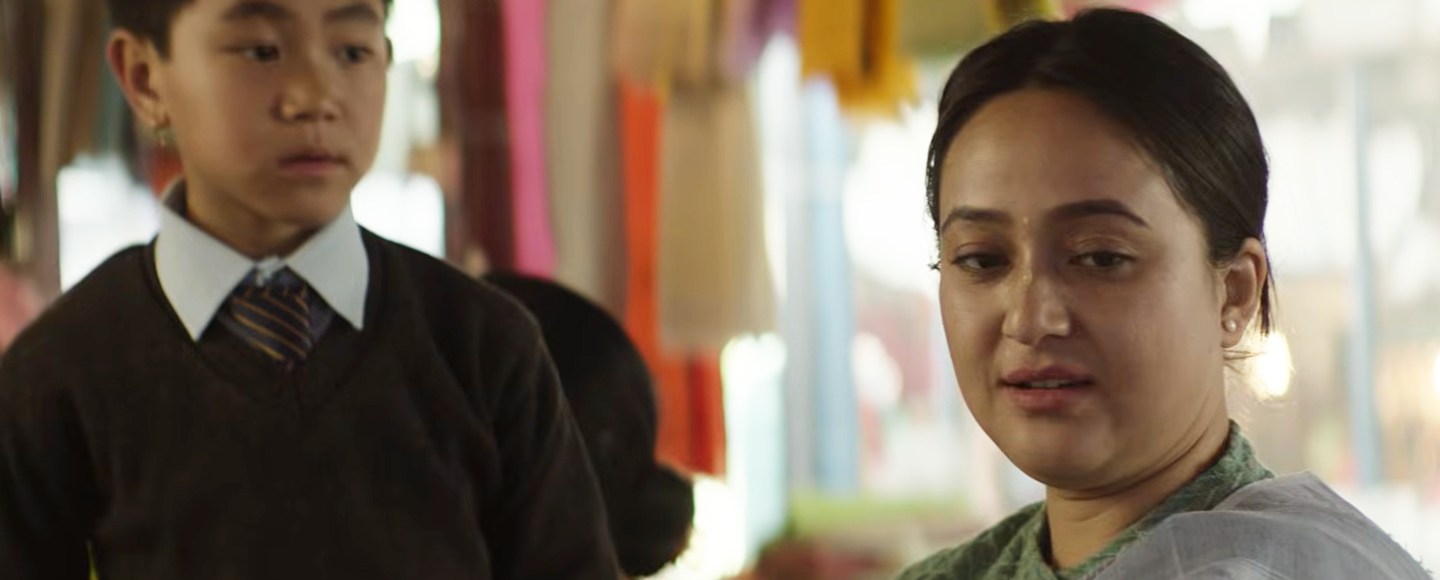
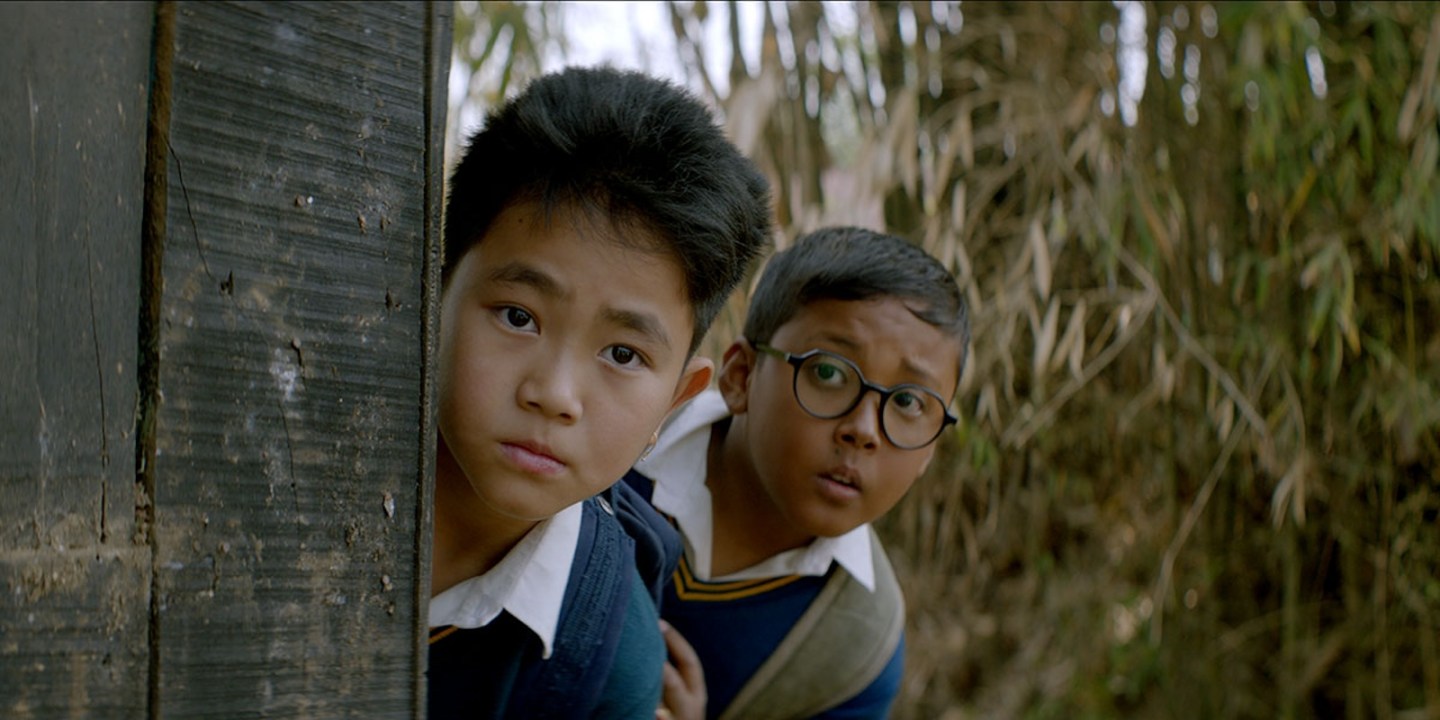
The film is seen through the eyes of Boong (played by Gugun Kipgen), a mischievous boy in Imphal whose father goes missing and is presumed dead. His close friend Raju (played by Angom Sanamatum), a Marwari boy, joins Boong on a heartfelt quest to find his lost father and reunite his mother with her husband.
Boong’s only memory of his father is a Madonna poster with the song, ‘Like a Virgin’, which Boong recites as a morning prayer at school until his teachers intervene. He later joins an English-medium school – an aspiration of his mother Mandakini (played by Bala Hijam Ningthoujam).
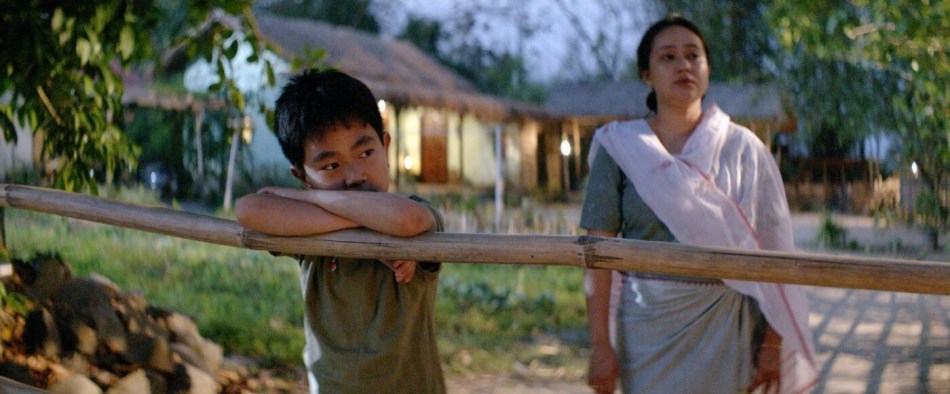
The film exposes Manipur’s patriarchal society by depicting how Mandakini is coerced to accept her husband’s death since her brother-in-law wants to claim her land; and the way she is disparaged by her sister-in-law for having a brief conversation with Raju’s father. The village chief, too, delivers a verdict intended to torment her as a single woman.
The narrative reveals how the state unofficially bans Hindi films, forcing people to watch pirated copies in secrecy. It also dwells on the ‘otherisation’ of people based on ethnicity.
Watching Boong made me reflect on my own childhood in Shillong during the 1980s, a time when insurgency was rising in the region. As a Bengali, I often felt like an outsider, much like Raju, who was called the ‘blackie outsider’ in a place that had been his home for generations.
The film stirred memories of peaceful mornings in the Northeast, where clouds lingered softly at the windows. I remembered my Manipuri friend Dolly Yumlumbum Devi, who left Delhi to return to her ancestral home in Imphal in 1990.
I also remembered the silent marches of naked Manipuri mothers and grandmothers demanding justice for a young woman’s brutal rape and murder at the hands of paramilitary forces in 2004; and the heartbreaking parade of two women in 2023, brutally violated by men wielding swords, touching them in ways that shamed the mountains themselves.
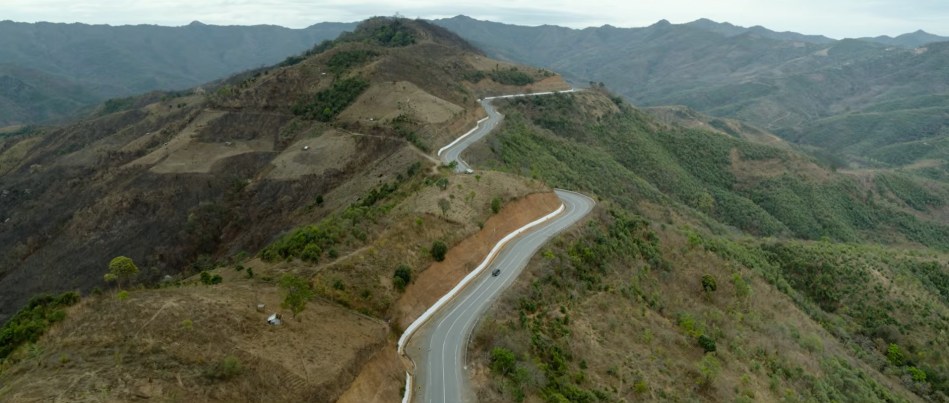
Manipur is a land of volatility and resilience. Amidst this chaos, the poignant story of Boong unfolds – him fleeing with Raju toward the Indo-Myanmar border in search of his father, meeting a compassionate transgender artist, and chasing after a girl who hits him with a slingshot, reminding him of his father Joykumar.
I watched the film’s climax in quiet awe as the horizon of Northeast India stretched before me. The last scene showing Boong burning what he once held so dear is like a scar that stays with you long after the flames fade.
Boong is a deeply moving film, beautifully shot, where the rich tapestry of Manipuri culture gently touches your soul – like gossamer over an open wound. The wounds of a part of India that still feels distant and misunderstood are vividly brought to life by Lakshmipriya Devi in her debut film, which deserves all the accolades it has received – including tributes from India’s Prime Minister Modi, West Bengal state Chief Minister Mamata Banerjee, and Manipur state Chief Minister Yumnam Khemchand Singh.
While accepting the BAFTA award at London’s Royal Festival Hall, the filmmaker drew attention to the ethnic conflict in Manipur, saying, “We pray for peace to return to Manipur. We pray that all the internally displaced children including the child actors in the film regain their joy, innocence and dream once again. We pray that no conflict is ever formidable enough to destroy the one superpower that all of us have as human beings, which is forgiveness.”

Mohua Chinappa is a poet and author. She runs a podcast called The Mohua Show.
Discover more from eShe
Subscribe to get the latest posts sent to your email.
 eShe
eShe 
0 comments on “‘Boong’: Manipur’s beauty, injustice and tumult depicted through a child’s gaze”