
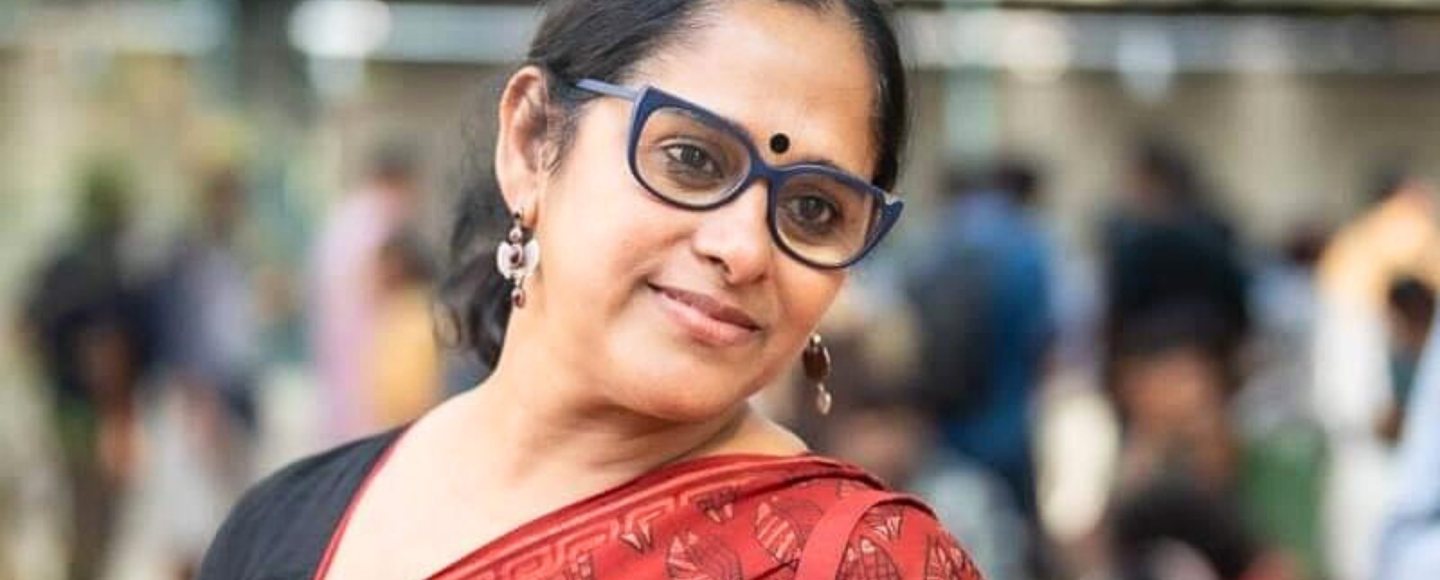

When acclaimed Kerala-born film and theatre personality Sajitha Madathil first set out to do her PhD from Jawaharlal Nehru University (JNU) over two decades ago, a glaring lack of academic scholarship about women in Kerala’s rich film and theatre history became the impetus for her to quit her studies and write a book about it.
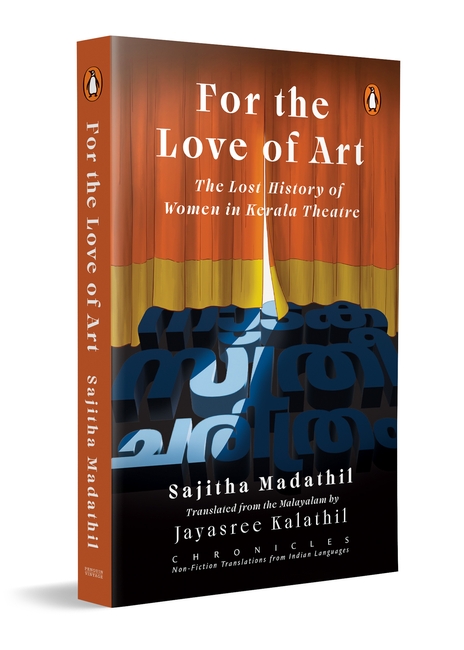
That book, Malayala Nataka Sthree Charithram (in Malayalam), was released in 2010. Fifteen years later – during which time the actor-playwright-producer went back to JNU and completed her PhD – her book is out in a new avatar, this time for worldwide audiences.
Translated to English by Jayasree Kalathil, Madathil’s new book, For the Love of Art: The Lost History of Women in Kerala Theatre (Penguin India, 2025, ₹399) is a riveting chronicle of women actors, dramatists and theatre artists in Kerala, and an invaluable addition to Indian film history and cultural studies.
Both an archive and an argument traced through a feminist historiography, it underscores the fact that written history is fundamentally incomplete without women’s voices, even though women in most creative fields are rarely given due credit for their contributions.
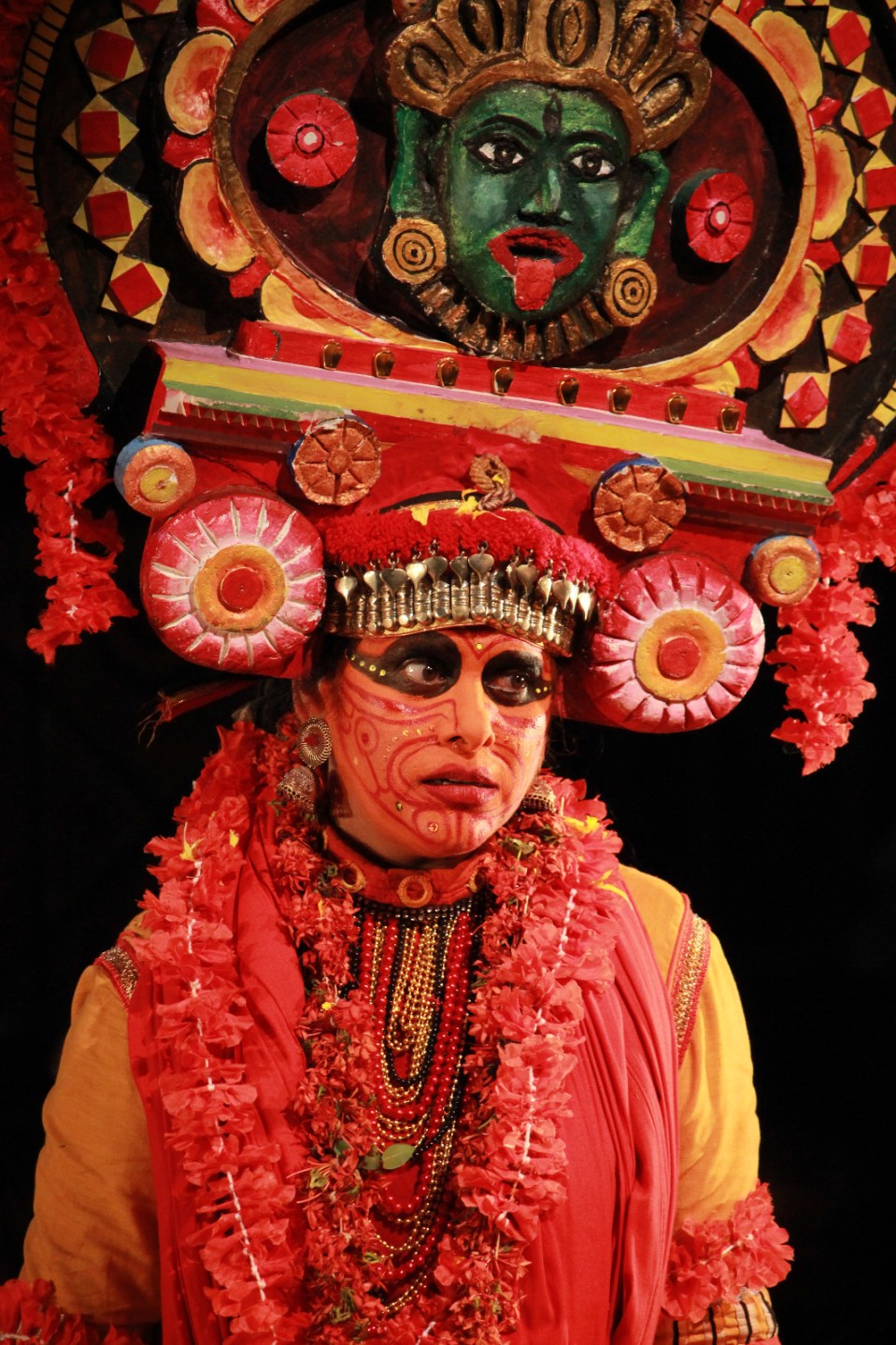
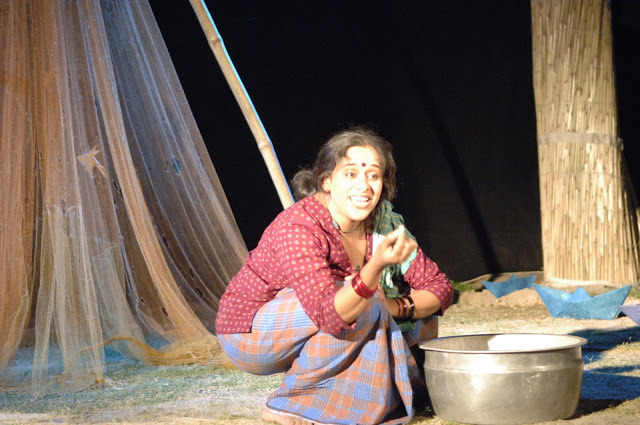
An award-winning film and theatre actor who began her career working in street plays, Madathil is one of the founding members of the drama troupe Abhinetri and of Kerala’s pathbreaking Women in Cinema Collective.
In 2020, she received the Kerala Sangeetha Nataka Akademi Award for contributions to drama. Besides several books and scripts, she has authored a memoir, Vellivelichavum Veyilnaalangalum, which was also published in 2025.
I chatted with her about her books and insights about women in theatre. Here are edited excerpts from the discussion.
Aekta Kapoor: You write that women were allowed to “act, not author”. What does authorship mean to you as a performer, writer and feminist, and why is reclaiming that space so crucial in theatre history?
Sajitha Madathil: Theatre is a live art, and text is important. Our perspective is revealed through text. That is why, generally, the one who writes plays gets more dignity than the one who performs the text. In the case of women, however, even those who wrote were not afforded that dignity. We have so many female playwrights in Kerala theatre from the early 20th century onwards, but they have been neglected in written history.
I really felt this absence during my research. When I talked to well-known male directors, they said things like, “Oh, those women just acted and made money and left; they made no contributions to theatre; that’s why their name is not there.” But when I went deeper into the subject, I realised women not only acted but also wrote plays and contributed in other ways to Malayalam theatre.
There are several women in Kerala’s theatre history – like Thottakkattu Ikkavamma, Kutti Kunju Thankachi, Madhavikutty, B. Saraswathiyamma and many more – who were very famous writers in their time, but their names are not mentioned even when their plays are performed or adapted years later.
While excavating these forgotten and fragmented histories, which story struck you as most emblematic of women’s struggle for artistic autonomy?
Many women artists in Kerala give up their profession due to family pressures or after marriage – which leaves them with a lot of sadness and regret. Had they just been doing this “for money”, as male directors claimed, why would they miss it so much? It was a genuine love for the art that drew them – that is what the book’s title signifies.
I met one such artist who had quit theatre after marriage. She told me she was very happy because her husband was a nice man and “looked after her”. Yet, she also shared that whenever she heard the noise and laughter from tempo travellers transporting theatre artists up the hill past her home, it left her with a deep sense of nostalgia for the fun and happiness she had left behind in the theatre world, and she longed to go with them in the bus or tempo. What a contradiction!
Another example is that of MK Kamalam, who starred in Malayalam cinema’s inaugural ‘talkie’ film, Balan (1938). She was only 15 at the time of the film release, and then she stopped acting after getting married and having children. Her husband was not supportive of her career and she faced a lot of domestic violence. Her three daughters were not told much about their mother’s acting achievements.
However, I had written her biography and had interviewed her several times. So, when she passed away in 2010 in her 80s, having acted in one last short film a couple of years earlier, I went to pay condolences to her family.
None of them wanted to speak about her. But I continued to sit there silently. Then, after a while, one of the daughters went inside and came back with a bag of newspaper cuttings about her mother’s work, which she almost threw at me. She said their father had burnt all other documentation related to their mother, labelling her a “bad woman” because she was an actor in films and theatre. These clippings were all they had about their mother’s career.
These are the kind of challenges women face when they set out to seek artistic autonomy.
Your book also talks about men playing women’s roles. What was the most surprising thing about women’s participation in Malayalam theatre that you found?
In Tamil theatre, from the beginning, both women and men would play female characters. But in Malayalam theatre, until the 1940s, it was mostly men who played women’s roles. In fact, these men also had to face a lot of harassment and ignominy due to this – they too were subjected to the same taunting, lustful gaze that women artists faced.
Veteran actor Mavelikkara Ponnamma told me about a time in the early 1950s when the famous female impersonator Ochira Velukkutty was unwell and asked her to play the important female character of Vasavadatta in his place.
Such was his stature as a female impersonator that she studied his body language as he performed on stage because the audiences were used to a certain depiction of womanhood through the male gaze. She told me, “First I became Velukkutty, and then I became Vasavadatta.”
Yes, I remember this anecdote from your book, and it really surprised me as well. What strikes me about your book is how it connects art with activism. You are one of the founders of Abhinetri and the Women in Cinema Collective. How do you see things changing for women in the industry?
From what young actors tell me, there is not much difference. One young actor narrated an episode when she was working with her friend’s father on set during a film shoot. One night after work, he invited her to join him for drinks in his room since he didn’t have company.
Though she repeatedly refused, he persisted in his demand. She was shocked that, despite being her friend’s father, he had the gall to take such liberties with her. I feel very sad when I hear stories like this.
But Kerala’s film industry is often celebrated for its progressive spirit. In fact, the Women in Cinema Collective was considered a gamechanger for protecting women’s safety and rights.
Yes, there were policy changes; we implemented POSH committees too. But the attitude is still very sexist. In fact, they don’t hire actors like me because they think I am a headache. Because I speak up against this kind of behaviour.
But I take hope in the fact that more people are becoming aware [of sexual harassment in the industry], and women are talking about this openly, questioning these men, saying “no” to them. That change is visible.
I feel the younger generation is better – the boys still ask for sex, but if the girls refuse, they accept it and move on. It is the middle-aged and older men who continue to be predatory.
Your book honours women who kept performing despite stigma and structural sexism. How do we build systems within theatre and cinema that ensure women are supported?
Being an actor is not a negative thing, but women have contributed a lot more to theatre and film in other ways as well – which was not recognised. That’s what I’m asserting through this book: that women have been, and still are, writing plays, producing and funding theatre – not just acting.
When I first wrote the book in 2010, the idea was to bring out a history book naming lots and lots of women in Kerala theatre and film. And it was completely ignored by people in Kerala theatre! It’s only now when the book has come out in English that so many of them are showing interest in it and talking about it. I would say that’s a sign of positive change.
What has been your greatest inspiration in your own journey despite all these challenges?
Passion. That’s it.
Lead image credit: Dijumon Komanthakkal
Discover more from eShe
Subscribe to get the latest posts sent to your email.
 eShe
eShe 
0 comments on ““Women have contributed in many more ways to theatre than just acting” – Sajitha Madathil”