
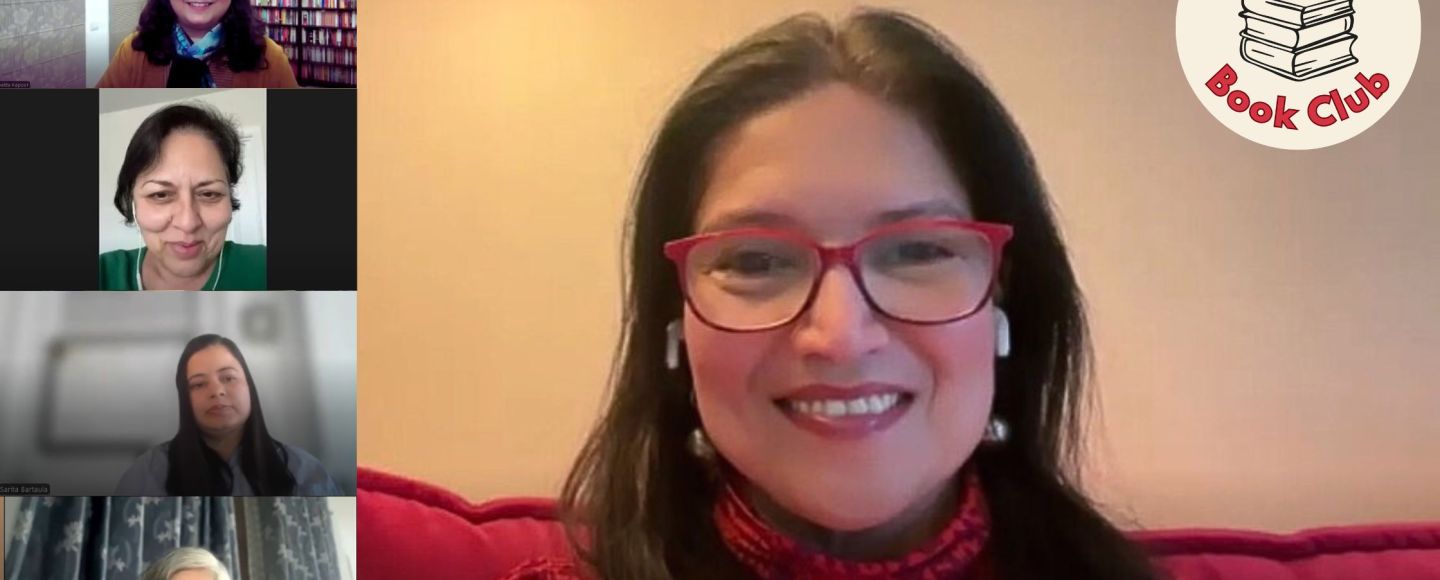

Female desire and sexuality, reclaiming agency through unconventional choice, and the importance of solitude for self-discovery. These were some of the topics that came up during eShe’s inaugural Book Club discussion featuring award-winning author Sonora Jha’s new novel Intemperance.
The discussion, moderated by Aekta Kapoor, founder and chief editor of eShe, brought together readers from across time zones to explore themes of female desire, ageing, self-love, disability, and challenging societal norms. The discussion brought up how Brahminical patriarchy intersects with disability, caste and gender, and the value of messiness and complexity in women’s narratives.
Important questions were raised: what happens when women refuse to age into invisibility? Is there any prerequisite to enjoying desire or sensual pleasure? What if women were the main characters in their own stories and refused to follow someone else’s script?
Sharing their opinions on the subject, eShe Book Club members agreed that women can and should reclaim their narratives around ageing, desire and love. That self-love is a journey that allows for greater capacity to love others. That female desire doesn’t diminish with age but is often suppressed by societal expectations, and that making unconventional choices publicly can be an act of defiance against patriarchal norms.
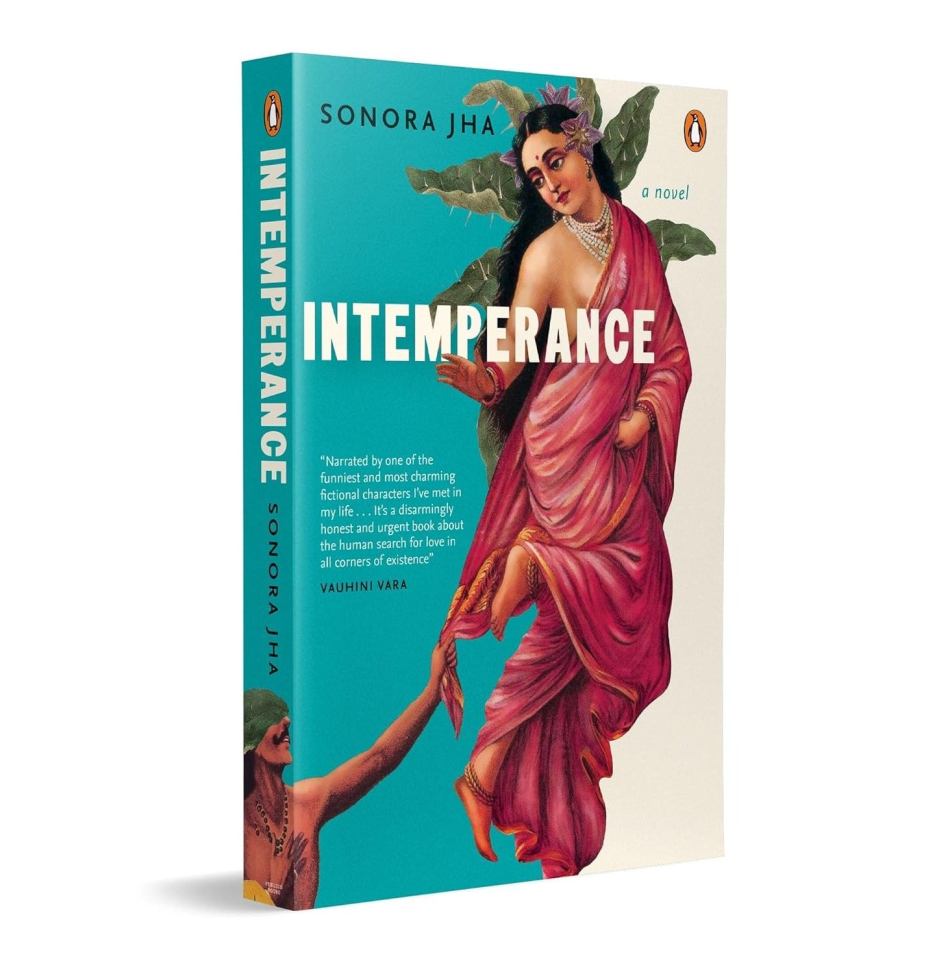
Professor at Seattle University, Dr. Sonora Jha, who was born in India and is now based in the US, has authored four books. Her latest novel Intemperance (2025) centres around a 55-year-old Seattle-based woman who decides to host a swayamvar (ancient Indian groom-choosing ritual for princesses) for her birthday. Jha explained that this concept emerged from conversations with single friends in midlife about what kind of partners they might want. The swayamvar becomes a way for the character to assert agency and challenge societal expectations about older women’s desires.
The Book Club members’ reactions to this premise ranged from amusement to approval, with comments like “Why not?” and seeing it as “taking the power back”. Jha described wanting to create a character with more audacity than herself, one who would publicly challenge norms around ageing and desire. The swayamvar serves not just as a way to find love but as a public declaration of self-worth and a refusal to follow societal scripts about how women should age.
This discussion is also available as a podcast on Spotify.
Author and doctor Shalini Mullick asked Jha, “How did you decide the tasks or feats for the men competing in the swayamvar?” Jha responded: “I kept writing without knowing what the tasks would be. As each character emerged, I considered what they would want and how that would intersect with the protagonist’s desires. The tasks became less about the specific feats and more about what performing them revealed about the men.”
A significant theme in the discussion was female desire, particularly for women beyond reproductive age. Jha emphasised how society often tells women that their sexual relevance ends with menopause, yet many women discover greater freedom and self-knowledge in midlife. The book portrays the protagonist enjoying sensual pleasures alone – from food to fantasy – challenging the notion that desire requires a partner.
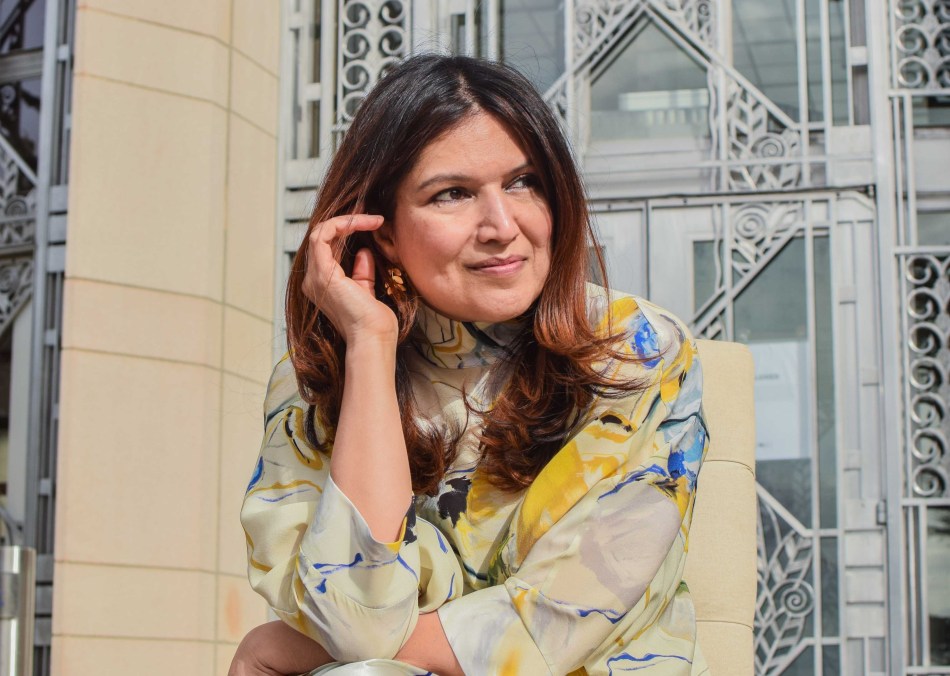
Jha spoke passionately about the importance of solitude in her own life, particularly during the pandemic, which allowed her to develop a rich interior life without constant social demands. She described how cultivating solitude actually made her more present and generous with others, contradicting the common fear that being alone equals loneliness.
The discussion highlighted how women are often denied solitude because of caregiving responsibilities and societal expectations. Audience members agreed that the only prerequisite for enjoying desire is being comfortable with oneself, though many noted that women often forget how to prioritise their own pleasure after years of putting others first.
As Jha said, “Society tells us our relevance was in producing children, and once that’s over, we’re supposed to step aside. Media celebrates youth while ignoring how women in their 40s, 50s, and 60s often feel freer with their bodies. The intersection with menopause is important – women are told they’re ‘drying up’ when research shows that doesn’t have to be the case.”
Shailaja Rao commented: “Many of us deny ourselves pleasure, held back by a deeply ingrained belief that we must always sacrifice for others before tending to ourselves. At 60+, I am a lot more different (thankfully)…”
Another topic of discussion was about the protagonist having a disability and the book’s representations of same-sex relationships, inter-caste love and transgender characters. Jha discussed how her own experience growing up with polio in a Brahmin household informed her understanding of how disability is often viewed as “impure” in upper-caste contexts. She explained that Brahmin women are often the first oppressed within Brahminical patriarchy, serving Brahmin men while enjoying certain privileges over lower-caste individuals.
The book explores how standing up against one’s own oppression can create solidarity with others facing different forms of marginalisation. Jha emphasised that including queer and transgender characters in the novel wasn’t activism but simply reflecting her own reality – these were the communities that supported her when she made difficult choices that led to her family estrangement. She noted that these representations might seem political only because such stories are typically invisible in mainstream narratives.
When asked whether things are getting better or worse regarding the fallout of Brahminical patriarchy, Jha responded: “It’s both. When things start to get better, the death throes of patriarchy lash out. We take three steps forward and one step back, but that step back feels huge. In India, there’s currently a rise in anti-Dalit sentiment and crimes, showing how these systems continue to harm.”
Jha also discussed several technical aspects of her writing, including her decision to leave the protagonist unnamed to allow readers to see themselves in the character. She explained her choice not to translate South Asian words and terms, noting that readers can use Google or context clues –just as she did growing up reading Western books with unfamiliar references.
The discussion touched on the book’s reception. “I was pleasantly surprised that people want love stories, especially different kinds of love stories, during times when so many horrible things are happening in the world. It shows that embracing love can manifest in different ways, including love for humanity that drives us to want to change the world,” Jha said.
In conclusion, she stated she would like the book’s readers to sit with this question: “What if I was the main character in my own story?”
Join eShe Book Club to connect with other readers. Share recommendations for books by contemporary South Asian women writers for future discussions.
Discover more from eShe
Subscribe to get the latest posts sent to your email.
 eShe
eShe 
0 comments on ““People want love stories during times when so many horrible things are happening in the world””