

By Neha Kirpal
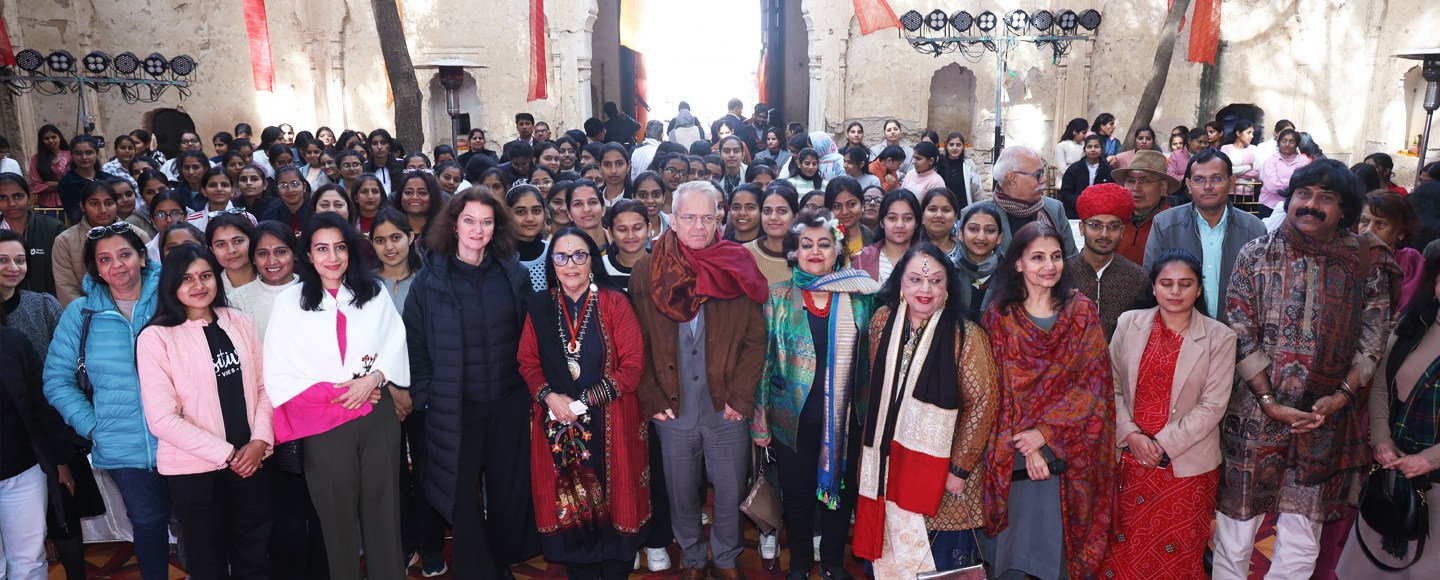
“In our Sanskrit culture, everything vibrating in this universe is female, and all movement is female energy,” said Vedic scholar, singer and heritage conservationist Shruti Nada Poddar, speaking at the recently concluded Vedaaranya Heritage and Healing Festival (VHAH Fest), in Ramgarh Shekhawati.
“I have learnt gratitude, humility, faith and trust from the women of Shekhawati,” she added. Poddar is the founder of Shruti Foundation, which partnered with UNESCO for the event, supported by the Ministry of Tourism and Culture, Incredible India and the Rajasthan Foundation.
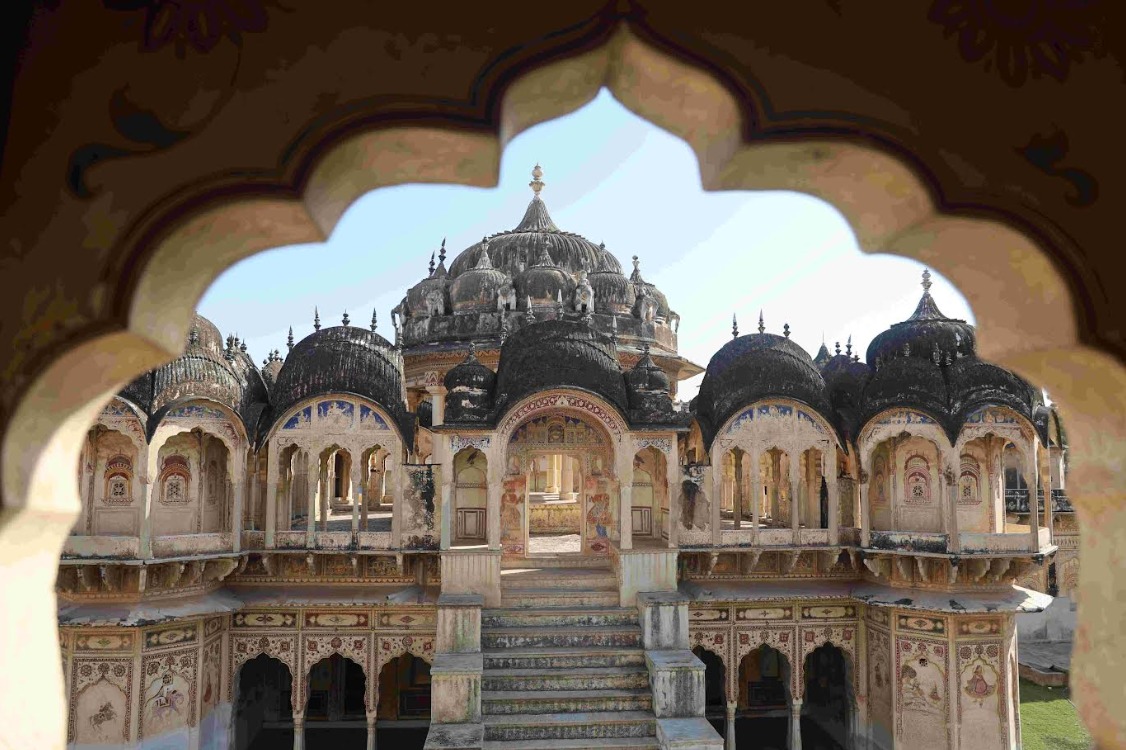
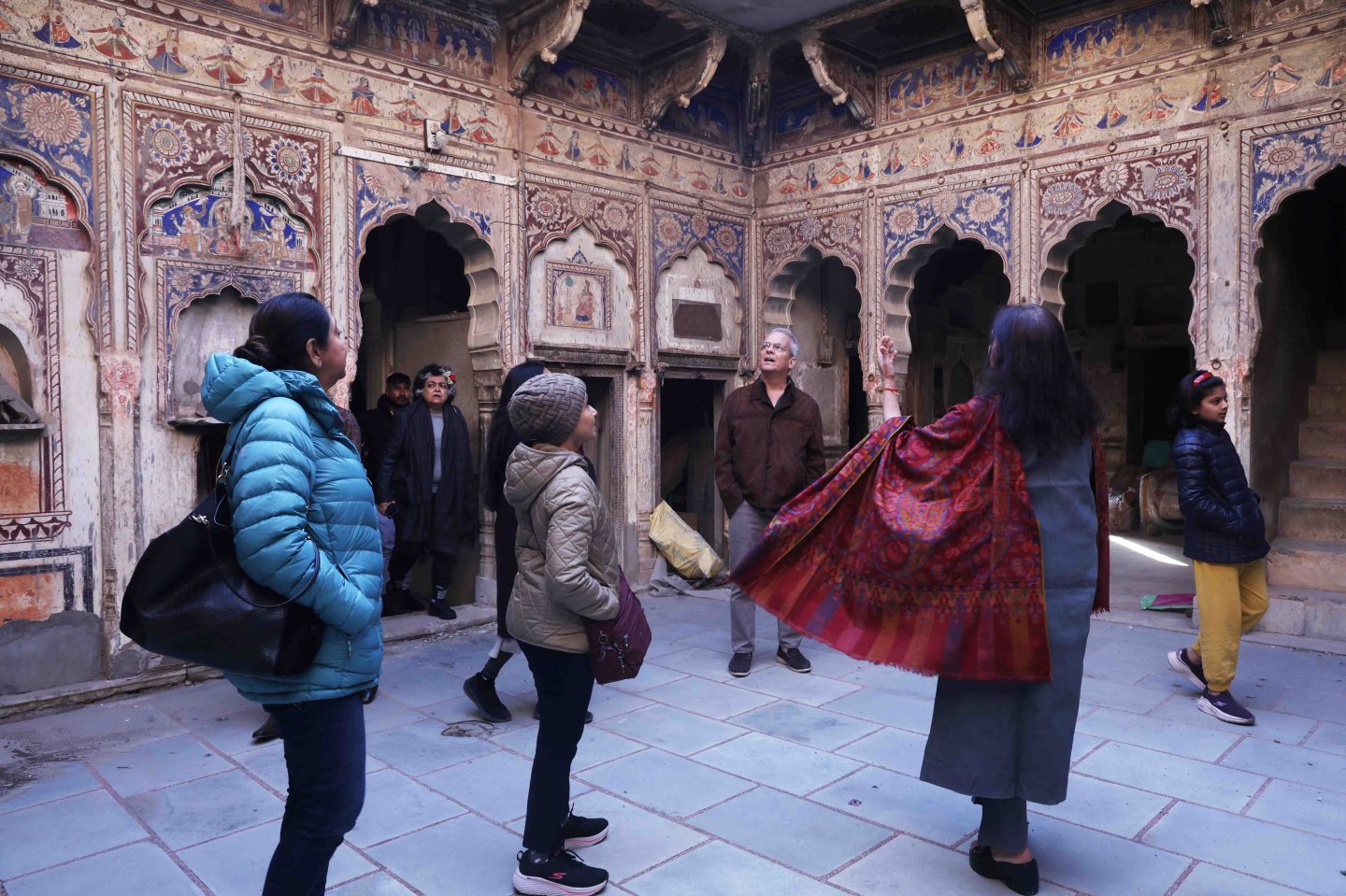
The five-day festival marked 10 years of cultural and community-led work in Shekhawati, a region known for its frescoed havelis, stepwells and the historic Ramgarh Fort.

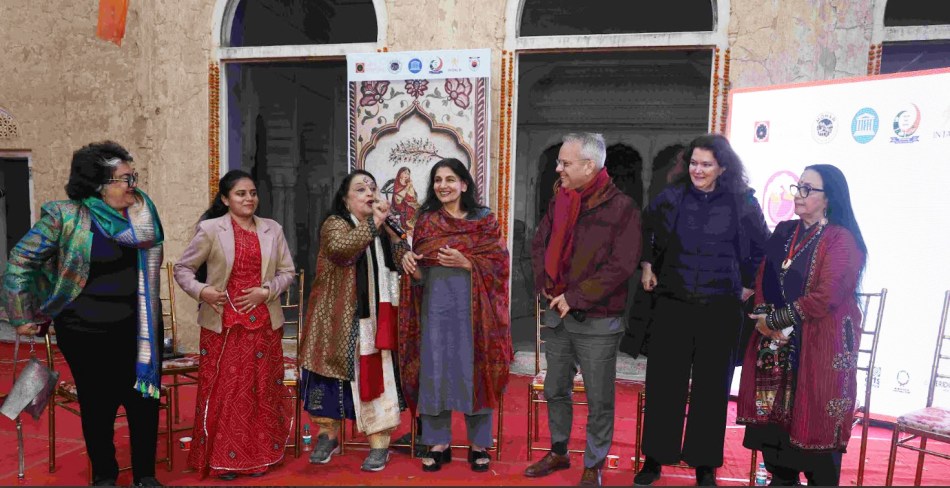
One of the highlights of the fest was a panel discussion with the theme ‘Women in Heritage’. Led by Dr Tim Curtis, director, UNESCO Regional Office for South Asia, the panel was moderated by art historian, author and curator Dr Alka Pande.
Speakers included Maharani of Rajkot HH Kadambari Jadeja; musician, theatre and film celebrity Ila Arun; president, International Council on Monuments and Sites (ICOMOS) India Dr Rima Hooja; world-renowned musician and cello maestro Saskia Rao-de Haas; and playwright and author Dr Rama Pandey; besides Poddar.
Held in the quaint, pale-yellow ramparts of the Ramgarh Fort on a chilly January morning – with pigeons flying in and out of ancient crevices – the panel was well attended by audiences as well as local school and college students. What most of the speakers had in common was the fact that they have all worked on India’s intangible, living heritage – one of the country’s greatest strengths.
Dr Curtis began by explaining how women have historically always been at the forefront of the intergenerational transmission of safeguarding knowledge systems as well as the conservation efforts of built heritage. “Women and their informal roles are often invisible, have not been spotlighted, and were not even considered heritage earlier,” he said.
He added that there has been a breakthrough in this area, as a lot of women are active in the heritage profession now. “While there is gender bias all over the world, India is at an advantage, as skilled craftsmen and workers are often missing in many other countries,” he added.
Kadambari Jadeja works primarily with women in her community, restoring heritage properties in Rajkot. At her NGO, Bhagini Seva Foundation, she works with about 500 women at the grassroots level, bringing about a change in society through several traditional practices, such as Talwar Raas, safa tying, wearing dhotis, having competitions on authentic recipes and connecting with nature.
Dr Rima Hooja, whose work primarily focuses on women’s role in history, said that through policy decisions and research, we need to work hard towards making a place for our intangible cultural heritage in the international community as well as make it a part of our everyday lives.
Saskia Rao-de Haas, who is also a cultural entrepreneur, talked about women in music heritage. “Traditionally viewed as mothers and caregivers, women have been the song keepers of every culture. In India, women were the ones – the courtesans and devadasis – who kept the north Indian classical music alive after the British left. Meera, the mystic from Rajasthan, devised poetry and music which is still sung today. Women musicians like us stand tall due to the sacrifice of all these women before us,” she said.
Rao-de Haas also talked about the progressive change that has taken place from the late 20th century until the early 21st century, where many female sitarists and tabla players have entered the domain.
Dr Rama Pandey, who has worked with the transgender community, talked about how she works at the intersection of culture, traditions and folklore, in order to work towards inclusivity in civil society. Her sister, Ila Arun too, regularly supports and celebrates women’s voices. “I salute the extraordinary women of Rajasthan, and feel blessed to have been born here,” she exclaimed.
With the help of Poddar, Priyanka Solanki, a young beauty expert from Shekhawati, has created a range of herbs that one can use in their daily lives. “I wanted to set an example that women can do whatever they want to,” she beamed.
Other highlights at the five-day festival included ‘Women by Raja Ravi Varma: How They Shaped India’, an exhibition of a massive collection of Raja Ravi Varma’s oleographs highlighting the powerful and evocative portrayal of women by the artist.
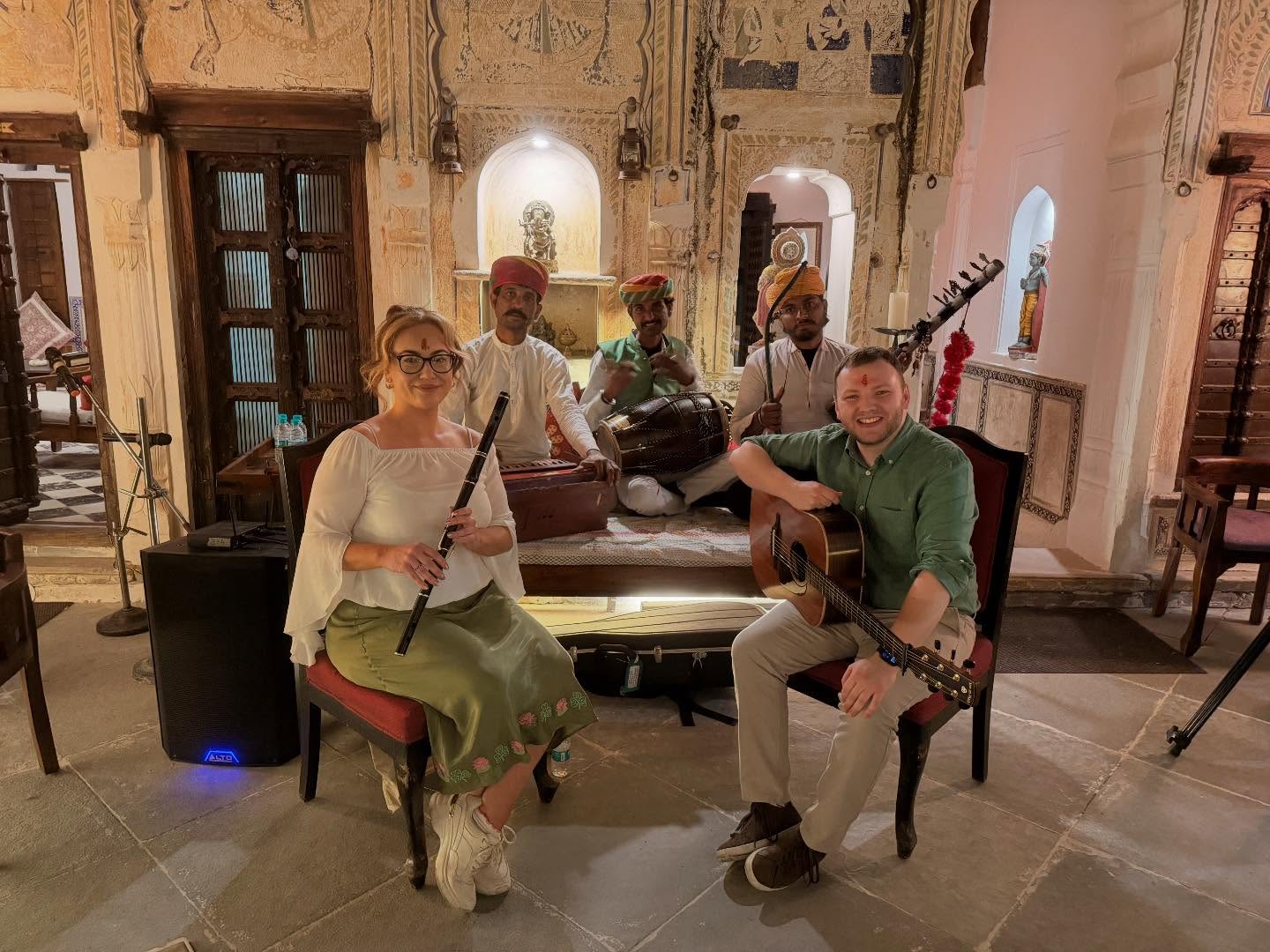
Irish musicians Siobhan Molloy and Jack Warnock opened the festival proceedings on the first evening, and performed alongside local Indian folk musicians in the MOHAR (museum of heritage and art at Ramgarh) Haveli, one of the venues for the festival.
Another interesting session was Mind, Mood and Food, a lifestyle chat with health transformation coach Vidhi Beri, in which she talked about secrets, daily habits and how we can give our mind and body a daily dose (dopamine, oxytocin, serotonin, endorphins) of happiness.
Apart from that, the festival also hosted two book launches, Devi and Her Avatars by Dr Alka Pande as well as Ila Arun’s autobiography, Parde Ke Peechhey. The evenings had some special programmes too, such as Dastangoi on the short life of Bollywood actor and poet Meena Kumari performed by Fouzia Dastango.
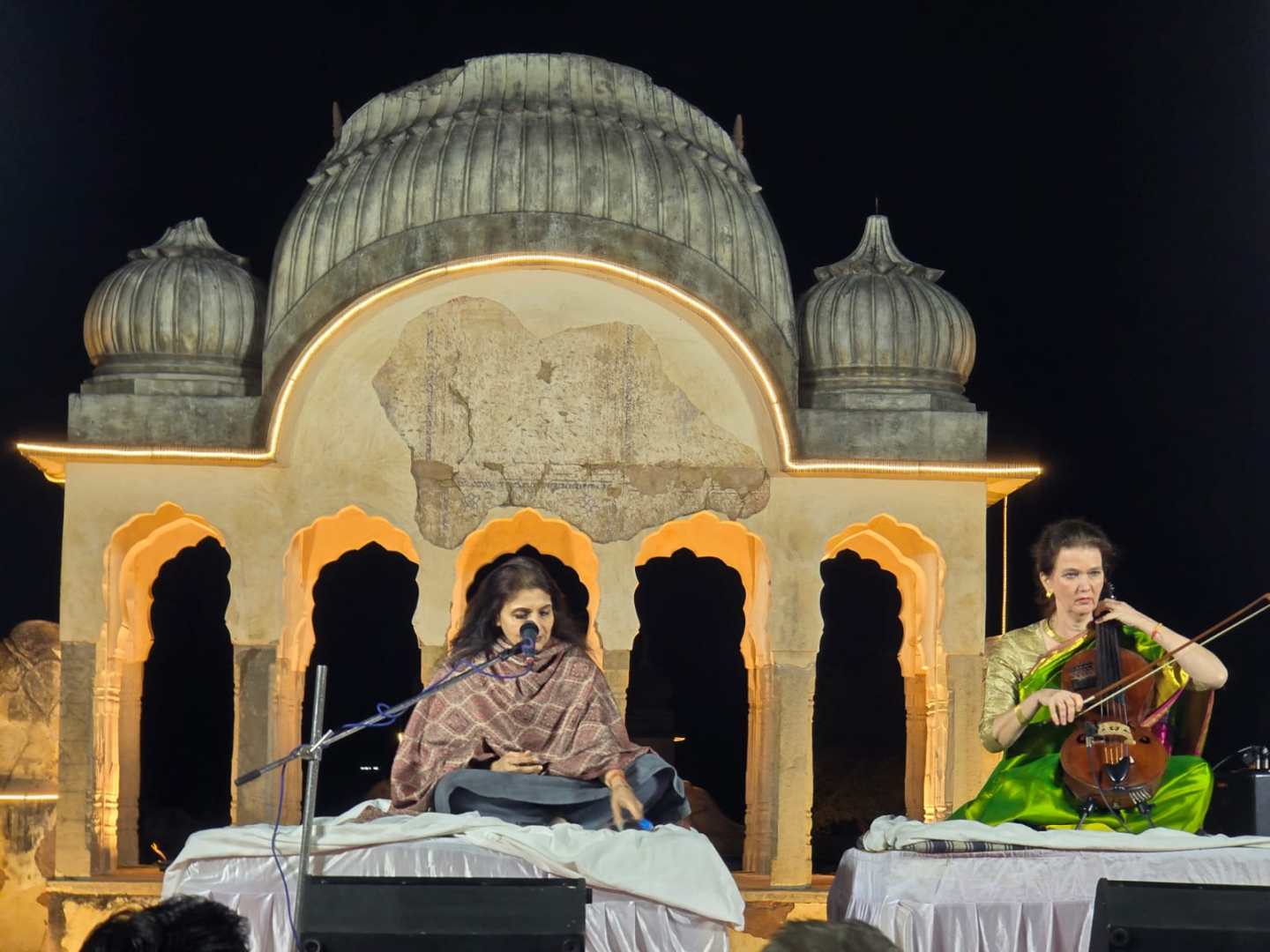
Another mesmerising evening saw a jugalbandi of the cello and Vedic chants by maestro Saskia Rao-de Haas and Shruti Poddar – with a majestic setting of the well-lit stepwell Sethani ka Johad in Churu.
The 10th VHAH Festival wrapped up after five evocative days of art, music and conversation, reaffirming Shekhawati’s legacy as India’s largest open-air art gallery and a former seat of Sanskrit learning.
Discover more from eShe
Subscribe to get the latest posts sent to your email.
 eShe
eShe 
Good one….
LikeLike