

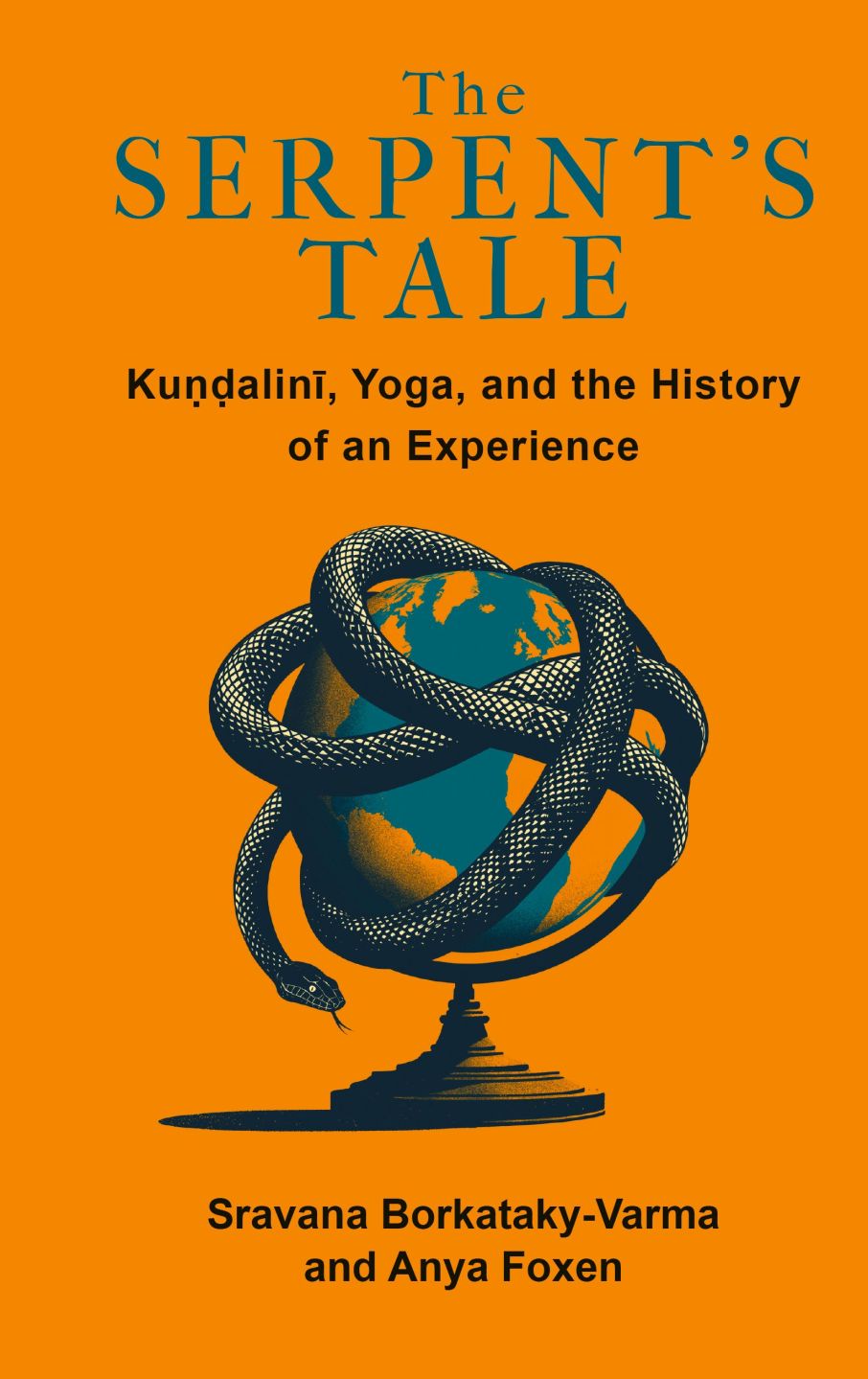
In a world eager to consume spirituality without context, a new book The Serpent’s Tale: Kundalini, Yoga, and the History of an Experience (Columbia University Press, ₹699) by Sravana Borkataky-Varma and Anya Foxen serves as a necessary reckoning.
The authors trace Kundalini’s long, unsettled journey from its tantric roots in South Asia to its reinvention as a global, market-friendly practice. Moving between history, philosophy and lived experience, they expose how “Kundalini yoga” has been secularised, commodified and stripped of cultural memory, even as it continues to promise transformation to mass audiences worldwide. Posing unsparing questions about authenticity, appropriation and power, the book is a nuanced, cautionary exploration of Kundalini.
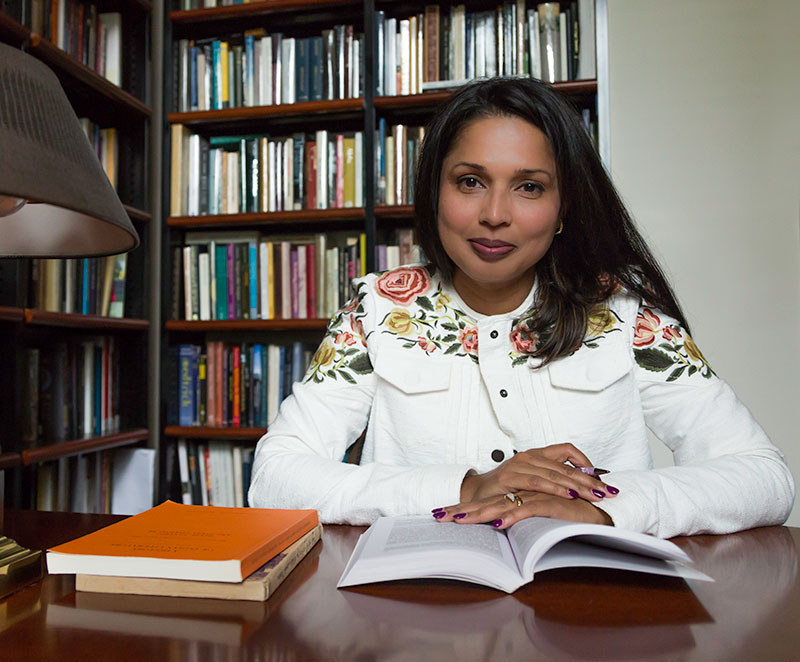
Sravana Borkataky-Varma is an instructional assistant professor of comparative cultural studies at the University of Houston as well as a research affiliate at the Center for the Study of World Religions at Harvard Divinity School. Her coauthor Anya Foxen is associate professor of religious studies at California Polytechnic State University, San Luis Obispo.
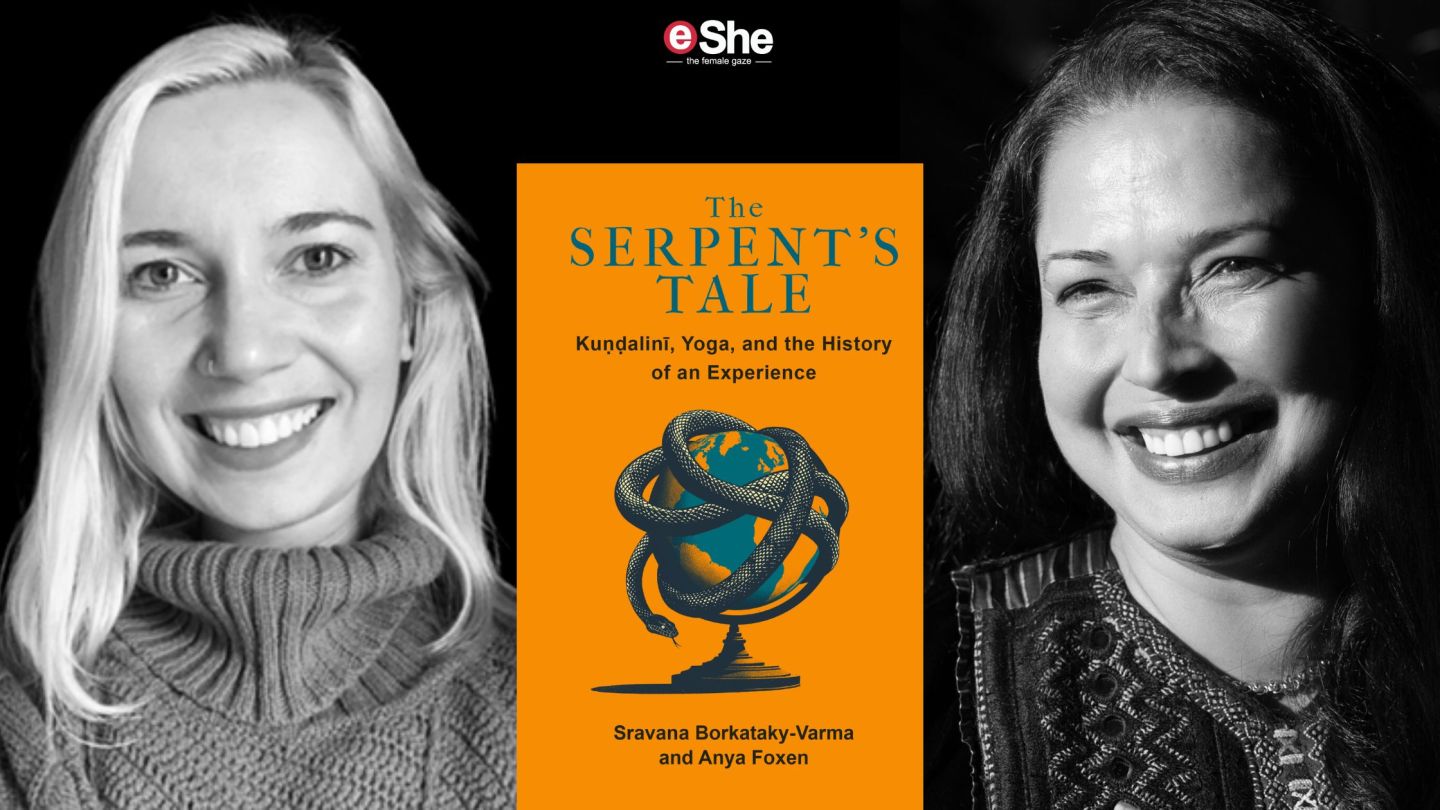
In this excerpt from the book, published with permission from Columbia University Press, Borkataky-Varma shares her own connection with Kundalini as both a practitioner and scholar.
By Sravana Borkataky-Varma
Walter H. Capps writes, “What the scholar does within the subject-field depends upon where he is standing. Where he stands influences what he discovers. Furthermore, where he stands and what he discovers are implicit in what he is trying to do.”
This book is a product of a “stir-churn-rise”. I am a scholar-practitioner of Shakta tantra. I am from Assam. I was initiated into the Kamakhya lineage at the age of eight, and at the time of writing, I am 50 years old, which means I have been a practitioner for 42 years and counting.
It was after 27 years, in 2010, that I started my PhD studies in the United States. From the first day of joining the PhD program, I became intensely aware of a large constituent of people who seemed to be obsessed with Kundalini.
To be perfectly honest, this was rather perplexing as the tradition of which I am a practitioner seldom uses the term Kundalini, and there are zero “Kundalini yoga” practices. I identify myself as a woman, and so I chose to focus on Kundalini rising in women’s bodies, including mine, in the ritual world of Shakta tantra as a way of resolving this confusion.
Such a double project requires a double lens. American religion scholar Jeffrey J. Kripal repeatedly makes the radical claim that one’s personal religious experiences and professional scholarship are not mutually exclusive, that they deeply inform one another, and so to understand one requires an understanding of the other.
In my own terms, I would say that when a student embarks on a journey to study religion, she either loses her religion or she must find a way to transform it. If she manages to do the latter, she finds a rich new meaning in her religious practices. Such a field of study can lead to a deep-seated, honest union of the personal and the professional.
This was the beginning of the “stir” within, a journey that would unravel multiple facets of my existence and turn my investigation inward. I speak Assamese, Bengali, and Hindi fluently. I am a Brahmin woman. I am an initiated member of Shakta tantra. These simple existential facts have opened all sorts of doors for my research.
Still, it is important to note that my access is geographically curtailed. For example, I do not believe I would have achieved the same amount of access in other parts of India as I enjoyed in Assam and West Bengal. It would have taken many years and formidable language skills to gain that access, if at all.

Other complications quickly arose. Soon after I had access to these communities, for example, I was faced with the classic dilemma that many scholars of religion are faced with: Am I an insider or an outsider? I soon discovered that it was one of the most challenging questions I would have to answer.
My quest did not fit into a simple split of either/or. The more I gained access to these communities, the more I felt conflicted. The question of belonging and boundaries ran deep. Every fieldwork trip (and I have made many) intensified this tension. The scholar and the practitioner within me fought and argued.
The scholar recognised that the groundbreaking information I was gathering was available to me only because I was a practitioner. Having said all of that, the dilemma inherent to being a scholar-practitioner had three additional layers of complexity.
First, I was born into the tradition. Second, I was initiated at the age of 13. I did not know back then that I would pursue an academic career researching the living tradition of Kundalini. How could I have? Third, the guru who initiated me was dead. Thus proceeded the “churning”.
After much contemplation and soul-searching, I have come to define myself as an insider with an outsider’s lens. The “insider” has helped me enormously in gaining access and getting accepted in communities that are governed by secrecy and in which knowledge of certain rituals and practices are kept gupt, that is, “secret”.
I believe this orientation has given me some modest success in transmitting the voices of Hindu Shakta tantric adepts and practitioners in a way that is more faithful to what they do and believe. Many of them have been relegated to the margins of modern Indian society, often misrepresented and maligned by modernist, rationalist, and mainline voices.
My objective in this research work is to allow these silenced voices to be heard. My academic training provides me with a strong double lens. From one side, I see through an “outsider lens” that is attuned to the historical and constructed nature of the tradition.
From another side, I am deeply sympathetic to the symbols and mythologies of the tradition as possible translations or mediations of some other reality or aspect of being.
This double theoretical framework enables me to look at the traditions in question critically and to challenge some of their accepted norms and narratives, even as it also empowers me to look at academic methods critically and to challenge some of their accepted norms and narratives. It is an ongoing two-way journey.
I began by saying that Kundalini was not something I understood to be part of my tradition when I embarked upon my studies. Needless to say, this view has been qualified in important and complex ways. One of the most challenging tasks I was given along the way was defining “tantra”. As a practitioner, it had never occurred to me to do this; as a scholar, I was told that I must.
And so, after a good long while, and drawing upon a number of other scholarly definitions, I arrived at the following. I consider a ritual space, philosophical thought, and/or a text to be tantric, if that space/thought/text engages the following features:
1. The human body is not rejected, including its fluids (those things so often considered most impure); in fact, these are essential.
2. There is an activation of subtle esoteric anatomies – chakras, naḍis, Kundalini energy, and so on – which become the catalyst to engage with the divine, with the intention of dissolving all binaries, such as sacred and profane, birth and death, beautiful and ugly, male and female, and so forth.
3. The practitioner engages with ritual tools – such as mantra, maṇḍala, and yantra – to transcend the divide between microcosm and macrocosm. The divine macrocosm resides within the microcosm of all beings. So, we are the divine as much as the divine is us.
4. All the above features can be put into the service of liberation, which is to be achieved while living – that is, jivanmukti.
Arriving at these four bullet points was part of the “rise” – the consummation of what it has meant for me to be a scholar of my own tradition. Kundalini is, in central ways, a tantric concept, and so I present this definition as a way to frame the key assumptions that inform how my coauthor and I approach not only the sources from which Kundalini emerges, but the places we ultimately understand it to be going.
Excerpted from The Serpent’s Tale by Sravana Borkataky-Varma and Anya Foxen. Copyright © 2025 Columbia University Press. Used by arrangement with the Publisher. All rights reserved.
Discover more from eShe
Subscribe to get the latest posts sent to your email.
 eShe
eShe 
0 comments on “Losing and finding my religion: a scholar of Kundalini reconciles her tradition and research”