


By Vaishnavi Roy
When a marriage breaks, the world splits into two, but what happens when the split is not just emotional, but geographical? When parents do not simply live apart, they live apart in ways that rearrange a child’s sense of belonging?
Divorce rarely stays within the walls of neighbourhood. It stretches across cities, highways and sometimes entire states and countries. At the fault line of this collision, and in the middle of this choreography of loss, are children who learn that love can exist in fragments, and who grow up living in pieces.
Nobody counts these children. There is no census form that asks if you have two bedrooms in two cities, or if your childhood fits inside a suitcase. There are no demographic categories for those who grow up on train or flight tickets and court papers. But they exist in growing numbers.
India’s urban divorce rate, though low by global standards, has been climbing steadily. According to the National Family Health Survey, divorce and separation cases have doubled in urban India over the last decade, driven by job mobility, gender role shifts, and changing aspirations. Where these trends intersect, a new reality emerges: children whose parents separate not within driving distance, but across time zones and flight schedules.
This isn’t about luxury lifestyles or the curated Instagram feed of “jet-setting kinds”. This is about what psychologists call chronic transition stress, a state of being perpetually between places, never fully settled.
Research in the International Journal of Indian Psychology confirms that children of divorce in India show higher rates of anxiety, social withdrawal, and feelings of guilt compared to peers from intact families. When parents live in different cities, this stress is compounded by repeated relocations and disrupted routines.
Imagine a life where every visit feels like a check-in counter. Where birthdays come with train schedules. Where summer holidays are negotiated like trade deals. For these children, even love becomes logistical. Time with one parent means time away from the other. Every embrace carries the weight of absence.
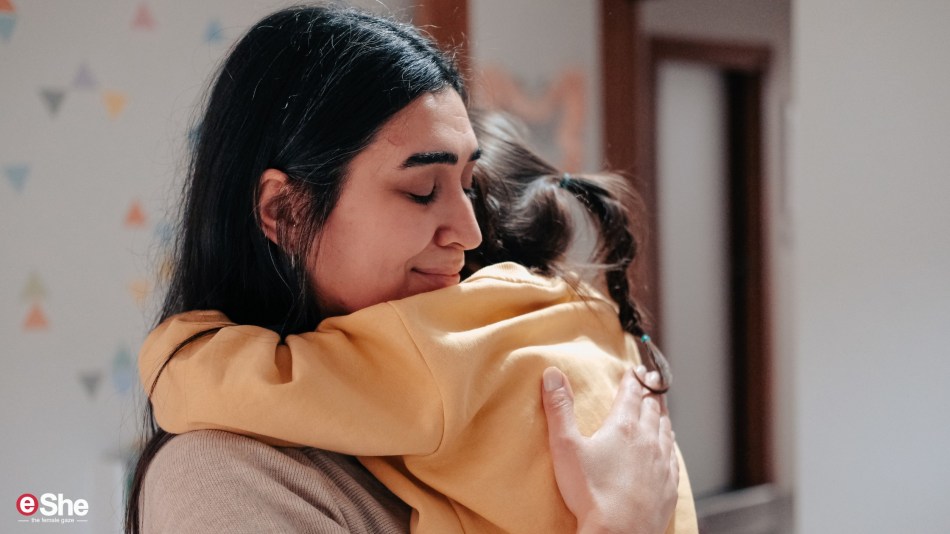
To the outside world, it might look aspirational: kids who travel, who speak with confidence about different cities, who have two sets of friends. But peel back the surface and you see the emotional economy of this arrangement: children trading stability for access and predictability for presence.
Research backs this. A recent study on Indian families found that children who shuttle between cities after divorce report higher emotional exhaustion and difficulty forming long-term attachments. While many adjust, the process often comes at a psychological cost – one that’s rarely acknowledged.
WhatsApp calls and FaceTime can never replicate the warmth of presence, the casual intimacy of a shared meal, the grounding touch of a parent’s hand on the shoulder. And when parental conflict is high, as often happens in contested custody battles, these gaps widen. Studies show that in such cases, children internalise guilt, believing they are the reason for the split.
Belonging is one of the most fundamental human needs. Childhood is when that need becomes a foundation. But how does a child belong when ‘home’ is not a single story, but two competing narratives?
Why are we silent about this? Perhaps because mobility is glamourised. Perhaps because divorce is framed as liberation – sometimes for very good reason. But somewhere between the progress and the practicalities, a child disappears from the narrative. We talk about custody as a legal arrangement, not an emotional ecosystem. We discuss maintenance and visitation rights, not continuity and attachment.
And this silence has consequences. The Supreme Court of India recently reaffirmed that children of separated parents have a right to the love and affection of both parents – a reminder that custody is not just about legal boxes but lived bonds.
Yet on the ground, a study by Ekam Nyaay Foundation found that only 25 percent of divorced fathers in India actually receive court-granted visitation. Which means children are often cut off from one parent, not just by distance but by dysfunction, conflict, or a history of abuse.
There is no neat fix. But there are principles that can soften the fracture in cases of shared custody:
Continuity over geography: Even when parents live apart, predictability matters. Shared rituals – a bedtime story read over video call every night, similar rules in both homes – help anchor a child.
Therapy that travels: Virtual counselling can provide a thread of stability when geography cannot.
Legal frameworks that prioritise mental health: Custody arrangements should include psychological support, not just visitation schedules.
And above all, parental maturity: Parenting is not a competition. The goal is not equal time. It’s equal love.
What does home mean for a child raised in fragments? Is it an address? A city? A bed they sleep in twice a month? Or is it something smaller, more fragile: a voice on the phone that sounds the same no matter where you are?
We cannot stop divorces. We cannot stop relocations. But we can stop abandoning these children to silence. Adjustment is not healing. Adaptation is not belonging. If we fail to understand this, we risk raising a generation fluent in many things except the language of home.

Vaishnavi Roy is an award-winning author and mental-health advocate based in Delhi. Follow her on Instagram.
Discover more from eShe
Subscribe to get the latest posts sent to your email.
 eShe
eShe 
Sometimes relationships don’t work and result in separation. To me, this is better that kids who are in marriages that are a sham. Living a life with parents who are constantly at war, where there is no love , is worse off trust me.
LikeLike
I read this and … it feels like somebody finally saw me. Sometimes I think I live in two different worlds and don’t really belong fully in either. One day I’m with Mom in Delhi, another with Dad in a different city. It hurts when people talk about stability and home like those words are simple for me they’re always shifting. Thank you for writing this thank you for naming the invisible pain of being a child caught between between love and absence. I wish bigger people judges, society, parents remembered us more. Because we do exist, and we do feel all of this.
LikeLike
very informative
LikeLike