


By Uttama Kirit Patel
Back when I had a Barbie with impractically long hair and a bodycon dress, the doll was a boss. I played that she managed a battery factory with Ken as her underperforming employee. A friend recently asked me, in the context of a conversation on domestic labour: “Where are the men?” My impulse was to answer, “Late to arrive.”
Barbie, of the Ultra variety that she was, forgave Ken his flaws and stepped in to do his part. At the end of each day, I lay her face down on my dresser, unable to watch the sadness I imagined overcame her at night. Before long, I’d abandoned her and the fella she made excuses for, worn out from playing the same game.
Off I went into the real world, declaring at age 16 that I wanted to adopt a child. “Good luck finding a man who wants that,” came the sinister response from a stranger. As if rehearsing for a role I’d inevitably have to play, I then found myself in a controlling relationship with a boy my age.
Forget adoption, the slick-tongued teenager wouldn’t even let me walk across the hallway without permission. From what I wore and who I conversed with to monitoring the pace of my studying (so as not to outdo him), he was in charge. I can write this with some distance now, but only because subsequent love filled with worth what emotional captivity had stripped away.
By the time I met the person I would marry, I had long decided the domestic sphere was where my adult self would end her submission. Wiser, whiter-haired and unwilling to accept traditions as truth, I rejected sexist marital rituals, kept my maiden name, and for the first time felt that being with someone would expand, not constrict, me.
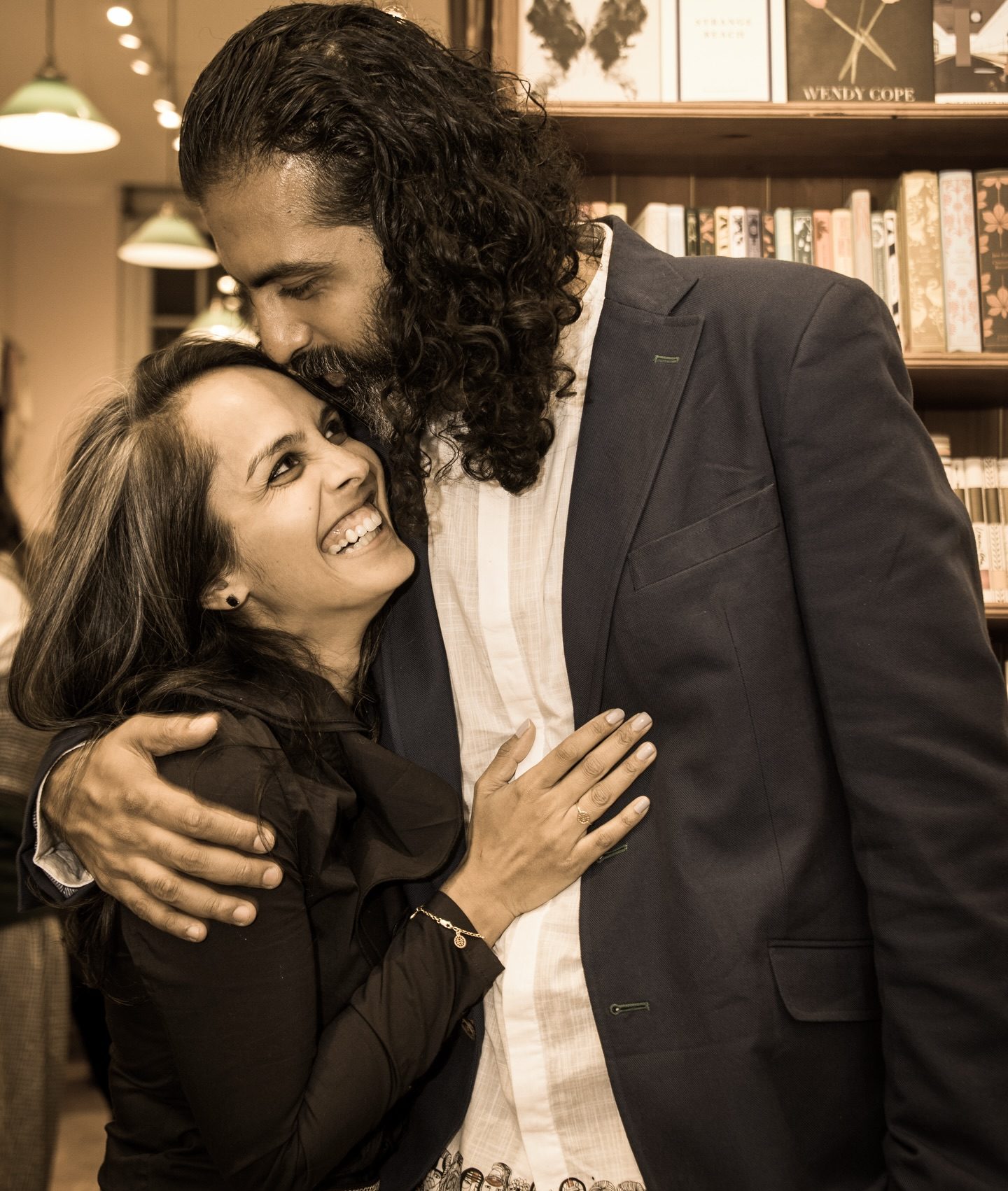
When two people enter a union on equal-ish footing, the assumption is that burdens will be fairly shared. But as we became partners, parents and pros at adulting, an unwelcome part of me resurfaced.
Coercion can be inflicted within a household by forces on the outside. Visible dangers may be safer than the unseen. Most frightening of all was that I hadn’t noticed my self-contortion until my husband pointed them out. I always stood up to clear the plates, he said, even though we’d agreed to share the chore. As hosts, I served guests food on their plate while he would politely say, “Please help yourself.”
When people presumed our miscarriages were a failure of my body, I never defended myself; it was he who would tell them, without shame and as matter of fact, that some sperm can be slow swimmers.
While I, and many like me, have managed to reject surface-level gender stereotypes, we still lower our stature in domestic spaces despite being as whole, as educated, as financially capable, and as successful (however defined) as our male counterparts.
Too many badass women I know with powerful voices on a podium are feeble in the household. The sexism we are subject to is masked ever-so-gracefully in the minutiae of personal life, microdoses of inequity largely unnoticed by men and quietly tolerated by women as part of life’s everyday annoyances.
Who is buying the gift when there’s a birthday party? Which parent is first added to school chat groups? When a favourite food is carried across borders for a friend’s son, why does his wife get the call to coordinate delivery? The injustices are miniscule enough that protesting any one of them sounds unreasonable, but the weight of the sum is enough to keep women pinned to servient status.
Much has been said about the unpaid and emotional labour of women, though far less has been done about it. Perhaps because the force that propels it is unnamed, and therefore, unblamed.
Forget the cliché of lazy husbands or controlling wives, and look at the slow, habitual ways women shrink in domestic spaces, even when every other factor of their life says they shouldn’t have to. It is a question of orientation, whether we position ourselves primarily in relation to others, or ourselves. And also one of posture. How frequently do we bend without even knowing we do so?
I began questioning what I did on autopilot, default behaviour that wasn’t assigned to me so much as absorbed by my subconscious. Disguised as jokes or offhand comments, gendered slights slip by unchallenged.
“The wives can make a plan,” a charming chauvinist will say. And I say nothing. “Let me show you where the kitchen is,” a property agent will say, and I will follow even though I despise cooking. “Do you work?” an acquaintance will ask, then turn to my husband and say, “What do you do for work?” Where professional spaces have made strides in equity (albeit imperfect), the domestic realm is archaic by comparison.
Unsurprising then, that many are opting out. Recent trends in populations of socioeconomic privilege show more couples choosing not to have children and fewer women choosing to settle down, the ‘down’ indicative of its value.
When the only options are to acquiesce or abscond altogether, we can infer the damage is deep. As populations decline, as the epidemic of loneliness in men spreads, and as more genders are restricted from, or refuse, marriage, we may be at a moment of reckoning.
If we are, the question returns, “Where are the men?” The majority of dialogue takes place without them. Most, like Ken, are showing up too late. To the conversation, to the idea of domestic labour, to its redistribution efforts, and to compensating for the superior status that has been granted upon them by birth, which women have had to fight against merely to exist as they are.
When my husband called me out on my impulses, I was forced to unlearn. To stop over-functioning in ways that denied both of us a fair experience.
In the same way women can do less, men have full capacity to do more – willingly, reflexively, and without applause. My husband has been close to winning the Nobel Prize for how often he vacations alone with our daughter. It does not make him feel good; congratulatory messages imply that what he’s doing is ‘unnatural’, excluding him from a part of parenting that is as much his as mine.
When I share in duties conventionally assigned to males (breadwinning, escorting insects off the premises, pumping air into car tires), I, too, am disproportionately praised.
Equity – real equity – isn’t about doing your half, but about noticing when the other has taken on more than theirs, even if they never say a word. Especially if they never say a word. It is an exercise in excessive communication. Uncomfortable callouts. Surrendering perfection for freedom.
If the domestic devil is in the details, there, too, sits the opportunity for defiance. While the patriarchy may seem too large of a power to destroy, we can avoid being its puppet at home.

The domestic space is where gender roles are made, enforced and witnessed. Parents of boys, I’m fiercely looking at you. If you think you are in a position of privilege because you have less ‘work’ to do in raising them, think again or face my wrath.
What we do behind closed doors makes all the damn difference. In bedrooms, kitchens, family reunions, on car rides to school. Children are master eavesdroppers and hear what power sounds like, who yields and who gets to lead. They will absorb if domestic submission is the cost of love, or if respect is fairly granted. Inequality will get quietly passed down or intentionally interrupted.
Our daughter has the advantage of being adopted. From the moment she met us as parents, we both did some combination of the same things: work, cook, schedule appointments, restock home supplies, feed her, bathe her, goof around.
She sees a fair distribution of paid and unpaid labour, but what I most want is for her not to inherit my reflex to yield. Though she’s often been gifted Barbie (sans Ken), she’s never shown any interest. The woman isn’t to be played with.

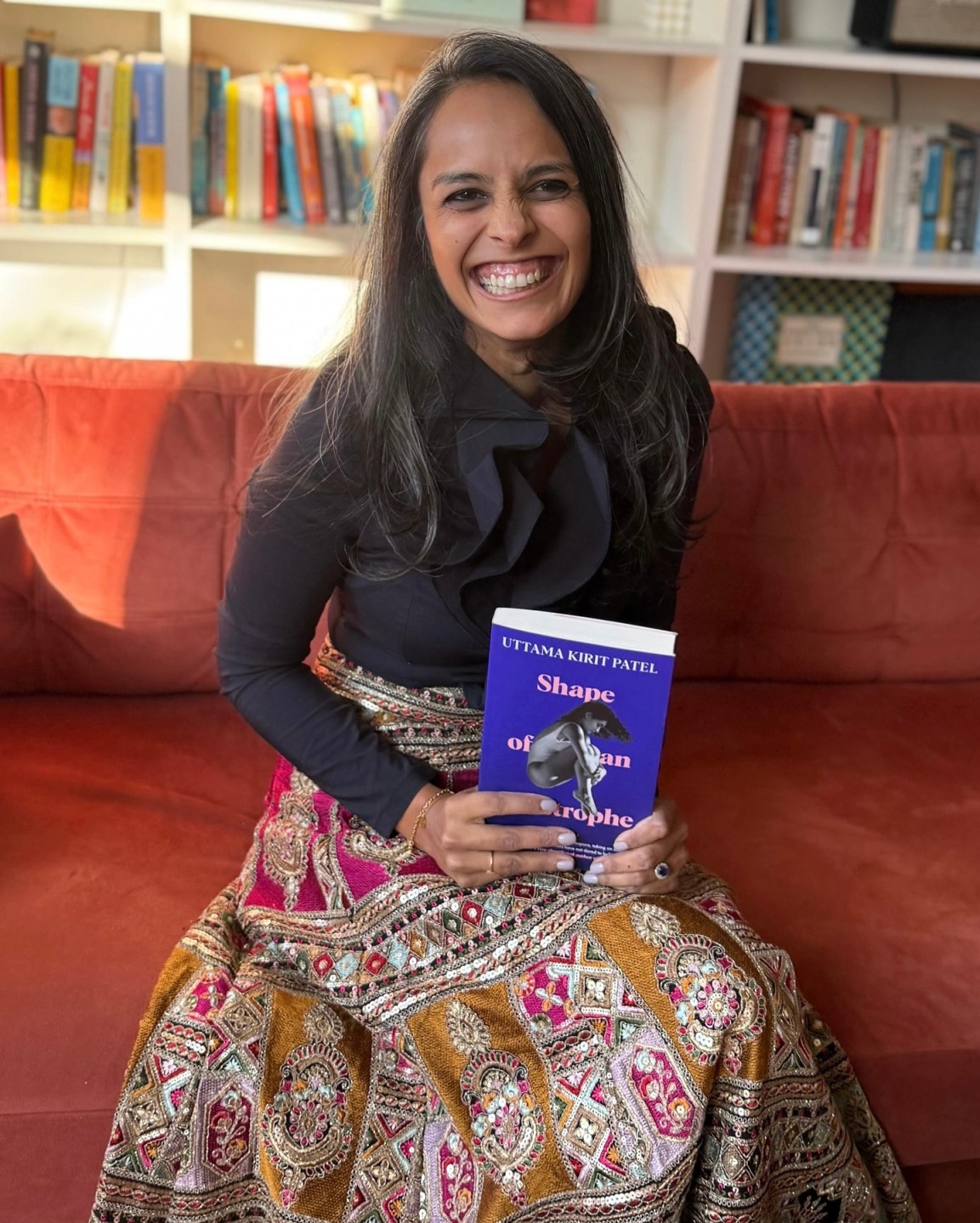
Uttama Kirit Patel is a writer, magazine founder and editor. She has lived in 12 cities across three continents, and is currently based in Thailand. She holds an MPhil in Psychology from the University of Cambridge, and founded the magazine South Asian Parent, ‘a platform for people who keep versions of themselves in the dark.’ She has been a semi-finalist in the Raymond Carver Short Story Contest and was nominated for the PEN/Robert J. Dau Short Story Prize for Emerging Writers. Shape of an Apostrophe (Serpent’s Tail, ₹699) is her debut novel. Follow her on Instagram.
Discover more from eShe
Subscribe to get the latest posts sent to your email.
 eShe
eShe 
0 comments on “Equality on paper, inequity at home: the silent gender gap in modern homes”