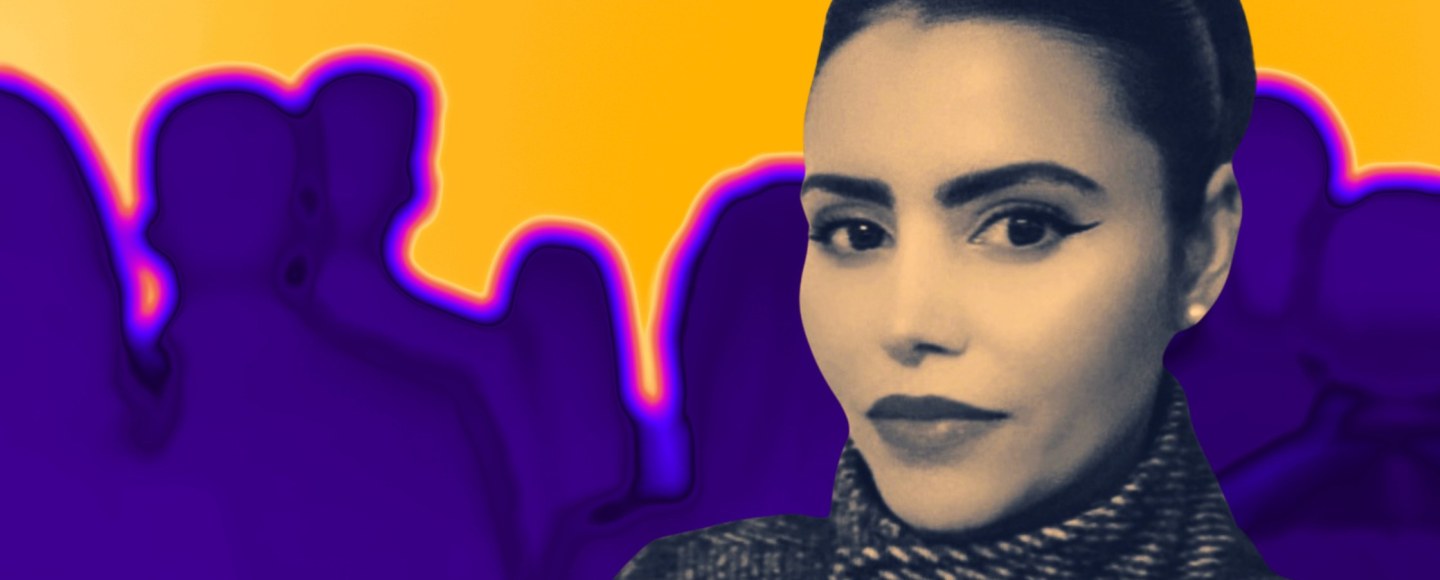

By Sara Yahia
“I’ve always been the insider-outsider guy and I’ve no plans to change that because I think it’s important to be in both camps.” I remember hearing Mehdi Hasan say these words during a conversation on identity and power. Hasan, a Muslim British-American journalist of Indian descent, has long been one of the most incisive and uncompromising voices in American political media. He wasn’t speaking directly to anyone, but he may as well have been.
For anyone, like myself, who has ever been too different to feel safe, too qualified to be overlooked, and still somehow not enough to truly belong, his words echo like a mirror. I’ve been, like many others, too Western for the Middle East, too foreign for the West; a woman navigating a male-dominated workplace; a person constantly having to prove they belong.
This is the paradox of being the “insider-outsider”. You speak the language, hold the degrees, and wear the clothes. You adjust your tone, soften your voice, study the unspoken rules, and still, you’re seen as the other. The subtle message is: you’re impressive, but not one of us.
Homi K. Bhabha speaks to this in his theory of hybridity, calling it a kind of cultural heresy, a refusal to fully belong, and a determination not to disappear.
With over a decade of experience as a senior executive, I’ve grown up, studied, and worked across the United States, France, Qatar, and Spain, learning how to make myself legible in spaces that weren’t designed for someone like me. Of Arab descent, wherever I was, my background was visible, but too complex to fit neatly into one category. Yet, the deeper layers of my identity were something I trimmed and shaped to fit the mould.
I led teams. I delivered results. I played the game with a kind of flawless precision. But the rules kept shifting. Respect was conditional. Recognition was rationed. And even as I climbed the ladder, I could feel the ground beneath me watching for a stumble.
It’s a peculiar form of exhaustion. This pressure to prove yourself not once, but constantly. Not because you’re underperforming, but because your background doesn’t come with built-in legitimacy. Because your accent, your story, your skin, doesn’t match their subconscious template of “who belongs here”.
That’s the thing… being not Western enough, being too Western, not familiar enough. Too assertive. Too poised. Too independent. Too feminine. Too much of everything except exactly what they imagined you should be.

As Nigerian writer Chimamanda Ngozi Adichie reminds us, “The problem with gender is that it prescribes how we should be rather than recognising how we are.” This tension doesn’t just show up in how minority women dress or speak, but in how we are perceived before we even begin.
The strange part is that the more you excel, the harder it gets. Because now your presence is unsettling. You’re not just capable, you’re credible. And credibility, in the hands of someone who doesn’t quite “match the image” becomes a threat.
This isn’t always loud discrimination. Often, it’s quiet. Courteous. Dismissive in a polished way.
As political philosopher-psychiatrist Frantz Fanon wrote in his landmark 1952 book Black Skin, White Masks, “The colonised is elevated above his jungle status in proportion to his adoption of the mother country’s cultural standards.” In other words, no matter how much you adapt, you’re still seen as the other.
It’s being asked to re-explain your decisions while others are trusted without question.
It’s watching someone with half your experience get tapped for leadership because they’re “easy to work with”.
It’s having to constantly justify your tone, your confidence, your competence, while someone else gets praised for simply showing up. American theorist bell hooks reminds us, “Marginality is not a simple space of deprivation but a complex site of resistance.”
It’s in that space of constant negotiation, where you’re neither fully inside nor out, that many of us live. It’s where I’ve lived. Not quite Western, not quite Eastern. Too much for one place, not enough for another.
But in that in-between, trimmed, translated, and misread, resistance quietly takes root. And from that moment, something stronger than belonging begins to grow: authority, depth, and the power to define yourself on your own terms.
The emotional labour is relentless. You become fluent in translating yourself. You tread carefully when offering ideas. You edit your emails three times before sending. You anticipate how your presence will be perceived before you even speak a word.
And all the while, you carry the silent fear that being excellent still might not be enough.
Worse, this marginalisation often isn’t coming from the “old guard.” Increasingly, it’s reflected in the voices of younger generations; those we once hoped would bring progress.
Watching Mehdi Hasan debate young men and women who dressed their bigotry in intellectual language was deeply unsettling. They weren’t just misinformed. They were passionately committed to exclusion, wielding concepts like “tradition” and “values” as tools of division.
As writer and cultural critic Shahed Ezaydi has pointed out in her essays, power often hides behind civility, masked by a veneer of professionalism. It’s not always overt discrimination, but its impact is no less damaging.
And these voices aren’t just online. They’re in HR offices, in hiring committees, in leadership programs. They’re shaping cultures and policies, whether they realise it or not.
If you don’t fit the image they’ve internalised as “good”, “capable”, or “neutral”, you’re not just misunderstood; you’re sidelined.
But here’s the truth I’ve come to hold, even when it felt fragile: You cannot earn your way out of their discomfort.
No degree, title, or accolade will make someone stop seeing you as “other” if that’s how they’ve chosen to define you. And that’s not your failure; it’s theirs.
For a long time, I stayed. I tried harder. I worked longer. I thought if I just kept proving myself, eventually, something would shift. But systems protect themselves, not the people inside them. And eventually, I reached a point where I realised I wasn’t the one who needed to change.
So I left. And it wasn’t easy.
Leaving my former job wasn’t just walking away from a position; it meant letting go of a life I had built, and a version of myself that still believed in fairness. It meant letting go of the illusion that success would eventually make me safe. I had followed every rule, used the proper channels, gathered the evidence, and trusted the system. And the system protected itself. Not me.
Walking away meant giving up the salary, the status, the perks, and the new life I had carefully constructed abroad. It meant packing everything, closing the door on a chapter I had poured myself into, and starting over back home in the U.S.
But in that departure, I found something else: my voice. Not the one I used to make myself palatable. The one that told the truth.
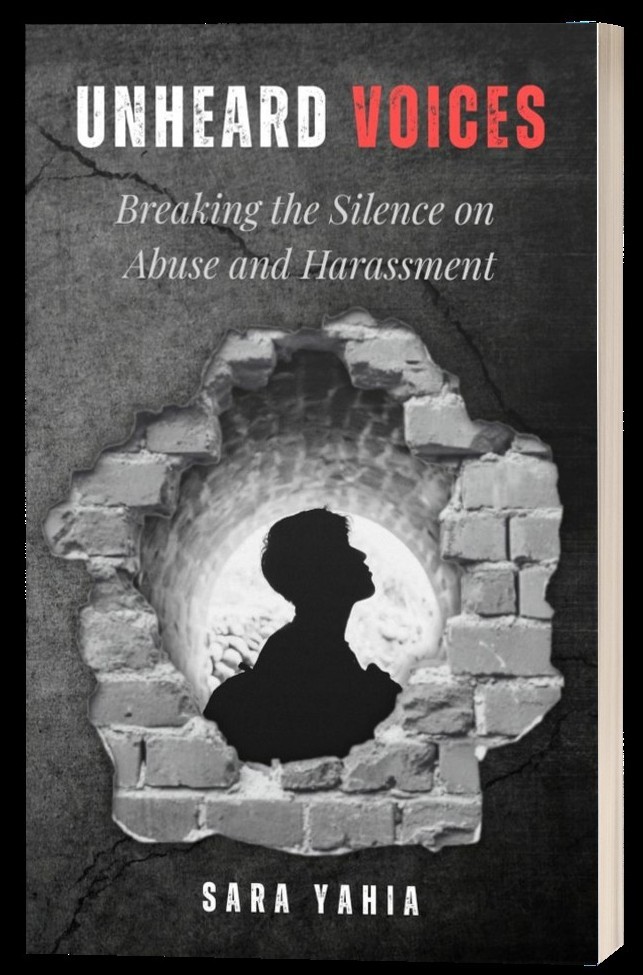
That truth became the foundation for my book, Unheard Voices: Breaking The Silence On Abuse And Harassment (2024). It’s not just about stories of abuse or exclusion; it’s about the deeper, unspoken toll of constantly being measured against someone else’s idea of acceptable. In the words of Edward Said, “No one today is purely one thing.” And yet, too often, systems demand that we be one-dimensional to be seen as legitimate.
And that struggle isn’t limited to one culture, one country, or one region. Change is necessary everywhere. These challenges appear in hiring decisions, workplace dynamics, and leadership pipelines everywhere, not just in the United States.
This is exactly why conversations around DEI (diversity, equity and inclusion) have become so urgent, because for many of us, simply being qualified has never been enough. For women and for people from diverse backgrounds, the pressure to fit in is both relentless and isolating.
The painful irony is that we aren’t asking to be accepted, but to be treated with equity.
To those who know what it’s like to sit at the table and still feel like a guest, let me say this: You are not too much. You are not overthinking it. And you are not alone.
This isn’t about demanding special treatment. It’s about refusing to normalise systems that reward comfort over competence, sameness over substance.
To paraphrase Marianne Williamson, we shouldn’t have to shrink ourselves to succeed. We shouldn’t have to explain our humanity to be respected. We shouldn’t have to erase the parts of us that made us exceptional in the first place.
Being the “insider-outsider” is exhausting. But it is also clarifying.
I’ve since embraced what sets me apart, celebrating my difference with both respect and openness to others. That shift was a turning point. It led to award-winning work, books that reflect my lived experience, and a career defined by authenticity. The same voice once dismissed is now sought out by platforms, leaders, and teams looking for real, human-centred insight.
Because once you see the architecture of exclusion for what it is, you stop blaming yourself for not fitting in and start building something better.
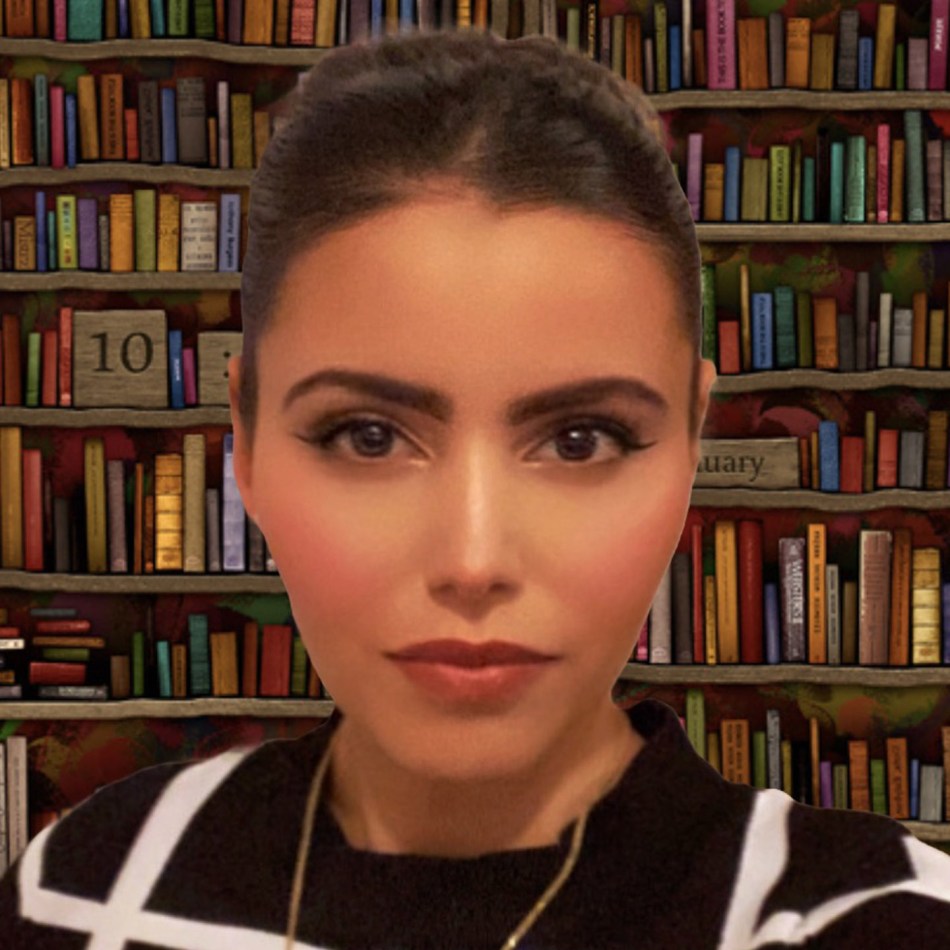
Sara Yahia has held key HR leadership positions at organisations such as DoubleTree by Hilton in Spain, Jade Associates in New York, and FIFA Qatar/Mall of Qatar. She now consults for US companies, specialising in HR strategies and promoting inclusive workplace cultures. Fluent in four languages and holding a Master’s in business management and leadership, she is passionate about flying planes, horse riding, playing the piano, and skiing.
Discover more from eShe
Subscribe to get the latest posts sent to your email.
 eShe
eShe 
Pingback: Sara Yahia: A New Voice which Redefining Leadership Through Culture, Inclusion, and Quiet Influence - Worlds Leaders
Pingback: Partner Track: Ambition, Bias & the Hidden Rules of Corporate America
Candid, insightful and pathbreaking :
This essay should be read by Heads of all institutions in the cross-cultural context.
Congratulations!
Prof. Sachidananda Mohanty
LikeLike