


By Aparna Dedhia
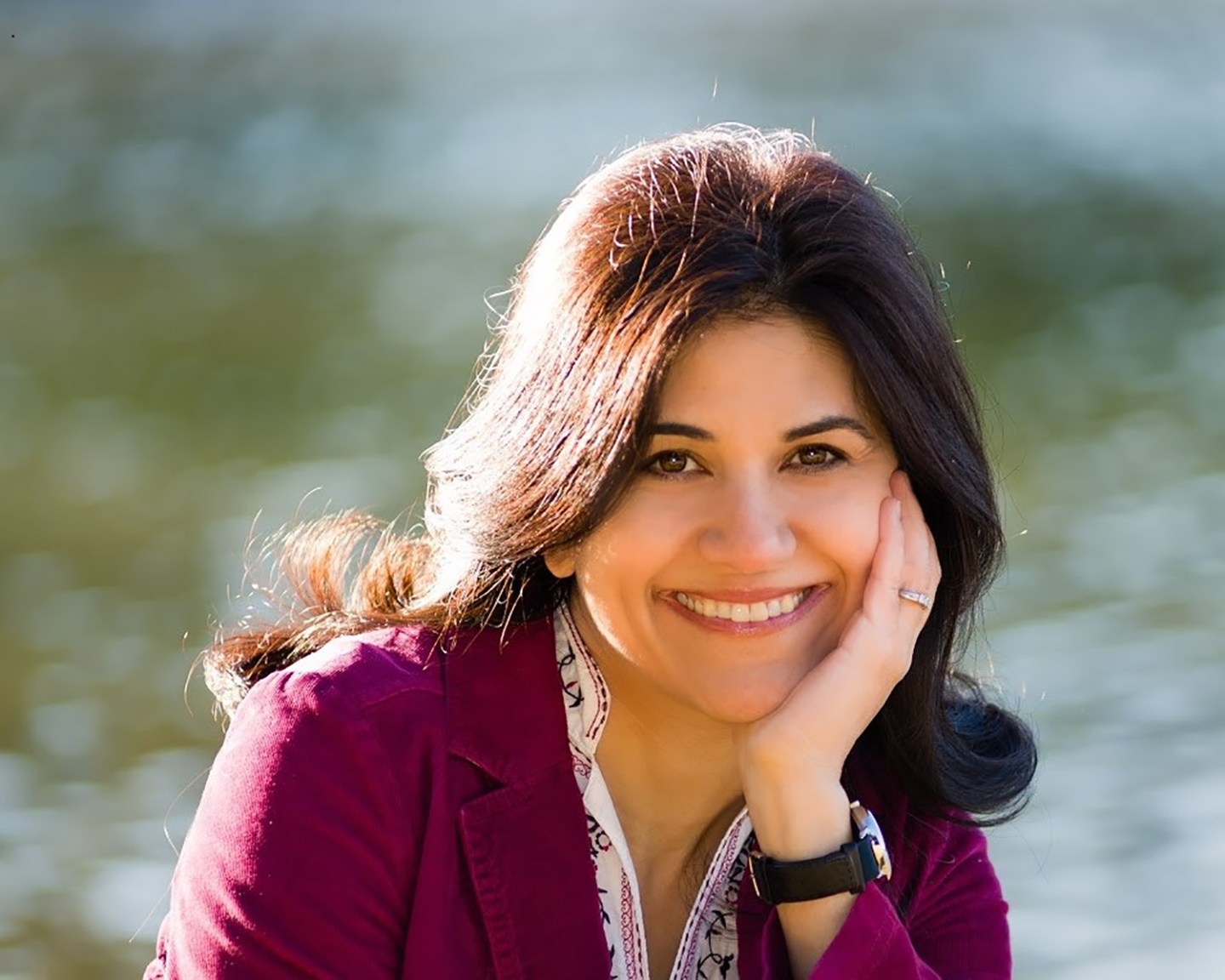
For Marjan Kamali, acclaimed author of Together Tea (2013), The Stationery Shop of Tehran (2019), and The Lion Women of Tehran (2024), stories didn’t just emerge from books – they surfaced from basements.
As a child in Tehran during the seismic years following the 1979 Revolution and the early tremors of the Iran-Iraq War, the young Marjan often found herself huddled underground as bombs echoed overhead. In those dim spaces, her mother’s old paperbacks became portals.
“I became aware,” she recalls, “of the power authors had to transport me to a different time and place. I was in awe of their superpower. I wanted that superpower for myself.”
Though her time in Tehran was brief, it left a deep and lasting imprint. She witnessed a nation in flux. One day she was a schoolgirl whispering secrets to her best friend in Tehran’s sunlit courtyards; the next, she was on a plane to New York, fleeing political unrest, never getting the chance to say goodbye.
That unfinished goodbye would become the ghost that haunts much of her fiction.
When her family fled to the US, Kamali was just 10. She carried more than memories—she bore the silent weight of a severed friendship. At first, there were letters – aerograms filled with longing and stories. But eventually, even those stopped. “I became an American,” she says, “but I still thought (and think) about my friend in Iran.”
It is from this ache of divergence – the life lived, and the life left behind – that Kamali’s fiction draws its power. Kamali was the 2022 recipient of the US National Endowment for the Arts Creative Writing Fellowship, and her novels have been published in more than 25 languages.
A legacy of upheaval
Mohammad Reza Shah Pahlavi, commonly referred to as “the Shah of Iran” governed from 1953 through 1979 under a secular yet authoritarian rule. His regime crushed dissent, censored the press, and imprisoned or tortured communists and Islamists.
Yet, amid this repression, he pushed for Western-style secular modernisation. Women gained the right to vote, entered the workforce in growing numbers, and benefited from the Family Protection Act, which allowed divorce and banned marriage under age 15.
The hijab was banned, seen by the Shah as a symbol suppressing women. Education flourished with new colleges and free secondary schooling, supported financially at the university level.
His aggressive modernisation and the ban on religious garments alienated traditionalists. The Shah’s image as a US puppet and economic instability deepened public resentment.
These tensions exploded in the 1979 Iranian Revolution, which toppled the Shah and brought Ayatollah Ruhollah Khomeini to power – a shift with profound consequences.
Under the new regime, the hijab was enforced, many women’s rights were rolled back, and repression intensified. Farrokhru Parsa, Iran’s female Minister of Education, was executed by firing squad. The era of the Shah ended not with a whisper, but in the upheaval of revolution and reversal.
Stories from the fault-lines
Kamali captures the Iran of Shah’s rule – cosmopolitan, restless, burning with possibility – and the Iran of the Islamic Republic, veiled and silenced, shadowed by war and censorship. Her characters are shaped by both, haunted by what was, what could have been, and what was taken away.
Some women stayed. They became lionesses in basements lit by candlelight, survivors of bombs and broken promises. Others fled, carrying pieces of Persian poetry in their suitcases, stitching together new selves in foreign cities. But none are whole. Not really. The past pulses through every choice they make.
Kamali doesn’t just write about displacement – she writes about disjunction. About what fractures when history intervenes. Her stories ask: What happens when your country forgets you? When your best friend becomes a stranger across borders? When freedom means leaving everything behind, including yourself?
Across her novels, Kamali’s women live on the hyphen – between homeland and host land, memory and becoming. They are unfinished selves, always in transit. In her world, a story is never just one story – It’s always two, running in parallel, tugging at each other across oceans and decades.
In the quiet ache of her prose, in the lingering scent of saffron and old books, Kamali holds all these binaries at once – and, in doing so, crafts fiction that reads like memory, like mourning, like home.
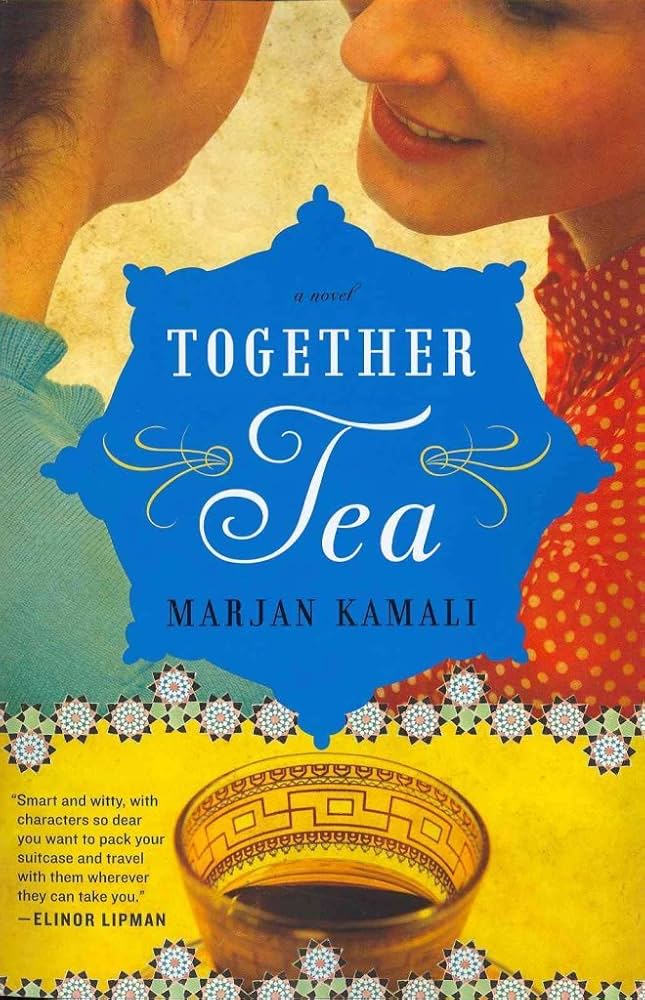
In her debut novel, Together Tea (2013), Kamali has written of lives lived on life’s delicate hyphen – between Iran and America, tradition and modernity, passion and purpose. Mina Rezayi wrestles with the tension between her artistic calling and an MBA’s practicality, while her mother Darya – a gifted mathematician once side-lined by an arranged marriage – tentatively reclaims a piece of herself through spreadsheets and the unexpected spark of Sam.
Their return to Tehran on Mina’s 25th birthday becomes a reckoning: with the country they left behind, the selves they’ve shaped abroad, and the versions they might have been.
In The Stationery Shop of Tehran (2019), that hyphen tightens into a taut thread as Roya, caught between fate and free will, relives a love story interrupted by history. Her youthful romance with Bahman unfolds under the tender watch of a stationery shop owner whose shelves cradle revolution and heartbreak. When Bahman fails to meet her in the square on the cusp of the 1953 coup, Roya’s life splinters.
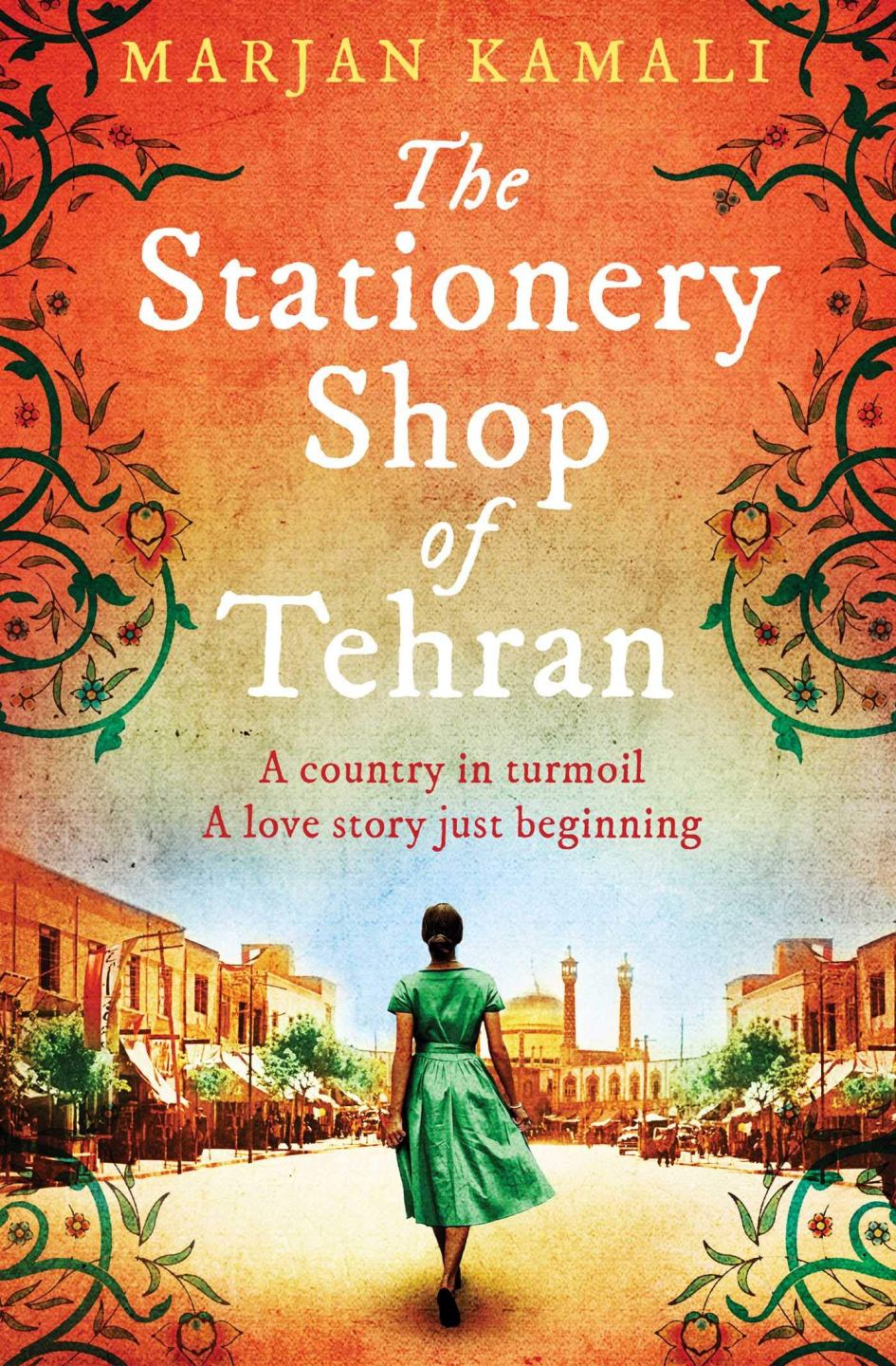
Years later, her voice shakes not with blame, but with the ache of unlived decades. In her husband Walter Archer’s quiet constancy in America, Roya finds steadiness but not surrender. Across Tehran and Massachusetts, between Bahman and Walter, memory and reality, her life remains delicately suspended between what was and what endured.
Threads of defiance – drawing parallels
In Iran, a lock of uncovered hair can unleash the full weight of the state. Under Sharia law, women who appear in public without a hijab face brutal punishments – lashings, imprisonment, social banishment. This is not ancient history; it is the smouldering present. The hijab, once a personal choice, has been weaponised as a tool of control.
Before 1979, Iranian women walked freely through Tehran’s streets in miniskirts or headscarves, their attire reflecting personal expression. But when Ayatollah Khomeini rose to power, the veil became more than a cloth – it became a muzzle. Women were stripped of autonomy and ordered to disappear beneath manteaus and modesty.
Yet even in silence, a revolution simmered. In 1979, over 100,000 women and men flooded Tehran’s streets to protest the compulsory hijab law. The regime dismissed them. But the resistance never vanished – it only grew more quiet, more dangerous.
Decades later, Iranian activists who had managed to escape to foreign lands such as Masih Alinejad ignited that flame anew on social media. What followed were thousands of hijab-less photos as girls and women in Iran rose up. Their rebellion was small but defiant – photos of hair tousled by wind, faces tilted to the sun. No slogans. Just quiet, visible courage.

Thus, Marjan Kamali’s third book, The Lion Women of Tehran (2024) is not an escape from reality – it is a reflection of it. The roar in its pages is the same as the one on Alinejad’s platforms. Together, they honour the Iranian woman not as a victim but as a force. Whether real or imagined, these Shir Zan (“lionesses” in Farsi) resist in lipstick or linen, in silence or hashtags, in Tehran or Toronto. And in doing so, they redraw the map of resistance – not as a place, but as a pulse.
Kamali’s books trace the interior revolutions of Iranian women torn between geographies, generations, and the ghost-lines of history. She excavates memory with a novelist’s scalpel, rewriting the story of Iranian womanhood with unwavering resolve.
As Kamali says, “It’s not the leaving that hurts – it’s the longing to return, and the knowing you never truly can.” That ache is where their courage lives.
Discover more from eShe
Subscribe to get the latest posts sent to your email.
 eShe
eShe 
A powerful and moving tribute to Marjan Kamali’s work. This piece captures how her fiction bridges history and heartbreak, weaving personal memory with political upheaval. Insightful, elegant, and deeply resonant.
LikeLike
Thanks. Shakil Ahmed (Shokee)Lahore Pakistan
LikeLike
Excellent write up ! Movingly told !
Narrative Intersects fiction and contemporary history.
The book covers capture the angst of a nation.
Congratulations!
Prof. Sachidananda Mohanty
LikeLike