

By Hansa Makhijani Jain
Face wash – check.
Toner – check.
Serum – check.
Moisturiser – check.
By the time I get to the last (and extremely crucial) part of the daily skincare routine, which is sun protection, I sort of lose steam. So, the lazy girl in me usually wins and I end up buying a moisturiser + sunscreen (even though dermatologists advise otherwise as they offer very little SPF).
For years, I have struggled with only one thing in my skincare routine. And that is sun protection. And I am not the only one. It is the bane of many.
For decades we’ve been told that sun protection is a step that we can’t afford to skip. Sun-damaged skin leads to faster appearance of fine lines and wrinkles, age spots, dryness, hyperpigmentation, uneven skin tone and loss of elasticity. And, of course, for people with light skin, skin cancer from sun exposure is an ever-present risk.
But sunscreens have gained a bad reputation of late. A 2024 study found that reels with the hashtag #sunscreen had been viewed over 7 billion times on TikTok. Many of these videos argue against using this product since it leads to the absorption of chemicals through the skin. However, the study also notes that most of these content creators are not dermatologists or physicians.

In fact, skin scientists have countered the over 11 million #nosunscreen and 5 million #antisunscreen TikTok reels terming them “misinformation” and the result of algorithms prioritising “engagement over accuracy”.
The complete truth about sunscreens is a bit more complex.
According to a study published in 2014 in the journal Photodermatology, Photoimmunology & Photomedicine, the amount of sunscreen under natural conditions is applied insufficiently by most people, which decreases the protection factor considerably. The only way out of that is early reapplication or using a very high SPF of 70–100.
While it has been found that the maximal use of sunscreen does lead to “systemic absorption of active ingredients” and some amount of toxicity, allergies and endocrine disruption, the same studies still maintain that the known risks of sun damage outweigh the potential harm of sunscreen. What this means is: protection is better than cure.
Now let’s get to more practical matters. One has to admit that what makes the application of sunscreen feel like a rather daunting task is the rules that come with it.
- You must apply it 20 minutes before you leave the house.
- You must apply generously and squirt as much as two finger-lengths full of the product.
- You must blend well because, hello, white cast!
- You must ensure an SPF of at least 30.
- You must reapply every two hours, especially after swimming or sweating.
- You must avoid the eye area to avoid irritation.
The list goes on… specially with the array of sunscreens available. Choosing the right option can seem overwhelming.
According to a study published in the Journal of Cosmetic Dermatology in 2021, the global sunscreen market is expected to reach $24.4 billion worldwide by the year 2029. The good news is that sunscreen formulations have been gradually evolving, and new photoprotective ingredients are continuing to be produced in response to growing scientific evidence on the effect of solar radiation on the skin.
The study also states that evidence-based sunscreens have come around only in the last century: “The first ultraviolet B filters were produced in 1928, its evidence of efficacy and safety discovered in 1956 and development of sun protection factor in 1974. Similarly, sunscreen containing ultraviolet A filters was released in 1980 and the ultraviolet A-star rating system developed in 1992. Regulatory bodies for sunscreen were introduced in the 1970s and have sought to review the safety and efficacy of ingredients.”
Today sunscreens come in creams, lotions, gels, sprays and light fluids. In this ever-evolving landscape of sun protection, sunscreen sticks are the new toast of the town.
The Pros of Sunscreen Sticks
Super easy to apply, sunscreen sticks are all the rage in beauty stores – online and offline. Prices start at ₹399 and can make a valuable addition to your routine.
They are portable and mess-free, so reapplication on-the-go is a breeze. Since it’s not a liquid formulation, it can ensure an accident-free place in your handbag as there are no spills involved.
Sunscreen sticks are also a game-changer if you’re constantly on the move or travel a lot.
It’s a fabulous alternative if, like me, liquid sunscreens make your eyes water. The waxy formulation of sunscreen sticks is, by nature, sweatproof. So there will be a lot less of it running into your eyes on a hot and humid day.
The best part? They can be used over makeup. Yes! Wherein liquid or gel sunscreens cannot be smeared over makeup for timely reapplication, the sticks are formulated to glide over makeup without making you look like The Joker.
The Cons of Sunscreen Sticks
Dermatologists argue, though, that is it much easier to ensure full coverage with liquid sunscreens. These sticks require correct application to achieve the labelled SPF. According to the American Academy of Dermatology, it can take as many as four passes of a sunscreen stick for each area on the face for optimum efficacy. So the rule of applying generously applies to sunscreen sticks as well.
Also, lotions or creams may be a better bet for larger exposed areas of the body such as arms, back and legs. Because of their shape, it can also be a little tricky for sunscreen sticks to reach the nooks and crannies of the face such as the crevices of the ears and the corners of the eyes and nose.
But if you’re one of those lazy girls like me who want to simplify their skincare game, try it out. Because some sun protection is definitely and infinitely better than none at all.
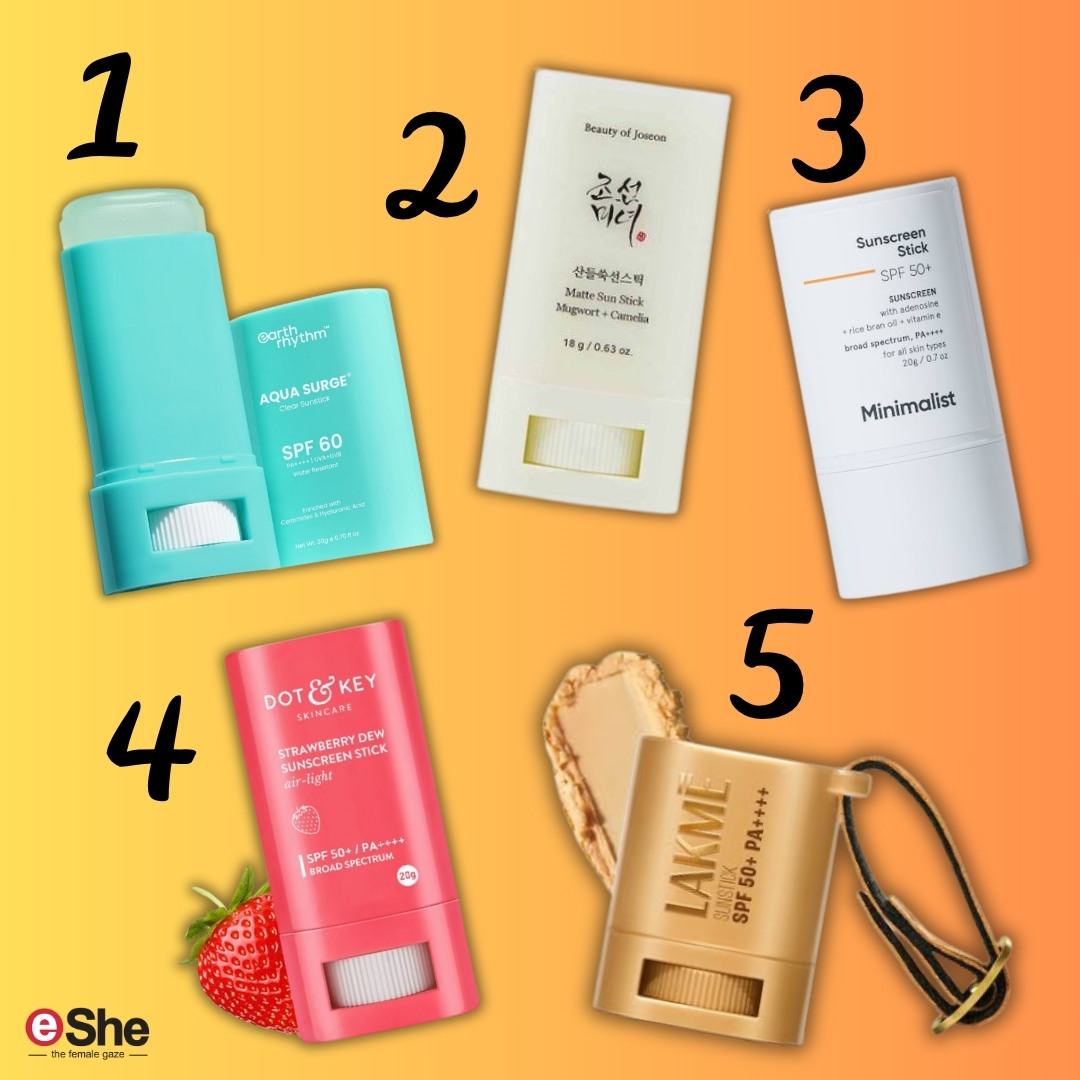
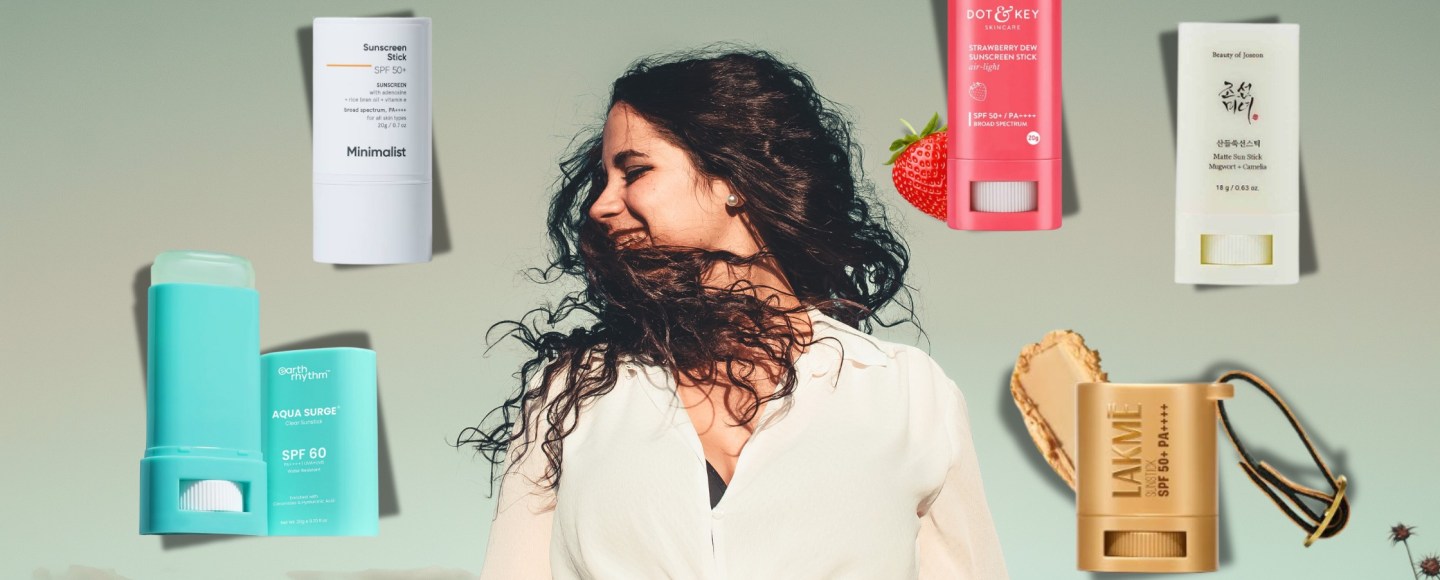
5 Sunscreen Sticks You Gotta Try
1. For those who loathe reapplying:
Earth Rhythm Aqua Surge Hyaluronic Sunscreen Stick SPF 60, ₹549
2. For K-beauty buffs:
Beauty of Joseon Mugwort & Camelia Matte Sun Stick, ₹1390
3. Best for sensitive skin:
Minimalist SPF 50+ Sunscreen Stick, ₹799
4. Best over makeup:
Dot & Key Strawberry Dew Sunscreen Stick SPF 50+ PA++++, ₹595
5. For those on the move:
Lakme Sun Expert Invisible Sunstick SPF 50+ PA++++, ₹399

Hansa Makhijani Jain may as well have been born with a lipstick in her hand. She’s been writing about the beauty biz for almost two decades. Follow her on Instagram.
Discover more from eShe
Subscribe to get the latest posts sent to your email.
 eShe
eShe 
0 comments on “Are sunscreens necessary? Here’s the science! Plus 5 sunscreen sticks we love”