


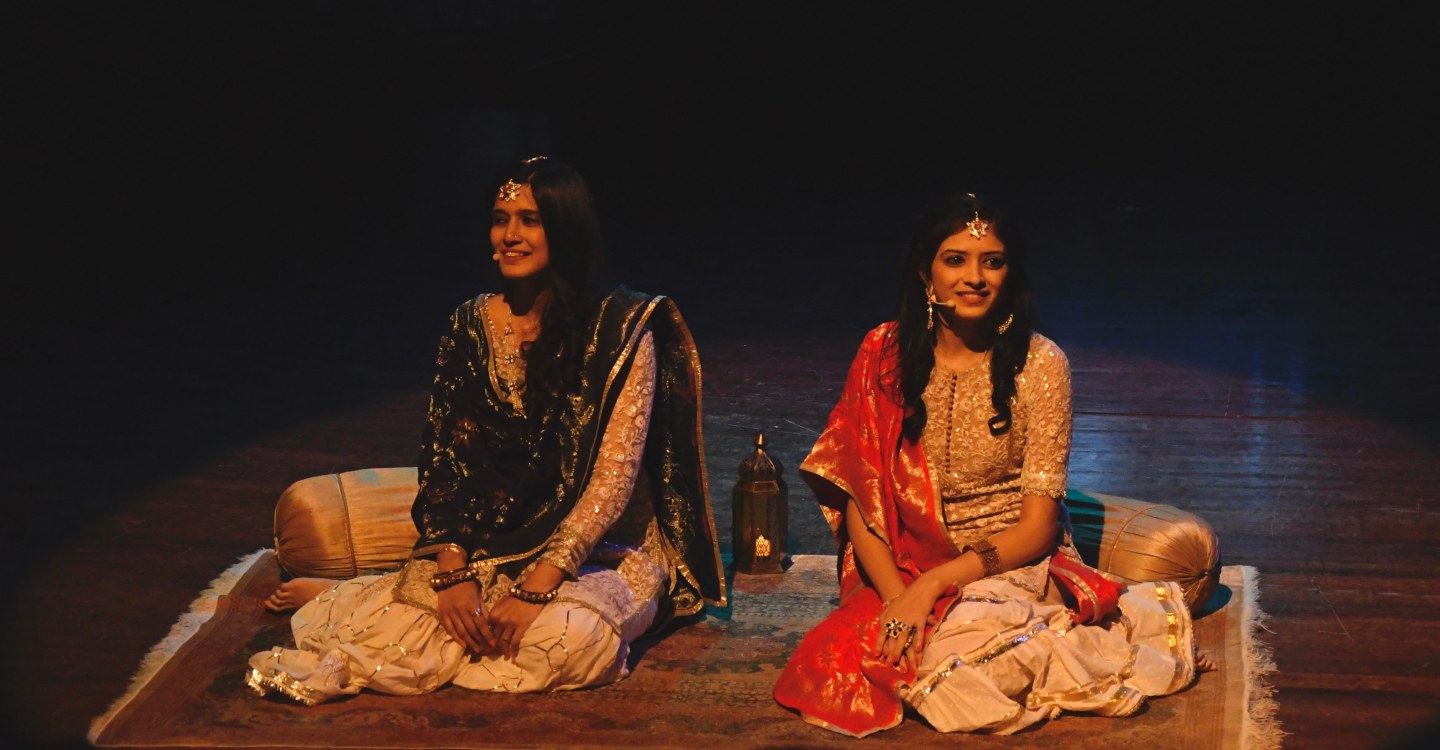
Mumbai sisters Kamakshi and Vishala Khurana grew up in a musically rich environment, learning Indian classical music under renowned gurus including their own father. Alongside their training in music, they both pursued psychology in college, which helped them understand the role of music in shaping minds.
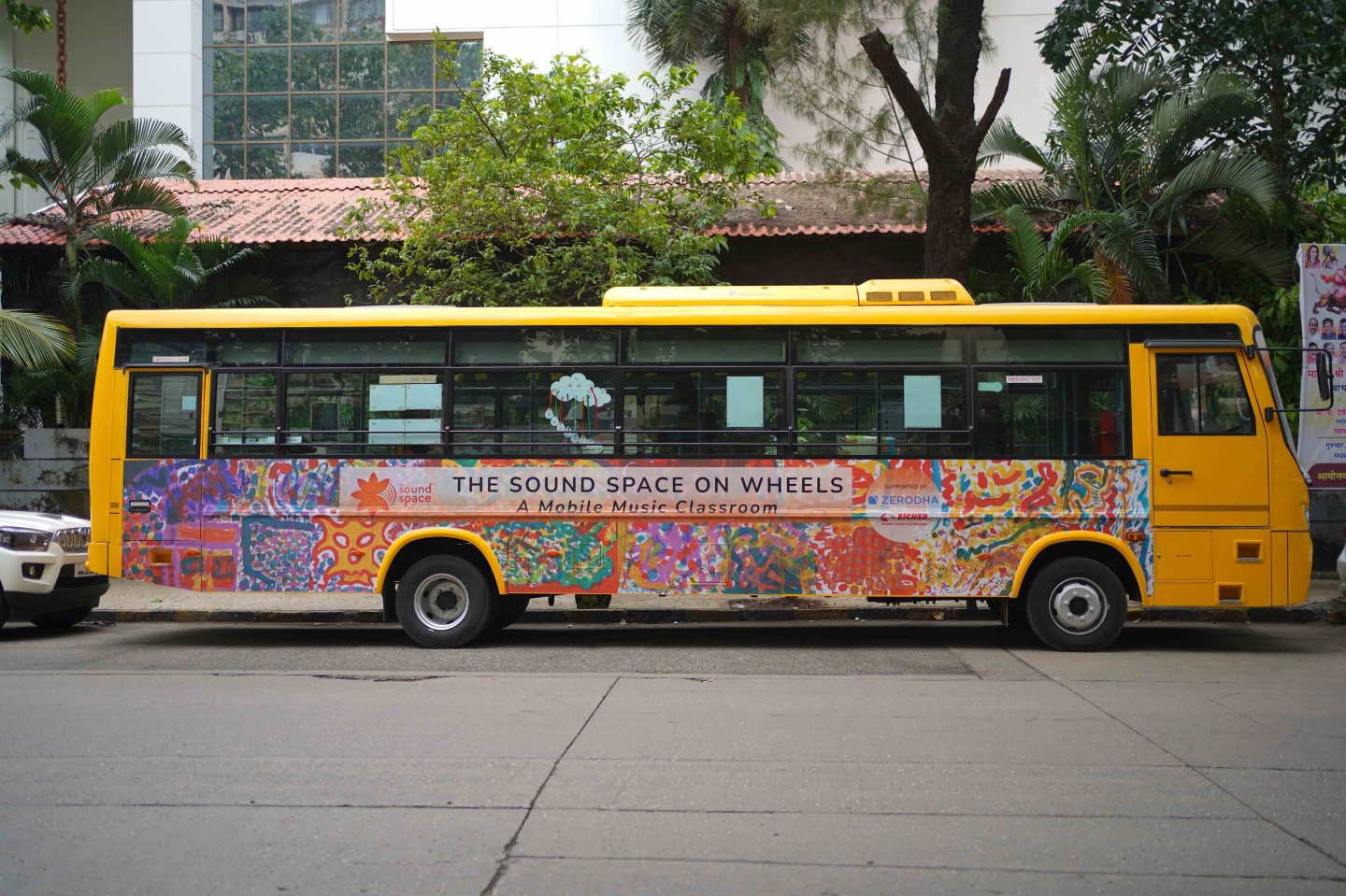
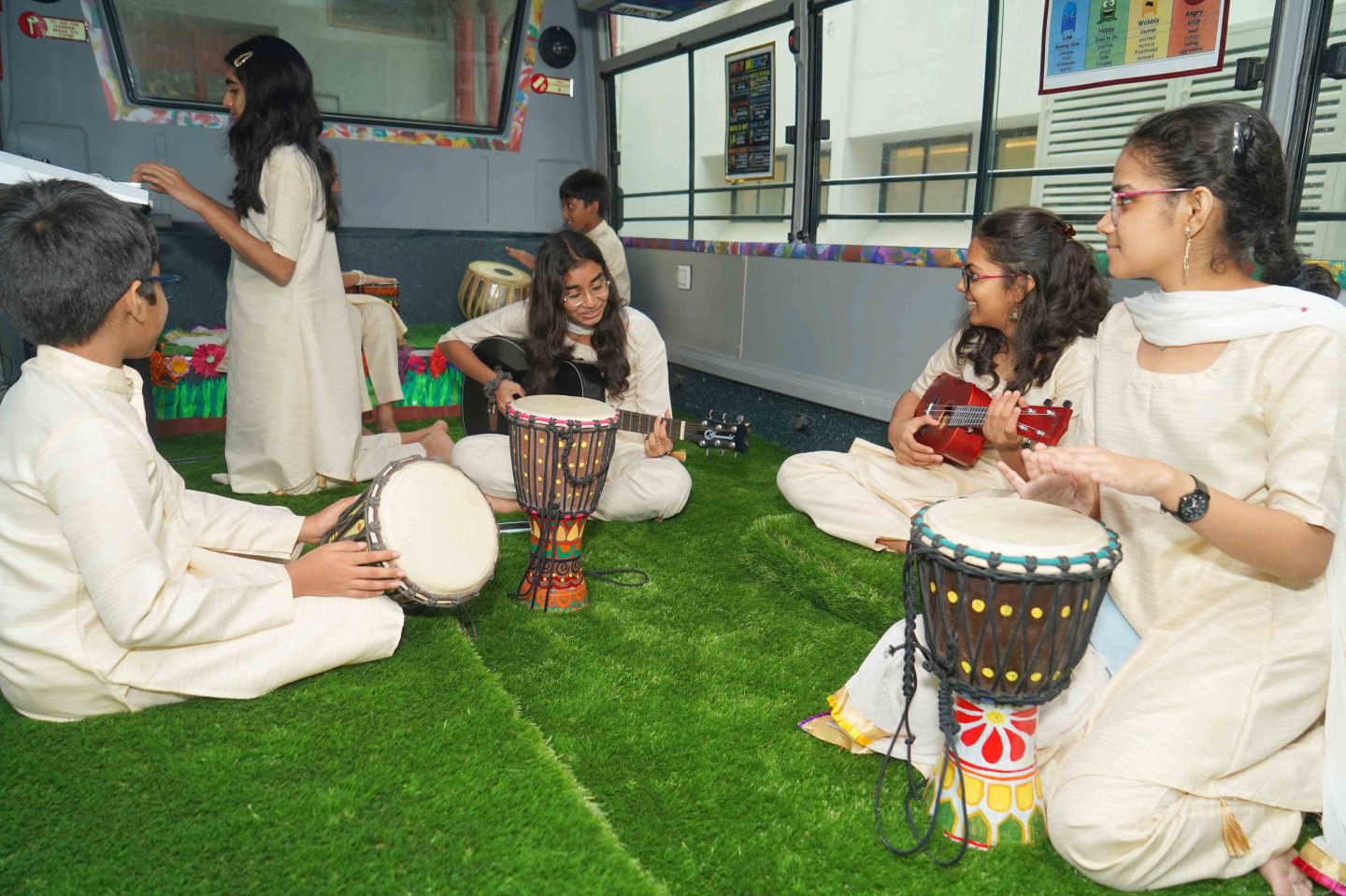
The natural outcome of their musical journey was the Sound Space, an institution to nurture and teach Indian classical music, which they launched over a decade ago. This year, the sisters have launched the Sound Space on Wheels, a mobile classroom that travels through slum areas in Mumbai to teach Indian classical music to children there.
eShe editor Aekta Kapoor spoke to the two sisters about their unique initiative. Watch the video here, or read on for the edited transcript.
What inspired you to launch your latest initiative, Sound Space on Wheels?
Kamakshi: Our goal has always been to bring music to everyone, regardless of their circumstances. During the Covid-19 lockdowns, many of our in-person classes stopped, and while we transitioned some sessions online, we worried about the children we taught through NGOs. Many lacked access to technology, so we thought, “Why not bring the classroom to them?” This bus is a safe, beautiful, musical space that comes to their doorstep, allowing them to participate without being dependent on time or transport.
That’s such a wonderful idea. How many children have you taught so far?
Kamakshi: We’ve reached about 700 to 800 children so far, and that’s just in the first year of running the programme! We’re continuously working to expand this initiative to reach more children in various communities.
What have you learnt as entrepreneurs and educators through this project?
Vishala: Every day is a learning experience! One of the biggest lessons has been how supportive people are and how great the need is for initiatives like this. We now have a waitlist of communities asking us to come and work with their children, which is very exciting for us. Initially, we wondered if people would appreciate this initiative or even want it. But that concern quickly faded as we realised the genuine interest and demand for meaningful, productive engagement for children.
You’re navigating two very different worlds – the traditional, structured world of Indian classical music and the fast-paced world of social media. How do you reconcile these two, and what are the pros and cons of using platforms like Instagram to promote your work?
Kamakshi: Indian classical music, with its rigorous discipline and structure, has taught us the value of appreciating art and being disciplined and being committed to a craft. We trained traditionally, but we also saw how our gurus incorporated more modern styles of teaching.
As times change, fewer students are able to dedicate years to learning classical music. There might be two out of 200 who want to dive deep into it, but that’s not enough to bring music to more people. So, we decided to make the music more accessible while still holding on to the core principles and essence or truth of what we teach.
Vishala: Our aim has always been to make Indian classical music accessible and relevant, while keeping its essence intact. Indian classical music carries immense cultural value, and it’s something we’re deeply passionate about. We feel it shouldn’t be lost just because it’s not being made ‘relatable’ to today’s audience. This is the gap we’re trying to bridge – keeping the authenticity of the music, while using modern tools like social media to engage today’s generation. It’s not just about children; we want everyone – young adults, grown-ups, all of them – to connect with this music in a meaningful way.
Kamakshi: I think it’s also important for people to see the face of who is behind this idea. Indian classical music often comes with a certain image, and many don’t expect people like us – people who also appreciate Western music, pop, rap – to be its ambassadors.
Vishala: We’re trying to show that you don’t have to choose one over the other – it does not have to be ‘this or that’, it can be ‘this and that’. You can appreciate Indian classical music alongside other genres, and that’s what we encourage our students to do. It’s about making this music ‘cool’ and fun, just like any other genre.
Do you think technology and changes in the music production environment has helped in making Indian classical music more approachable and widespread?
Vishala: It’s about making classical music more accessible and relevant. If we were to teach music exactly the way it was taught 100 years ago, we’d have a much smaller audience. Now, with apps and digital tools, the process of learning has become easier.
Kamakshi: For example, tuning the tanpura used to take up to 30 minutes, and while that was a valuable part of the learning process for us in our time, it doesn’t fit with the schedules of today’s students. There are multiple apps now and you can do it instantly. It saves time and also encourages students to practise more at home. Technology has its pros and cons but we should focus on the pros.
Vishala: I also think that technology has made the world smaller. We’re able to hear and learn from musicians all over the globe, and that broadens our understanding of music. For us as musicians, it’s been a great learning tool. We’re constantly exposed to new sounds, techniques and collaborations, and that keeps us growing.
While technology has many advantages, it has also made us impatient and accustomed to instant gratification. How do you balance this with the patience required to learn an art form like music?
Kamakshi: That’s where the discipline of learning an art form comes in. Music, particularly Indian classical music, requires patience, and that’s one of the key benefits of learning it. Whether it’s mastering a particular raga or perfecting a dance routine, the time and effort you invest teaches you how to stay focused. It’s a balance between the fast-paced nature of today’s world and the meditative practice of art. It’s so important to expose the younger generation to this balance.
You’ve also been using music for healing, especially with children who have special needs. Could you share your experiences with this and how music has benefited these children?
Kamakshi: This is a cause that’s very close to our hearts. It all started organically – we’d find children in our classes who inevitably needed extra attention and care. Sound plays such an important role in our lives. For children with learning impairments, music can help them listen better and communicate more effectively. The goal isn’t to make them singers, but to help them with skills we often take for granted, like listening and speaking.
It’s amazing how something as simple as music can help with emotional healing, sleep disorders, and even trauma. We also work with chakra healing, but that’s on another level. At its core, though, music is a universal language that helps people, especially children, in many ways.
You touched on the spiritual aspects of Indian classical music. In today’s world, it’s often seen as entertainment rather than a means of connecting with divinity or your higher self. What are your thoughts on this?
Vishala: Any art form, if practised deeply, becomes a form of meditation. The concentration, patience, and dedication it requires naturally connects you to a higher state of being. Whether you’re practising music, painting, or dance, it’s a meditative experience. True artists are deeply connected spiritually because they spend so much time in this focused, meditative state. It’s something that we’ve tried to instil in our students as well.
We bring in elements of introspection and self-awareness through music, even with our youngest students, who are one and half year old. By the time they’re nine or 10 years old, they’re engaging with music in a way that’s not just about performance but about self-connection.
Kamakshi: Practising music becomes a spiritual exercise in itself because it requires you to be fully present and focused.
Living in Mumbai, a city known for its Bollywood music and glamour, do you feel any pressure to teach or create more commercial music versus traditional classical music?
Vishala: Yes, there’s definitely an influence, but we’re not opposed to it at all. We are very happy to include all kinds of music, including Bollywood. Everything comes from the same seed: music. We do, however, try to focus on music that brings value to our students, so we may not teach very mainstream or commercial music. Like I said, it’s not about ‘this or that’ when it comes to music – it’s about embracing ‘this and that’.
Kamakshi: We also connect Bollywood music to its classical roots, as many songs are based on traditional ragas. This way, students can appreciate both forms. A lot of our students are here to appreciate music, not necessarily to become singers. So, if we can help them understand and enjoy music in its many forms, that’s our goal.
Do you see yourselves primarily as musicians or educators?
Kamakshi: Both, absolutely. You can’t be a good music educator without being a musician yourself. Teaching music requires not just knowledge but a deep personal connection to it, which only comes from being a practising musician.
Lastly, what’s the biggest lesson you’ve learnt through your musical career and growing up with music, and what advice would you give to others?
Vishala: You don’t need to be a musician to love music. Music can be your best friend, whether you sing, play an instrument or simply listen.
Kamakshi: There’s no age or stage in life where it’s too late to start making music a part of your daily life. Everyone should have a connection to music because it’s a companion that can uplift, comfort, and inspire you at any time.
Discover more from eShe
Subscribe to get the latest posts sent to your email.
 eShe
eShe 
Hats off to Khurana sisters and salute to Aekta for such a nice interview. Classical music is real music and pop music is rubbish. Their music teaching on wheels is a novel and amazing idea!! Kudos to the young girls.
LikeLiked by 1 person