
A recent paper has found that taboos about menstruation in Nepal are strong and persistent, and limit women’s and girls’ activities despite equality laws in place. Most prone to superstition and dogma are women in rural areas belonging to the “upper castes” – communities that are supposedly the upholders of religious customs.
The study, authored by Nathaniel Ferguson, Meeta Sainju Pradhan and Rachana Upadhyaya for CGIAR’s Gender Impact Platform, was a result of interviews of 826 women and 826 men in Nepal.
It found that women experience disproportionate burdens in the water, sanitation and hygiene sector, and examined women’s empowerment as it relates to menstruation. Here are some of the findings.
Menstruation is considered “polluting”
In Nepal, there is a strong taboo attached to menstruation, based around the persistent idea – rooted in religion – that menstruation “pollutes”, say the authors.
Chhaupadi (“seclusion”) during a woman’s period continues to be practised. Women are sequestered in sheds called ‘chhau goth’ (menstrual huts), which are separate from their house.
According to the 2022 Demographic and Health Survey of Nepal, the practice is most common in the western provinces of Karnali and Sudurpashchim. One-fifth and one-quarter of women, respectively, were excluded from staying in the house during their periods.

In urban and educated families, a less severe form of exclusion called chuna nahune (“untouchable phase”) is practised. This practice bars menstruating women from touching men in their family, sleeping in the same bed as family members, entering the kitchen, and touching water sources.
According to the DHS report, eighty-five percent of women reported being excluded from at least one activity while menstruating. Naturally, this exclusion has negative effects on the lives and psychological wellbeing of girls and women, including by limiting school attendance and by propagating misogynist stereotypes in society.
This custom not only exists in Nepal, but in many parts of India as well. The 2021 film The Great Indian Kitchen, set in the southern Indian state of Kerala, offers a glimpse of how women are forcibly sequestered in a tiny room for their entire menstrual cycle even in educated families.
Caste and ethnicity affect women’s empowerment
The study found that caste and ethnicity were a significant driver of menstruation-related norms. More than 81 percent women avoided certain locations and activities during their period to a smaller or greater degree. For instance, 70 percent of women were excluded from religious activities and 36 percent from food preparation.
Notably, the study finds that higher levels of segregation during menstruation were more prevalent among the so-called “higher” castes of Brahmin and Chhetri – often the enforcers of religious practice.
“Ritual (im)purity is a strong concept in Hinduism and is the source of many restrictions placed on menstruating women, who are considered ‘impure’,” write the authors. They add that, since it is mostly Brahmin men who serve as priests, Brahmin women (and the other “high” caste Chhetris) are expected to maintain strict adherence to ritual purity and are more commonly excluded from religious places and rituals while menstruating.
“The religious roots of the menstrual taboo create deep-seated norms which are resistant to change,” note the authors. The result of this is that three out of four Nepali women themselves believe that women should be separated from other people or places, or should not prepare food, while menstruating.
Difference in attitudes and norms
Interestingly, what women believe may not be the same as what they actually do. Nowhere was this most apparent than in the indicator that measured whether participants believe “menstruation is a normal part of life for women”.
Unlike the other indicators, a majority of Nepali women (54.8 percent) were empowered in this indicator. This means greater acceptability of girls having practical knowledge of menstruation before their first period, the acceptability of treating the pain with medication, and a lack of shame when acquiring menstrual products.
But again, empowerment varies significantly across social identities. Janajati women, considered one of the lower castes, are the most empowered in the other indicators, but the least empowered in this indicator.
The authors posit that this could be because, though attitudes are changing among women, there may be resistance from community leaders who have vested interests in enforcing age-old stereotypes.
Women who reject restrictions during menstruation are often stigmatised. Further, though there are laws that do away with menstrual taboos, these laws do not prevent voluntary adherence to restrictions.
“These indicators may reveal that attitudes are changing faster than norms,” say the authors.

Interestingly, while almost all women respondents agreed that menstruation is normal, nearly half felt “ashamed” while menstruating.
This correlates with a 2014 study in Nepal which found the simultaneous existence of two contrary beliefs: that menstruation is normal, and that menstruation requires exclusion. “These gaps could reveal a context where women’s attitudes are changing faster than social norms, leading to a perceived dissonance between beliefs and practices,” say the authors.
They recommend that community interventions to mitigate these restrictions must target women as well as men. “Their effectiveness is also dependent on the engagement of community stakeholders, such as municipal and school officials, who may hesitate in moving to promote change, despite personal approval.”
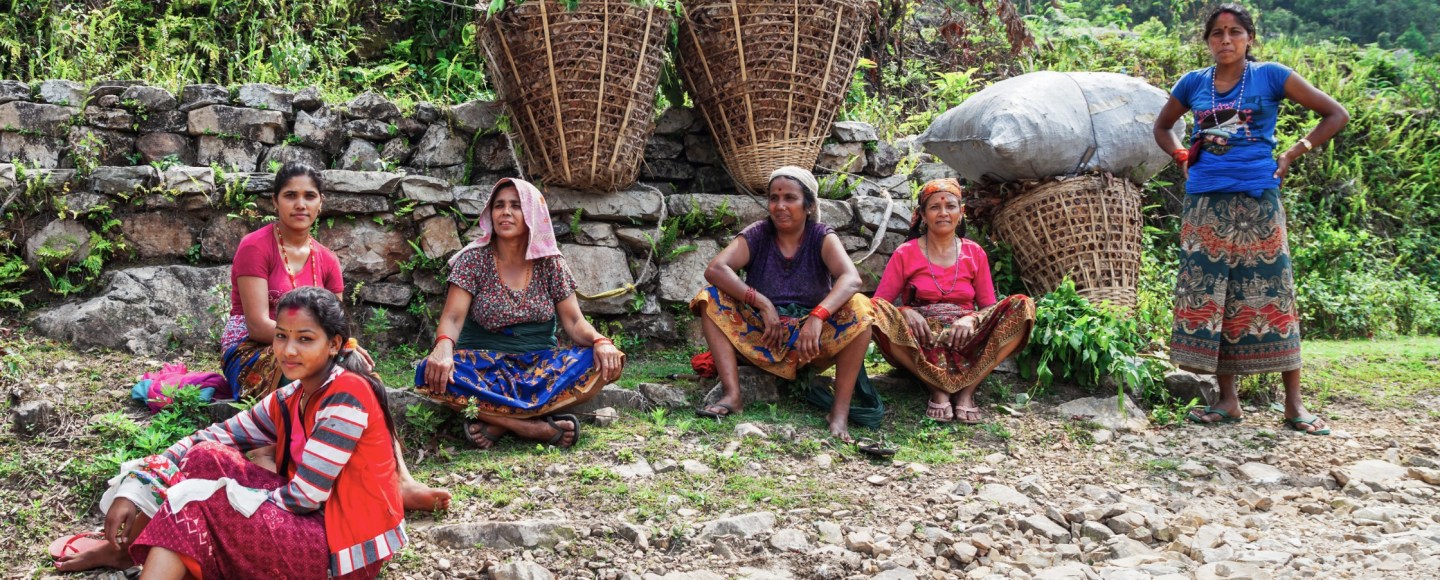
Lead image: Women workers resting in a rice field near Pokhara city, Nepal. Photo credit: Andrey Khrobostov
Discover more from eShe
Subscribe to get the latest posts sent to your email.
 eShe
eShe 
0 comments on “Nepal study finds that menstrual taboos persist despite education, women still secluded during periods”